
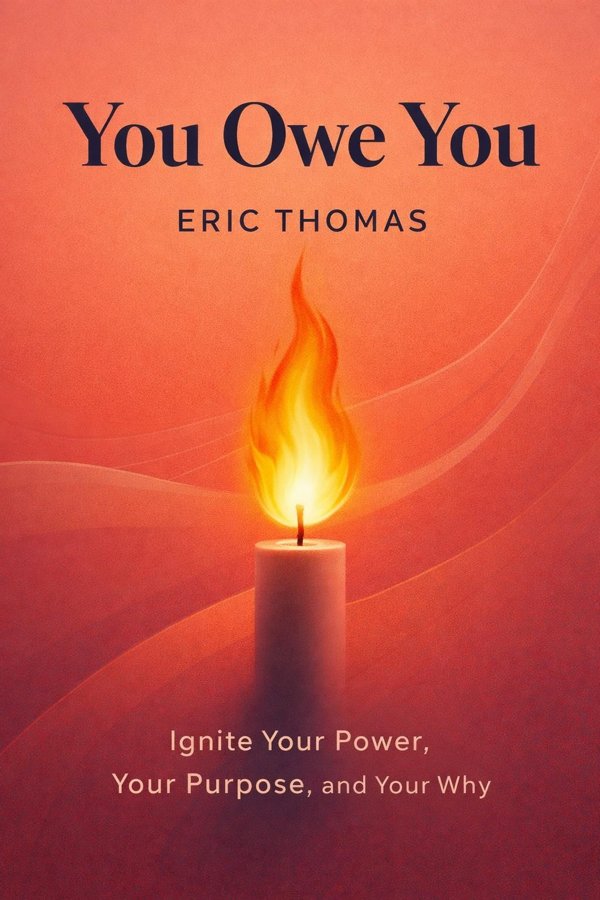
You Owe You: Ignite Your Power, Your Purpose, and Your Why: Summary & Key Insights
by Eric Thomas
 10 min9 chaptersAudio available
Key Takeaways from You Owe You: Ignite Your Power, Your Purpose, and Your Why
Most people spend years waiting for permission to become who they already know they could be.
A major reason people underperform is not lack of talent but lack of recognition.
Excuses are rarely about facts alone; they are often about emotional protection.
Without purpose, effort feels random and suffering feels wasteful.
Motivation is powerful, but it is unreliable.
What Is You Owe You: Ignite Your Power, Your Purpose, and Your Why About?
You Owe You: Ignite Your Power, Your Purpose, and Your Why by Eric Thomas is a mindset book spanning 11 pages. You Owe You is Eric Thomas’s forceful argument that the life you want will not be handed to you by luck, approval, or ideal circumstances. It must be claimed through ownership, discipline, and a deep commitment to becoming who you were created to be. Drawing from his journey from homelessness and academic struggle to earning a Ph.D. and becoming one of the world’s best-known motivational speakers, Thomas writes with unusual credibility. He is not speaking from theory alone; he is speaking from lived transformation. The core idea is simple but demanding: stop waiting for someone else to rescue, validate, or complete you. You owe it to yourself to maximize your gifts, confront your excuses, and align your daily actions with your purpose. What makes the book matter is its combination of emotional honesty and practical urgency. Thomas does not promise an easy path. Instead, he shows that self-respect is built through responsibility, resilience, and service. For anyone feeling stuck, underused, or distracted, this book offers a wake-up call to reclaim personal power and live intentionally.
This FizzRead summary covers all 9 key chapters of You Owe You: Ignite Your Power, Your Purpose, and Your Why in approximately 10 minutes, distilling the most important ideas, arguments, and takeaways from Eric Thomas's work. Also available as an audio summary and Key Quotes Podcast.
You Owe You: Ignite Your Power, Your Purpose, and Your Why
You Owe You is Eric Thomas’s forceful argument that the life you want will not be handed to you by luck, approval, or ideal circumstances. It must be claimed through ownership, discipline, and a deep commitment to becoming who you were created to be. Drawing from his journey from homelessness and academic struggle to earning a Ph.D. and becoming one of the world’s best-known motivational speakers, Thomas writes with unusual credibility. He is not speaking from theory alone; he is speaking from lived transformation. The core idea is simple but demanding: stop waiting for someone else to rescue, validate, or complete you. You owe it to yourself to maximize your gifts, confront your excuses, and align your daily actions with your purpose. What makes the book matter is its combination of emotional honesty and practical urgency. Thomas does not promise an easy path. Instead, he shows that self-respect is built through responsibility, resilience, and service. For anyone feeling stuck, underused, or distracted, this book offers a wake-up call to reclaim personal power and live intentionally.
Who Should Read You Owe You: Ignite Your Power, Your Purpose, and Your Why?
This book is perfect for anyone interested in mindset and looking to gain actionable insights in a short read. Whether you're a student, professional, or lifelong learner, the key ideas from You Owe You: Ignite Your Power, Your Purpose, and Your Why by Eric Thomas will help you think differently.
- ✓Readers who enjoy mindset and want practical takeaways
- ✓Professionals looking to apply new ideas to their work and life
- ✓Anyone who wants the core insights of You Owe You: Ignite Your Power, Your Purpose, and Your Why in just 10 minutes
Want the full summary?
Get instant access to this book summary and 100K+ more with Fizz Moment.
Get Free SummaryAvailable on App Store • Free to download
Key Chapters
Most people spend years waiting for permission to become who they already know they could be. Eric Thomas’s phrase “You owe you” cuts through that passivity. It means you have a personal debt to your own future, your own gifts, and your own potential. The idea is not selfishness or self-absorption. It is responsibility. Thomas argues that too many people blame parents, teachers, bosses, systems, or past pain for the life they are living now. While those factors are real, staying trapped by them only gives away your power. To say “you owe you” is to stop expecting the world to do for you what only you can do for yourself.
Thomas’s own life makes this message credible. He experienced homelessness, instability, and academic failure. Yet he eventually chose to stop living as if his circumstances were his identity. That shift is the heart of the book. You do not repay the debt you owe yourself with talk, dreams, or motivational quotes. You repay it by honoring your capacity through action. That may mean returning to school, getting healthy, apologizing for old patterns, waking up earlier, or refusing to settle for mediocrity in your work and relationships.
A practical way to apply this idea is to ask: what have I been postponing that my future depends on? Maybe it is building a skill, fixing your finances, or setting boundaries with people who drain you. Once you identify it, treat it as an obligation, not a preference. Put it on your calendar and track it weekly.
Actionable takeaway: Write one sentence beginning with “I owe myself…” and turn it into a daily non-negotiable for the next 30 days.
A major reason people underperform is not lack of talent but lack of recognition. They do not see themselves clearly enough to use what they have. Thomas insists that every person carries unique power, but many live as if they are ordinary, accidental, or disqualified. Personal power begins with self-recognition: understanding that your background does not cancel your worth and your current position does not define your ceiling.
Thomas challenges the habit of letting outside voices shape internal identity. If you were repeatedly told that you were not smart enough, disciplined enough, or likely to succeed, those messages can become internal scripts. Over time, you stop testing your limits because you assume the verdict has already been delivered. Thomas argues that transformation starts when you reject inherited labels and begin building a new self-concept rooted in possibility and purpose.
This is not mere positive thinking. Real confidence grows when you identify your strengths and develop them intentionally. For one person, that may be communication. For another, empathy, strategy, persistence, or leadership. The key is to stop dismissing what comes naturally to you. Teachers, parents, and workplaces often reward narrow forms of success, but your contribution may emerge in a different lane. Recognizing your power means taking inventory of your patterns: what do people consistently ask you for help with? What energizes you? Where have you shown resilience before?
A practical exercise is to list five strengths, five hard experiences you survived, and five ways those experiences have prepared you to serve others. That connects self-awareness with mission.
Actionable takeaway: Create a personal power inventory this week and choose one strength to sharpen deliberately through practice, study, or mentorship.
Excuses are rarely about facts alone; they are often about emotional protection. Thomas argues that excuses allow people to avoid the discomfort of confronting where they have compromised, delayed, or quit. They give temporary relief because they make failure feel understandable. But the longer they are repeated, the more they become identity. Eventually, “I’m too tired,” “I didn’t have the right support,” or “it’s just not my season” can become permanent reasons for a stagnant life.
Thomas does not deny that obstacles are real. Some people begin with far fewer resources, more trauma, and less guidance. His point is that excuses do not solve any of that. They only delay the work of adaptation. If you cannot control the starting line, you can still control your response. Breaking excuses means asking better questions. Instead of “Why is this happening to me?” ask “What can I do next with what I have?” Instead of “Who failed me?” ask “What responsibility is mine now?”
A practical application is to pay attention to recurring language. If you regularly explain your lack of progress with the same story, that story may be functioning as a shield. For example, someone who wants to start a business may keep saying they need perfect timing, when what they really fear is rejection. A student may claim to be too busy, when the real issue is disorganization. Naming the truth is empowering because it points to a solution.
Thomas encourages replacing excuses with systems. If mornings are chaotic, prepare the night before. If you keep skipping workouts, train with a partner. If you doom-scroll instead of reading, move your phone out of reach.
Actionable takeaway: Identify your top three excuses and write one behavioral change that makes each excuse harder to use.
Without purpose, effort feels random and suffering feels wasteful. Thomas argues that purpose is the force that turns struggle into investment. It gives direction to sacrifice and keeps you moving when motivation fades. For him, purpose is not simply a career choice or a personal ambition. It is the deeper reason your life, gifts, and experiences matter beyond comfort and applause.
Many people think purpose should arrive as a single dramatic revelation, but Thomas presents it more as discovery through alignment. You find it by noticing what burdens you enough to act, what kind of impact feels deeply meaningful, and what strengths you can bring to that need. Purpose often emerges where passion, pain, and service intersect. A person who overcame addiction may feel called to mentor others. Someone who struggled in school may become a teacher or advocate. Hardship does not automatically reveal purpose, but it can become part of the evidence.
This matters because purpose changes how you evaluate your days. If your only goal is comfort, discipline will feel oppressive. If your goal is a mission larger than your mood, discipline becomes necessary. Purpose also helps you say no. It clarifies which opportunities are distractions and which are aligned. You do not need to chase everything when you know what you are building.
To apply this, reflect on three questions: What problem do I care enough to help solve? What abilities do I have or want to develop in that direction? Who benefits if I become my best self? The answers may not produce a polished mission statement immediately, but they will point toward a path.
Actionable takeaway: Write a one-paragraph purpose draft linking your strengths, your story, and the people you want to serve.
Motivation is powerful, but it is unreliable. Thomas emphasizes that the people who change their lives are not the ones who feel inspired every day; they are the ones who act consistently whether inspiration is present or not. Discipline is what turns intention into identity. It closes the gap between what you say matters and what your schedule proves matters.
Thomas’s message is especially important in a culture that celebrates emotional peaks but ignores routine. People love breakthrough moments, dramatic announcements, and big goals. Yet real progress usually comes from repeated ordinary choices: going to bed on time, studying when no one is watching, saving money instead of spending for status, practicing your craft after a long day. Discipline is not punishment. It is self-respect in behavior form.
One reason discipline feels difficult is that people set goals without designing systems. They say they want to read more, get healthier, or grow professionally, but they leave those desires floating in good intentions. Thomas urges readers to create structure. If your purpose matters, your calendar should reflect it. For example, if fitness is a priority, schedule workouts like appointments. If learning is a priority, block a daily hour for reading or coursework. If family leadership matters, create device-free time each evening.
Discipline also grows through small wins. Starting with an extreme routine can create burnout. Starting with repeatable commitments creates momentum. Reading ten pages daily is better than reading fifty pages once and quitting. Writing for twenty focused minutes can beat waiting for a perfect three-hour block.
Actionable takeaway: Choose one core area of life and install a simple daily system you can sustain for the next two weeks without negotiation.
Pain is inevitable, but identity built around pain is not. Thomas repeatedly returns to the reality that adversity can either become an anchor or a training ground. His own life story demonstrates this tension. Hardship marked him early, but he refused to let struggle become his final label. The lesson is not to romanticize suffering. It is to refuse to waste it.
Adversity tests what is shallow and reveals what is durable. It exposes character gaps, emotional triggers, and weak habits, but it also uncovers resilience, creativity, and faith. Thomas encourages readers to stop asking only how to escape hardship and start asking what hardship is teaching them. Losing a job may force you to confront your dependence on one source of income. A failed relationship may reveal unresolved wounds or unhealthy patterns. A public setback may strengthen humility and focus.
This reframing matters because many people stay emotionally chained to what happened to them. They replay injustice, betrayal, and disappointment until those experiences become the main story of their lives. Thomas’s challenge is to honor the pain without surrendering to it. Healing may require therapy, mentors, faith, community, or time, but the goal is growth, not permanent victimhood.
Practically, adversity becomes useful when you extract lessons. After any major setback, ask: What was outside my control? What was within my control? What skill, boundary, or mindset must I develop now? This helps transform emotion into strategy. It also prevents repeating the same avoidable mistakes.
Actionable takeaway: Choose one painful experience from your past and write down three strengths or lessons it forced you to develop, then decide how to use one of them going forward.
People often think freedom means having fewer responsibilities, but Thomas argues the opposite: real freedom comes from ownership. When you take responsibility for your choices, habits, reactions, and growth, you stop living at the mercy of circumstance. Accountability is not about harsh self-judgment. It is about reclaiming agency.
Thomas warns against the seductive comfort of blaming others for where life stands. Blame may be justified in some situations, but it rarely produces progress. Ownership asks a harder question: what part of this is mine to improve? If your career is stuck, maybe you need more skill, initiative, or networking. If your relationships keep breaking down, maybe communication or emotional maturity needs work. If your goals remain abstract, maybe execution is the missing piece. Responsibility can feel heavy at first, but it is ultimately energizing because it points to action.
Confidence grows from this process. Many people chase confidence as a feeling, but Thomas shows that it is more often the result of evidence. You trust yourself when you keep promises to yourself. You feel stronger when you repeatedly do difficult things. Ownership leads to consistent action, and consistent action builds self-belief. This is why confidence through action is more durable than confidence through affirmation alone.
A useful practice is weekly review. Evaluate one area of life by asking: What did I say I would do? What did I actually do? What got in the way? What is the next correction? This creates a cycle of honesty and improvement instead of guilt and avoidance.
Actionable takeaway: Start a weekly accountability ritual with yourself or a trusted partner and measure progress by behaviors, not intentions.
Willpower matters, but environment often decides whether willpower has to fight every minute of the day. Thomas highlights the role of surroundings, relationships, and culture in shaping outcomes. If you are consistently surrounded by negativity, distraction, low standards, or people threatened by growth, staying focused becomes much harder. Over time, you normalize what you see repeatedly.
Environment includes more than physical location. It includes digital inputs, conversations, habits, and social expectations. If your phone feeds you comparison, outrage, and entertainment all day, it becomes an environment. If your peers mock ambition or discipline, that becomes an environment too. Thomas’s point is not to blame your surroundings forever. It is to become intentional about what is influencing you.
Changing your environment may involve difficult decisions. You may need to spend less time with people who constantly pull you backward. You may need to organize your home around your goals, such as keeping books visible, meal-prepping, or creating a workspace free of distraction. You may need to join communities that challenge you, whether that means a mastermind group, a faith community, a class, or a mentor relationship.
The power of environment is visible in simple examples. A person trying to save money but socializing with status-driven spenders will struggle. Someone training for a certification but staying in a house full of noise and interruption may need a library routine. Small environmental changes reduce friction and reinforce the identity you are building.
Actionable takeaway: Audit your environment this week by listing what in your physical space, digital life, and relationships is helping or hurting your growth, then change one element immediately.
Success that stops with you is smaller than it appears. Thomas argues that real greatness is not merely personal achievement but meaningful contribution. Leadership is not about titles, image, or control. It is about influence used in service of others. When your purpose expands beyond self-advancement, your work gains depth, resilience, and legacy.
This idea protects against a shallow version of ambition. Many people want recognition, money, or freedom, but those rewards alone rarely sustain long-term fulfillment. Thomas emphasizes that your gifts are meant to bless more than just your own life. A leader asks not only, “How far can I go?” but also, “Who becomes stronger because I showed up fully?” That may apply in business, parenting, teaching, coaching, ministry, or community life.
Service also sharpens character. It exposes selfishness, impatience, and ego, while building empathy and responsibility. For example, a manager who learns to develop employees rather than simply demand performance becomes more effective and respected. A parent who models discipline and integrity leads through example, not speech. A successful entrepreneur who mentors younger founders turns private progress into shared impact.
Thomas connects lasting motivation to this service mindset. When your goals benefit only you, quitting is easier. When others depend on your growth, your standards rise. Legacy is built one act of service at a time: encouraging someone, sharing knowledge, creating opportunity, or solving a problem that outlives you.
Actionable takeaway: Identify one way your current growth can directly serve another person this month and make that contribution part of your definition of success.
All Chapters in You Owe You: Ignite Your Power, Your Purpose, and Your Why
About the Author
Eric Thomas is an American motivational speaker, author, educator, and minister best known as the “Hip Hop Preacher.” His message carries unusual weight because it grows out of lived hardship: he experienced homelessness, struggled in school, and spent years rebuilding his life through discipline, faith, and education. Thomas eventually earned a Ph.D. in Education Administration from Michigan State University, an achievement that reflects the transformation he often speaks about. He rose to international prominence through his passionate speeches on success, perseverance, and purpose, reaching students, athletes, entrepreneurs, and corporate leaders around the world. Across his books, talks, and teaching, Thomas emphasizes personal responsibility, resilience, and the belief that people can rise above their circumstances by aligning their actions with their purpose.
Get This Summary in Your Preferred Format
Read or listen to the You Owe You: Ignite Your Power, Your Purpose, and Your Why summary by Eric Thomas anytime, anywhere. FizzRead offers multiple formats so you can learn on your terms — all free.
Available formats: App · Audio · PDF · EPUB — All included free with FizzRead
Download You Owe You: Ignite Your Power, Your Purpose, and Your Why PDF and EPUB Summary
Key Quotes from You Owe You: Ignite Your Power, Your Purpose, and Your Why
“Most people spend years waiting for permission to become who they already know they could be.”
“A major reason people underperform is not lack of talent but lack of recognition.”
“Excuses are rarely about facts alone; they are often about emotional protection.”
“Without purpose, effort feels random and suffering feels wasteful.”
“Motivation is powerful, but it is unreliable.”
Frequently Asked Questions about You Owe You: Ignite Your Power, Your Purpose, and Your Why
You Owe You: Ignite Your Power, Your Purpose, and Your Why by Eric Thomas is a mindset book that explores key ideas across 9 chapters. You Owe You is Eric Thomas’s forceful argument that the life you want will not be handed to you by luck, approval, or ideal circumstances. It must be claimed through ownership, discipline, and a deep commitment to becoming who you were created to be. Drawing from his journey from homelessness and academic struggle to earning a Ph.D. and becoming one of the world’s best-known motivational speakers, Thomas writes with unusual credibility. He is not speaking from theory alone; he is speaking from lived transformation. The core idea is simple but demanding: stop waiting for someone else to rescue, validate, or complete you. You owe it to yourself to maximize your gifts, confront your excuses, and align your daily actions with your purpose. What makes the book matter is its combination of emotional honesty and practical urgency. Thomas does not promise an easy path. Instead, he shows that self-respect is built through responsibility, resilience, and service. For anyone feeling stuck, underused, or distracted, this book offers a wake-up call to reclaim personal power and live intentionally.
You Might Also Like


Browse by Category
Ready to read You Owe You: Ignite Your Power, Your Purpose, and Your Why?
Get the full summary and 100K+ more books with Fizz Moment.