
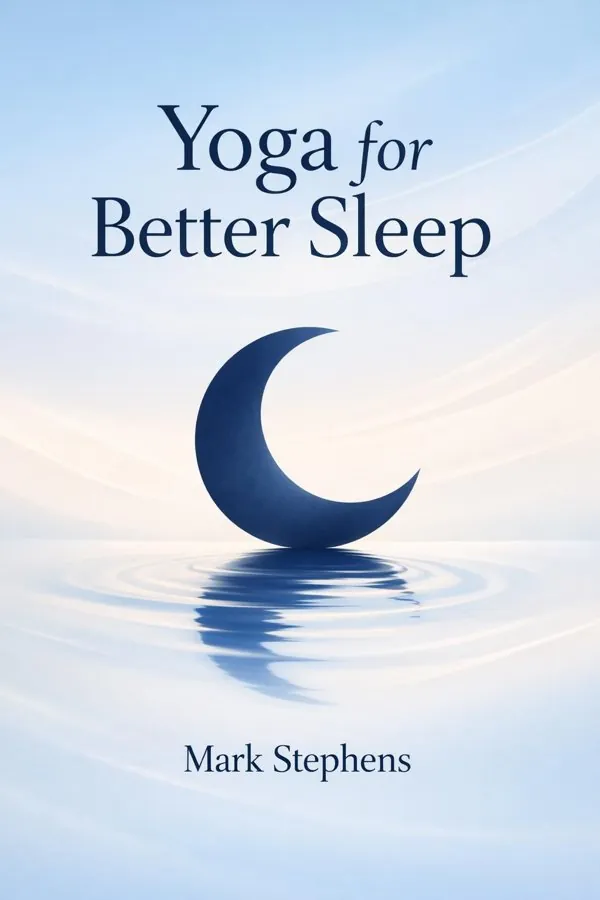
Yoga for Better Sleep: Simple Practices to Calm Your Mind and Restore Your Body: Summary & Key Insights
 10 min7 chaptersAudio available
What Is Yoga for Better Sleep: Simple Practices to Calm Your Mind and Restore Your Body About?
Yoga for Better Sleep: Simple Practices to Calm Your Mind and Restore Your Body by Mark Stephens is a wellness book spanning 7 pages. This book offers a comprehensive guide to using yoga as a tool for improving sleep quality and overall well-being. It includes practical sequences, breathing techniques, and mindfulness practices designed to relax the body and quiet the mind, helping readers establish healthy sleep habits.
This FizzRead summary covers all 7 key chapters of Yoga for Better Sleep: Simple Practices to Calm Your Mind and Restore Your Body in approximately 10 minutes, distilling the most important ideas, arguments, and takeaways from Mark Stephens's work. Also available as an audio summary and Key Quotes Podcast.
Yoga for Better Sleep: Simple Practices to Calm Your Mind and Restore Your Body
This book offers a comprehensive guide to using yoga as a tool for improving sleep quality and overall well-being. It includes practical sequences, breathing techniques, and mindfulness practices designed to relax the body and quiet the mind, helping readers establish healthy sleep habits.
Who Should Read Yoga for Better Sleep: Simple Practices to Calm Your Mind and Restore Your Body?
This book is perfect for anyone interested in wellness and looking to gain actionable insights in a short read. Whether you're a student, professional, or lifelong learner, the key ideas from Yoga for Better Sleep: Simple Practices to Calm Your Mind and Restore Your Body by Mark Stephens will help you think differently.
- ✓Readers who enjoy wellness and want practical takeaways
- ✓Professionals looking to apply new ideas to their work and life
- ✓Anyone who wants the core insights of Yoga for Better Sleep: Simple Practices to Calm Your Mind and Restore Your Body in just 10 minutes
Want the full summary?
Get instant access to this book summary and 100K+ more with Fizz Moment.
Get Free SummaryAvailable on App Store • Free to download
Key Chapters
Yoga and sleep share a fundamental rhythm—both are states of balance between activity and surrender. The challenge in modern life is that our nervous systems rarely disengage from stimulation. We are perpetually alert, chasing tasks, holding tension. Yoga reintroduces the practice of parasympathetic activation—the state of rest and digest—through movement, breathing, and awareness. In my teaching, I’ve found that those who practice gentle yoga before bed often describe a shift from agitation to calm, not because the poses are physically demanding, but because they cultivate presence. When we move slowly, stay attuned to our breath, and release attachments to outcome, we begin the nightly transition into restfulness.
Sleep difficulties arise when mental chatter keeps looping through the body as tension. Posture itself reflects this disharmony: tight shoulders, shallow breaths, clenched jaws. Through yoga, we create openings—not just in the muscles but in our sense of being. A soft forward fold, a gentle reclined twist, or a few minutes in constructive rest pose can bring the body into a language of trust. In that trust, sleep follows naturally. Yoga’s approach is non-coercive; it reminds us that rest is innate, not achieved by force. In cultivating the yogic principles of ahimsa (nonviolence) and satya (truthfulness), we learn to meet our own fatigue with kindness. The practice shifts from controlling sleep to listening deeply to what keeps us from it.
Modern sleep research reveals intricate processes governed by circadian rhythms—the body’s natural clock that responds to light, temperature, and habit. Sleep unfolds in stages, from light slumber to deep restorative cycles and rapid eye movement phases. When these rhythms are disrupted by stress, erratic schedules, or artificial light exposure, the body loses its internal coherence. Yoga harmonizes these cycles by retraining our awareness of daily patterns. Practicing at consistent times, synchronizing breath and movement, and cultivating mindfulness help realign biological rhythms with natural cycles of sunrise and sunset.
I integrate this science into yoga practice not to complicate it, but to emphasize that physiology and consciousness are one continuum. When we stretch slowly before bed or use diaphragmatic breathing, we signal the pineal gland to ease melatonin secretion, inviting rest. When we meditate upon sensations rather than resisting them, we retrain the brain to differentiate between useful alertness and unnecessary anxiety. Sleep difficulties often stem from hyperarousal—an overactive sympathetic system. Yoga corrects this by strengthening vagal tone, improving heart rate variability, and moderating cortisol levels. The result is not just longer sleep, but emotionally grounded wakefulness.
Understanding the science behind sleep offers empowerment. You begin to see rest not as random luck, but as a response of the body to the conditions you create. Science affirms what ancient yogis observed intuitively: the quality of consciousness shapes the quality of rest.
+ 5 more chapters — available in the FizzRead app
All Chapters in Yoga for Better Sleep: Simple Practices to Calm Your Mind and Restore Your Body
About the Author
Mark Stephens is an internationally recognized yoga teacher and author known for his accessible and evidence-based approach to yoga practice and teaching. He has written several influential books on yoga, including 'Teaching Yoga' and 'Yoga Sequencing'.
Get This Summary in Your Preferred Format
Read or listen to the Yoga for Better Sleep: Simple Practices to Calm Your Mind and Restore Your Body summary by Mark Stephens anytime, anywhere. FizzRead offers multiple formats so you can learn on your terms — all free.
Available formats: App · Audio · PDF · EPUB — All included free with FizzRead
Download Yoga for Better Sleep: Simple Practices to Calm Your Mind and Restore Your Body PDF and EPUB Summary
Key Quotes from Yoga for Better Sleep: Simple Practices to Calm Your Mind and Restore Your Body
“Yoga and sleep share a fundamental rhythm—both are states of balance between activity and surrender.”
“Modern sleep research reveals intricate processes governed by circadian rhythms—the body’s natural clock that responds to light, temperature, and habit.”
Frequently Asked Questions about Yoga for Better Sleep: Simple Practices to Calm Your Mind and Restore Your Body
Yoga for Better Sleep: Simple Practices to Calm Your Mind and Restore Your Body by Mark Stephens is a wellness book that explores key ideas across 7 chapters. This book offers a comprehensive guide to using yoga as a tool for improving sleep quality and overall well-being. It includes practical sequences, breathing techniques, and mindfulness practices designed to relax the body and quiet the mind, helping readers establish healthy sleep habits.
You Might Also Like
How We Heal: Uncover Your Power and Set Yourself Free
Alexandra Elle
10 min
A Year of Self-Care: Daily Practices and Inspiration for Caring for Yourself
Zoe Shaw
10 min
Biohacker’s Handbook: Upgrade Your Life
Olli Sovijärvi, Teemu Arina, Jaakko Halmetoja
10 min
Bliss More: How to Succeed in Meditation Without Really Trying
Light Watkins
10 min
Body Kindness: Transform Your Health from the Inside Out—and Never Say Diet Again
Rebecca Scritchfield
10 min
Cook, Eat, Run: Cook Fast, Boost Performance with 75 Ultimate Recipes for Runners
Charlie Watson
10 minBrowse by Category
Ready to read Yoga for Better Sleep: Simple Practices to Calm Your Mind and Restore Your Body?
Get the full summary and 100K+ more books with Fizz Moment.