
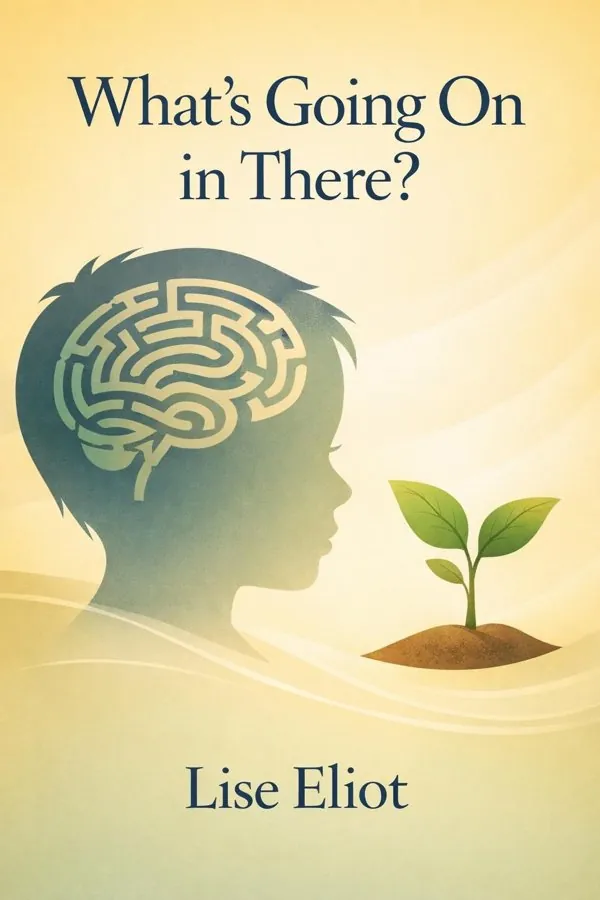
What's Going On in There?: How the Brain and Mind Develop in the First Five Years of Life: Summary & Key Insights
by Lise Eliot
 10 min6 chaptersAudio available
What Is What's Going On in There?: How the Brain and Mind Develop in the First Five Years of Life About?
What's Going On in There?: How the Brain and Mind Develop in the First Five Years of Life by Lise Eliot is a neuroscience book spanning 6 pages. This book explores how a child's brain develops from conception through the first five years of life. Drawing on neuroscience and developmental psychology, Lise Eliot explains how early experiences shape cognitive, emotional, and social growth, offering insights for parents and educators on nurturing healthy brain development.
This FizzRead summary covers all 6 key chapters of What's Going On in There?: How the Brain and Mind Develop in the First Five Years of Life in approximately 10 minutes, distilling the most important ideas, arguments, and takeaways from Lise Eliot's work. Also available as an audio summary and Key Quotes Podcast.
What's Going On in There?: How the Brain and Mind Develop in the First Five Years of Life
This book explores how a child's brain develops from conception through the first five years of life. Drawing on neuroscience and developmental psychology, Lise Eliot explains how early experiences shape cognitive, emotional, and social growth, offering insights for parents and educators on nurturing healthy brain development.
Who Should Read What's Going On in There?: How the Brain and Mind Develop in the First Five Years of Life?
This book is perfect for anyone interested in neuroscience and looking to gain actionable insights in a short read. Whether you're a student, professional, or lifelong learner, the key ideas from What's Going On in There?: How the Brain and Mind Develop in the First Five Years of Life by Lise Eliot will help you think differently.
- ✓Readers who enjoy neuroscience and want practical takeaways
- ✓Professionals looking to apply new ideas to their work and life
- ✓Anyone who wants the core insights of What's Going On in There?: How the Brain and Mind Develop in the First Five Years of Life in just 10 minutes
Want the full summary?
Get instant access to this book summary and 100K+ more with Fizz Moment.
Get Free SummaryAvailable on App Store • Free to download
Key Chapters
The story of the brain begins before birth. Within three weeks of conception, a tiny neural tube starts to fold and segment, giving rise to the structures that will eventually become the brain and spinal cord. By the end of the first trimester, millions of neurons are being generated every minute. This explosive growth is the groundwork on which all future mental life will depend.
As I explain, the prenatal environment powerfully influences this biological construction. The mother’s nutrition, stress level, and exposure to toxins or infections can affect fetal brain development. The placenta acts as a filtering system, but not an impenetrable barrier. Nutrients such as folic acid and essential fatty acids strengthen cell formation and connectivity, while harmful substances—such as alcohol or lead—can disrupt migration patterns, leaving permanent marks on the brain’s circuitry.
Equally crucial is the hormonal environment. Cortisol, the stress hormone, can cross the placenta and influence neural organization. Chronic maternal stress has been linked to changes in hippocampal development, the region responsible for memory and learning. Yet, this is not a deterministic fate; the prenatal brain remains remarkably plastic. With proper care—adequate rest, balanced diet, supportive relationships—the mother provides a rich matrix for her child’s brain to flourish even before that child takes its first breath.
I emphasize that the maternal-fetal dialogue is continuous and bi-directional. The fetus responds to the mother’s voice and rhythmic heartbeat long before birth, so the bonds of emotion and perception begin in utero. In understanding prenatal brain development, we grasp the origins of the mind itself: life’s earliest moments are neural poetry written in the language of biology and love.
Birth is perhaps the most radical transformation a human being undergoes. A baby enters a world of dazzling light, intricate sound, and touch—the first sensory flood that sets the brain into motion. As I write, every sensory experience forms a stimulus for synaptic growth. Neural circuits that were dormant in the womb awaken, searching for patterns that define the outside world.
Sight begins sluggishly but swiftly matures. The newborn sees blurry outlines, preferring faces and shapes that contrast sharply against the background. Within weeks, the brain’s visual cortex reorganizes itself through a process known as synaptic strengthening, guided by repeated exposure to familiar faces and surroundings. Sound perception, however, is already surprisingly advanced at birth. Newborns recognize the rhythm and tone of their mother’s voice, a melody they have been hearing through the womb’s watery filter. These early auditory preferences become essential for language acquisition later on.
Touch and smell bind the baby to its caregiver emotionally and physiologically. Through skin-to-skin contact, warmth, and the scent of a parent, oxytocin levels rise, fostering trust and soothing the stress that accompanies this monumental transition. Every soft caress helps to organize sensory integration, setting the tone for attachment.
I remind readers that this sensory awakening is not passive. The infant’s brain is already engaged in active exploration—looking, listening, tasting—to build mental maps of reality. What parents perceive as simple reactions are, in truth, the first experiments in cognition. Each sensory input sparks neural synchrony, forging connections that make perception and learning possible for the years to come.
+ 4 more chapters — available in the FizzRead app
All Chapters in What's Going On in There?: How the Brain and Mind Develop in the First Five Years of Life
About the Author
Lise Eliot is an American neuroscientist and professor at the Chicago Medical School of Rosalind Franklin University. Her research focuses on brain and gender development, and she is known for her accessible writing on neuroscience for general audiences.
Get This Summary in Your Preferred Format
Read or listen to the What's Going On in There?: How the Brain and Mind Develop in the First Five Years of Life summary by Lise Eliot anytime, anywhere. FizzRead offers multiple formats so you can learn on your terms — all free.
Available formats: App · Audio · PDF · EPUB — All included free with FizzRead
Download What's Going On in There?: How the Brain and Mind Develop in the First Five Years of Life PDF and EPUB Summary
Key Quotes from What's Going On in There?: How the Brain and Mind Develop in the First Five Years of Life
“The story of the brain begins before birth.”
“Birth is perhaps the most radical transformation a human being undergoes.”
Frequently Asked Questions about What's Going On in There?: How the Brain and Mind Develop in the First Five Years of Life
What's Going On in There?: How the Brain and Mind Develop in the First Five Years of Life by Lise Eliot is a neuroscience book that explores key ideas across 6 chapters. This book explores how a child's brain develops from conception through the first five years of life. Drawing on neuroscience and developmental psychology, Lise Eliot explains how early experiences shape cognitive, emotional, and social growth, offering insights for parents and educators on nurturing healthy brain development.
You Might Also Like
Anxious
Joseph LeDoux
10 min
Hallucinations
Oliver Sacks
10 min
The Biological Mind: How Brain, Body, and Environment Collaborate to Make Us Who We Are
Alan Jasanoff
10 min
The Feeling of Life Itself: Why Consciousness Is Widespread but Can't Be Computed
Christof Koch
10 min
The No-Nonsense Meditation Book
Steven Laureys
10 min
A General Theory of Love
Thomas Lewis, Fari Amini, Richard Lannon
10 minBrowse by Category
Ready to read What's Going On in There?: How the Brain and Mind Develop in the First Five Years of Life?
Get the full summary and 100K+ more books with Fizz Moment.