
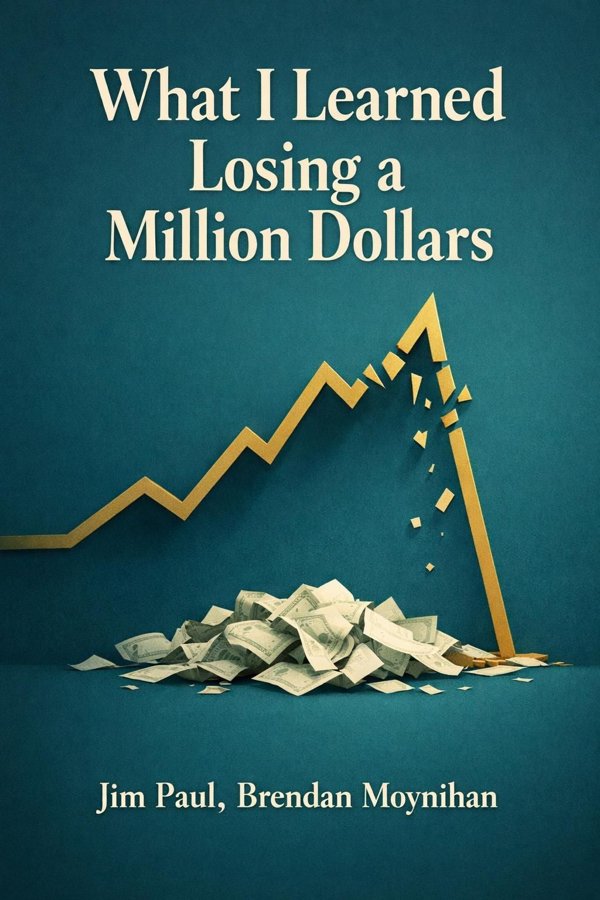
What I Learned Losing a Million Dollars: Summary & Key Insights
 10 min11 chaptersAudio available
What Is What I Learned Losing a Million Dollars About?
What I Learned Losing a Million Dollars by Jim Paul, Brendan Moynihan is a finance book spanning 11 pages. In this candid and insightful book, Jim Paul recounts how he lost a fortune in the stock market and explores the psychological and behavioral factors that led to his downfall. Together with Brendan Moynihan, he dissects the emotional traps and cognitive biases that cause investors to make irrational decisions, offering lessons on risk, discipline, and the importance of understanding one’s own mindset in financial markets.
This FizzRead summary covers all 11 key chapters of What I Learned Losing a Million Dollars in approximately 10 minutes, distilling the most important ideas, arguments, and takeaways from Jim Paul, Brendan Moynihan's work. Also available as an audio summary and Key Quotes Podcast.
What I Learned Losing a Million Dollars
In this candid and insightful book, Jim Paul recounts how he lost a fortune in the stock market and explores the psychological and behavioral factors that led to his downfall. Together with Brendan Moynihan, he dissects the emotional traps and cognitive biases that cause investors to make irrational decisions, offering lessons on risk, discipline, and the importance of understanding one’s own mindset in financial markets.
Who Should Read What I Learned Losing a Million Dollars?
This book is perfect for anyone interested in finance and looking to gain actionable insights in a short read. Whether you're a student, professional, or lifelong learner, the key ideas from What I Learned Losing a Million Dollars by Jim Paul, Brendan Moynihan will help you think differently.
- ✓Readers who enjoy finance and want practical takeaways
- ✓Professionals looking to apply new ideas to their work and life
- ✓Anyone who wants the core insights of What I Learned Losing a Million Dollars in just 10 minutes
Want the full summary?
Get instant access to this book summary and 100K+ more with Fizz Moment.
Get Free SummaryAvailable on App Store • Free to download
Key Chapters
My journey began like many traders’ tales — with an intoxicating rush of early wins. In the Chicago trading pits, adrenaline and confidence circulate faster than air. Every profit feeds your belief that you understand the market better than others. For a while, I truly believed that my talent set me apart. Commodity trading seemed simple: predict trends, act quickly, trust your gut. The more I profited, the more I trusted instinct over analysis.
But successes can be deceptive. Every gain reinforces behavioral patterns. I began to misattribute cause and effect — assuming that good outcomes validated my methods rather than questioning the randomness behind them. If a trade worked, it confirmed my skill; if it didn’t, it was merely bad luck. Very soon, my self-worth became intertwined with being right. I wasn’t just trading positions — I was trading identity.
In those heady early days, peers admired me, magazines wrote about my results, and recognition poured in. That external validation created a dangerous feedback loop. I started believing not only that I could predict markets but that I deserved to. What looked like competence was actually ego cloaked in success. The irony is that markets specialize in exploiting such confidence. They reward you just long enough to make sure you overcommit when the odds inevitably turn.
Then came the pivotal trade — lumber. I saw an opportunity others seemed to ignore and decided that would be my greatest triumph yet. Lumber prices were rising, and my analysis convinced me they would keep climbing. What began as a reasonable position soon ballooned into an obsession. I increased my exposure, convinced the market would vindicate me.
Overconfidence translated into recklessness. When small pullbacks came, I rationalized them as temporary noise. The losses didn’t register as warnings because I couldn’t imagine being wrong. In my mind, every dip was another chance to prove conviction. That’s the subtle danger of overconfidence — it masks itself as faith. The line between confidence and arrogance is invisible until you cross it.
What I didn’t grasp at the time was that markets don’t punish failure; they magnify denial. The moment you stop asking “what if I’m wrong,” you’ve stopped trading and started gambling. As my lumber positions grew, so did my emotional attachment. I was no longer evaluating probability — I was defending my identity. This was the turning point, the beginning of my downfall.
+ 9 more chapters — available in the FizzRead app
All Chapters in What I Learned Losing a Million Dollars
About the Authors
Get This Summary in Your Preferred Format
Read or listen to the What I Learned Losing a Million Dollars summary by Jim Paul, Brendan Moynihan anytime, anywhere. FizzRead offers multiple formats so you can learn on your terms — all free.
Available formats: App · Audio · PDF · EPUB — All included free with FizzRead
Download What I Learned Losing a Million Dollars PDF and EPUB Summary
Key Quotes from What I Learned Losing a Million Dollars
“My journey began like many traders’ tales — with an intoxicating rush of early wins.”
“I saw an opportunity others seemed to ignore and decided that would be my greatest triumph yet.”
Frequently Asked Questions about What I Learned Losing a Million Dollars
What I Learned Losing a Million Dollars by Jim Paul, Brendan Moynihan is a finance book that explores key ideas across 11 chapters. In this candid and insightful book, Jim Paul recounts how he lost a fortune in the stock market and explores the psychological and behavioral factors that led to his downfall. Together with Brendan Moynihan, he dissects the emotional traps and cognitive biases that cause investors to make irrational decisions, offering lessons on risk, discipline, and the importance of understanding one’s own mindset in financial markets.
You Might Also Like



Browse by Category
Ready to read What I Learned Losing a Million Dollars?
Get the full summary and 100K+ more books with Fizz Moment.