

Ulysses: Summary & Key Insights
by James Joyce
 10 min9 chaptersAudio available
Key Takeaways from Ulysses
A person can be surrounded by voices and still feel fundamentally alone.
Greatness does not always arrive in dramatic form; often it looks like kindness, routine, and attention.
The deepest truth in a person may appear only when social performance falls away.
Ancient myths endure because they can be reborn in ordinary circumstances.
What if the truest story of a day is not what happens, but how it is experienced moment by moment?
What Is Ulysses About?
Ulysses by James Joyce is a classics book spanning 3 pages. James Joyce’s Ulysses is a novel about one ordinary day that somehow contains an entire universe. Set in Dublin on June 16, 1904, it follows three central consciousnesses—Stephen Dedalus, Leopold Bloom, and Molly Bloom—as they move through the city, through memory, through desire, and through the restless flow of thought itself. What happens on the surface seems almost modest: people wake, eat, walk, argue, attend a funeral, visit a newspaper office, drift through bars, and return home. Yet Joyce transforms these daily acts into a modern epic, showing that the deepest dramas of human life unfold not only in wars and kingdoms, but in kitchens, streets, and private minds. First published in 1922, Ulysses changed what a novel could be through radical experimentation with language, structure, and point of view. Joyce, one of the defining writers of literary modernism, draws on Homer’s Odyssey while refusing simple imitation. The result is a book that rewards patience with astonishing insight into identity, loneliness, sexuality, grief, marriage, and the dignity of the everyday.
This FizzRead summary covers all 9 key chapters of Ulysses in approximately 10 minutes, distilling the most important ideas, arguments, and takeaways from James Joyce's work. Also available as an audio summary and Key Quotes Podcast.
Ulysses
James Joyce’s Ulysses is a novel about one ordinary day that somehow contains an entire universe. Set in Dublin on June 16, 1904, it follows three central consciousnesses—Stephen Dedalus, Leopold Bloom, and Molly Bloom—as they move through the city, through memory, through desire, and through the restless flow of thought itself. What happens on the surface seems almost modest: people wake, eat, walk, argue, attend a funeral, visit a newspaper office, drift through bars, and return home. Yet Joyce transforms these daily acts into a modern epic, showing that the deepest dramas of human life unfold not only in wars and kingdoms, but in kitchens, streets, and private minds. First published in 1922, Ulysses changed what a novel could be through radical experimentation with language, structure, and point of view. Joyce, one of the defining writers of literary modernism, draws on Homer’s Odyssey while refusing simple imitation. The result is a book that rewards patience with astonishing insight into identity, loneliness, sexuality, grief, marriage, and the dignity of the everyday.
Who Should Read Ulysses?
This book is perfect for anyone interested in classics and looking to gain actionable insights in a short read. Whether you're a student, professional, or lifelong learner, the key ideas from Ulysses by James Joyce will help you think differently.
- ✓Readers who enjoy classics and want practical takeaways
- ✓Professionals looking to apply new ideas to their work and life
- ✓Anyone who wants the core insights of Ulysses in just 10 minutes
Want the full summary?
Get instant access to this book summary and 100K+ more with Fizz Moment.
Get Free SummaryAvailable on App Store • Free to download
Key Chapters
A person can be surrounded by voices and still feel fundamentally alone. That insight shapes Stephen Dedalus’s early journey in Ulysses. At dawn, he begins the day in the Martello tower at Sandycove with Buck Mulligan and Haines, yet his inner life remains detached, wounded, and unresolved. He is haunted by his mother’s death, burdened by guilt, suspicious of authority, and obsessed with questions of art, intellect, and spiritual independence. As he moves from the tower to the classroom and then to the strand, Joyce presents not a heroic conqueror but a young man trapped between brilliance and paralysis.
Stephen’s struggle matters because it shows how intellect can become both a gift and a prison. He sees symbolism everywhere, interprets the world through philosophy and literature, and yet cannot convert insight into belonging. His thoughts are dazzling, but they often pull him away from ordinary human warmth. In modern terms, Stephen is someone who overthinks his life while failing to live it. Many readers recognize this pattern: replaying old wounds, rehearsing arguments internally, and mistaking self-consciousness for self-knowledge.
Joyce uses Stephen to dramatize the modern search for identity. He is trying to become himself, but first he must confront memory, ego, class, religion, and family expectation. The seashore scenes especially emphasize uncertainty: the tide, shifting sand, and reflected light mirror a mind in flux.
A practical way to read Stephen is to ask where reflection becomes avoidance in your own life. Deep thought is valuable, but not if it prevents action, connection, or mourning. Notice when analysis shields you from experience. The actionable takeaway: identify one unresolved inner burden and move it from private rumination into expression—through conversation, writing, or a concrete decision.
The deepest truth in a person may appear only when social performance falls away. Molly Bloom’s famous closing soliloquy does exactly that. In bed at night, after the long movements of Stephen’s and Bloom’s day, Molly’s mind opens in a sustained stream of memory, desire, irritation, sensuality, complaint, affection, and affirmation. Her voice is unfiltered, rhythmic, intimate, and expansive. It gathers the body and the mind into one continuous current, challenging the more formal structures and intellectual postures that dominate much of the novel.
Molly is often reduced to a symbol—wife, adulteress, earth figure, Penelope counterpart—but Joyce gives her something richer: subjectivity on her own terms. She remembers lovers, judges men, reflects on marriage, thinks about money, aging, pleasure, and the physical realities of being alive. Her monologue reminds readers that consciousness is not neat, linear, or morally tidy. It is repetitive, sensory, contradictory, and alive.
Her final movement toward affirmation is especially important. After a day filled with alienation, misunderstanding, and wandering, Molly’s closing “yes” offers not simplistic happiness but radical acceptance: of desire, of memory, of life’s entanglements, of embodied existence. In practical terms, this makes her one of the novel’s great correctives. Where others overanalyze, she inhabits.
Readers can apply this by listening for the parts of themselves they usually censor. What do you think when you are not arranging your thoughts for approval? What truths emerge when you stop trying to sound coherent or virtuous? Molly suggests that honesty is often messy before it becomes meaningful. The actionable takeaway: set aside ten minutes to write continuously without editing or judging yourself, and notice what your uncensored inner voice reveals about desire, resentment, and gratitude.
Ancient myths endure because they can be reborn in ordinary circumstances. One of Ulysses’s most famous achievements is its relationship to Homer’s Odyssey. Joyce does not simply retell the ancient epic with modern names. Instead, he uses Homeric parallels as a hidden scaffold, transforming wandering, temptation, return, and recognition into the patterns of one June day in Dublin. Leopold Bloom becomes a modern Odysseus, Stephen a version of Telemachus, and Molly an ironic Penelope, but each remains fully human rather than allegorical.
This structure matters because it changes how we see both epic and everyday life. The funeral carriage becomes a descent into mortality. A newspaper office turns into a scene of rhetorical combat. A brothel episode becomes a hallucinatory underworld. Homecoming becomes not a glorious restoration but a quiet re-entry into an imperfect marriage. Joyce suggests that myth is not distant from modernity; it is one way of understanding its recurring emotional patterns.
For readers, the Homeric frame can be helpful without being mandatory. You do not need to master every parallel to appreciate the novel. What matters is recognizing the underlying principle: the ordinary gains depth when seen through larger patterns, and ancient stories remain alive because they describe structures of human experience—loss, wandering, temptation, reconciliation, and return.
This idea has practical value beyond literature. People make sense of their lives through narrative frameworks: recovery journeys, career arcs, family roles, personal reinventions. These frameworks can give meaning, but they can also oversimplify. Joyce shows how to use grand narratives without sacrificing complexity. The actionable takeaway: reflect on one challenge in your life and ask what larger story you are placing it in—quest, exile, rebirth, failure—and whether that frame is helping you see more clearly or merely romanticizing confusion.
What if the truest story of a day is not what happens, but how it is experienced moment by moment? Ulysses answers that question through one of literature’s most influential uses of stream of consciousness. Rather than presenting events in a neat, external sequence, Joyce plunges readers into mental movement itself: fragments of memory, sensory impressions, associations, fantasies, anxieties, jokes, and half-formed ideas. Consciousness in the novel does not march; it swerves.
This technique changed fiction because it treats the mind as a dynamic landscape rather than a transparent window. Stephen’s thought is dense, allusive, and intellectual. Bloom’s is observant, practical, wandering, and humane. Molly’s is sensual, circular, and immediate. By differentiating these voices so sharply, Joyce demonstrates that reality is always filtered through temperament, history, desire, and language. There is no neutral experience, only lived experience.
In everyday life, people often assume communication fails because others lack facts. Ulysses suggests a deeper reason: each person occupies a distinct interior world. Two people can inhabit the same room and experience entirely different emotional realities. This insight is useful in relationships, leadership, teaching, and self-understanding. To understand someone, you need more than their actions; you need curiosity about the patterns behind them.
Joyce also exposes how distracting, repetitive, and involuntary thought can be. Minds loop. They wander toward embarrassment, appetite, fantasy, and grief. That recognition can be oddly comforting. Mental messiness is not a defect but part of being human.
The actionable takeaway: for one conversation today, listen beyond surface statements and ask yourself what unspoken associations, fears, or needs might be shaping the other person’s response. Practicing this kind of imaginative attention can make your interactions more patient and more humane.
Human beings do not think apart from their bodies, and Ulysses refuses to let us pretend otherwise. One reason the novel was controversial is that Joyce insists on including bodily processes, sexual desire, appetite, digestion, fatigue, smell, touch, and shame within the realm of serious art. He does not isolate noble thought from physical existence. Instead, he shows that consciousness is embodied from beginning to end.
Bloom is central to this insight. He eats kidney for breakfast, thinks about food, notices bodies, experiences erotic curiosity, and navigates the city as a creature of sensation as much as intellect. Molly’s monologue intensifies this further, bringing menstruation, sex, memory, and pleasure into open language. Even Stephen’s more abstract mind remains tethered to hunger, exhaustion, and guilt. In Joyce’s world, the sacred does not float above the body; it appears within the body’s rhythms.
This has moral significance. Cultures often rank experience, treating intellectual, public, or spiritual activities as more worthy than private, domestic, or physical realities. Joyce dismantles that hierarchy. To eat, desire, age, bleed, sweat, and sleep is not beneath literature or dignity. It is what life consists of. That is part of why Ulysses feels so radical even now.
Applied practically, this idea invites a healthier respect for embodiment. Many people live as though the body is an inconvenience carrying the “real” self around. That split can produce shame, denial, and disconnection. Joyce encourages a fuller honesty: mood, thought, vulnerability, and desire are shaped by bodily life.
The actionable takeaway: pay attention for one day to how physical states—hunger, rest, tension, attraction, discomfort—affect your thoughts and decisions. Naming that connection can improve self-awareness and reduce the false belief that your mind operates independently of your body.
Feeling like an outsider can sharpen perception even as it deepens pain. Ulysses returns repeatedly to this condition through both Stephen and Bloom, though Bloom embodies it most powerfully. As the son of a Jewish father in Catholic Dublin, Bloom is never fully secure inside the dominant culture. He is teased, patronized, and occasionally targeted by prejudice. Yet his marginality also gives him a distinctive ethical perspective. He sees the cruelty of belonging when belonging becomes exclusion.
Bloom’s outsider status is not only ethnic or religious. He is sexually unconventional, emotionally tender, commercially minded rather than grandly intellectual, and often at odds with masculine codes of aggression and bravado. Instead of responding with domination, he tends toward sympathy, mediation, and imaginative identification. He wonders about others, softens conflict when possible, and registers suffering that more confident men overlook.
This makes Ulysses a profound study of pluralism and coexistence. A city is not held together only by institutions or ideologies, but by ordinary acts of tolerance, restraint, and curiosity across difference. Bloom’s humane responsiveness becomes one of the novel’s quiet moral centers.
In contemporary life, outsiderhood appears in many forms: race, class, religion, sexuality, migration, disability, temperament, or simply not fitting the dominant social script. Joyce does not romanticize exclusion; it hurts. But he does show that people on the margins often develop forms of insight unavailable to the comfortably included.
The practical lesson is to treat unfamiliarity as a reason for curiosity rather than suspicion. If you are an insider, notice where ease blinds you. If you are an outsider, recognize that your perspective may contain hard-won wisdom. The actionable takeaway: in your next disagreement or social setting, deliberately ask what the least comfortable person in the room might be seeing that others are missing.
Some books tell a story through language; Ulysses also turns language itself into the story. Joyce constantly changes style, rhythm, vocabulary, and form across the novel’s episodes. He can be lyrical, comic, parodic, journalistic, theatrical, catechetical, hallucinatory, and intimate—sometimes within the same section. These shifts are not decorative tricks. They reveal how language shapes perception and how every social world carries its own verbal habits.
This stylistic experimentation is part of why Ulysses has a reputation for difficulty. But difficulty is not the same as emptiness. Joyce asks readers to experience language as living material: noisy, unstable, seductive, and historically layered. A newspaper office sounds different from a bedroom; a pub differs from a philosophical meditation; fantasy has another syntax altogether. Form becomes meaning.
For modern readers, this offers two important insights. First, there is no single “correct” way reality must be described. Different vocabularies illuminate different truths. Second, paying attention to tone matters. The style of a message—ironic, bureaucratic, intimate, aggressive, evasive—often conveys as much as its content. In workplaces, politics, media, and personal relationships, people are constantly shaped by the forms language takes.
A practical way to approach Joyce is to release the pressure to understand every reference on first reading. Instead, notice sound, mood, speed, and texture. Ask how the prose makes you feel before demanding that it explain itself completely. This approach improves not only literary reading but everyday communication, because it trains sensitivity to register and framing.
The actionable takeaway: when you read or hear an important message today, examine not just what is being said but how it is being said. Tone, structure, and style often reveal hidden motives, emotional temperature, and social context.
Not all returns restore what was lost, yet they can still matter deeply. The later movement of Ulysses brings Bloom and Stephen briefly together and then returns Bloom to Molly, creating a modern version of homecoming that is tender, awkward, and unresolved. There is no grand reunion scene in which everything is healed. Stephen does not become Bloom’s son in any simple sense, and Bloom’s marriage is not purified by confession or dramatic reconciliation. Instead, Joyce offers something more realistic: partial connection.
Bloom’s encounter with Stephen contains paternal feeling, hospitality, and possibility. Bloom, who has lost his son Rudy, responds to Stephen with concern and imaginative openness. Stephen, restless and resistant, cannot fully accept the offer of shelter or symbolic kinship. Their near-bond is moving precisely because it remains incomplete. Likewise, Bloom returns to a marriage shadowed by infidelity, habit, memory, and endurance. He does not solve it; he re-enters it.
This is one of the novel’s wisest emotional achievements. Many stories promise clean closure, but real relationships rarely work that way. Families carry absences. Marriages contain love and disappointment simultaneously. Friendships form through missed timings as much as perfect understanding. Ulysses suggests that maturity lies less in achieving purity than in sustaining connection under imperfect conditions.
In practical terms, this perspective can reduce the demand for ideal resolution. Sometimes the meaningful act is not fixing everything, but showing up with patience, honesty, or care despite unresolved tension. Bloom models a humble form of fidelity to life as it actually is.
The actionable takeaway: identify one relationship in your life where you are waiting for perfect clarity before taking a constructive step. Replace the fantasy of total resolution with one modest act of repair, welcome, or steady presence.
All Chapters in Ulysses
About the Author
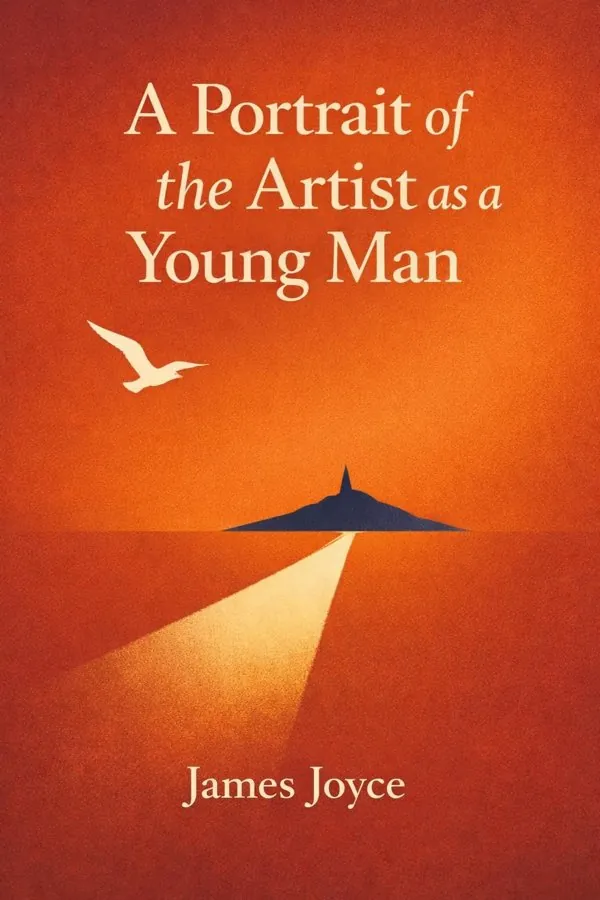
James Joyce (1882–1941) was an Irish novelist, poet, and one of the defining writers of literary modernism. Born in Dublin, he drew deeply on the city’s streets, speech, politics, and religious culture, even though he spent much of his adult life in self-imposed exile across Europe, including periods in Trieste, Zurich, and Paris. Joyce is celebrated for revolutionizing fiction through stream of consciousness, linguistic experimentation, and intense psychological realism. His major works include Dubliners, A Portrait of the Artist as a Young Man, Ulysses, and Finnegans Wake. Often challenging but endlessly influential, his writing expanded the possibilities of the novel and reshaped how literature could represent thought, memory, and everyday life. Joyce remains a central figure in world literature.
Get This Summary in Your Preferred Format
Read or listen to the Ulysses summary by James Joyce anytime, anywhere. FizzRead offers multiple formats so you can learn on your terms — all free.
Available formats: App · Audio · PDF · EPUB — All included free with FizzRead
Download Ulysses PDF and EPUB Summary
Key Quotes from Ulysses
“A person can be surrounded by voices and still feel fundamentally alone.”
“Greatness does not always arrive in dramatic form; often it looks like kindness, routine, and attention.”
“The deepest truth in a person may appear only when social performance falls away.”
“Ancient myths endure because they can be reborn in ordinary circumstances.”
“What if the truest story of a day is not what happens, but how it is experienced moment by moment?”
Frequently Asked Questions about Ulysses
Ulysses by James Joyce is a classics book that explores key ideas across 9 chapters. James Joyce’s Ulysses is a novel about one ordinary day that somehow contains an entire universe. Set in Dublin on June 16, 1904, it follows three central consciousnesses—Stephen Dedalus, Leopold Bloom, and Molly Bloom—as they move through the city, through memory, through desire, and through the restless flow of thought itself. What happens on the surface seems almost modest: people wake, eat, walk, argue, attend a funeral, visit a newspaper office, drift through bars, and return home. Yet Joyce transforms these daily acts into a modern epic, showing that the deepest dramas of human life unfold not only in wars and kingdoms, but in kitchens, streets, and private minds. First published in 1922, Ulysses changed what a novel could be through radical experimentation with language, structure, and point of view. Joyce, one of the defining writers of literary modernism, draws on Homer’s Odyssey while refusing simple imitation. The result is a book that rewards patience with astonishing insight into identity, loneliness, sexuality, grief, marriage, and the dignity of the everyday.
More by James Joyce
You Might Also Like


Browse by Category
Ready to read Ulysses?
Get the full summary and 100K+ more books with Fizz Moment.