
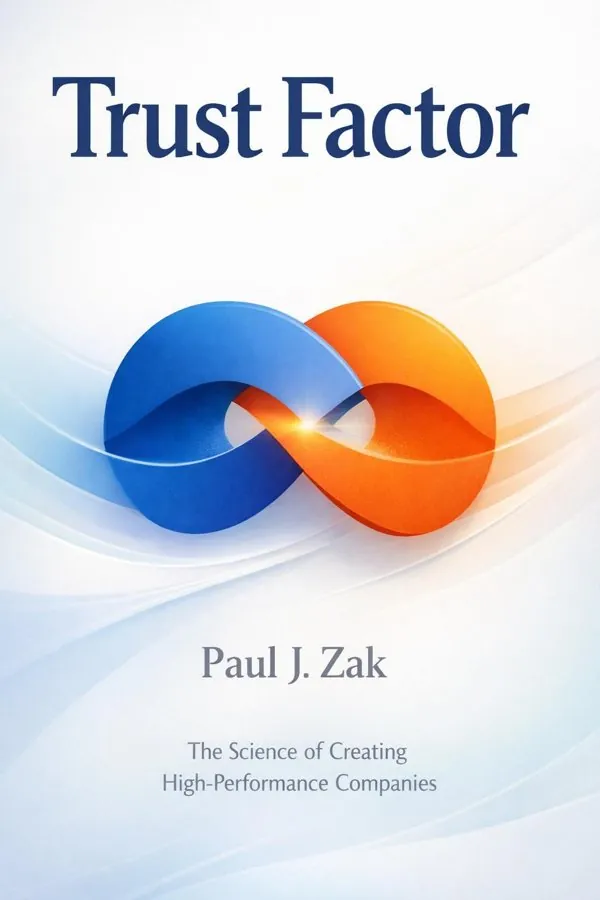
Trust Factor: The Science of Creating High-Performance Companies: Summary & Key Insights
by Paul J. Zak
 10 min5 chaptersAudio available
What Is Trust Factor: The Science of Creating High-Performance Companies About?
Trust Factor: The Science of Creating High-Performance Companies by Paul J. Zak is a leadership book spanning 5 pages. In Trust Factor, neuroscientist Paul J. Zak explores how building a culture of trust within organizations leads to higher performance, greater employee engagement, and improved well-being. Drawing on years of research in neuroeconomics, Zak demonstrates how trust activates the brain’s oxytocin system, fostering cooperation and productivity. The book provides practical strategies for leaders to measure and strengthen trust, transforming workplaces into thriving communities.
This FizzRead summary covers all 5 key chapters of Trust Factor: The Science of Creating High-Performance Companies in approximately 10 minutes, distilling the most important ideas, arguments, and takeaways from Paul J. Zak's work. Also available as an audio summary and Key Quotes Podcast.
Trust Factor: The Science of Creating High-Performance Companies
In Trust Factor, neuroscientist Paul J. Zak explores how building a culture of trust within organizations leads to higher performance, greater employee engagement, and improved well-being. Drawing on years of research in neuroeconomics, Zak demonstrates how trust activates the brain’s oxytocin system, fostering cooperation and productivity. The book provides practical strategies for leaders to measure and strengthen trust, transforming workplaces into thriving communities.
Who Should Read Trust Factor: The Science of Creating High-Performance Companies?
This book is perfect for anyone interested in leadership and looking to gain actionable insights in a short read. Whether you're a student, professional, or lifelong learner, the key ideas from Trust Factor: The Science of Creating High-Performance Companies by Paul J. Zak will help you think differently.
- ✓Readers who enjoy leadership and want practical takeaways
- ✓Professionals looking to apply new ideas to their work and life
- ✓Anyone who wants the core insights of Trust Factor: The Science of Creating High-Performance Companies in just 10 minutes
Want the full summary?
Get instant access to this book summary and 100K+ more with Fizz Moment.
Get Free SummaryAvailable on App Store • Free to download
Key Chapters
The story begins in the lab. Years ago, my colleagues and I discovered that human trust is intimately connected to a neurochemical called oxytocin. This molecule, first known for its role in childbirth and bonding between mother and infant, also mediates trust between adults. When someone shows us trust—by giving us responsibility, sharing sensitive information, or simply treating us with respect—our brain releases oxytocin. This release not only makes us feel good, it also increases our empathy and our motivation to reciprocate the trust.
My team tested this by administering small doses of synthetic oxytocin and observing how people behaved. Time and again, those who received oxytocin were more generous, cooperative, and willing to take social risks. But even more interesting was that trust itself triggered natural oxytocin release—meaning that when we act generously or transparently, we reshape another person’s brain chemistry in the direction of deeper connection.
In the workplace, this dynamic explains why trust is so foundational. When employees trust their leaders, their stress levels drop, their cognitive flexibility increases, and creativity flourishes. Conversely, in low-trust cultures, cortisol and adrenalin dominate, leading to chronic stress and burnout. Thus, the biological systems of trust and stress are twin forces operating in constant tension. Which force dominates depends on the social cues a leader sends every day.
In this light, leadership becomes less about authority and more about shaping neurochemical patterns within an organization. The behaviors you model either stimulate oxytocin and build engagement or trigger threat responses and disengagement. Understanding this allows leaders to move from command-and-control toward inspiration-and-empowerment—a shift that brings measurable, sustained performance gains.
Years of fieldwork and cross-industry studies led me to identify eight core behaviors that most reliably elevate trust and performance. Together, they form what I call the O-Factor, short for organizational trust factor.
The first behavior is recognizing excellence. Human brains thrive on social reinforcement. When managers acknowledge a job well done—quickly, personally, and publicly—oxytocin levels rise, and motivation spirals upward. The second is inducing challenge stress, setting achievable but demanding goals. When people are pushed slightly beyond their comfort zone, they experience a heightened sense of purpose and capability.
Granting autonomy is next. Micromanagement suppresses oxytocin, whereas freedom releases it. Autonomy signals respect and confidence, which nurture intrinsic motivation. Then comes openness—sharing information broadly. People cannot act responsibly without being well-informed. Transparency builds alignment and dissolves rumor-driven anxiety.
Another crucial behavior is investing in relationships. Leaders who take time to know their employees as people—not simply as roles—create deep trust reservoirs. This relational investment enhances cooperation during high-pressure periods. Aligning work with shared purpose is equally vital. When employees understand how their efforts contribute to a meaningful mission, oxytocin levels remain elevated even under stress.
The last two behaviors involve enabling growth and showing vulnerability. When leaders admit their mistakes or ask for help, they humanize themselves. Paradoxically, this vulnerability strengthens credibility, inviting reciprocal trust. And when organizations provide continuous opportunities for professional development, they signal belief in each individual’s potential, reinforcing the virtuous cycle of engagement and trust.
Each of these eight behaviors is small in isolation but transformative in combination. Together, they shape a biological ecosystem where people feel safe, valued, and motivated to give their best.
+ 3 more chapters — available in the FizzRead app
All Chapters in Trust Factor: The Science of Creating High-Performance Companies
About the Author
Paul J. Zak is an American neuroscientist and professor known for his pioneering work in neuroeconomics and the biology of trust. He is the founding director of the Center for Neuroeconomics Studies at Claremont Graduate University and has published widely on the role of oxytocin in social behavior and organizational performance.
Get This Summary in Your Preferred Format
Read or listen to the Trust Factor: The Science of Creating High-Performance Companies summary by Paul J. Zak anytime, anywhere. FizzRead offers multiple formats so you can learn on your terms — all free.
Available formats: App · Audio · PDF · EPUB — All included free with FizzRead
Download Trust Factor: The Science of Creating High-Performance Companies PDF and EPUB Summary
Key Quotes from Trust Factor: The Science of Creating High-Performance Companies
“Years ago, my colleagues and I discovered that human trust is intimately connected to a neurochemical called oxytocin.”
“Years of fieldwork and cross-industry studies led me to identify eight core behaviors that most reliably elevate trust and performance.”
Frequently Asked Questions about Trust Factor: The Science of Creating High-Performance Companies
Trust Factor: The Science of Creating High-Performance Companies by Paul J. Zak is a leadership book that explores key ideas across 5 chapters. In Trust Factor, neuroscientist Paul J. Zak explores how building a culture of trust within organizations leads to higher performance, greater employee engagement, and improved well-being. Drawing on years of research in neuroeconomics, Zak demonstrates how trust activates the brain’s oxytocin system, fostering cooperation and productivity. The book provides practical strategies for leaders to measure and strengthen trust, transforming workplaces into thriving communities.
You Might Also Like

Extreme Ownership
Jocko Willink
10 min
Dare to Lead
Brene Brown
10 min
Leaders Eat Last
Simon Sinek
10 min
The 21 Irrefutable Laws of Leadership
John Maxwell
10 min
Start With Why
Simon Sinek
10 min
How to Lead When You're Not in Charge
Clay Scroggins
10 minBrowse by Category
Ready to read Trust Factor: The Science of Creating High-Performance Companies?
Get the full summary and 100K+ more books with Fizz Moment.