
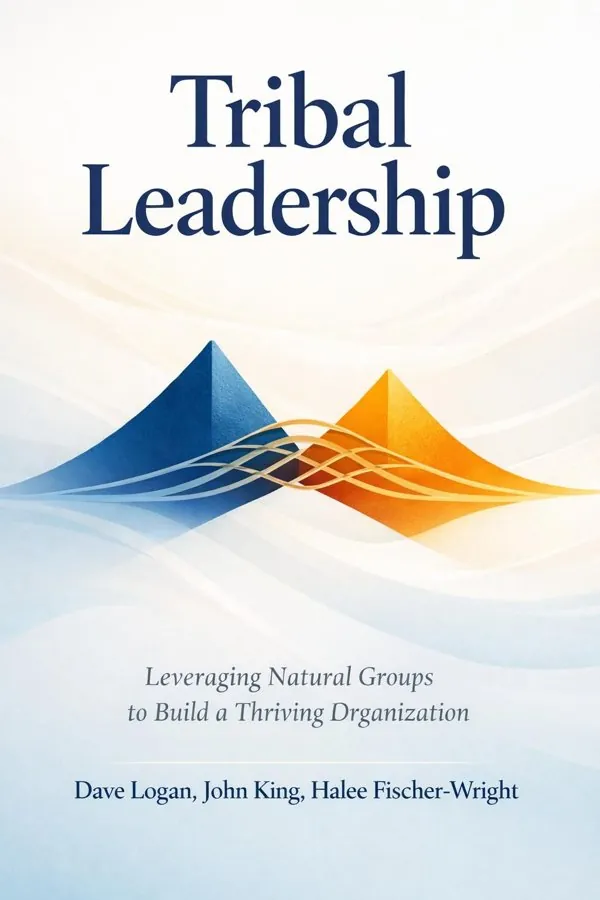
Tribal Leadership: Leveraging Natural Groups to Build a Thriving Organization: Summary & Key Insights
by Dave Logan, John King, Halee Fischer-Wright
 10 min9 chaptersAudio available
What Is Tribal Leadership: Leveraging Natural Groups to Build a Thriving Organization About?
Tribal Leadership: Leveraging Natural Groups to Build a Thriving Organization by Dave Logan, John King, Halee Fischer-Wright is a leadership book spanning 9 pages. Tribal Leadership explores how corporate cultures evolve through five stages of tribal development, from low-performing groups driven by personal gain to high-performing tribes united by shared values and purpose. Drawing on extensive research across thousands of organizations, the authors show how leaders can identify their tribe’s stage and guide it toward greater collaboration, innovation, and success.
This FizzRead summary covers all 9 key chapters of Tribal Leadership: Leveraging Natural Groups to Build a Thriving Organization in approximately 10 minutes, distilling the most important ideas, arguments, and takeaways from Dave Logan, John King, Halee Fischer-Wright's work. Also available as an audio summary and Key Quotes Podcast.
Tribal Leadership: Leveraging Natural Groups to Build a Thriving Organization
Tribal Leadership explores how corporate cultures evolve through five stages of tribal development, from low-performing groups driven by personal gain to high-performing tribes united by shared values and purpose. Drawing on extensive research across thousands of organizations, the authors show how leaders can identify their tribe’s stage and guide it toward greater collaboration, innovation, and success.
Who Should Read Tribal Leadership: Leveraging Natural Groups to Build a Thriving Organization?
This book is perfect for anyone interested in leadership and looking to gain actionable insights in a short read. Whether you're a student, professional, or lifelong learner, the key ideas from Tribal Leadership: Leveraging Natural Groups to Build a Thriving Organization by Dave Logan, John King, Halee Fischer-Wright will help you think differently.
- ✓Readers who enjoy leadership and want practical takeaways
- ✓Professionals looking to apply new ideas to their work and life
- ✓Anyone who wants the core insights of Tribal Leadership: Leveraging Natural Groups to Build a Thriving Organization in just 10 minutes
Want the full summary?
Get instant access to this book summary and 100K+ more with Fizz Moment.
Get Free SummaryAvailable on App Store • Free to download
Key Chapters
Every tribe functions through language. In our research, we discovered that the conversational patterns people use day to day reveal what cultural stage they occupy. A person’s way of speaking reveals how they perceive life, work, and their relationship to others. Culture, therefore, isn’t a mission statement—it’s the sum total of conversations.
We found that successful organizations differ not because they have better ideas or smarter people, but because they have different cultural languages. In low-performing tribes, people speak as victims of circumstance. In thriving tribes, people speak as co-creators of possibility.
Relationships form the backbone of each tribe. But the nature of those relationships evolves as the tribe matures. In early stages, relationships are transactional or competitive. In higher stages, they become mission-driven and values-based. The tribal leader’s primary role is not to impose strategy but to shift the nature of conversations and relationships within their tribe.
When leaders model new language—language that emphasizes *we* over *I*—powerful things happen. People begin to see themselves as part of a shared future rather than isolated achievers. They start aligning their goals with common values. And the organization’s collective intelligence begins to flourish.
Consider Southwest Airlines. Its internal dialogue consistently revolves around shared purpose and humor, even during hardship. Employees speak of being part of something greater than themselves. Their relationships reinforce belonging, not mere employment. This linguistic and relational fabric sustains one of the most resilient corporate cultures in history.
Stage One is a dark place. Individuals in this stage believe that life itself is horrible. The language is despairing: 'Life sucks.' This outlook produces alienation, resentment, and even aggression toward the system. You might see this in gangs, some prison populations, or deeply toxic workplaces where people no longer see a point in participating.
The tragedy of Stage One is that people in it have lost faith in humanity. They see themselves as victims of a cruel world. Relationships form around survival, not trust. Leadership barely exists because no one believes that life or work can get any better.
We encountered Stage One in corporate environments that were marked by fear, corruption, or complete disconnection from purpose. Individuals weren’t evil; they were disillusioned. Their energy had turned inward, protective, defensive.
Moving out of Stage One requires a personal breakthrough. A Stage One person doesn’t respond to programs or plans. They need someone to offer genuine human connection—a mentor, a guide, a reason to hope. Sometimes it’s a conversation that reminds them life can be meaningful again. Sometimes it’s removing them from the destructive environment entirely. The path out begins with trust in one person, which later expands into trust in a small group, and eventually, in a tribe that believes life doesn’t have to suck.
+ 7 more chapters — available in the FizzRead app
All Chapters in Tribal Leadership: Leveraging Natural Groups to Build a Thriving Organization
About the Authors
Dave Logan is a professor at the University of Southern California and a consultant specializing in organizational culture. John King is an executive coach and leadership trainer. Halee Fischer-Wright is a physician and business leader known for her work in organizational transformation.
Get This Summary in Your Preferred Format
Read or listen to the Tribal Leadership: Leveraging Natural Groups to Build a Thriving Organization summary by Dave Logan, John King, Halee Fischer-Wright anytime, anywhere. FizzRead offers multiple formats so you can learn on your terms — all free.
Available formats: App · Audio · PDF · EPUB — All included free with FizzRead
Download Tribal Leadership: Leveraging Natural Groups to Build a Thriving Organization PDF and EPUB Summary
Key Quotes from Tribal Leadership: Leveraging Natural Groups to Build a Thriving Organization
“In our research, we discovered that the conversational patterns people use day to day reveal what cultural stage they occupy.”
“Individuals in this stage believe that life itself is horrible.”
Frequently Asked Questions about Tribal Leadership: Leveraging Natural Groups to Build a Thriving Organization
Tribal Leadership: Leveraging Natural Groups to Build a Thriving Organization by Dave Logan, John King, Halee Fischer-Wright is a leadership book that explores key ideas across 9 chapters. Tribal Leadership explores how corporate cultures evolve through five stages of tribal development, from low-performing groups driven by personal gain to high-performing tribes united by shared values and purpose. Drawing on extensive research across thousands of organizations, the authors show how leaders can identify their tribe’s stage and guide it toward greater collaboration, innovation, and success.
You Might Also Like

Extreme Ownership
Jocko Willink
10 min
Dare to Lead
Brene Brown
10 min
Leaders Eat Last
Simon Sinek
10 min
The 21 Irrefutable Laws of Leadership
John Maxwell
10 min
Start With Why
Simon Sinek
10 min
How to Lead When You're Not in Charge
Clay Scroggins
10 minBrowse by Category
Ready to read Tribal Leadership: Leveraging Natural Groups to Build a Thriving Organization?
Get the full summary and 100K+ more books with Fizz Moment.