
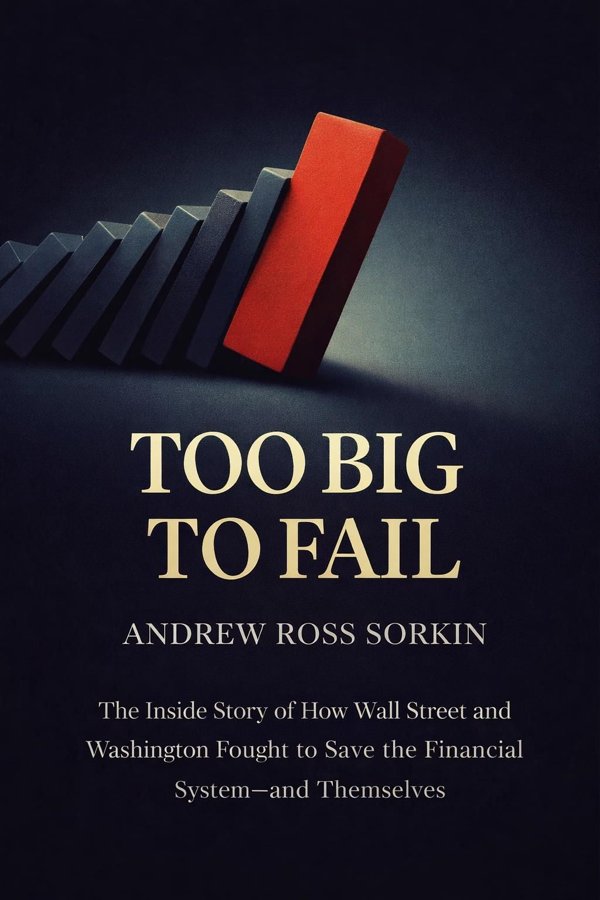
Too Big to Fail: The Inside Story of How Wall Street and Washington Fought to Save the Financial System—and Themselves: Summary & Key Insights
 10 min6 chaptersAudio available
What Is Too Big to Fail: The Inside Story of How Wall Street and Washington Fought to Save the Financial System—and Themselves About?
Too Big to Fail: The Inside Story of How Wall Street and Washington Fought to Save the Financial System—and Themselves by Andrew Ross Sorkin is a finance book spanning 6 pages. A detailed narrative of the 2008 financial crisis, chronicling the collapse of Lehman Brothers and the frantic efforts by Wall Street executives and U.S. government officials to prevent a total economic meltdown. The book offers an insider’s view of the decisions, personalities, and power struggles that shaped the rescue of the global financial system.
This FizzRead summary covers all 6 key chapters of Too Big to Fail: The Inside Story of How Wall Street and Washington Fought to Save the Financial System—and Themselves in approximately 10 minutes, distilling the most important ideas, arguments, and takeaways from Andrew Ross Sorkin's work. Also available as an audio summary and Key Quotes Podcast.
Too Big to Fail: The Inside Story of How Wall Street and Washington Fought to Save the Financial System—and Themselves
A detailed narrative of the 2008 financial crisis, chronicling the collapse of Lehman Brothers and the frantic efforts by Wall Street executives and U.S. government officials to prevent a total economic meltdown. The book offers an insider’s view of the decisions, personalities, and power struggles that shaped the rescue of the global financial system.
Who Should Read Too Big to Fail: The Inside Story of How Wall Street and Washington Fought to Save the Financial System—and Themselves?
This book is perfect for anyone interested in finance and looking to gain actionable insights in a short read. Whether you're a student, professional, or lifelong learner, the key ideas from Too Big to Fail: The Inside Story of How Wall Street and Washington Fought to Save the Financial System—and Themselves by Andrew Ross Sorkin will help you think differently.
- ✓Readers who enjoy finance and want practical takeaways
- ✓Professionals looking to apply new ideas to their work and life
- ✓Anyone who wants the core insights of Too Big to Fail: The Inside Story of How Wall Street and Washington Fought to Save the Financial System—and Themselves in just 10 minutes
Want the full summary?
Get instant access to this book summary and 100K+ more with Fizz Moment.
Get Free SummaryAvailable on App Store • Free to download
Key Chapters
To grasp the drama of 2008, we have to start with the long prelude—a financial ecosystem swollen with leverage, complexity, and misplaced confidence. In the years leading up to the crisis, Wall Street thrived on innovation that blurred traditional boundaries between lending, trading, and speculation. Mortgage-backed securities became the crown jewel of this system: bundles of home loans sliced, repackaged, and sold across the globe. The profits seemed endless, driven by the illusion that housing prices could never fall.
I spoke to dozens of executives who admitted, sometimes bitterly, that the mood in those years was euphoric. Institutions like Lehman Brothers and Merrill Lynch were chasing market share as if the race would never end. Ratings agencies stamped complex assets with triple-A labels, and investors—pension funds, foreign banks, government entities—bought them without understanding the underlying risk. The appetite for short-term gain overwhelmed the memory of past crises.
Internally, leverage ratios ballooned. Firms were borrowing forty dollars for every dollar of equity, amplifying every fluctuation in asset values. The accountants and risk officers, who should have been the system’s brakes, often lacked the authority or courage to intervene. Meanwhile, Washington looked on with complacency. Regulatory agencies celebrated innovation rather than scrutinizing it. Even senior policymakers like Ben Bernanke initially believed that modern financial instruments had dispersed risk more safely across the system.
But of course, dispersal turned out to be contagion. Risk wasn’t diluted—it was transmitted. When the first cracks appeared in subprime mortgages, no one realized how wide the fissure was. Bear Stearns’ collapse in early 2008 was the sudden thunderclap that exposed how interconnected the institutions had become. What followed was no longer a market correction but a chain reaction that threatened the entirety of the global financial structure.
Bear Stearns was the canary in the coal mine. In March 2008, its liquidity crisis erupted almost overnight. The firm had long been proud of its independence and nimble trading culture, but that culture also bred a kind of arrogance. When confidence evaporated, lenders withdrew funding, and Bear Stearns became a hunted animal in the marketplace. Behind closed doors, frantic phone calls connected Wall Street’s titans to regulators. Hank Paulson, the Treasury Secretary, coordinated with Ben Bernanke at the Federal Reserve, seeking an emergency rescue.
The drama culminated in JPMorgan Chase stepping in to acquire Bear Stearns for a fire-sale price backed by federal guarantees. I remember how stunned bankers were—the idea that a major investment bank could collapse in mere days seemed impossible. Yet Bear’s downfall sent an unmistakable signal: liquidity could vanish in hours, and no titan was immune. The rescue avoided immediate meltdown but also set a dangerous precedent: the government had proven it would intervene, making other firms less cautious.
For Paulson, the lesson was bitter. Saving Bear had bought time but blurred boundaries between private failure and public subsidy. He feared moral hazard but knew inaction could trigger systemic collapse. For Wall Street CEOs, the message was ambiguous—some felt reassured, others feared the next target could be them. The stage was set for the even deeper crisis to come.
+ 4 more chapters — available in the FizzRead app
All Chapters in Too Big to Fail: The Inside Story of How Wall Street and Washington Fought to Save the Financial System—and Themselves
About the Author
Andrew Ross Sorkin is an American journalist and author, best known as a financial columnist for The New York Times and co-anchor of CNBC’s Squawk Box. He is recognized for his in-depth reporting on Wall Street and corporate finance.
Get This Summary in Your Preferred Format
Read or listen to the Too Big to Fail: The Inside Story of How Wall Street and Washington Fought to Save the Financial System—and Themselves summary by Andrew Ross Sorkin anytime, anywhere. FizzRead offers multiple formats so you can learn on your terms — all free.
Available formats: App · Audio · PDF · EPUB — All included free with FizzRead
Download Too Big to Fail: The Inside Story of How Wall Street and Washington Fought to Save the Financial System—and Themselves PDF and EPUB Summary
Key Quotes from Too Big to Fail: The Inside Story of How Wall Street and Washington Fought to Save the Financial System—and Themselves
“To grasp the drama of 2008, we have to start with the long prelude—a financial ecosystem swollen with leverage, complexity, and misplaced confidence.”
“Bear Stearns was the canary in the coal mine.”
Frequently Asked Questions about Too Big to Fail: The Inside Story of How Wall Street and Washington Fought to Save the Financial System—and Themselves
Too Big to Fail: The Inside Story of How Wall Street and Washington Fought to Save the Financial System—and Themselves by Andrew Ross Sorkin is a finance book that explores key ideas across 6 chapters. A detailed narrative of the 2008 financial crisis, chronicling the collapse of Lehman Brothers and the frantic efforts by Wall Street executives and U.S. government officials to prevent a total economic meltdown. The book offers an insider’s view of the decisions, personalities, and power struggles that shaped the rescue of the global financial system.
You Might Also Like



Browse by Category
Ready to read Too Big to Fail: The Inside Story of How Wall Street and Washington Fought to Save the Financial System—and Themselves?
Get the full summary and 100K+ more books with Fizz Moment.