
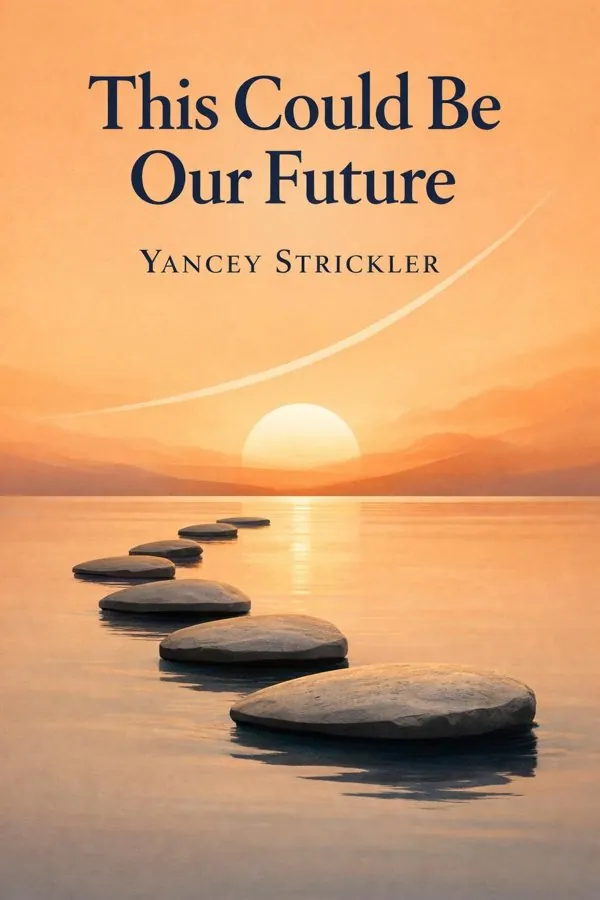
This Could Be Our Future: A Manifesto for a More Generous World: Summary & Key Insights
 10 min11 chaptersAudio available
What Is This Could Be Our Future: A Manifesto for a More Generous World About?
This Could Be Our Future: A Manifesto for a More Generous World by Yancey Strickler is a mindset book spanning 11 pages. In this book, Yancey Strickler, co-founder of Kickstarter, argues that our society has become overly focused on financial value and short-term gain. He proposes a new framework for decision-making that prioritizes long-term thinking, community well-being, and non-financial forms of value. Through personal stories, cultural analysis, and practical insights, Strickler encourages readers to imagine a future built on generosity and shared prosperity.
This FizzRead summary covers all 11 key chapters of This Could Be Our Future: A Manifesto for a More Generous World in approximately 10 minutes, distilling the most important ideas, arguments, and takeaways from Yancey Strickler's work. Also available as an audio summary and Key Quotes Podcast.
This Could Be Our Future: A Manifesto for a More Generous World
In this book, Yancey Strickler, co-founder of Kickstarter, argues that our society has become overly focused on financial value and short-term gain. He proposes a new framework for decision-making that prioritizes long-term thinking, community well-being, and non-financial forms of value. Through personal stories, cultural analysis, and practical insights, Strickler encourages readers to imagine a future built on generosity and shared prosperity.
Who Should Read This Could Be Our Future: A Manifesto for a More Generous World?
This book is perfect for anyone interested in mindset and looking to gain actionable insights in a short read. Whether you're a student, professional, or lifelong learner, the key ideas from This Could Be Our Future: A Manifesto for a More Generous World by Yancey Strickler will help you think differently.
- ✓Readers who enjoy mindset and want practical takeaways
- ✓Professionals looking to apply new ideas to their work and life
- ✓Anyone who wants the core insights of This Could Be Our Future: A Manifesto for a More Generous World in just 10 minutes
Want the full summary?
Get instant access to this book summary and 100K+ more with Fizz Moment.
Get Free SummaryAvailable on App Store • Free to download
Key Chapters
Our world operates with a powerful blind spot: the invisible dominance of financial value. We make decisions as if money were the ultimate measure of worth, ignoring other dimensions of impact—ethical, social, and emotional. I’ve seen how leaders, investors, even artists are pulled toward the gravitational force of the spreadsheet, believing it represents truth.
This fixation didn’t emerge overnight. It gradually settled into our culture through repetition and reward. Financial metrics are quantifiable; they offer clarity and control. But this clarity came at a cost—our sense of moral imagination. We stopped asking whether decisions were good for people, for communities, or for the future. Instead, we ask: is it profitable?
The danger lies in what I call the 'now-me' trap. It’s the narrowing of perspective to short-term, individual gain. We optimize for immediate personal benefit, even when we suspect it undermines something larger or lasting. This blind spot distorts our possibilities. It makes generosity appear irrational, fairness optional, and compassion sentimental.
Recognizing this bias is the first step toward freedom. Once we see that money is merely one form of value among many, we can start reclaiming others: knowledge, connection, purpose, time, and well-being. The world becomes richer again—not through accumulation, but through recognition.
To understand how we arrived here, we need to trace the evolution of value itself. For centuries, value was moral, spiritual, or communal—what enhanced life for the group was prized over individual accumulation. The Industrial Revolution began to alter this, shifting trust from human relationships to mechanical processes. Capitalism’s rise codified financial value as the dominant measure, rewarding production and efficiency over empathy or balance.
As economies became digitized, the logic intensified. In the internet age, data itself became monetized, giving rise to attention markets and algorithmic optimization. What we click became what we value. This history explains why our institutions, from companies to governments, often prioritize short-term returns over long-term welfare.
But history also offers hope. It reminds us that our systems are not fixed—they’re cultural creations. If we built this value hierarchy, we can rebuild it differently. By learning from earlier eras where moral and ethical dimensions guided prosperity, we reclaim the possibility of a more balanced equation between profit and purpose.
+ 9 more chapters — available in the FizzRead app
All Chapters in This Could Be Our Future: A Manifesto for a More Generous World
About the Author
Yancey Strickler is an American writer, entrepreneur, and co-founder of Kickstarter. He has also co-founded the Bento Society and is known for his work on reimagining value systems and promoting more equitable and sustainable approaches to business and culture.
Get This Summary in Your Preferred Format
Read or listen to the This Could Be Our Future: A Manifesto for a More Generous World summary by Yancey Strickler anytime, anywhere. FizzRead offers multiple formats so you can learn on your terms — all free.
Available formats: App · Audio · PDF · EPUB — All included free with FizzRead
Download This Could Be Our Future: A Manifesto for a More Generous World PDF and EPUB Summary
Key Quotes from This Could Be Our Future: A Manifesto for a More Generous World
“Our world operates with a powerful blind spot: the invisible dominance of financial value.”
“To understand how we arrived here, we need to trace the evolution of value itself.”
Frequently Asked Questions about This Could Be Our Future: A Manifesto for a More Generous World
This Could Be Our Future: A Manifesto for a More Generous World by Yancey Strickler is a mindset book that explores key ideas across 11 chapters. In this book, Yancey Strickler, co-founder of Kickstarter, argues that our society has become overly focused on financial value and short-term gain. He proposes a new framework for decision-making that prioritizes long-term thinking, community well-being, and non-financial forms of value. Through personal stories, cultural analysis, and practical insights, Strickler encourages readers to imagine a future built on generosity and shared prosperity.
You Might Also Like
Browse by Category
Ready to read This Could Be Our Future: A Manifesto for a More Generous World?
Get the full summary and 100K+ more books with Fizz Moment.