
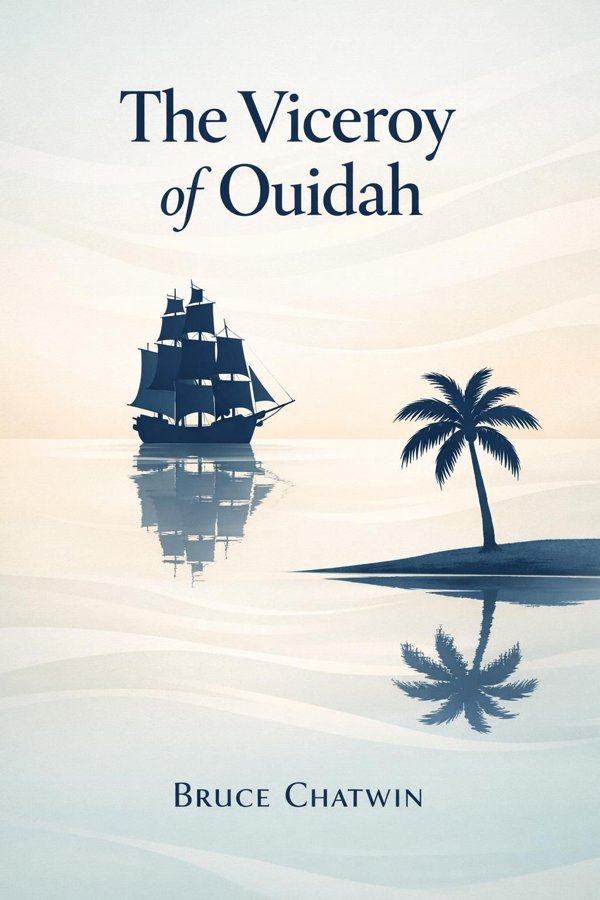
The Viceroy of Ouidah: Summary & Key Insights
 10 min3 chaptersAudio available
What Is The Viceroy of Ouidah About?
The Viceroy of Ouidah by Bruce Chatwin is a travel book spanning 3 pages. The Viceroy of Ouidah is a short historical novel by Bruce Chatwin, first published in 1980. It tells the story of Francisco Félix de Souza, a Brazilian slave trader who became the Viceroy of Ouidah in West Africa. The book blends fact and fiction, exploring themes of colonialism, greed, and cultural collision through Chatwin’s distinctive prose style.
This FizzRead summary covers all 3 key chapters of The Viceroy of Ouidah in approximately 10 minutes, distilling the most important ideas, arguments, and takeaways from Bruce Chatwin's work. Also available as an audio summary and Key Quotes Podcast.
The Viceroy of Ouidah
The Viceroy of Ouidah is a short historical novel by Bruce Chatwin, first published in 1980. It tells the story of Francisco Félix de Souza, a Brazilian slave trader who became the Viceroy of Ouidah in West Africa. The book blends fact and fiction, exploring themes of colonialism, greed, and cultural collision through Chatwin’s distinctive prose style.
Who Should Read The Viceroy of Ouidah?
This book is perfect for anyone interested in travel and looking to gain actionable insights in a short read. Whether you're a student, professional, or lifelong learner, the key ideas from The Viceroy of Ouidah by Bruce Chatwin will help you think differently.
- ✓Readers who enjoy travel and want practical takeaways
- ✓Professionals looking to apply new ideas to their work and life
- ✓Anyone who wants the core insights of The Viceroy of Ouidah in just 10 minutes
Want the full summary?
Get instant access to this book summary and 100K+ more with Fizz Moment.
Get Free SummaryAvailable on App Store • Free to download
Key Chapters
It begins with death—the solemn procession through Ouidah’s humid air. Francisco’s descendants gather, adorned in faded finery, symbols of past opulence now corroded by time. The tropical rot of their surroundings mirrors the decline of the dynasty. I invited readers to witness this ritual not as distant spectators but as participants within a historical ghost story. The pages are saturated with the smell of decay, the weight of history pressing upon the living. It is within this moment that the reader first senses the irony of immortality—the Viceroy’s ambition survives only as myth.
Then the narrative returns to Brazil. Before becoming the master of Ouidah, de Souza was a restless soul adrift in the colonial world of Bahia, born to a mixed heritage. He belonged neither wholly to Europe nor to Africa, a condition that became his destiny. The young Francisco was marked by dissatisfaction—a hunger that would not be stilled by commerce or domestic life. He saw opportunity not in contentment but in exile. This moment—his departure from Brazil—was his first act of reinvention, a declaration of independence from his own origins.
Through the passage across the sea, I traced the symbolic movement of history: from the Old World to the New, and back again, but now reversed. Francisco sails not as cargo nor conqueror, but as hybrid, navigating the spaces between. His arrival in Ouidah signals the start of his apprenticeship to violence. He does not yet perceive the moral abyss beneath his enterprise; at first, he sees only exchange, negotiation, profit. Yet, as he becomes entangled in the structures of slavery, his own freedom becomes the mirror of others’ bondage.
Ouidah stood then at the junction of trade and tragedy. It was a place where fetish priests and European merchants rubbed shoulders, where rituals of protection accompanied the loading of ships, where every transaction was struck against the backdrop of drums and misery. The balance of brutality and ceremony fascinated me—the way commerce transformed into worship.
De Souza, quick to exploit cultural complexities, learned to speak to both worlds. He courted the Dahomey rulers and, through diplomacy and flattery, became indispensable to King Ghezo, whose kingdom thrived on slave raiding. The bond between merchant and monarch was pragmatic and poisoned. Ghezo provided captives; de Souza provided guns, rum, and the illusion of permanence. I wanted readers to see this not as historical exposition, but as theater—the grand choreography of greed.
But with success came corruption. Francisco’s warehouse overflowed with ivory, gold, and human despair. His children multiplied, scattered among households and tribes, inheriting a fragmented empire. He wore titles that were half mockery, half reverence—Viceroy, patriarch, outsider. He had become both Portuguese and African, both victim and oppressor. Through him, I examined the corrosive process by which identity is eroded by ambition.
In Ouidah, religion absorbed commerce, and commerce absorbed religion. Fetish figures guarded warehouses. The cross merged with the serpent. De Souza prayed to the God of both mercy and transaction. This syncretism fascinated me: how the spiritual vocabulary of redemption could coexist with the cruelty of the trade. His story became the parable of cultural fusion—a grotesque but mesmerizing harmony born of exploitation. The deeper he burrows into power, the more he succumbs to spiritual disarray.
+ 1 more chapters — available in the FizzRead app
All Chapters in The Viceroy of Ouidah
About the Author
Bruce Chatwin (1940–1989) was a British travel writer and novelist known for his explorations of nomadism, culture, and human restlessness. His major works include In Patagonia and The Songlines, which established him as one of the most influential travel writers of the 20th century.
Get This Summary in Your Preferred Format
Read or listen to the The Viceroy of Ouidah summary by Bruce Chatwin anytime, anywhere. FizzRead offers multiple formats so you can learn on your terms — all free.
Available formats: App · Audio · PDF · EPUB — All included free with FizzRead
Download The Viceroy of Ouidah PDF and EPUB Summary
Key Quotes from The Viceroy of Ouidah
“It begins with death—the solemn procession through Ouidah’s humid air.”
“Ouidah stood then at the junction of trade and tragedy.”
Frequently Asked Questions about The Viceroy of Ouidah
The Viceroy of Ouidah by Bruce Chatwin is a travel book that explores key ideas across 3 chapters. The Viceroy of Ouidah is a short historical novel by Bruce Chatwin, first published in 1980. It tells the story of Francisco Félix de Souza, a Brazilian slave trader who became the Viceroy of Ouidah in West Africa. The book blends fact and fiction, exploring themes of colonialism, greed, and cultural collision through Chatwin’s distinctive prose style.
You Might Also Like

The Half Known Life: In Search of Paradise
Pico Iyer
10 min
A Walk in the Woods: Rediscovering America on the Appalachian Trail
Bill Bryson
10 min
How to Travel the World on $50 a Day: Travel Cheaper, Longer, Smarter
Matt Kepnes
10 min
In Xanadu: A Quest
William Dalrymple
10 min
In a Sunburned Country
Bill Bryson
10 min
Notes From A Small Island
Bill Bryson
10 minBrowse by Category
Ready to read The Viceroy of Ouidah?
Get the full summary and 100K+ more books with Fizz Moment.