
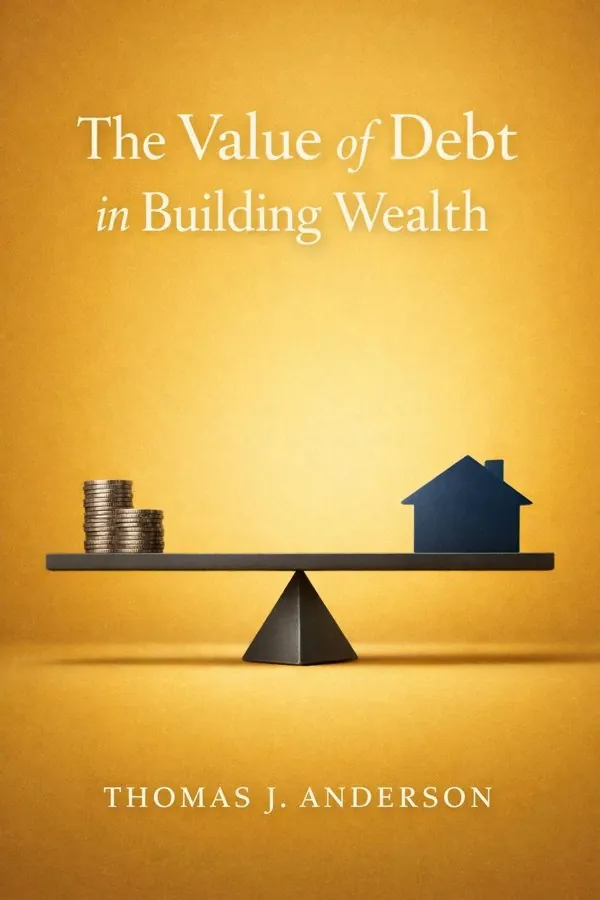
The Value of Debt in Building Wealth: Summary & Key Insights
 10 min5 chaptersAudio available
What Is The Value of Debt in Building Wealth About?
The Value of Debt in Building Wealth by Thomas J. Anderson is a finance book spanning 5 pages. In this follow-up to his acclaimed book 'The Value of Debt', Thomas J. Anderson explores how strategic, responsible use of debt can accelerate wealth creation. He argues that debt, when managed intelligently, can serve as a powerful financial tool rather than a burden. The book provides frameworks for balancing assets and liabilities, optimizing leverage, and achieving long-term financial independence through disciplined borrowing and investment strategies.
This FizzRead summary covers all 5 key chapters of The Value of Debt in Building Wealth in approximately 10 minutes, distilling the most important ideas, arguments, and takeaways from Thomas J. Anderson's work. Also available as an audio summary and Key Quotes Podcast.
The Value of Debt in Building Wealth
In this follow-up to his acclaimed book 'The Value of Debt', Thomas J. Anderson explores how strategic, responsible use of debt can accelerate wealth creation. He argues that debt, when managed intelligently, can serve as a powerful financial tool rather than a burden. The book provides frameworks for balancing assets and liabilities, optimizing leverage, and achieving long-term financial independence through disciplined borrowing and investment strategies.
Who Should Read The Value of Debt in Building Wealth?
This book is perfect for anyone interested in finance and looking to gain actionable insights in a short read. Whether you're a student, professional, or lifelong learner, the key ideas from The Value of Debt in Building Wealth by Thomas J. Anderson will help you think differently.
- ✓Readers who enjoy finance and want practical takeaways
- ✓Professionals looking to apply new ideas to their work and life
- ✓Anyone who wants the core insights of The Value of Debt in Building Wealth in just 10 minutes
Want the full summary?
Get instant access to this book summary and 100K+ more with Fizz Moment.
Get Free SummaryAvailable on App Store • Free to download
Key Chapters
Before we can talk about building a healthy financial life, we need to dismantle the myth that all debt is bad. The traditional narrative—pay off every loan, stay debt-free, and live without obligations—sounds secure, but in reality, it can hinder true financial growth. When you view debt solely as an enemy, you ignore the potential benefits it offers in liquidity and leverage.
In this section, I explain how misconceptions about debt emerged. Generational experiences with recessions, credit card crises, and poor borrowing habits taught people to distrust debt entirely. Yet the problem was never the debt itself—it was unstructured, unmanaged, and unstrategic use of it. The truth is that healthy debt is not about consumer loans or mindless spending. It is about aligning debt with productive assets: homes, businesses, investments that yield returns exceeding their cost.
I illustrate this shift through examples drawn from clients who used debt conservatively but effectively. One executive used low-interest financing to acquire stock options at a crucial time, multiplying his net worth severalfold. Another small business owner maintained calculated debt exposure to preserve operational flexibility and avoid liquidating investments during downturns. In both cases, debt acted as a stabilizer—not a stressor.
The key takeaway is that debt is a neutral tool. It doesn’t create value or destroy it; you do. By learning to control debt with discipline and structure—selecting terms, optimizing interest rates, and matching durations to cash flow—you transform something traditionally seen as a liability into an instrument of wealth building.
Your financial health depends not on isolated decisions but on how you balance liquidity, income, flexibility, and equity. This framework—L.I.F.E.—serves as the cornerstone of my philosophy.
Liquidity represents freedom: the ability to respond quickly when opportunity knocks or crisis arises. Through strategic use of debt, liquidity can be expanded without selling long-term assets at inopportune moments. A well-structured line of credit or the responsible use of home equity, for instance, provides stability in volatile markets.
Income is the engine of growth. Managing debt optimally enhances disposable income by minimizing taxes and financing costs. Consider the power of tax-deductible interest: when handled correctly, it reduces effective expense and increases post-tax cash flow, improving your ability to invest further.
Flexibility means adaptability. Life is unpredictable—career changes, family needs, and market cycles constantly reshape financial priorities. Strategic debt, kept within safe parameters, lets you pivot without panic. It can allow you to refinance, invest in skill development, or weather a temporary downturn without depleting savings.
Finally, equity represents long-term ownership and wealth accumulation. Contrary to popular belief, optimizing debt can enhance equity rather than erode it. The key lies in rate arbitrage—borrowing at lower costs while investing in assets with higher expected returns. Over time, that differential compounds, building net worth faster than an all-cash approach could.
Each element of L.I.F.E interacts dynamically. Liquidity prevents forced liquidation of equity, flexibility ensures stability of income, and income feeds further equity growth. Debt, when incorporated wisely into this system, acts like oil in a finely tuned machine—reducing friction, amplifying efficiency, and ensuring smooth financial motion across all stages of your life.
+ 3 more chapters — available in the FizzRead app
All Chapters in The Value of Debt in Building Wealth
About the Author
Thomas J. Anderson is an American financial expert, entrepreneur, and author known for his innovative perspectives on personal finance and debt management. He founded Supernova Companies, a financial technology firm, and has written several books on how individuals and organizations can use debt strategically to build wealth.
Get This Summary in Your Preferred Format
Read or listen to the The Value of Debt in Building Wealth summary by Thomas J. Anderson anytime, anywhere. FizzRead offers multiple formats so you can learn on your terms — all free.
Available formats: App · Audio · PDF · EPUB — All included free with FizzRead
Download The Value of Debt in Building Wealth PDF and EPUB Summary
Key Quotes from The Value of Debt in Building Wealth
“Before we can talk about building a healthy financial life, we need to dismantle the myth that all debt is bad.”
“Your financial health depends not on isolated decisions but on how you balance liquidity, income, flexibility, and equity.”
Frequently Asked Questions about The Value of Debt in Building Wealth
The Value of Debt in Building Wealth by Thomas J. Anderson is a finance book that explores key ideas across 5 chapters. In this follow-up to his acclaimed book 'The Value of Debt', Thomas J. Anderson explores how strategic, responsible use of debt can accelerate wealth creation. He argues that debt, when managed intelligently, can serve as a powerful financial tool rather than a burden. The book provides frameworks for balancing assets and liabilities, optimizing leverage, and achieving long-term financial independence through disciplined borrowing and investment strategies.
You Might Also Like




Browse by Category
Ready to read The Value of Debt in Building Wealth?
Get the full summary and 100K+ more books with Fizz Moment.