

The Speed of Trust: The One Thing That Changes Everything: Summary & Key Insights
 10 min9 chaptersAudio available
What Is The Speed of Trust: The One Thing That Changes Everything About?
The Speed of Trust: The One Thing That Changes Everything by Stephen M. R. Covey is a leadership book spanning 9 pages. In this influential work, Stephen M. R. Covey explores how trust is the most critical factor in personal and organizational success. He argues that trust is not merely a social virtue but an economic driver that accelerates relationships, projects, and business outcomes. Covey provides a framework for understanding and building trust through credibility, behavior, and alignment, offering practical tools for leaders and individuals to restore and expand trust in all areas of life.
This FizzRead summary covers all 9 key chapters of The Speed of Trust: The One Thing That Changes Everything in approximately 10 minutes, distilling the most important ideas, arguments, and takeaways from Stephen M. R. Covey's work. Also available as an audio summary and Key Quotes Podcast.
The Speed of Trust: The One Thing That Changes Everything
In this influential work, Stephen M. R. Covey explores how trust is the most critical factor in personal and organizational success. He argues that trust is not merely a social virtue but an economic driver that accelerates relationships, projects, and business outcomes. Covey provides a framework for understanding and building trust through credibility, behavior, and alignment, offering practical tools for leaders and individuals to restore and expand trust in all areas of life.
Who Should Read The Speed of Trust: The One Thing That Changes Everything?
This book is perfect for anyone interested in leadership and looking to gain actionable insights in a short read. Whether you're a student, professional, or lifelong learner, the key ideas from The Speed of Trust: The One Thing That Changes Everything by Stephen M. R. Covey will help you think differently.
- ✓Readers who enjoy leadership and want practical takeaways
- ✓Professionals looking to apply new ideas to their work and life
- ✓Anyone who wants the core insights of The Speed of Trust: The One Thing That Changes Everything in just 10 minutes
Want the full summary?
Get instant access to this book summary and 100K+ more with Fizz Moment.
Get Free SummaryAvailable on App Store • Free to download
Key Chapters
Trust doesn’t just influence relationships; it shapes the bottom line. Imagine a project in which team members believe in one another, communicate honestly, and follow through on commitments. Meetings are shorter, decisions faster, errors fewer. Now imagine a team riddled with suspicion. Every statement must be verified, every step monitored, and every message reframed to appear safe. The difference between the two is not simply cultural—it’s economic.
I call this difference the 'Trust Tax' and the 'Trust Dividend.' When trust is low, you pay a trust tax. Everything costs more and takes longer. When trust is high, you earn a trust dividend—everything happens faster and costs less. You can observe this dynamic in every field, from personal relationships to geopolitics. After major corporate scandals, for example, markets slow down as investors, regulators, and consumers demand more proof, more procedures, more controls. Contrast that with a brand known for integrity, whose reputation alone accelerates transactions. The dividend of trust is real and measurable.
Recognizing the economic dimension of trust transforms how you manage both people and systems. Rather than treating trust as a moral ideal, you begin to see it as a pragmatic force, a lever for efficiency and engagement. This shift is essential, because when you understand that trust creates tangible value, you start investing in it systematically. You pay attention to behaviors that build credibility rather than undermine it, and you align your structures to reinforce trustworthy conduct across the organization.
Trust radiates outward like ripples from a stone cast into water. Each wave builds upon the previous one: self-trust forms the core, and from it flow relationship trust, organizational trust, market trust, and societal trust. These five layers describe both the sequence of influence and the hierarchy of responsibility.
Self-trust is about credibility. It answers the question, 'Am I trustworthy?' before we ever ask, 'Can others be trusted?' Without this foundation, every outward promise feels hollow. Relationship trust then grows from behavior: the consistent actions that confirm our words. Organizational trust depends on alignment—whether systems, symbols, and policies reinforce trustworthy principles. Market trust rests on reputation, the collective judgment of customers, partners, and competitors. Finally, societal trust is built through contribution—through how individuals and organizations act toward the public good.
Each wave requires attention and intention. The stronger the inner waves, the greater your capacity to influence the outer ones. Without inner credibility, attempts to inspire societal or market trust will crumble. But when you deliberately build from the inside out, you create a resilient structure of confidence that extends far beyond yourself.
+ 7 more chapters — available in the FizzRead app
All Chapters in The Speed of Trust: The One Thing That Changes Everything
About the Author
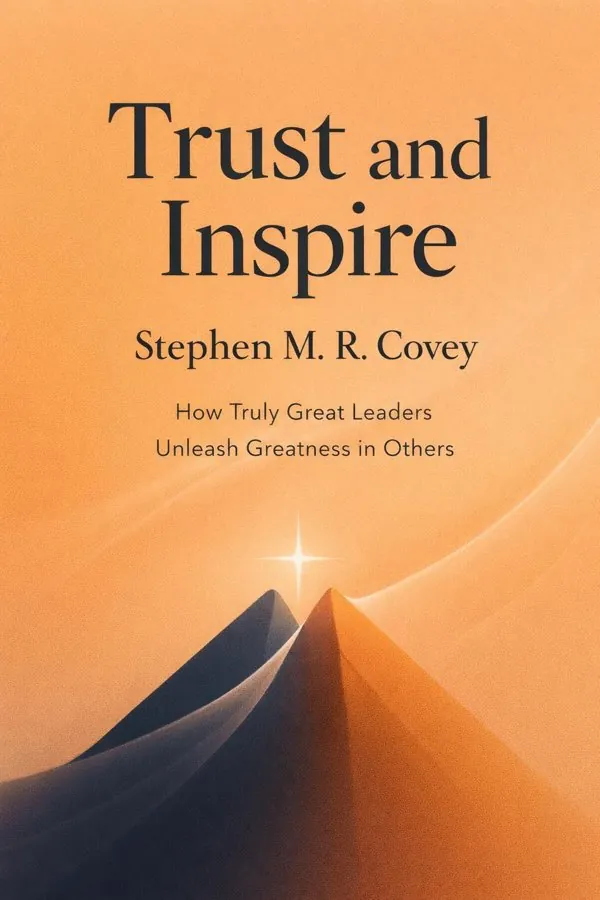
Stephen M. R. Covey is an American author, speaker, and business consultant, best known for his expertise in leadership and trust. The son of Stephen R. Covey, author of 'The 7 Habits of Highly Effective People,' he has served as CEO of Covey Leadership Center and co-founded CoveyLink Worldwide. His work focuses on trust, leadership, and organizational transformation.
Get This Summary in Your Preferred Format
Read or listen to the The Speed of Trust: The One Thing That Changes Everything summary by Stephen M. R. Covey anytime, anywhere. FizzRead offers multiple formats so you can learn on your terms — all free.
Available formats: App · Audio · PDF · EPUB — All included free with FizzRead
Download The Speed of Trust: The One Thing That Changes Everything PDF and EPUB Summary
Key Quotes from The Speed of Trust: The One Thing That Changes Everything
“Trust doesn’t just influence relationships; it shapes the bottom line.”
“Trust radiates outward like ripples from a stone cast into water.”
Frequently Asked Questions about The Speed of Trust: The One Thing That Changes Everything
The Speed of Trust: The One Thing That Changes Everything by Stephen M. R. Covey is a leadership book that explores key ideas across 9 chapters. In this influential work, Stephen M. R. Covey explores how trust is the most critical factor in personal and organizational success. He argues that trust is not merely a social virtue but an economic driver that accelerates relationships, projects, and business outcomes. Covey provides a framework for understanding and building trust through credibility, behavior, and alignment, offering practical tools for leaders and individuals to restore and expand trust in all areas of life.
More by Stephen M. R. Covey
You Might Also Like

Extreme Ownership
Jocko Willink
10 min
Dare to Lead
Brene Brown
10 min
Leaders Eat Last
Simon Sinek
10 min
The 21 Irrefutable Laws of Leadership
John Maxwell
10 min
Start With Why
Simon Sinek
10 min
How to Lead When You're Not in Charge
Clay Scroggins
10 minBrowse by Category
Ready to read The Speed of Trust: The One Thing That Changes Everything?
Get the full summary and 100K+ more books with Fizz Moment.