
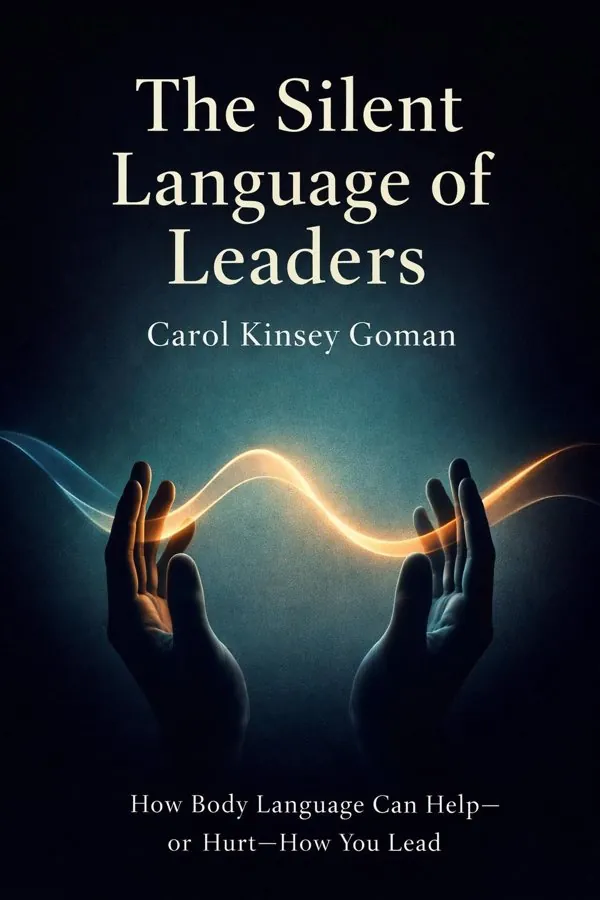
The Silent Language of Leaders: How Body Language Can Help—or Hurt—How You Lead: Summary & Key Insights
 10 min10 chaptersAudio available
What Is The Silent Language of Leaders: How Body Language Can Help—or Hurt—How You Lead About?
The Silent Language of Leaders: How Body Language Can Help—or Hurt—How You Lead by Carol Kinsey Goman is a leadership book spanning 10 pages. In this insightful guide, Carol Kinsey Goman explores how nonverbal communication shapes leadership effectiveness. Drawing on research in psychology and communication, she explains how gestures, posture, facial expressions, and tone of voice influence trust, credibility, and engagement. The book provides practical strategies for leaders to align their body language with their messages, enhance their presence, and build stronger relationships within organizations.
This FizzRead summary covers all 10 key chapters of The Silent Language of Leaders: How Body Language Can Help—or Hurt—How You Lead in approximately 10 minutes, distilling the most important ideas, arguments, and takeaways from Carol Kinsey Goman's work. Also available as an audio summary and Key Quotes Podcast.
The Silent Language of Leaders: How Body Language Can Help—or Hurt—How You Lead
In this insightful guide, Carol Kinsey Goman explores how nonverbal communication shapes leadership effectiveness. Drawing on research in psychology and communication, she explains how gestures, posture, facial expressions, and tone of voice influence trust, credibility, and engagement. The book provides practical strategies for leaders to align their body language with their messages, enhance their presence, and build stronger relationships within organizations.
Who Should Read The Silent Language of Leaders: How Body Language Can Help—or Hurt—How You Lead?
This book is perfect for anyone interested in leadership and looking to gain actionable insights in a short read. Whether you're a student, professional, or lifelong learner, the key ideas from The Silent Language of Leaders: How Body Language Can Help—or Hurt—How You Lead by Carol Kinsey Goman will help you think differently.
- ✓Readers who enjoy leadership and want practical takeaways
- ✓Professionals looking to apply new ideas to their work and life
- ✓Anyone who wants the core insights of The Silent Language of Leaders: How Body Language Can Help—or Hurt—How You Lead in just 10 minutes
Want the full summary?
Get instant access to this book summary and 100K+ more with Fizz Moment.
Get Free SummaryAvailable on App Store • Free to download
Key Chapters
Nonverbal communication is universal, yet remarkably complex. It encompasses gestures, posture, facial expressions, tone of voice, proximity, and touch—all signals that convey emotion and intent beyond words. Research consistently demonstrates that in face-to-face interactions, up to 90 percent of the impact of a message comes from nonverbal elements. This doesn’t mean words are irrelevant; rather, it shows that words are interpreted through the emotional and psychological lens of body language.
When I coach leaders, I often begin by making them aware of their 'silent messages.' Imagine you are delivering a presentation announcing a strategic direction. If your tone is flat, your eyes dart around, and your hands stay rigid at your sides, people will instinctively feel uncertainty. However, if your voice has warmth and conviction, your gestures are open, and your stance is confident, the same content will be received as inspiring. The nonverbal context frames meaning.
Every gesture carries cultural and psychological significance. A genuine smile builds connection; the tilt of a head signals attention and empathy; leaning forward conveys engagement. Conversely, frowning, avoiding eye contact, or fidgeting can destroy rapport. Leaders who understand this silent vocabulary learn to communicate confidence and approachability even before speaking. Importantly, body language doesn’t lie—the moment your verbal message diverges from your internal feelings, people sense the incongruence. Your body reveals what you truly think and feel, sometimes despite your best intentions.
In my work, I stress that self-awareness is the foundation. Leaders must first observe their default nonverbal habits. Are you open or guarded? Do you project calm or tension? The goal isn’t perfection but authenticity—aligning external expression with inner clarity. Nonverbal intelligence means being mindful of how you transmit your emotional state so your silent signals enhance, not sabotage, your words.
Presence is that intangible quality that makes people pay attention the moment you enter a room. It’s not about charisma or status—it’s about the subtle integration of self-assurance, posture, and authenticity in your behavior. True leadership presence arises from the alignment between internal confidence and external expression.
I’ve watched leaders transform their entire relational impact by adjusting their physical demeanor. One executive I coached had exceptional strategic insight but struggled to gain traction with her team. Her voice was soft, her gestures minimal, and she often looked down during conversations. These nonverbal signals suggested hesitancy, undermining her authority. Through practice—standing tall, projecting voice, maintaining steady eye contact—she learned to embody confidence nonverbally. The transformation wasn’t cosmetic; it altered how others perceived her values and competence.
Your physical stance communicates much about your leadership identity. Standing upright with shoulders back and movements that are calm yet purposeful conveys confidence. Avoiding excessive gestures or rushed speech shows composure. Authenticity in presence also means expressing genuine emotion. When you smile sincerely, your eyes communicate warmth. When you listen attentively, your posture leans slightly forward, signaling respect and engagement. These small behaviors define the environment around you.
Presence is also about emotional congruence. Leaders who are internally aligned radiate credibility. When your body reflects your beliefs, people sense integrity and feel safe to follow. The paradox is that presence isn’t about performance—it’s about genuine connection. When you stop trying to impress and start embodying what you value, presence naturally emerges.
+ 8 more chapters — available in the FizzRead app
All Chapters in The Silent Language of Leaders: How Body Language Can Help—or Hurt—How You Lead
About the Author
Carol Kinsey Goman, Ph.D., is an international keynote speaker, leadership coach, and author specializing in body language and organizational change. She has worked with leaders and teams in over 30 countries and is a recognized expert on the impact of nonverbal communication in business.
Get This Summary in Your Preferred Format
Read or listen to the The Silent Language of Leaders: How Body Language Can Help—or Hurt—How You Lead summary by Carol Kinsey Goman anytime, anywhere. FizzRead offers multiple formats so you can learn on your terms — all free.
Available formats: App · Audio · PDF · EPUB — All included free with FizzRead
Download The Silent Language of Leaders: How Body Language Can Help—or Hurt—How You Lead PDF and EPUB Summary
Key Quotes from The Silent Language of Leaders: How Body Language Can Help—or Hurt—How You Lead
“Nonverbal communication is universal, yet remarkably complex.”
“Presence is that intangible quality that makes people pay attention the moment you enter a room.”
Frequently Asked Questions about The Silent Language of Leaders: How Body Language Can Help—or Hurt—How You Lead
The Silent Language of Leaders: How Body Language Can Help—or Hurt—How You Lead by Carol Kinsey Goman is a leadership book that explores key ideas across 10 chapters. In this insightful guide, Carol Kinsey Goman explores how nonverbal communication shapes leadership effectiveness. Drawing on research in psychology and communication, she explains how gestures, posture, facial expressions, and tone of voice influence trust, credibility, and engagement. The book provides practical strategies for leaders to align their body language with their messages, enhance their presence, and build stronger relationships within organizations.
You Might Also Like

Extreme Ownership
Jocko Willink
10 min
Dare to Lead
Brene Brown
10 min
Leaders Eat Last
Simon Sinek
10 min
The 21 Irrefutable Laws of Leadership
John Maxwell
10 min
Start With Why
Simon Sinek
10 min
How to Lead When You're Not in Charge
Clay Scroggins
10 minBrowse by Category
Ready to read The Silent Language of Leaders: How Body Language Can Help—or Hurt—How You Lead?
Get the full summary and 100K+ more books with Fizz Moment.