
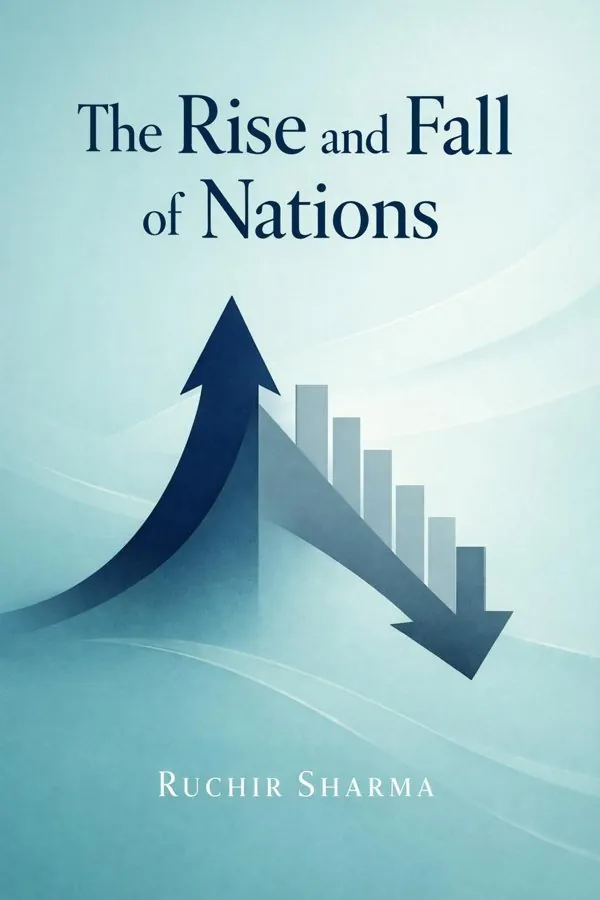
The Rise and Fall of Nations: Forces of Change in the Post-Crisis World: Summary & Key Insights
 10 min11 chaptersAudio available
What Is The Rise and Fall of Nations: Forces of Change in the Post-Crisis World About?
The Rise and Fall of Nations: Forces of Change in the Post-Crisis World by Ruchir Sharma is a economics book spanning 11 pages. In this book, Ruchir Sharma, a global investor and political economist, explores the key factors that determine the economic success or decline of nations in the aftermath of the 2008 financial crisis. Drawing on extensive travel and data analysis, Sharma identifies ten rules that help predict which countries will rise or fall in the global economy, focusing on themes such as political stability, inequality, demographics, and technological adaptation.
This FizzRead summary covers all 11 key chapters of The Rise and Fall of Nations: Forces of Change in the Post-Crisis World in approximately 10 minutes, distilling the most important ideas, arguments, and takeaways from Ruchir Sharma's work. Also available as an audio summary and Key Quotes Podcast.
The Rise and Fall of Nations: Forces of Change in the Post-Crisis World
In this book, Ruchir Sharma, a global investor and political economist, explores the key factors that determine the economic success or decline of nations in the aftermath of the 2008 financial crisis. Drawing on extensive travel and data analysis, Sharma identifies ten rules that help predict which countries will rise or fall in the global economy, focusing on themes such as political stability, inequality, demographics, and technological adaptation.
Who Should Read The Rise and Fall of Nations: Forces of Change in the Post-Crisis World?
This book is perfect for anyone interested in economics and looking to gain actionable insights in a short read. Whether you're a student, professional, or lifelong learner, the key ideas from The Rise and Fall of Nations: Forces of Change in the Post-Crisis World by Ruchir Sharma will help you think differently.
- ✓Readers who enjoy economics and want practical takeaways
- ✓Professionals looking to apply new ideas to their work and life
- ✓Anyone who wants the core insights of The Rise and Fall of Nations: Forces of Change in the Post-Crisis World in just 10 minutes
Want the full summary?
Get instant access to this book summary and 100K+ more with Fizz Moment.
Get Free SummaryAvailable on App Store • Free to download
Key Chapters
Few forces shape the destiny of nations more profoundly than demographics. Whenever I visit a new country, one of the first numbers I look at is not GDP or stock market performance—it is population growth. This simple metric can reveal where a nation stands in its growth cycle. A young, expanding population often brings energy, consumption, and labor—key ingredients for economic vitality. In contrast, aging societies struggle to sustain momentum once their working-age population starts to shrink.
In the decades before 2008, rapid urbanization and youthful demographics powered the booms in China, India, and across emerging Asia. But as I traveled through Eastern Europe and Japan, I found an unsettling quiet—a sense that the future itself was shrinking. Their workforces were contracting, their cities aging, and their economies turning inward. Demographics may not determine destiny, but they certainly define the tempo of growth.
Yet, population alone is no guarantee of success. A young population with poor education or limited opportunity can become a source of instability rather than growth. The migration of people—both internal and external—also redefines potential. Nations that welcome talent and manage urban growth wisely often convert demographic change into economic strength. Those that cling to closed borders or neglect opportunity zones watch stagnation take root. Every demographic transition holds promise and peril; what matters is how a society prepares for its next generation.
Political cycles are as critical to prosperity as business cycles, yet far less quantifiable. Through years of fieldwork, I’ve learned that economic success depends not on ideology but on the rhythm of political renewal. Nations with regular, peaceful leadership turnover tend to rejuvenate themselves; those trapped under long-standing rulers often decay from within. Stability without accountability breeds complacency.
In emerging markets, populism often masquerades as reform. Leaders promise the poor quick gains but neglect structural change. Over time, such overreach destroys confidence and investment. In contrast, countries that build institutions strong enough to survive leadership transitions—like Chile or South Korea—sustain growth far better than those that tie their fortunes to a single individual.
The lesson is clear: political stability matters, but so does political change. Nations must avoid both chaos and stagnation. The healthiest political system is one that permits renewal without revolt—a system dynamic enough to adapt and disciplined enough to endure.
+ 9 more chapters — available in the FizzRead app
All Chapters in The Rise and Fall of Nations: Forces of Change in the Post-Crisis World
About the Author
Ruchir Sharma is an Indian investor, author, and columnist known for his work on global economics and emerging markets. He is the Chairman of Rockefeller International and has written several influential books on global economic trends.
Get This Summary in Your Preferred Format
Read or listen to the The Rise and Fall of Nations: Forces of Change in the Post-Crisis World summary by Ruchir Sharma anytime, anywhere. FizzRead offers multiple formats so you can learn on your terms — all free.
Available formats: App · Audio · PDF · EPUB — All included free with FizzRead
Download The Rise and Fall of Nations: Forces of Change in the Post-Crisis World PDF and EPUB Summary
Key Quotes from The Rise and Fall of Nations: Forces of Change in the Post-Crisis World
“Few forces shape the destiny of nations more profoundly than demographics.”
“Political cycles are as critical to prosperity as business cycles, yet far less quantifiable.”
Frequently Asked Questions about The Rise and Fall of Nations: Forces of Change in the Post-Crisis World
The Rise and Fall of Nations: Forces of Change in the Post-Crisis World by Ruchir Sharma is a economics book that explores key ideas across 11 chapters. In this book, Ruchir Sharma, a global investor and political economist, explores the key factors that determine the economic success or decline of nations in the aftermath of the 2008 financial crisis. Drawing on extensive travel and data analysis, Sharma identifies ten rules that help predict which countries will rise or fall in the global economy, focusing on themes such as political stability, inequality, demographics, and technological adaptation.
You Might Also Like

Business Adventures
John Brooks
10 min
Nudge
Richard H. Thaler, Cass R. Sunstein
10 min
The Hitchhiker"s Guide to the Galaxy
Douglas Adams
10 minThe Muqaddimah
Ibn Khaldun
10 minThe Outsiders
William N. Thorndike
10 min
A Little History of Economics
Niall Kishtainy
10 minBrowse by Category
Ready to read The Rise and Fall of Nations: Forces of Change in the Post-Crisis World?
Get the full summary and 100K+ more books with Fizz Moment.