
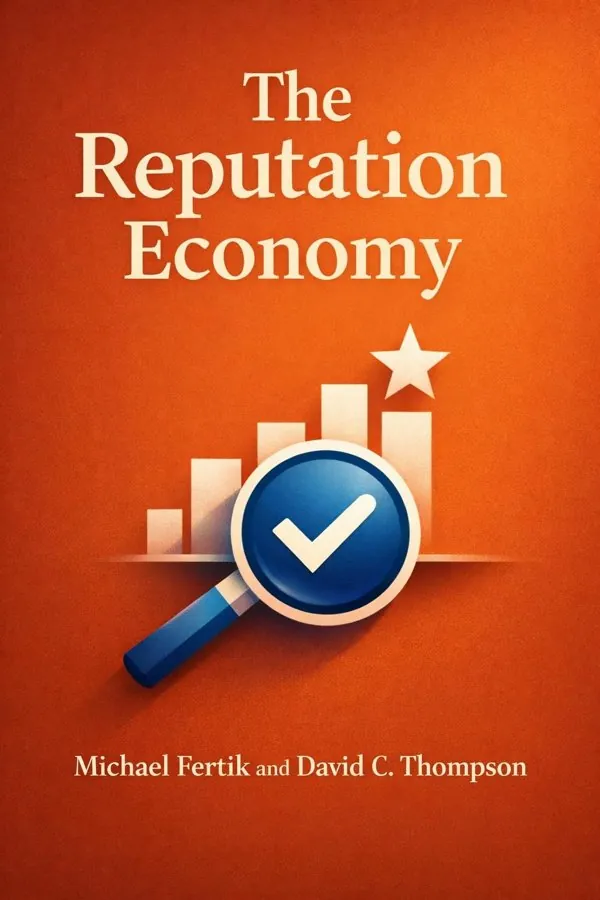
The Reputation Economy: How to Optimize Your Digital Footprint in a World Where Your Reputation Is Your Most Valuable Asset: Summary & Key Insights
by Michael Fertik, David C. Thompson
 10 min12 chaptersAudio available
What Is The Reputation Economy: How to Optimize Your Digital Footprint in a World Where Your Reputation Is Your Most Valuable Asset About?
The Reputation Economy: How to Optimize Your Digital Footprint in a World Where Your Reputation Is Your Most Valuable Asset by Michael Fertik and David C. Thompson is a digital_culture book spanning 12 pages. In this book, Michael Fertik and David C. Thompson explore how online reputation has become a critical form of currency in the digital age. They explain how individuals and organizations can manage, protect, and enhance their reputations across social media, search engines, and professional networks. The authors provide practical strategies for building a positive digital presence and mitigating the risks of misinformation or negative publicity.
This FizzRead summary covers all 12 key chapters of The Reputation Economy: How to Optimize Your Digital Footprint in a World Where Your Reputation Is Your Most Valuable Asset in approximately 10 minutes, distilling the most important ideas, arguments, and takeaways from Michael Fertik and David C. Thompson's work. Also available as an audio summary and Key Quotes Podcast.
The Reputation Economy: How to Optimize Your Digital Footprint in a World Where Your Reputation Is Your Most Valuable Asset
In this book, Michael Fertik and David C. Thompson explore how online reputation has become a critical form of currency in the digital age. They explain how individuals and organizations can manage, protect, and enhance their reputations across social media, search engines, and professional networks. The authors provide practical strategies for building a positive digital presence and mitigating the risks of misinformation or negative publicity.
Who Should Read The Reputation Economy: How to Optimize Your Digital Footprint in a World Where Your Reputation Is Your Most Valuable Asset?
This book is perfect for anyone interested in digital_culture and looking to gain actionable insights in a short read. Whether you're a student, professional, or lifelong learner, the key ideas from The Reputation Economy: How to Optimize Your Digital Footprint in a World Where Your Reputation Is Your Most Valuable Asset by Michael Fertik and David C. Thompson will help you think differently.
- ✓Readers who enjoy digital_culture and want practical takeaways
- ✓Professionals looking to apply new ideas to their work and life
- ✓Anyone who wants the core insights of The Reputation Economy: How to Optimize Your Digital Footprint in a World Where Your Reputation Is Your Most Valuable Asset in just 10 minutes
Want the full summary?
Get instant access to this book summary and 100K+ more with Fizz Moment.
Get Free SummaryAvailable on App Store • Free to download
Key Chapters
Let’s start by reframing the concept of reputation itself. In the past, reputation was local and organic—it was built through repeated social encounters, word-of-mouth, and decades of personal and professional interactions. Today, it’s algorithmic. Platforms like Google, LinkedIn, and Yelp have become reputation engines. They quantify trust through data, reviews, social engagement, and even inferred behaviors. In short, reputation has become a form of currency—a medium of exchange that influences access to resources, relationships, and recognition.
From an economic standpoint, reputation now behaves like capital. A freelancer’s online ratings may determine her next job opportunity. A company’s brand perception can raise or sink its market value. Even ordinary users accumulate reputation scores—through site rankings, social signals, and follower counts—that affect everything from dating matches to credit offerings. The conversion of reputation into measurable data has essentially turned it into a marketplace of trust.
But this currency is fragile. It can be inflated, manipulated, or stolen. Think of fake reviews, bot-generated followers, or viral misinformation campaigns. In the Reputation Economy, authenticity is valuable but must be constantly defended. The task ahead is to understand how reputation is produced and exchanged digitally so we can safeguard and optimize it.
Every digital action leaves a trace—something searchable, indexable, and ultimately interpretable. When we talk about your online reputation, we are really talking about the sum total of your digital traces. Social profiles, purchase histories, comments, media mentions, and even the people you are connected to all contribute to what others—and machines—believe about you.
Search engines, especially Google, have become the new first impression generators. Before anyone meets you or evaluates your company, they will search you. If your results show credibility, thought leadership, and transparency, you gain trust. If they show inconsistency or controversy, you lose it instantly. In other words, the structure of search results is now a probabilistic mirror of perceived identity.
This means that managing your data is no longer vanity—it’s strategy. Curating online content, engaging authentically on social platforms, and ensuring your professional credentials are well represented are now vital. You cannot delete all information out there, but you can strategically promote positive, accurate, and authoritative data to outrank damaging or false content. That’s the core tactic behind digital footprint optimization—active curation rather than passive presence.
+ 10 more chapters — available in the FizzRead app
All Chapters in The Reputation Economy: How to Optimize Your Digital Footprint in a World Where Your Reputation Is Your Most Valuable Asset
About the Authors
Michael Fertik is an entrepreneur and founder of Reputation.com, recognized as a pioneer in online reputation management. David C. Thompson is a writer and consultant specializing in technology and business strategy.
Get This Summary in Your Preferred Format
Read or listen to the The Reputation Economy: How to Optimize Your Digital Footprint in a World Where Your Reputation Is Your Most Valuable Asset summary by Michael Fertik and David C. Thompson anytime, anywhere. FizzRead offers multiple formats so you can learn on your terms — all free.
Available formats: App · Audio · PDF · EPUB — All included free with FizzRead
Download The Reputation Economy: How to Optimize Your Digital Footprint in a World Where Your Reputation Is Your Most Valuable Asset PDF and EPUB Summary
Key Quotes from The Reputation Economy: How to Optimize Your Digital Footprint in a World Where Your Reputation Is Your Most Valuable Asset
“Let’s start by reframing the concept of reputation itself.”
“Every digital action leaves a trace—something searchable, indexable, and ultimately interpretable.”
Frequently Asked Questions about The Reputation Economy: How to Optimize Your Digital Footprint in a World Where Your Reputation Is Your Most Valuable Asset
The Reputation Economy: How to Optimize Your Digital Footprint in a World Where Your Reputation Is Your Most Valuable Asset by Michael Fertik and David C. Thompson is a digital_culture book that explores key ideas across 12 chapters. In this book, Michael Fertik and David C. Thompson explore how online reputation has become a critical form of currency in the digital age. They explain how individuals and organizations can manage, protect, and enhance their reputations across social media, search engines, and professional networks. The authors provide practical strategies for building a positive digital presence and mitigating the risks of misinformation or negative publicity.
You Might Also Like
An Ugly Truth: Inside Facebook’s Battle for Domination
Sheera Frenkel, Cecilia Kang
10 min
Cyber Citizens
Ian Goodfellow
10 min
Digital Minimalism: Choosing a Focused Life in a Noisy World
Cal Newport
10 min
E‑Books & Beyond
Various Authors
10 min
The Future of Media
Various Authors
10 min
This Is Why We Can't Have Nice Things
Whitney Phillips
10 minBrowse by Category
Ready to read The Reputation Economy: How to Optimize Your Digital Footprint in a World Where Your Reputation Is Your Most Valuable Asset?
Get the full summary and 100K+ more books with Fizz Moment.