
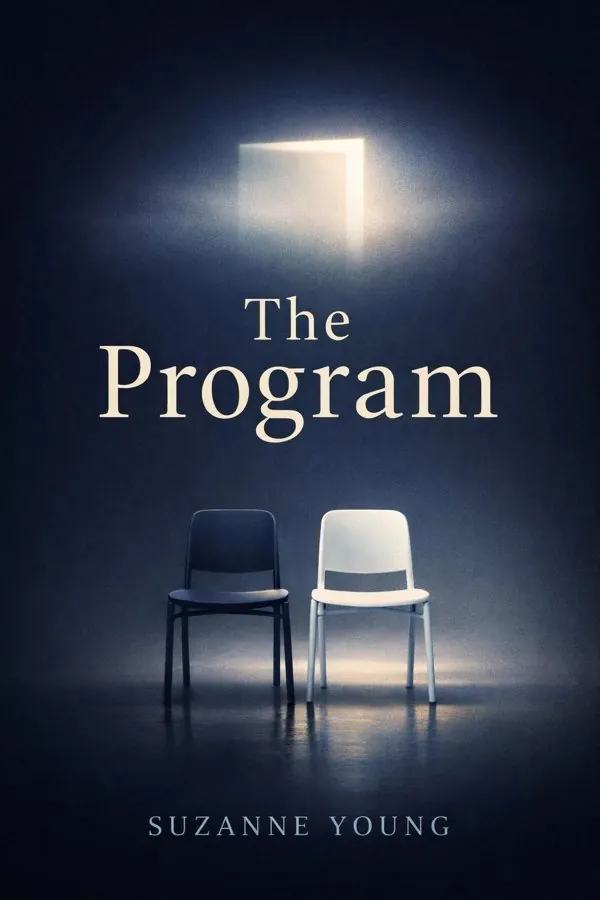
The Program: Summary & Key Insights
 10 min8 chaptersAudio available
Key Takeaways from The Program
Fear makes almost any policy sound reasonable.
If someone erased your worst pain, would you still be yourself?
In oppressive systems, private emotion can become a political act.
What happens when a culture fears sadness more than suffering?
Adults often design systems for young people without truly listening to them.
What Is The Program About?
The Program by Suzanne Young is a bestsellers book. What if the greatest threat to your future was not a disease, a war, or a natural disaster, but your own sadness? Suzanne Young’s The Program imagines exactly that premise and turns it into a chilling young adult dystopian thriller. In this world, teen suicide has become a national epidemic, and the government’s answer is The Program: a controversial treatment that removes painful memories in the name of safety. At the center of the story is Sloane Barstow, a teenage girl trying to survive grief, fear, and first love while knowing that one visible crack in her composure could get her taken away. As her reality grows more fragile, the novel raises unsettling questions about identity, emotional control, and the price of protection. Young, known for crafting emotionally intense and high-concept YA fiction, uses a fast-paced plot and intimate character perspective to explore mental health, trauma, and authoritarian overreach. The Program matters because it speaks directly to the teenage fear of not being understood, while also challenging readers to think about whether a society can truly heal by erasing pain instead of confronting it.
This FizzRead summary covers all 8 key chapters of The Program in approximately 10 minutes, distilling the most important ideas, arguments, and takeaways from Suzanne Young's work. Also available as an audio summary and Key Quotes Podcast.
The Program
What if the greatest threat to your future was not a disease, a war, or a natural disaster, but your own sadness? Suzanne Young’s The Program imagines exactly that premise and turns it into a chilling young adult dystopian thriller. In this world, teen suicide has become a national epidemic, and the government’s answer is The Program: a controversial treatment that removes painful memories in the name of safety. At the center of the story is Sloane Barstow, a teenage girl trying to survive grief, fear, and first love while knowing that one visible crack in her composure could get her taken away. As her reality grows more fragile, the novel raises unsettling questions about identity, emotional control, and the price of protection. Young, known for crafting emotionally intense and high-concept YA fiction, uses a fast-paced plot and intimate character perspective to explore mental health, trauma, and authoritarian overreach. The Program matters because it speaks directly to the teenage fear of not being understood, while also challenging readers to think about whether a society can truly heal by erasing pain instead of confronting it.
Who Should Read The Program?
This book is perfect for anyone interested in bestsellers and looking to gain actionable insights in a short read. Whether you're a student, professional, or lifelong learner, the key ideas from The Program by Suzanne Young will help you think differently.
- ✓Readers who enjoy bestsellers and want practical takeaways
- ✓Professionals looking to apply new ideas to their work and life
- ✓Anyone who wants the core insights of The Program in just 10 minutes
Want the full summary?
Get instant access to this book summary and 100K+ more with Fizz Moment.
Get Free SummaryAvailable on App Store • Free to download
Key Chapters
Fear makes almost any policy sound reasonable. One of the most powerful ideas in The Program is how easily a society can surrender freedom when people are desperate for protection. In the novel, teenage suicide has become so widespread that the government creates a system designed to identify and remove emotionally vulnerable teens before they can harm themselves. On the surface, this sounds compassionate. Parents want their children alive. Schools want students safe. Communities want an answer. But Suzanne Young quickly shows that safety can become a language of control when it is enforced without consent, transparency, or humanity.
The Program does not merely provide treatment. It monitors behavior, encourages suspicion, and punishes emotional honesty. Teens learn to hide grief, suppress anxiety, and perform happiness. Parents, teachers, and peers become part of a surveillance culture in which sadness itself can be treated like a criminal act. This transforms ordinary human emotion into evidence. The result is a society where fear of intervention becomes as dangerous as the condition the system claims to prevent.
This idea extends beyond the novel. In real life, institutions often justify invasive rules by presenting them as necessary for public good. That does not mean protection is wrong, but it does mean people must ask hard questions: Who defines danger? What rights are surrendered? What happens to those being "helped"? The Program reminds readers that good intentions are not enough when systems strip away autonomy.
A practical way to apply this insight is to examine any authority structure with both empathy and skepticism. Support mental health interventions that are evidence-based, respectful, and patient-centered, but stay alert when care becomes coercion.
Actionable takeaway: When a system promises safety, ask whether it also preserves dignity, choice, and the right to feel fully human.
If someone erased your worst pain, would you still be yourself? That haunting question sits at the emotional core of The Program. The treatment in the novel does not simply calm distress; it removes memories tied to trauma, love, and loss. Suzanne Young uses this premise to explore a profound truth: our identities are not built from happy moments alone. They are formed through everything we remember, including heartbreak, guilt, fear, and grief.
Sloane’s struggle makes this clear. Her relationships, decisions, and emotional responses are all tied to what she has lived through. When The Program threatens to take those memories away, it threatens to take away the meaning behind her attachments. Love becomes fragile when its history can be deleted. Trust becomes unstable when a person’s emotional life can be rewritten by force. The novel suggests that pain is not only something we endure; it is also something that teaches, connects, and defines us.
This idea resonates in everyday life. People often wish they could forget embarrassment, trauma, betrayal, or regret. Yet many of the most important forms of growth come from wrestling with difficult experiences rather than erasing them. A breakup can teach boundaries. Failure can build resilience. Grief can deepen compassion. Even painful memories contribute to the stories we tell ourselves about who we are and what matters.
That does not mean suffering should be glorified, nor that healing means clinging to pain. Instead, Young argues through fiction that healing requires integration. We become stronger not by deleting the past, but by learning how to live with it honestly.
Actionable takeaway: Treat your memories, even the painful ones, as part of your identity, and seek healing that helps you process the past rather than pretend it never happened.
In oppressive systems, private emotion can become a political act. One of the most memorable dimensions of The Program is how romance is not just a subplot but a form of resistance. Sloane and James share more than teenage attraction; they share grief, secrecy, and the desperate need to remain emotionally intact in a world that punishes visible vulnerability. Their relationship matters because it gives them something authentic in a culture built on emotional performance.
Young shows that love becomes dangerous when authorities regulate inner life. Sloane and James cannot freely mourn, cannot openly break down, and cannot trust institutions to care for them. In that environment, intimacy becomes a way of preserving truth. They remind each other of who they are when the world tries to redefine them as symptoms or risks. Their bond highlights a larger theme: systems that control bodies often aim to control memory, attachment, and feeling as well.
This idea has practical relevance because real-life relationships often serve as anchors during periods of stress, instability, or institutional pressure. Whether someone is navigating family conflict, school expectations, burnout, or a mental health struggle, supportive connection can be a lifeline. Not because love solves everything, but because being seen by another person helps preserve selfhood. Honest relationships can keep people grounded when external forces make them doubt themselves.
At the same time, the novel does not romanticize dependence. Love in The Program is powerful precisely because it is tied to choice, loyalty, and emotional recognition. It works as resistance because it affirms humanity rather than control.
Actionable takeaway: Invest in relationships that let you be truthful, especially during difficult times, because genuine connection can protect your sense of self when the world pressures you to hide it.
What happens when a culture fears sadness more than suffering? The Program offers a disturbing answer: grief goes underground. In Sloane’s world, the loss of friends and classmates is common, but open mourning is dangerous. Any sign of emotional distress can trigger intervention. Instead of receiving space to process pain, teenagers are taught to conceal it. This creates a vicious cycle where grief becomes both unavoidable and unspeakable.
Suzanne Young captures a reality many readers will recognize in less extreme forms. People are often encouraged to "stay strong," "move on," or avoid making others uncomfortable with visible sadness. In schools, workplaces, and families, grief can be treated like a disruption to normal life rather than a natural response to love and loss. The Program magnifies this tendency into a dystopian nightmare, showing what happens when emotional suppression is institutionalized.
The novel’s message is clear: silence does not heal grief. It isolates people. It makes them feel defective for hurting. It cuts them off from the very support they need. Sloane’s fear of expressing pain demonstrates how dangerous it becomes when emotional honesty carries consequences. Instead of reducing suffering, silence intensifies it.
A practical lesson here is the importance of creating environments where difficult emotions can be named without immediate judgment. That might mean checking in on a friend after a loss, letting a teenager express sadness without trying to fix it instantly, or recognizing that healing rarely follows a neat timeline. Emotional safety comes from being allowed to feel, not from being forced to appear fine.
Actionable takeaway: When grief appears in your life or someone else’s, respond with presence and permission rather than pressure to hide or hurry past it.
The most unsettling systems are often the ones that call themselves compassionate. The Program is frightening not because it presents evil in an obvious form, but because it wraps trauma in clinical language, procedures, and promises of recovery. Suzanne Young portrays an institution that insists it is saving lives while violating memory, consent, and emotional reality. That tension gives the novel much of its power.
The staff, protocols, and medical framing of The Program create an appearance of legitimacy. This is important because readers are forced to confront how harmful actions can be normalized when delivered through organized systems. The treatment may not look violent in a traditional sense, yet it destroys continuity of self. It separates people from their histories and relationships. It turns emotional complexity into something to be medically erased. In doing so, it raises a difficult ethical question: can an intervention still be called care if it removes the person along with the pain?
This idea applies beyond fiction. Institutions such as schools, hospitals, governments, and even families can sometimes justify harmful behavior by insisting it is for someone’s own good. That does not mean institutions are inherently oppressive. It means that structure and authority are not proof of morality. Policies must be judged by outcomes, ethics, and the lived experiences of those subjected to them.
In practical terms, readers can use this insight by paying attention to whether support systems prioritize consent, transparency, and long-term wellbeing. If a solution requires silencing the people it affects, that is a warning sign.
Actionable takeaway: Evaluate systems not by how caring they sound, but by whether they respect personhood, informed choice, and the full complexity of healing.
Sometimes the most dangerous thing a person can say is the truth. In The Program, teenagers quickly learn that showing sadness, fear, or instability may lead to being taken away. As a result, they become performers. They rehearse normalcy, censor their reactions, and manage every expression. Suzanne Young uses this atmosphere to reveal a harsh dynamic: when people are punished for vulnerability, they become experts at masking.
Sloane’s world is built on emotional surveillance. A tear can be suspicious. Withdrawal can be suspicious. Even grief can be suspicious. Under those conditions, authenticity is risky, and performance becomes necessary. The tragedy is that the skills developed for survival also deepen isolation. If no one can safely reveal what they feel, then everyone becomes lonely inside a crowd. The system may appear stable, but it is built on hidden pain.
This idea is deeply relevant in contemporary life. Many people mask emotions at school, work, online, or even at home. They smile through burnout, joke through depression, and avoid honesty because they fear judgment or consequences. While some emotional regulation is healthy, chronic performance can disconnect people from themselves and others. It can also make it harder for those around them to recognize when they need real support.
The novel encourages readers to notice the difference between composure and wellbeing. Someone who appears fine may simply be practiced at hiding. That is why trust, nuance, and attentive listening matter so much.
Actionable takeaway: Do not assume outward calm equals inner health; build at least one relationship or environment where honest emotion is safer than performance.
Authoritarian power depends on controlling the story people tell about themselves. In The Program, this happens literally through memory erasure, but the deeper point is broader: resistance starts when people reclaim truth. Sloane’s fight is not only against an institution; it is against the possibility of losing the personal history that makes resistance meaningful in the first place. If pain, love, and betrayal can all be edited out, then so can the reasons to question power.
Suzanne Young emphasizes that memory is not passive storage. It is a moral and emotional archive. It holds evidence of what happened, who mattered, and what was taken. Without it, people become easier to manipulate because they cannot fully compare official narratives with lived experience. The Program therefore functions as more than a treatment center. It is a machine for narrative control.
This insight has real-world applications. While most readers will never face literal memory erasure, many do encounter pressures to rewrite events, minimize harm, or accept convenient versions of the truth. Communities forget uncomfortable histories. Families avoid painful conversations. Individuals gaslight themselves into believing something "wasn’t that bad." The novel reminds us that healing and justice both require accurate remembrance.
Practically, remembering can mean journaling, preserving meaningful conversations, speaking honestly about hard experiences, or refusing to let others define your reality for you. Truth can be painful, but it is also protective. It anchors identity and makes informed choices possible.
Actionable takeaway: Keep hold of your own story, because remembering clearly is often the first step toward protecting your freedom, your relationships, and your sense of self.
All Chapters in The Program
About the Author
Suzanne Young is an American author known for bestselling young adult novels that combine emotional intensity with speculative, dystopian, and contemporary elements. She has built a strong reputation for writing stories that place teenagers in high-pressure situations while exploring love, identity, grief, and resilience. Among her best-known works is The Program series, which brought her wide recognition for its chilling premise and psychological depth. Young’s fiction often appeals to readers who enjoy fast-paced plots but also want meaningful emotional stakes. Her background as a writer of teen-centered stories has made her a notable voice in young adult literature, particularly in books that examine how external systems shape inner lives. She is widely appreciated for creating compelling heroines, memorable relationships, and thought-provoking worlds.
Get This Summary in Your Preferred Format
Read or listen to the The Program summary by Suzanne Young anytime, anywhere. FizzRead offers multiple formats so you can learn on your terms — all free.
Available formats: App · Audio · PDF · EPUB — All included free with FizzRead
Download The Program PDF and EPUB Summary
Key Quotes from The Program
“Fear makes almost any policy sound reasonable.”
“If someone erased your worst pain, would you still be yourself?”
“In oppressive systems, private emotion can become a political act.”
“What happens when a culture fears sadness more than suffering?”
“Adults often design systems for young people without truly listening to them.”
Frequently Asked Questions about The Program
The Program by Suzanne Young is a bestsellers book that explores key ideas across 8 chapters. What if the greatest threat to your future was not a disease, a war, or a natural disaster, but your own sadness? Suzanne Young’s The Program imagines exactly that premise and turns it into a chilling young adult dystopian thriller. In this world, teen suicide has become a national epidemic, and the government’s answer is The Program: a controversial treatment that removes painful memories in the name of safety. At the center of the story is Sloane Barstow, a teenage girl trying to survive grief, fear, and first love while knowing that one visible crack in her composure could get her taken away. As her reality grows more fragile, the novel raises unsettling questions about identity, emotional control, and the price of protection. Young, known for crafting emotionally intense and high-concept YA fiction, uses a fast-paced plot and intimate character perspective to explore mental health, trauma, and authoritarian overreach. The Program matters because it speaks directly to the teenage fear of not being understood, while also challenging readers to think about whether a society can truly heal by erasing pain instead of confronting it.
You Might Also Like
The Godfather
Mario Puzo
10 min
The Handmaid's Tale
Margaret Atwood
10 min
The Hunger Games
Suzanne Collins
10 min
The Nightingale
Kristin Hannah
10 min
The Seven Husbands of Evelyn Hugo
Taylor Jenkins Reid
10 min
Backwater Justice
Fern Michaels
10 minBrowse by Category
Ready to read The Program?
Get the full summary and 100K+ more books with Fizz Moment.