
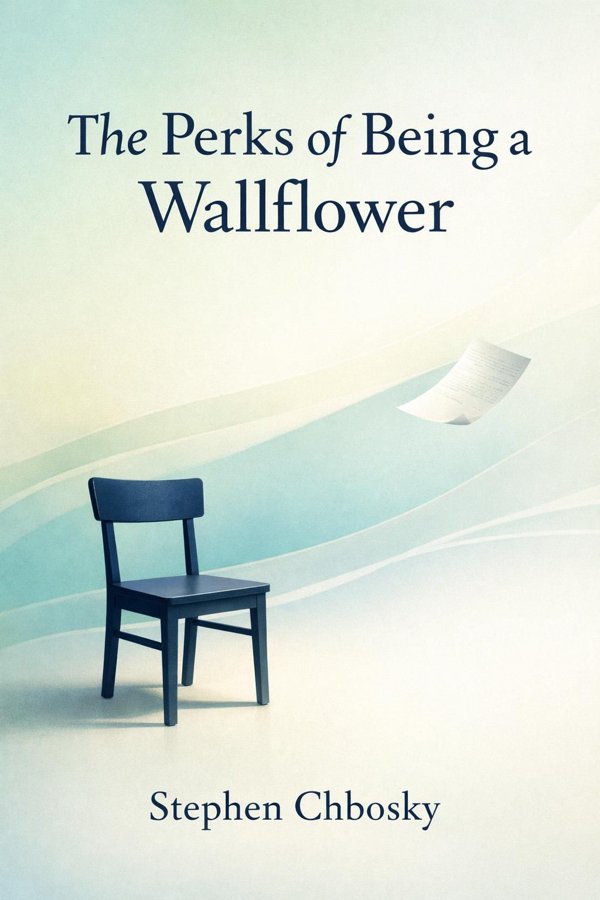
The Perks of Being a Wallflower: Summary & Key Insights
 10 min4 chaptersAudio available
What Is The Perks of Being a Wallflower About?
The Perks of Being a Wallflower by Stephen Chbosky is a bestsellers book spanning 4 pages. The novel follows Charlie, a shy and introspective teenager navigating the challenges of adolescence, friendship, love, and trauma while writing letters to an anonymous friend. Set in the early 1990s, it explores themes of identity, mental health, and the search for belonging.
This FizzRead summary covers all 4 key chapters of The Perks of Being a Wallflower in approximately 10 minutes, distilling the most important ideas, arguments, and takeaways from Stephen Chbosky's work. Also available as an audio summary and Key Quotes Podcast.
The Perks of Being a Wallflower
The novel follows Charlie, a shy and introspective teenager navigating the challenges of adolescence, friendship, love, and trauma while writing letters to an anonymous friend. Set in the early 1990s, it explores themes of identity, mental health, and the search for belonging.
Who Should Read The Perks of Being a Wallflower?
This book is perfect for anyone interested in bestsellers and looking to gain actionable insights in a short read. Whether you're a student, professional, or lifelong learner, the key ideas from The Perks of Being a Wallflower by Stephen Chbosky will help you think differently.
- ✓Readers who enjoy bestsellers and want practical takeaways
- ✓Professionals looking to apply new ideas to their work and life
- ✓Anyone who wants the core insights of The Perks of Being a Wallflower in just 10 minutes
Want the full summary?
Get instant access to this book summary and 100K+ more with Fizz Moment.
Get Free SummaryAvailable on App Store • Free to download
Key Chapters
Charlie begins high school under the weight of an unspoken grief — his friend Michael has killed himself, and the silence that follows feels unbearable. So he writes letters, not to anyone specific, but to a ‘friend’ he believes will understand. Those letters become his lifeline, his way to untangle the confusion of his mind and heart.
As he navigates those first lonely days of freshman year, Charlie’s world is colored by anxiety and a deep yearning for connection. His voice is tender, unsure, yet startlingly honest. He observes more than he acts, and that makes him the perfect witness to the beauty and brutality of teenage life. Through his letters, we learn of his family’s quiet dysfunction — a brother who’s distant, a sister who hides her own pain, parents who don’t always see what’s happening beneath their son’s surface. The simplicity of Charlie’s voice conceals the complexity of his feelings. He misses Michael deeply, but what he misses more is understanding.
In these early chapters, loneliness and empathy intertwine. Charlie doesn’t just feel for himself; he feels for everyone. He worries when his sister fights with her boyfriend, he wonders if his teachers are happy, and he finds solace in literature that reflects his own invisible struggles. His English teacher, Bill, becomes one of the few adults who recognizes Charlie’s depth. Bill gives him extra books to read, believing that through great stories, Charlie can find language for the emotions he cannot yet name.
These beginnings are not merely about setting the stage for a coming-of-age story; they are about what it means to live inside your own head when the world outside moves too fast. Charlie writes because he must, and in doing so, he invites us into the mind of someone who — without even realizing it — is fighting to stay whole.
Everything shifts when Charlie meets Patrick and Sam. They are seniors, self-assured and dazzlingly alive, and yet they carry their own invisible scars. To Charlie, they represent what freedom looks like — laughing loudly at football games, dancing at house parties, singing along to songs that seem to explain every feeling he’s ever had.
Patrick, witty and openly gay in a world not yet ready to understand him, becomes Charlie’s first true friend. Sam, radiant and kind but complicated in her own right, awakens in Charlie a new, confusing kind of love — one that alternates between heartbreak and joy. Through them, Charlie is welcomed into a group of friends who expand his world: they drink, they experiment, they drive fast through tunnels while blasting music that feels infinite. For the first time, Charlie experiences what belonging feels like — not as an abstract wish, but as a physical, exhilarating truth.
Yet this newfound belonging comes with its own shadows. Drugs and parties blur the line between joy and escape. Each of his friends battles something private — a broken family, a secret relationship, a sense of lost direction — and Charlie absorbs it all. He wants to fix what’s broken in others, perhaps because he cannot yet face what’s broken in himself. Through his honest observations, we see how adolescence becomes both liberation and confusion. Love feels easy when it’s about caring, but impossible when it requires owning your own desire.
Belonging, in Charlie’s letters, is not about popularity or attention. It’s about being seen in your truest form and still being accepted. When Patrick calls him a wallflower, he means it as a kind of compliment — someone who sees things, who understands. And in that moment, Charlie begins to believe that maybe observation itself can be an act of courage.
+ 2 more chapters — available in the FizzRead app
All Chapters in The Perks of Being a Wallflower
About the Author
Stephen Chbosky is an American novelist, screenwriter, and film director. He is best known for his debut novel 'The Perks of Being a Wallflower' and for writing and directing its 2012 film adaptation. Chbosky has also written screenplays for films such as 'Wonder' and 'Rent'.
Get This Summary in Your Preferred Format
Read or listen to the The Perks of Being a Wallflower summary by Stephen Chbosky anytime, anywhere. FizzRead offers multiple formats so you can learn on your terms — all free.
Available formats: App · Audio · PDF · EPUB — All included free with FizzRead
Download The Perks of Being a Wallflower PDF and EPUB Summary
Key Quotes from The Perks of Being a Wallflower
“Charlie begins high school under the weight of an unspoken grief — his friend Michael has killed himself, and the silence that follows feels unbearable.”
“Everything shifts when Charlie meets Patrick and Sam.”
Frequently Asked Questions about The Perks of Being a Wallflower
The Perks of Being a Wallflower by Stephen Chbosky is a bestsellers book that explores key ideas across 4 chapters. The novel follows Charlie, a shy and introspective teenager navigating the challenges of adolescence, friendship, love, and trauma while writing letters to an anonymous friend. Set in the early 1990s, it explores themes of identity, mental health, and the search for belonging.
You Might Also Like
The Godfather
Mario Puzo
10 min
The Handmaid's Tale
Margaret Atwood
10 min
The Hunger Games
Suzanne Collins
10 min
The Nightingale
Kristin Hannah
10 min
The Seven Husbands of Evelyn Hugo
Taylor Jenkins Reid
10 min
Backwater Justice
Fern Michaels
10 minBrowse by Category
Ready to read The Perks of Being a Wallflower?
Get the full summary and 100K+ more books with Fizz Moment.