
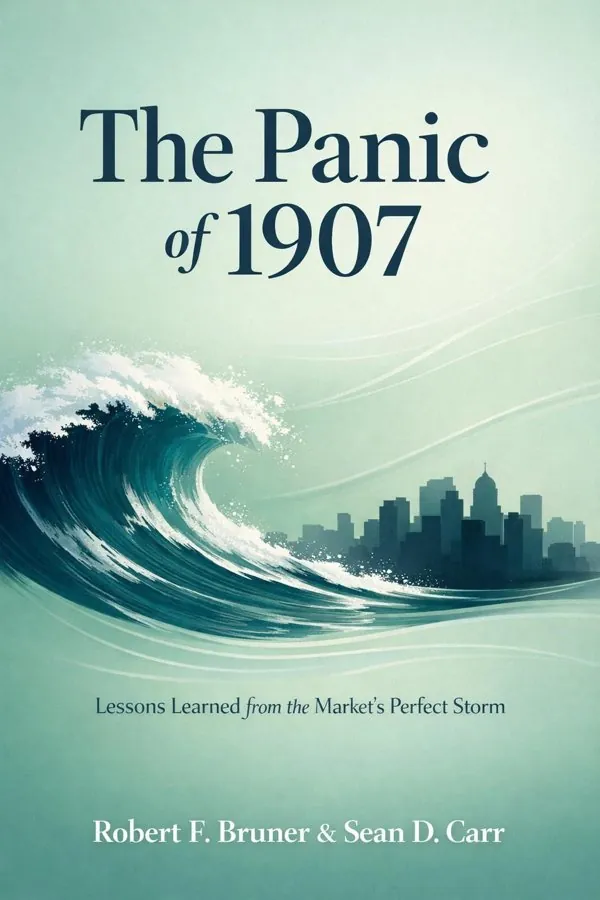
The Panic of 1907: Lessons Learned from the Market's Perfect Storm: Summary & Key Insights
by Robert F. Bruner, Sean D. Carr
 10 min4 chaptersAudio available
What Is The Panic of 1907: Lessons Learned from the Market's Perfect Storm About?
The Panic of 1907: Lessons Learned from the Market's Perfect Storm by Robert F. Bruner & Sean D. Carr is a finance book spanning 4 pages. In this detailed account, Robert F. Bruner and Sean D. Carr analyze the financial panic of 1907, exploring its causes, key players, and the decisive actions taken by J.P. Morgan to stabilize the markets. The book draws lessons from this historic crisis to illuminate patterns of financial instability and leadership under pressure.
This FizzRead summary covers all 4 key chapters of The Panic of 1907: Lessons Learned from the Market's Perfect Storm in approximately 10 minutes, distilling the most important ideas, arguments, and takeaways from Robert F. Bruner & Sean D. Carr's work. Also available as an audio summary and Key Quotes Podcast.
The Panic of 1907: Lessons Learned from the Market's Perfect Storm
In this detailed account, Robert F. Bruner and Sean D. Carr analyze the financial panic of 1907, exploring its causes, key players, and the decisive actions taken by J.P. Morgan to stabilize the markets. The book draws lessons from this historic crisis to illuminate patterns of financial instability and leadership under pressure.
Who Should Read The Panic of 1907: Lessons Learned from the Market's Perfect Storm?
This book is perfect for anyone interested in finance and looking to gain actionable insights in a short read. Whether you're a student, professional, or lifelong learner, the key ideas from The Panic of 1907: Lessons Learned from the Market's Perfect Storm by Robert F. Bruner & Sean D. Carr will help you think differently.
- ✓Readers who enjoy finance and want practical takeaways
- ✓Professionals looking to apply new ideas to their work and life
- ✓Anyone who wants the core insights of The Panic of 1907: Lessons Learned from the Market's Perfect Storm in just 10 minutes
Want the full summary?
Get instant access to this book summary and 100K+ more with Fizz Moment.
Get Free SummaryAvailable on App Store • Free to download
Key Chapters
The spark that ignited the Panic was, in itself, astonishingly small—a failed attempt to corner the market on United Copper Company stock by speculators F. Augustus Heinze and Charles W. Morse. Their gamble, dependent on borrowed money and confidence in their ability to manipulate supply, unraveled within days. When stock prices collapsed, their network of financing relationships collapsed with them. The ripple effect struck at the heart of several New York institutions, including the Knickerbocker Trust Company, one of the largest and most respected trusts in the country.
As rumors of insolvency spread, depositors began to withdraw their funds. In an environment where liquidity was everything, and word of mouth could shape reality faster than any official announcement, fear became self-fulfilling. Lines formed outside banks, reserves dwindled, and institutions once deemed robust found themselves unable to meet demand. Panic thrived on uncertainty—it was psychological combustion fueled by whispers and headlines.
What followed was a classic contagion scenario: the failure of one institution triggered doubts about others, regardless of their actual health. When Knickerbocker was forced to suspend operations, confidence evaporated throughout the financial district. Stock prices plunged, call money rates spiked to unprecedented levels, and interbank lending froze. Without a central bank to provide liquidity, crisis management fell to private actors who understood that stability depended on restoring belief as much as it did on restoring cash.
From our perspective, studying these events reveals how crises are rarely born from a single mistake—they emerge from systems primed for failure. The cornering of United Copper was the match, but the combustible material was a financial ecosystem saturated with leverage and speculation. Once that match lit, no one—except perhaps J.P. Morgan—could summon enough credibility to quench the fire.
+ 2 more chapters — available in the FizzRead app
All Chapters in The Panic of 1907: Lessons Learned from the Market's Perfect Storm
About the Authors
Robert F. Bruner is a professor and former dean at the Darden School of Business, University of Virginia, known for his work on financial crises and corporate finance. Sean D. Carr is an academic and journalist specializing in business and innovation studies.
Get This Summary in Your Preferred Format
Read or listen to the The Panic of 1907: Lessons Learned from the Market's Perfect Storm summary by Robert F. Bruner & Sean D. Carr anytime, anywhere. FizzRead offers multiple formats so you can learn on your terms — all free.
Available formats: App · Audio · PDF · EPUB — All included free with FizzRead
Download The Panic of 1907: Lessons Learned from the Market's Perfect Storm PDF and EPUB Summary
Key Quotes from The Panic of 1907: Lessons Learned from the Market's Perfect Storm
“The economy was expanding explosively, driven by technological innovation and urban growth.”
“The spark that ignited the Panic was, in itself, astonishingly small—a failed attempt to corner the market on United Copper Company stock by speculators F.”
Frequently Asked Questions about The Panic of 1907: Lessons Learned from the Market's Perfect Storm
The Panic of 1907: Lessons Learned from the Market's Perfect Storm by Robert F. Bruner & Sean D. Carr is a finance book that explores key ideas across 4 chapters. In this detailed account, Robert F. Bruner and Sean D. Carr analyze the financial panic of 1907, exploring its causes, key players, and the decisive actions taken by J.P. Morgan to stabilize the markets. The book draws lessons from this historic crisis to illuminate patterns of financial instability and leadership under pressure.
You Might Also Like




Browse by Category
Ready to read The Panic of 1907: Lessons Learned from the Market's Perfect Storm?
Get the full summary and 100K+ more books with Fizz Moment.