
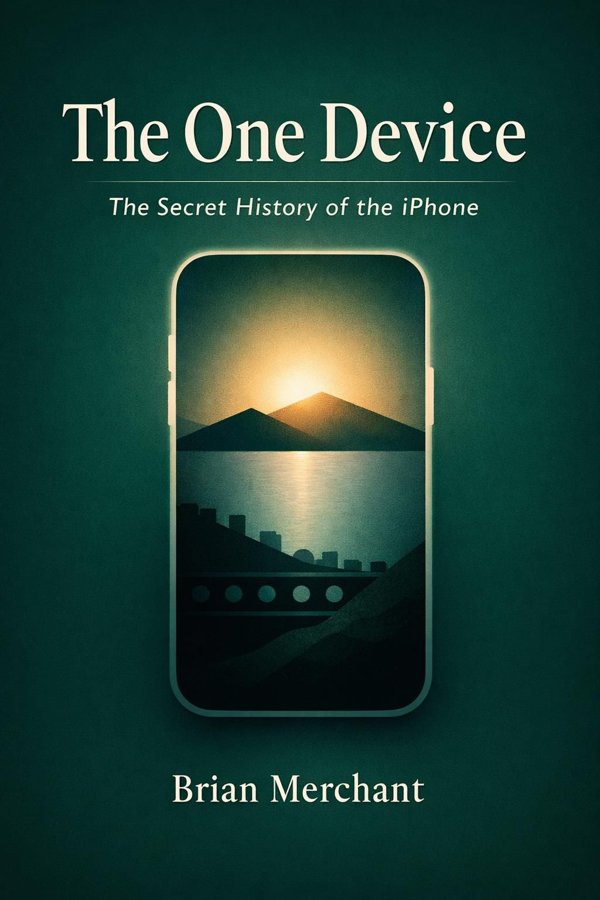
The One Device: The Secret History of the iPhone: Summary & Key Insights
 10 min11 chaptersAudio available
What Is The One Device: The Secret History of the iPhone About?
The One Device: The Secret History of the iPhone by Brian Merchant is a digital_culture book spanning 11 pages. The One Device: The Secret History of the iPhone es una investigación exhaustiva sobre el desarrollo del iPhone, el producto que transformó la tecnología moderna. Brian Merchant explora los orígenes del dispositivo, desde los laboratorios de Apple hasta las minas de litio y fábricas en Asia, revelando las historias humanas y técnicas detrás de su creación. El libro combina periodismo tecnológico, historia industrial y análisis cultural para mostrar cómo el iPhone cambió la forma en que vivimos y nos comunicamos.
This FizzRead summary covers all 11 key chapters of The One Device: The Secret History of the iPhone in approximately 10 minutes, distilling the most important ideas, arguments, and takeaways from Brian Merchant's work. Also available as an audio summary and Key Quotes Podcast.
The One Device: The Secret History of the iPhone
The One Device: The Secret History of the iPhone es una investigación exhaustiva sobre el desarrollo del iPhone, el producto que transformó la tecnología moderna. Brian Merchant explora los orígenes del dispositivo, desde los laboratorios de Apple hasta las minas de litio y fábricas en Asia, revelando las historias humanas y técnicas detrás de su creación. El libro combina periodismo tecnológico, historia industrial y análisis cultural para mostrar cómo el iPhone cambió la forma en que vivimos y nos comunicamos.
Who Should Read The One Device: The Secret History of the iPhone?
This book is perfect for anyone interested in digital_culture and looking to gain actionable insights in a short read. Whether you're a student, professional, or lifelong learner, the key ideas from The One Device: The Secret History of the iPhone by Brian Merchant will help you think differently.
- ✓Readers who enjoy digital_culture and want practical takeaways
- ✓Professionals looking to apply new ideas to their work and life
- ✓Anyone who wants the core insights of The One Device: The Secret History of the iPhone in just 10 minutes
Want the full summary?
Get instant access to this book summary and 100K+ more with Fizz Moment.
Get Free SummaryAvailable on App Store • Free to download
Key Chapters
The origins of the iPhone trace back not to a phone, but to music. The iPod had revolutionized portable listening, and within Apple, a question began to stir—what would come next? Engineers and designers knew the mobile phone market was booming, but Apple was not a phone company. Still, the danger was clear: if other phone makers learned to integrate music players, the iPod would become obsolete. Against this backdrop, small teams began exploring prototypes that merged communication and computing. Some envisioned a tablet-like interface; others sought to shrink a Mac down to pocket size.
These efforts were far from straightforward. In internal discussions, ideas came and went—a touchscreen iPod, a modified Motorola phone, even an experiment code-named “Project Purple.” What united them all was an ambition to reimagine how people interacted with technology. Out of this ferment would emerge the seed of the iPhone: the belief that the device could be not just another gadget, but a personal extension of the human hand and mind. The early ambition was stunningly broad, but it remained, for years, held back by technical limitations and Apple’s own secrecy.
At Apple, design was never ornament—it was essence. Under Jony Ive’s leadership, the design studio became a sanctuary of simplicity, a place where materials and form were questioned until only the essential remained. Ive and his team believed that technology served the user only when it disappeared into intuition. They sought a purity of experience: a device with no physical keyboard, only a glass surface that would respond to touch like an extension of the self.
The first prototypes were crude compared to the finished model that would stun the world. Multitouch screens were a struggling technology, and making them work reliably required immense experimentation. Ive insisted on materials that were both tactile and visually silent, negotiating with engineers who told him such precision might be impossible. Yet the team pursued a philosophy that combined aesthetic discipline with a fierce ergonomic empathy. What emerged was a design not merely engineered but sculpted—an object that felt inevitable, as if it had always been meant to exist. Its form became the face of a new era.
In this phase, the iPhone’s “look” became inseparable from its “feel.” The glass had to be flawless, the curve of its edges humane. Apple’s design studio operated like an artisan workshop inside a corporation, and that paradox—craftsmanship in the age of mass production—became one of the iPhone’s greatest contradictions and triumphs.
+ 9 more chapters — available in the FizzRead app
All Chapters in The One Device: The Secret History of the iPhone
About the Author
Brian Merchant es periodista y editor especializado en tecnología y cultura digital. Ha trabajado para medios como Vice y Motherboard, y es conocido por su enfoque crítico sobre la innovación tecnológica y sus implicaciones sociales. Merchant reside en Los Ángeles, California.
Get This Summary in Your Preferred Format
Read or listen to the The One Device: The Secret History of the iPhone summary by Brian Merchant anytime, anywhere. FizzRead offers multiple formats so you can learn on your terms — all free.
Available formats: App · Audio · PDF · EPUB — All included free with FizzRead
Download The One Device: The Secret History of the iPhone PDF and EPUB Summary
Key Quotes from The One Device: The Secret History of the iPhone
“The origins of the iPhone trace back not to a phone, but to music.”
“At Apple, design was never ornament—it was essence.”
Frequently Asked Questions about The One Device: The Secret History of the iPhone
The One Device: The Secret History of the iPhone by Brian Merchant is a digital_culture book that explores key ideas across 11 chapters. The One Device: The Secret History of the iPhone es una investigación exhaustiva sobre el desarrollo del iPhone, el producto que transformó la tecnología moderna. Brian Merchant explora los orígenes del dispositivo, desde los laboratorios de Apple hasta las minas de litio y fábricas en Asia, revelando las historias humanas y técnicas detrás de su creación. El libro combina periodismo tecnológico, historia industrial y análisis cultural para mostrar cómo el iPhone cambió la forma en que vivimos y nos comunicamos.
You Might Also Like
An Ugly Truth: Inside Facebook’s Battle for Domination
Sheera Frenkel, Cecilia Kang
10 min
Cyber Citizens
Ian Goodfellow
10 min
Digital Minimalism: Choosing a Focused Life in a Noisy World
Cal Newport
10 min
E‑Books & Beyond
Various Authors
10 min
The Future of Media
Various Authors
10 min
This Is Why We Can't Have Nice Things
Whitney Phillips
10 minBrowse by Category
Ready to read The One Device: The Secret History of the iPhone?
Get the full summary and 100K+ more books with Fizz Moment.