
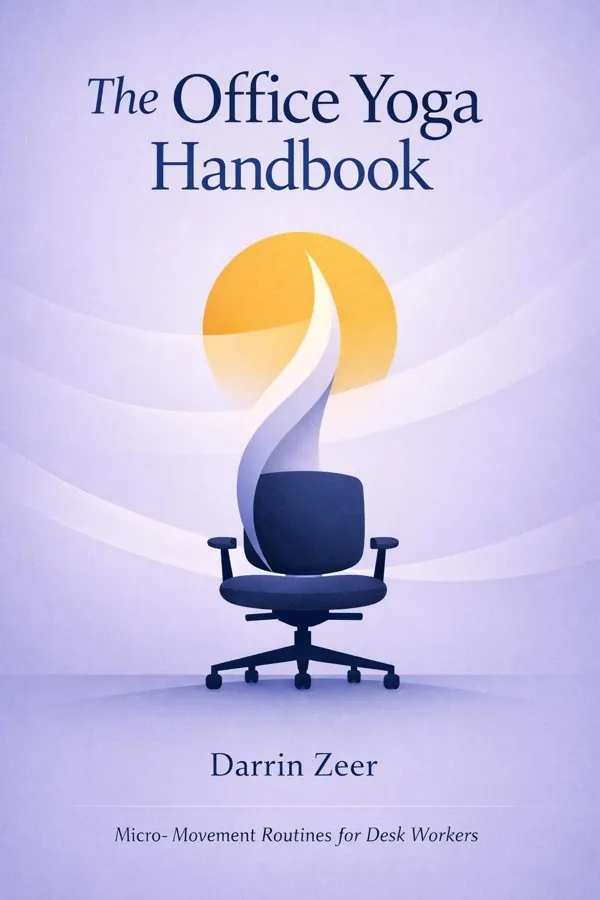
The Office Yoga Handbook: Micro-Movement Routines for Desk Workers: Summary & Key Insights
by Darrin Zeer
 10 min9 chaptersAudio available
Key Takeaways from The Office Yoga Handbook: Micro-Movement Routines for Desk Workers
The great irony of modern work is that jobs designed to increase efficiency often slowly decrease our physical well-being.
Big health changes often begin with very small motions.
Stress usually shows up in the breath before it shows up anywhere else.
For many desk workers, the neck, shoulders, jaw, and hands function like storage units for unprocessed stress.
The body suffers not only where it moves repeatedly, but also where it barely moves at all.
What Is The Office Yoga Handbook: Micro-Movement Routines for Desk Workers About?
The Office Yoga Handbook: Micro-Movement Routines for Desk Workers by Darrin Zeer is a wellness book spanning 6 pages. The Office Yoga Handbook: Micro-Movement Routines for Desk Workers is a practical wellness guide for people whose jobs keep them seated, staring at screens, and carrying stress in their bodies all day. Darrin Zeer argues that modern work has normalized stiffness, fatigue, shallow breathing, and poor posture, even though these problems are not inevitable. His answer is refreshingly simple: brief, discreet yoga-inspired movements that fit into the workday without requiring a mat, workout clothes, or a private room. Instead of treating health as something reserved for mornings, evenings, or weekends, he shows how to restore the body in small moments between emails, meetings, and deadlines. What makes the book valuable is its realism. Zeer understands office culture and offers routines that are subtle, accessible, and easy to repeat. As a yoga instructor focused on stress relief and workplace wellness, he brings both expertise and practicality to the topic. The result is a concise but effective handbook that helps desk workers reduce tension, improve focus, and turn the office itself into a place of recovery rather than constant physical strain.
This FizzRead summary covers all 9 key chapters of The Office Yoga Handbook: Micro-Movement Routines for Desk Workers in approximately 10 minutes, distilling the most important ideas, arguments, and takeaways from Darrin Zeer's work. Also available as an audio summary and Key Quotes Podcast.
The Office Yoga Handbook: Micro-Movement Routines for Desk Workers
The Office Yoga Handbook: Micro-Movement Routines for Desk Workers is a practical wellness guide for people whose jobs keep them seated, staring at screens, and carrying stress in their bodies all day. Darrin Zeer argues that modern work has normalized stiffness, fatigue, shallow breathing, and poor posture, even though these problems are not inevitable. His answer is refreshingly simple: brief, discreet yoga-inspired movements that fit into the workday without requiring a mat, workout clothes, or a private room. Instead of treating health as something reserved for mornings, evenings, or weekends, he shows how to restore the body in small moments between emails, meetings, and deadlines. What makes the book valuable is its realism. Zeer understands office culture and offers routines that are subtle, accessible, and easy to repeat. As a yoga instructor focused on stress relief and workplace wellness, he brings both expertise and practicality to the topic. The result is a concise but effective handbook that helps desk workers reduce tension, improve focus, and turn the office itself into a place of recovery rather than constant physical strain.
Who Should Read The Office Yoga Handbook: Micro-Movement Routines for Desk Workers?
This book is perfect for anyone interested in wellness and looking to gain actionable insights in a short read. Whether you're a student, professional, or lifelong learner, the key ideas from The Office Yoga Handbook: Micro-Movement Routines for Desk Workers by Darrin Zeer will help you think differently.
- ✓Readers who enjoy wellness and want practical takeaways
- ✓Professionals looking to apply new ideas to their work and life
- ✓Anyone who wants the core insights of The Office Yoga Handbook: Micro-Movement Routines for Desk Workers in just 10 minutes
Want the full summary?
Get instant access to this book summary and 100K+ more with Fizz Moment.
Get Free SummaryAvailable on App Store • Free to download
Key Chapters
The great irony of modern work is that jobs designed to increase efficiency often slowly decrease our physical well-being. Zeer begins from this central insight: the body was built for movement, yet the office asks it to remain fixed for hours at a time. Sitting itself is not the only problem. The deeper issue is prolonged sameness—eyes locked on screens, shoulders rounded forward, hands repeating tiny motions, and breathing becoming shallow under pressure. Over time, this creates a chain reaction of stiffness, fatigue, irritability, and reduced concentration. What many workers call normal office discomfort is often a predictable result of physical neglect.
Zeer frames immobility as the defining wellness challenge of contemporary desk life. Unlike earlier generations whose labor involved repetitive physical effort, many knowledge workers face the opposite imbalance: too little varied movement and too much static strain. The consequences appear in tight necks, compressed lower backs, aching wrists, and a vague sense of feeling "drained" by the end of the day. These symptoms are frequently treated as unavoidable, but the book argues they are signals that the body needs regular interruption of sedentary patterns.
A useful example is the worker who powers through three hours of email without standing, only to notice tension headaches and a sore upper back by lunch. Zeer would not recommend waiting until pain demands attention. Instead, he encourages noticing the first signs of compression and responding early with simple posture resets and stretches.
Actionable takeaway: stop viewing discomfort as part of your job description. Treat long periods of stillness as a wellness problem that deserves small, frequent correction throughout the workday.
Big health changes often begin with very small motions. That is the promise of Zeer’s micro-movement approach. Rather than asking desk workers to transform their schedule or commit to long exercise routines, he introduces brief, intentional movements that can be done in seconds at a workstation. A neck roll, shoulder lift, seated twist, wrist stretch, ankle rotation, or conscious lengthening of the spine may seem minor, yet their cumulative effect can be substantial. These movements interrupt stagnation, restore circulation, and remind the body that it is still alive and adaptable.
What makes micro-movements powerful is their practicality. Most people do not skip wellness because they reject it; they skip it because they think they need more time, privacy, or energy than they have. Zeer removes those barriers. His routines are discreet enough for cubicles, conference tables, and computer stations. They can happen while waiting for a file to load, before a meeting starts, or after finishing a phone call. In that sense, office yoga becomes less a separate activity and more a way of working.
The philosophy also matters psychologically. Small movements are easier to repeat than large commitments. A worker who will never attend a midday yoga class may still pause every hour to roll the shoulders back and take three full breaths. Those tiny acts build consistency, and consistency is what changes how the body feels over weeks and months.
Actionable takeaway: choose two or three movements you can perform without leaving your desk, and attach them to existing cues such as sending an email, ending a call, or checking the time.
Stress usually shows up in the breath before it shows up anywhere else. Zeer emphasizes that office wellness is not only mechanical but also mental. A tense worker typically breathes quickly, shallowly, and high in the chest, reinforcing feelings of urgency and strain. By contrast, a slower and more conscious breath signals safety to the nervous system, helping the body release unnecessary contraction. In this sense, breath is the fastest and most portable workplace reset available.
The book encourages workers to pair movement with awareness. This means noticing where tension gathers, how posture collapses under concentration, and when fatigue begins to dull attention. Awareness turns routine discomfort into useful information. Instead of discovering at 5 p.m. that your jaw has been clenched all day, you begin to catch the pattern in real time and soften it. Zeer’s mindset is gentle rather than perfectionistic: the goal is not ideal posture every second, but recurring moments of reconnection.
Practical applications are simple. Before opening a difficult email, inhale slowly and sit taller. During a long meeting, relax the tongue and soften the shoulders as you exhale. Every hour, pause for three full breaths, feeling the rib cage expand and the spine lengthen. These small acts improve focus because they interrupt automatic stress habits.
Zeer also suggests that the workspace itself can become a cue for mindfulness. Your chair, keyboard, and screen are no longer passive objects; they become reminders to breathe, align, and return to the body.
Actionable takeaway: build a three-breath reset into your day and use it whenever you feel rushed, tight, or mentally scattered.
For many desk workers, the neck, shoulders, jaw, and hands function like storage units for unprocessed stress. Zeer pays particular attention to these areas because they absorb the cost of screen work and deadline pressure. The head drifts forward, shoulders creep upward, wrists stay fixed over keyboards, and fingers repeat the same motions for hours. The result is not just physical discomfort but also reduced ease in thinking and working. When the upper body is locked, attention often feels locked too.
Zeer’s office yoga solutions focus on releasing these congested zones with gentle, repeatable actions. Neck stretches help restore range of motion after long periods of looking forward. Shoulder rolls and chest opening movements counter the rounded posture created by typing. Wrist flexes, finger extensions, and hand shakes relieve the overuse patterns associated with mouse and keyboard work. Even relaxing the face matters; softening the jaw and brow can reduce the subtle full-body strain that accumulates during concentration.
A practical office example is the worker who ends each day with numb fingers and a band of tension across the upper back. Instead of waiting for an evening workout, Zeer would suggest mini-interventions every hour: lift and drop the shoulders, rotate the wrists, spread the fingers wide, and gently turn the head side to side. These moves are quiet, fast, and preventive.
The broader lesson is that strain should be managed before it intensifies. Releasing tension in the upper body improves posture, breathing, and comfort all at once.
Actionable takeaway: create a two-minute upper-body reset involving neck stretch, shoulder roll, wrist stretch, and finger release, then repeat it several times during the day.
The body suffers not only where it moves repeatedly, but also where it barely moves at all. Zeer expands the focus beyond the upper body to the areas most dulled by prolonged sitting: the lower back, hips, legs, and eyes. When desk workers remain seated too long, the spine compresses, hip flexors tighten, circulation slows through the legs, and visual fatigue builds from constant near-focus. This combination produces the familiar office feeling of being both overstimulated and physically stagnant.
His suggested response is simple but strategic. Seated spinal twists and posture lifts help the back recover from slumping. Extending one leg at a time under the desk, rotating the ankles, or briefly standing to shift weight can wake up the lower body and improve circulation. Gentle forward folds or seated hip adjustments can counter the stiffness caused by fixed chair positions. Just as importantly, eye practices remind workers that vision is part of office wellness. Looking away from the screen, focusing on a distant point, blinking fully, and briefly closing the eyes can reduce strain and mental fatigue.
Consider someone who feels sleepy and achy every afternoon. The problem may not be laziness or lack of discipline, but physical stagnation. A standing stretch, calf raise, seated twist, and one-minute visual break may restore more energy than another cup of coffee. Zeer encourages using these movements proactively, especially before the afternoon slump becomes full-body exhaustion.
Actionable takeaway: every 60 to 90 minutes, reset your lower body and eyes by standing or shifting position, mobilizing the legs, and looking away from the screen for at least 20 to 30 seconds.
Wellness becomes sustainable when it stops feeling separate from life. One of Zeer’s most useful ideas is that office yoga is not a collection of isolated stretches but a new relationship to the workday itself. Instead of dividing time into "working" and "taking care of myself," he encourages weaving care directly into the rhythm of professional life. That shift matters because many workers postpone recovery until after work, when they are already depleted. Zeer’s method brings recovery forward into the moments when strain is actually happening.
This turns the workday into a series of checkpoints rather than a marathon of neglect. You arrive and set posture. Before meetings, you breathe. After calls, you release the shoulders. During long tasks, you pause to move the spine and rest the eyes. At lunch, you walk or stretch. Before leaving, you unwind the hands and neck so you do not carry office tension home. These rituals are modest, but they transform the emotional tone of work. The day feels less punishing because the body is no longer ignored.
The idea also supports mindfulness. Repeated physical check-ins sharpen awareness of mood, energy, and stress patterns. Workers often discover they are more patient, focused, and resilient when they do not wait until discomfort becomes overwhelming. Office yoga then becomes both physical hygiene and mental reset.
Actionable takeaway: design a simple daily sequence of movement cues linked to routine events—arrival, before meetings, midday, afternoon slump, and end of day—so mindfulness becomes part of how you work, not an extra task.
Many people overestimate the value of occasional effort and underestimate the power of repetition. Zeer’s method is built on the idea that in a desk-bound environment, consistency matters more than intensity. A vigorous evening workout can be beneficial, but it does not erase eight or ten hours of uninterrupted compression. The body responds best when it is gently reminded throughout the day to realign, breathe, and move. In office wellness, frequency is often more important than force.
This principle is liberating because it makes improvement achievable. You do not need to sweat, strain, or radically reorganize your life. You need a pattern. For example, one minute of movement every hour adds up to meaningful relief by the end of the week. A five-second posture correction repeated twenty times can be more useful for desk comfort than one long stretch performed only when pain becomes unbearable. Zeer’s routines work because they fit the reality of work rather than competing with it.
Consistency also helps habits survive stress. On busy days, people often abandon elaborate wellness plans. But they can usually still take one deep breath, sit tall, roll the shoulders, or stand for thirty seconds. By keeping the practices small, Zeer protects them from perfectionism. A partial reset still counts.
This idea can be applied by setting calendar reminders, using transitions as prompts, or pairing micro-movements with repeated actions like checking messages. Over time, the body begins to expect and benefit from regular variation.
Actionable takeaway: stop aiming for occasional ideal routines and commit instead to a minimum daily standard of brief movement breaks that you can realistically maintain even on your busiest days.
Behavior changes more easily when the environment supports it. Zeer’s office yoga philosophy implies that wellness is not just about willpower but also about cues. If your desk setup encourages slumping, overreaching, and uninterrupted sitting, discomfort will return no matter how good your intentions are. But if the workspace reminds you to align, breathe, and vary your posture, micro-movements become easier to remember and more effective to practice.
This does not require an expensive ergonomic overhaul. Small changes can make a big difference. Positioning the monitor at a more comfortable height can reduce neck strain. Keeping both feet grounded can improve stability and posture. Storing commonly used items so you occasionally reach, stand, or turn can add natural movement. Placing a note on the screen edge that says "breathe" or "shoulders" can prompt resets at the right time. Even choosing a water bottle that requires frequent refilling can encourage more standing and walking.
The environment also includes social permission. If possible, normalizing stretch breaks within a team can reduce self-consciousness. A leader who pauses before meetings for a brief posture or breathing reset creates a culture where body awareness is not seen as weakness or distraction.
Zeer’s larger point is that healthy work habits should not depend entirely on memory under stress. Good design lowers friction and turns movement into the path of least resistance.
Actionable takeaway: make three small changes to your workspace this week—one for posture, one for movement prompting, and one that encourages standing or visual breaks.
The most useful wellness systems are the ones people will actually continue using. Zeer’s lasting contribution is that he reframes yoga not as a performance, identity, or fitness challenge, but as an accessible antidote to workplace wear and tear. His approach meets people exactly where they are: in office clothes, under deadlines, with limited time and limited space. That practicality makes the method sustainable, especially for people who feel intimidated by traditional yoga culture or too busy for elaborate self-care routines.
The stress-reduction benefits are broader than flexibility. Regular micro-movements reduce the sense of being trapped in a chair, and conscious breathing interrupts cycles of reactivity. Posture changes can influence confidence and alertness. Small body resets often prevent emotional buildup, making workers less likely to spiral into frustration or exhaustion by midafternoon. In other words, physical ease supports mental steadiness.
A realistic application might involve someone who previously associated self-care with expensive memberships or weekend recovery rituals. Zeer offers a different model: wellness as something embedded in ordinary moments. Open the chest while reading. Stretch the hands after typing. Relax the jaw before a presentation. Shift the hips before they stiffen. These choices are modest but empowering because they restore a sense of agency.
The book ultimately suggests that caring for the body at work is not indulgent. It is a practical strategy for maintaining energy, productivity, and well-being over the long term.
Actionable takeaway: adopt office yoga as a daily maintenance practice, not an occasional rescue plan, and aim to reduce stress in real time rather than recovering from it only after work.
All Chapters in The Office Yoga Handbook: Micro-Movement Routines for Desk Workers
About the Author
Darrin Zeer is an American yoga instructor and wellness author best known for adapting yoga principles to the realities of busy modern life. Rather than focusing on complex poses or studio-based practice, he emphasizes approachable techniques for stress relief, posture improvement, and everyday physical comfort. His work often speaks to professionals who spend long hours sitting, multitasking, and dealing with the physical effects of screen-centered work. In The Office Yoga Handbook, Zeer brings that practical philosophy directly into the workplace, showing how small movements and breathing exercises can make office life less draining and more sustainable. His writing is valued for its clarity, accessibility, and realistic understanding of how people actually live and work.
Get This Summary in Your Preferred Format
Read or listen to the The Office Yoga Handbook: Micro-Movement Routines for Desk Workers summary by Darrin Zeer anytime, anywhere. FizzRead offers multiple formats so you can learn on your terms — all free.
Available formats: App · Audio · PDF · EPUB — All included free with FizzRead
Download The Office Yoga Handbook: Micro-Movement Routines for Desk Workers PDF and EPUB Summary
Key Quotes from The Office Yoga Handbook: Micro-Movement Routines for Desk Workers
“The great irony of modern work is that jobs designed to increase efficiency often slowly decrease our physical well-being.”
“Big health changes often begin with very small motions.”
“Stress usually shows up in the breath before it shows up anywhere else.”
“For many desk workers, the neck, shoulders, jaw, and hands function like storage units for unprocessed stress.”
“The body suffers not only where it moves repeatedly, but also where it barely moves at all.”
Frequently Asked Questions about The Office Yoga Handbook: Micro-Movement Routines for Desk Workers
The Office Yoga Handbook: Micro-Movement Routines for Desk Workers by Darrin Zeer is a wellness book that explores key ideas across 9 chapters. The Office Yoga Handbook: Micro-Movement Routines for Desk Workers is a practical wellness guide for people whose jobs keep them seated, staring at screens, and carrying stress in their bodies all day. Darrin Zeer argues that modern work has normalized stiffness, fatigue, shallow breathing, and poor posture, even though these problems are not inevitable. His answer is refreshingly simple: brief, discreet yoga-inspired movements that fit into the workday without requiring a mat, workout clothes, or a private room. Instead of treating health as something reserved for mornings, evenings, or weekends, he shows how to restore the body in small moments between emails, meetings, and deadlines. What makes the book valuable is its realism. Zeer understands office culture and offers routines that are subtle, accessible, and easy to repeat. As a yoga instructor focused on stress relief and workplace wellness, he brings both expertise and practicality to the topic. The result is a concise but effective handbook that helps desk workers reduce tension, improve focus, and turn the office itself into a place of recovery rather than constant physical strain.
More by Darrin Zeer
You Might Also Like
How We Heal: Uncover Your Power and Set Yourself Free
Alexandra Elle
10 min
A Year of Self-Care: Daily Practices and Inspiration for Caring for Yourself
Zoe Shaw
10 min
Biohacker’s Handbook: Upgrade Your Life
Olli Sovijärvi, Teemu Arina, Jaakko Halmetoja
10 min
Bliss More: How to Succeed in Meditation Without Really Trying
Light Watkins
10 min
Body Kindness: Transform Your Health from the Inside Out—and Never Say Diet Again
Rebecca Scritchfield
10 min
Cook, Eat, Run: Cook Fast, Boost Performance with 75 Ultimate Recipes for Runners
Charlie Watson
10 minBrowse by Category
Ready to read The Office Yoga Handbook: Micro-Movement Routines for Desk Workers?
Get the full summary and 100K+ more books with Fizz Moment.