
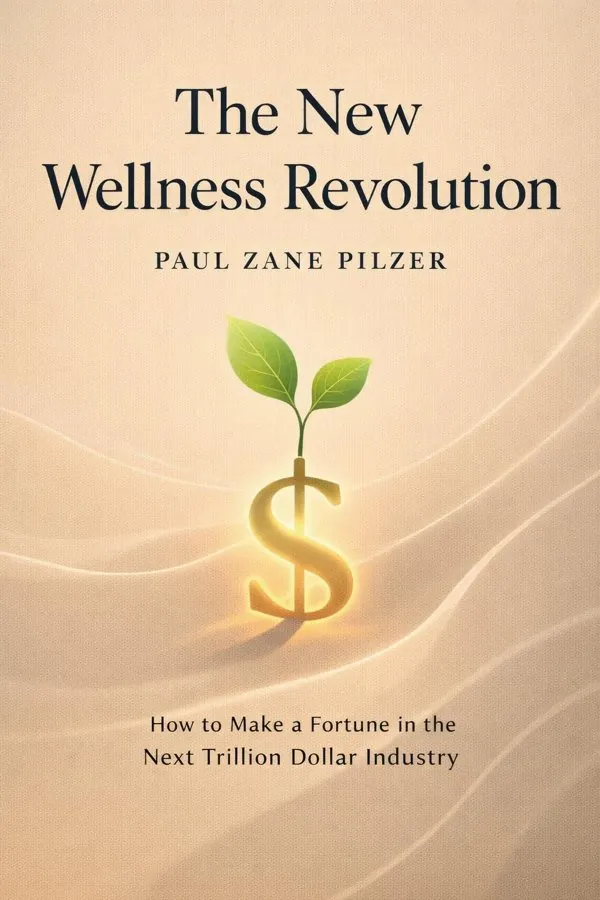
The New Wellness Revolution: How to Make a Fortune in the Next Trillion Dollar Industry: Summary & Key Insights
 10 min6 chaptersAudio available
What Is The New Wellness Revolution: How to Make a Fortune in the Next Trillion Dollar Industry About?
The New Wellness Revolution: How to Make a Fortune in the Next Trillion Dollar Industry by Paul Zane Pilzer is a economics book spanning 6 pages. This book explores the emerging wellness industry, analyzing how economic, technological, and social trends are driving a global shift toward preventive health and personal well-being. Pilzer outlines opportunities for entrepreneurs and investors to participate in this trillion-dollar market, emphasizing the intersection of business innovation and human health.
This FizzRead summary covers all 6 key chapters of The New Wellness Revolution: How to Make a Fortune in the Next Trillion Dollar Industry in approximately 10 minutes, distilling the most important ideas, arguments, and takeaways from Paul Zane Pilzer's work. Also available as an audio summary and Key Quotes Podcast.
The New Wellness Revolution: How to Make a Fortune in the Next Trillion Dollar Industry
This book explores the emerging wellness industry, analyzing how economic, technological, and social trends are driving a global shift toward preventive health and personal well-being. Pilzer outlines opportunities for entrepreneurs and investors to participate in this trillion-dollar market, emphasizing the intersection of business innovation and human health.
Who Should Read The New Wellness Revolution: How to Make a Fortune in the Next Trillion Dollar Industry?
This book is perfect for anyone interested in economics and looking to gain actionable insights in a short read. Whether you're a student, professional, or lifelong learner, the key ideas from The New Wellness Revolution: How to Make a Fortune in the Next Trillion Dollar Industry by Paul Zane Pilzer will help you think differently.
- ✓Readers who enjoy economics and want practical takeaways
- ✓Professionals looking to apply new ideas to their work and life
- ✓Anyone who wants the core insights of The New Wellness Revolution: How to Make a Fortune in the Next Trillion Dollar Industry in just 10 minutes
Want the full summary?
Get instant access to this book summary and 100K+ more with Fizz Moment.
Get Free SummaryAvailable on App Store • Free to download
Key Chapters
For most of the twentieth century, the healthcare industry was focused on one thing—treating disease after it appeared. This reactive system defined success in terms of procedures performed, drugs prescribed, and hospital stays completed. Yet as I began to study the economics behind it, I realized this system was both unsustainable and misaligned with human potential. It rewarded sickness instead of wellness.
At the turn of the millennium, several converging forces began to rewrite that equation. The first was technological change. The rapid rise of biotechnology, nutritional science, and data analytics made it possible to detect and prevent disease earlier than ever before. Then came the information revolution, which democratized health knowledge. Consumers could now learn about nutrition, exercise, and preventive care in ways once limited to university labs or physician offices. Add to that the aging baby boomer generation—wealthy, informed, and unwilling to accept aging as decline—and the stage was set.
This historical shift marks more than a medical evolution; it’s an economic revolution. In the same way agriculture gave birth to industrial society, wellness is redefining economic production around human vitality. People are now consumers of wellness goods—from organic foods and supplements to yoga retreats and anti-aging technology. The system is transitioning from selling cures to selling prevention—and to products that empower individuals to live healthier on their own terms.
The old medical system will not vanish overnight, but it will increasingly occupy a smaller share of the health economy. In its place, the wellness economy—rapid, renewable, and holistic—is becoming the growth engine. Understanding this change is the first step toward participating in it.
To understand the scale of the wellness revolution, one must first grasp how wide its boundaries are. When I speak of the wellness industry, I refer to every sector that helps people look, feel, and perform better without relying on medical intervention. That includes nutrition and dietary supplements, fitness clubs, anti-aging products, weight management services, health-oriented technology, spa and personal care, and even preventive diagnostics.
In the early 2000s, these categories may have seemed peripheral compared to traditional medicine, but their growth rates were exponential. For instance, nutritional supplements expanded at double-digit rates each year while pharmaceutical growth slowed. Health clubs multiplied worldwide, wellness tourism emerged as a major global trend, and companies from Nike to Nestlé pivoted toward lifestyle and preventive product lines. These were not coincidences—they were early signals of structural change.
What makes this industry so uniquely powerful is its alignment with universal human desires: longevity, vitality, and happiness. Unlike the sickness business, which depends on fear, wellness operates on aspiration. Consumers don’t buy a vitamin supplement because they’re sick; they buy it because they want to feel stronger, live longer, or simply stay young. This is a far more sustainable engine of demand.
At a macroeconomic level, I estimate the wellness economy at over one trillion dollars—a figure that continues to climb. But that number only captures the measurable market. The deeper transformation lies in how wellness values are redefining consumer expectations across all sectors—from beverages and fashion to housing and travel. Every business today must consider how it contributes to a customer’s well-being, or it risks becoming irrelevant in the wellness age.
+ 4 more chapters — available in the FizzRead app
All Chapters in The New Wellness Revolution: How to Make a Fortune in the Next Trillion Dollar Industry
About the Author
Paul Zane Pilzer is an American economist, entrepreneur, and author known for his work on economic theory and wellness economics. He has served as an economic advisor and written several influential books on business and health.
Get This Summary in Your Preferred Format
Read or listen to the The New Wellness Revolution: How to Make a Fortune in the Next Trillion Dollar Industry summary by Paul Zane Pilzer anytime, anywhere. FizzRead offers multiple formats so you can learn on your terms — all free.
Available formats: App · Audio · PDF · EPUB — All included free with FizzRead
Download The New Wellness Revolution: How to Make a Fortune in the Next Trillion Dollar Industry PDF and EPUB Summary
Key Quotes from The New Wellness Revolution: How to Make a Fortune in the Next Trillion Dollar Industry
“For most of the twentieth century, the healthcare industry was focused on one thing—treating disease after it appeared.”
“To understand the scale of the wellness revolution, one must first grasp how wide its boundaries are.”
Frequently Asked Questions about The New Wellness Revolution: How to Make a Fortune in the Next Trillion Dollar Industry
The New Wellness Revolution: How to Make a Fortune in the Next Trillion Dollar Industry by Paul Zane Pilzer is a economics book that explores key ideas across 6 chapters. This book explores the emerging wellness industry, analyzing how economic, technological, and social trends are driving a global shift toward preventive health and personal well-being. Pilzer outlines opportunities for entrepreneurs and investors to participate in this trillion-dollar market, emphasizing the intersection of business innovation and human health.
You Might Also Like

Business Adventures
John Brooks
10 min
Nudge
Richard H. Thaler, Cass R. Sunstein
10 min
The Hitchhiker"s Guide to the Galaxy
Douglas Adams
10 minThe Muqaddimah
Ibn Khaldun
10 minThe Outsiders
William N. Thorndike
10 min
A Little History of Economics
Niall Kishtainy
10 minBrowse by Category
Ready to read The New Wellness Revolution: How to Make a Fortune in the Next Trillion Dollar Industry?
Get the full summary and 100K+ more books with Fizz Moment.