
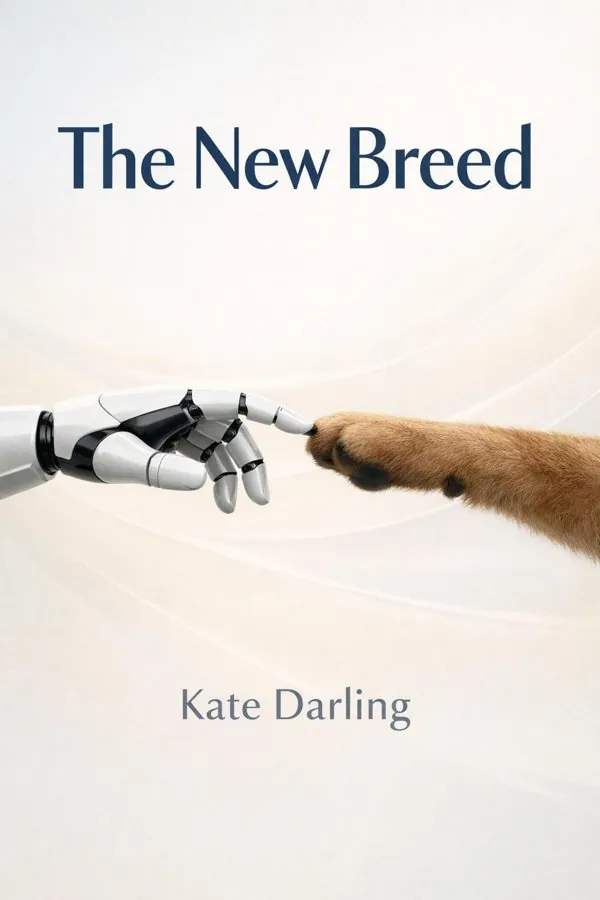
The New Breed: What Our History with Animals Reveals About Our Future with Robots: Summary & Key Insights
by Kate Darling
 10 min10 chaptersAudio available
What Is The New Breed: What Our History with Animals Reveals About Our Future with Robots About?
The New Breed: What Our History with Animals Reveals About Our Future with Robots by Kate Darling is a ai_ml book spanning 10 pages. In this thought-provoking work, Kate Darling explores the parallels between our relationships with animals and our emerging interactions with robots. Drawing on history, psychology, and ethics, she argues that understanding how humans have treated animals can guide us in shaping a more empathetic and responsible future with intelligent machines.
This FizzRead summary covers all 10 key chapters of The New Breed: What Our History with Animals Reveals About Our Future with Robots in approximately 10 minutes, distilling the most important ideas, arguments, and takeaways from Kate Darling's work. Also available as an audio summary and Key Quotes Podcast.
The New Breed: What Our History with Animals Reveals About Our Future with Robots
In this thought-provoking work, Kate Darling explores the parallels between our relationships with animals and our emerging interactions with robots. Drawing on history, psychology, and ethics, she argues that understanding how humans have treated animals can guide us in shaping a more empathetic and responsible future with intelligent machines.
Who Should Read The New Breed: What Our History with Animals Reveals About Our Future with Robots?
This book is perfect for anyone interested in ai_ml and looking to gain actionable insights in a short read. Whether you're a student, professional, or lifelong learner, the key ideas from The New Breed: What Our History with Animals Reveals About Our Future with Robots by Kate Darling will help you think differently.
- ✓Readers who enjoy ai_ml and want practical takeaways
- ✓Professionals looking to apply new ideas to their work and life
- ✓Anyone who wants the core insights of The New Breed: What Our History with Animals Reveals About Our Future with Robots in just 10 minutes
Want the full summary?
Get instant access to this book summary and 100K+ more with Fizz Moment.
Get Free SummaryAvailable on App Store • Free to download
Key Chapters
To understand our future with robots, we must first look at our long history with animals. The story begins thousands of years ago, when humans first domesticated wolves, cattle, and horses. These acts of domestication were not merely technological achievements — they were social transformations. When we learned to work with animals, we reshaped both species and societies. Animals labored, fought, and sometimes lived beside us like kin. Over time, our relationships diversified: animals became tools, partners, symbols, and companions.
In tracing this evolution, we see how necessity turned to empathy. Farm animals gave rise to ethical questions: how should we treat creatures that serve us yet feel pain? The shift from exploitation to compassion marked a turning point in human ethics. The same shift occurred when we invited pets into our homes — redefining intimacy with non-human beings.
The historical record shows that every stage of technological advancement was mirrored by a stage of emotional sophistication. As we moved from herding to industry, our interactions with animals reflected changing ideas of control and care. We learned to put limits on cruelty, to grant rights, and, in many cases, to recognize agency.
This evolution parallels what we face now with robots. Just as the horse once extended human mobility, so autonomous machines extend our capabilities today. Our challenge lies not only in teaching them tasks but in understanding what kind of relationship we are building — one of domination or cooperation, replacement or coexistence.
When people talk about robots, they often imagine mechanical servants or surrogates for human labor. I propose we see them differently: robots are neither people nor mere tools — they occupy a relational space much closer to animals. Like animals, they have autonomy, react unpredictably, inspire empathy, and elicit moral reflection.
I describe robots not as sentient beings but as social actors. They provoke human emotional responses, shape social structures, and demand moral choices. Robots perform work as animals once did — yet they also inhabit our homes and our social lives. We look into their 'eyes,' speak to them, and assign them emotional significance. This behavior tells us less about the robots themselves and more about our innate drive to relate.
Our future depends on recognizing this dynamic. Robots will not merely execute commands; they will change the way we think about responsibility and cooperation. The parallels with animal labor and companionship remind us that our responses to autonomy must be informed by empathy and ethics, not just regulation. We must learn to accept robots for what they are — new kinds of participants in our human narrative.
+ 8 more chapters — available in the FizzRead app
All Chapters in The New Breed: What Our History with Animals Reveals About Our Future with Robots
About the Author
Kate Darling is a researcher at the MIT Media Lab, specializing in technology ethics and the social implications of robotics. Her work focuses on the intersection of law, technology, and human-robot interaction.
Get This Summary in Your Preferred Format
Read or listen to the The New Breed: What Our History with Animals Reveals About Our Future with Robots summary by Kate Darling anytime, anywhere. FizzRead offers multiple formats so you can learn on your terms — all free.
Available formats: App · Audio · PDF · EPUB — All included free with FizzRead
Download The New Breed: What Our History with Animals Reveals About Our Future with Robots PDF and EPUB Summary
Key Quotes from The New Breed: What Our History with Animals Reveals About Our Future with Robots
“To understand our future with robots, we must first look at our long history with animals.”
“When people talk about robots, they often imagine mechanical servants or surrogates for human labor.”
Frequently Asked Questions about The New Breed: What Our History with Animals Reveals About Our Future with Robots
The New Breed: What Our History with Animals Reveals About Our Future with Robots by Kate Darling is a ai_ml book that explores key ideas across 10 chapters. In this thought-provoking work, Kate Darling explores the parallels between our relationships with animals and our emerging interactions with robots. Drawing on history, psychology, and ethics, she argues that understanding how humans have treated animals can guide us in shaping a more empathetic and responsible future with intelligent machines.
You Might Also Like
Life 3.0
Max Tegmark
10 min
Superintelligence
Nick Bostrom
10 min
TensorFlow in Action
Thushan Ganegedara
10 min
AI Made Simple: A Beginner’s Guide to Generative AI, ChatGPT, and the Future of Work
Rajeev Kapur
10 min
AI Snake Oil
Arvind Narayanan, Sayash Kapoor
10 min
AI Superpowers: China, Silicon Valley, and the New World Order
Kai-Fu Lee
10 minBrowse by Category
Ready to read The New Breed: What Our History with Animals Reveals About Our Future with Robots?
Get the full summary and 100K+ more books with Fizz Moment.