
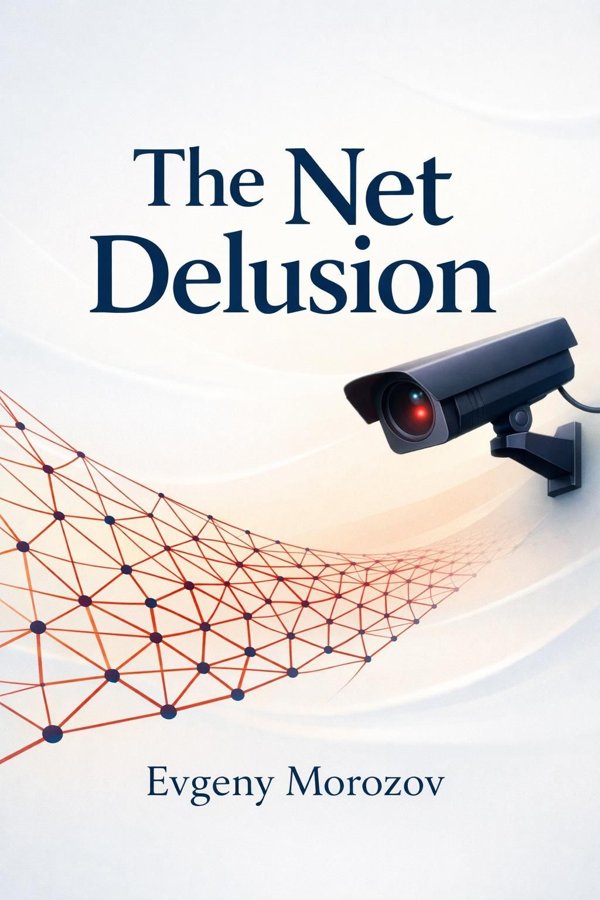
The Net Delusion: The Dark Side of Internet Freedom: Summary & Key Insights
 10 min5 chaptersAudio available
What Is The Net Delusion: The Dark Side of Internet Freedom About?
The Net Delusion: The Dark Side of Internet Freedom by Evgeny Morozov is a digital_culture book spanning 5 pages. In this influential work, Evgeny Morozov challenges the widespread belief that the internet inherently promotes democracy and freedom. He argues that authoritarian regimes have learned to exploit digital technologies for surveillance, propaganda, and control, turning the web into a tool of repression rather than liberation. Drawing on global case studies, Morozov exposes the naivety of 'cyber-utopianism' and calls for a more realistic understanding of technology’s political impact.
This FizzRead summary covers all 5 key chapters of The Net Delusion: The Dark Side of Internet Freedom in approximately 10 minutes, distilling the most important ideas, arguments, and takeaways from Evgeny Morozov's work. Also available as an audio summary and Key Quotes Podcast.
The Net Delusion: The Dark Side of Internet Freedom
In this influential work, Evgeny Morozov challenges the widespread belief that the internet inherently promotes democracy and freedom. He argues that authoritarian regimes have learned to exploit digital technologies for surveillance, propaganda, and control, turning the web into a tool of repression rather than liberation. Drawing on global case studies, Morozov exposes the naivety of 'cyber-utopianism' and calls for a more realistic understanding of technology’s political impact.
Who Should Read The Net Delusion: The Dark Side of Internet Freedom?
This book is perfect for anyone interested in digital_culture and looking to gain actionable insights in a short read. Whether you're a student, professional, or lifelong learner, the key ideas from The Net Delusion: The Dark Side of Internet Freedom by Evgeny Morozov will help you think differently.
- ✓Readers who enjoy digital_culture and want practical takeaways
- ✓Professionals looking to apply new ideas to their work and life
- ✓Anyone who wants the core insights of The Net Delusion: The Dark Side of Internet Freedom in just 10 minutes
Want the full summary?
Get instant access to this book summary and 100K+ more with Fizz Moment.
Get Free SummaryAvailable on App Store • Free to download
Key Chapters
In the 1990s and early 2000s, the Internet emerged as a symbol of liberation. Western policymakers, especially in the United States, began speaking of digital technologies as synonymous with political progress. Think tanks and media outlets portrayed the Web as a virtual global agora, where free exchange of ideas would inevitably undermine censorship and topple dictators. This narrative was reinforced by early high-profile events—the fall of the Berlin Wall framed as a prelude to a wired world, the spread of mobile phones across Eastern Europe, and the successes of online activism in Western democracies.
But this narrative ignored an essential lesson of history: every new communication technology—from the printing press to the radio—has been harnessed not only for emancipation but also for domination. Radio fueled Hitler’s propaganda machine. Television, celebrated in its infancy for its openness, later became a vehicle of state control in many authoritarian societies. The Internet, in this sense, was no different. The error lay in assuming its decentralized architecture automatically guaranteed decentralized outcomes.
Western optimism about Internet freedom crystallized into policy through initiatives like the U.S. State Department’s promotion of digital diplomacy, which treated online tools as substitutes for political engagement or institution-building. The problem with such policies was not their advocacy of free access but their blindness to how technology interacts with entrenched political interests. By treating the Internet as a universal elixir, leaders disregarded local history, culture, and the adaptability of authoritarian regimes.
+ 3 more chapters — available in the FizzRead app
All Chapters in The Net Delusion: The Dark Side of Internet Freedom
About the Author
Evgeny Morozov is a Belarusian-born writer and researcher known for his critical analysis of the social and political implications of technology. He has written extensively on internet freedom, digital politics, and the intersection of technology and society, contributing to publications such as The New Republic, The Economist, and The New York Times.
Get This Summary in Your Preferred Format
Read or listen to the The Net Delusion: The Dark Side of Internet Freedom summary by Evgeny Morozov anytime, anywhere. FizzRead offers multiple formats so you can learn on your terms — all free.
Available formats: App · Audio · PDF · EPUB — All included free with FizzRead
Download The Net Delusion: The Dark Side of Internet Freedom PDF and EPUB Summary
Key Quotes from The Net Delusion: The Dark Side of Internet Freedom
“In the 1990s and early 2000s, the Internet emerged as a symbol of liberation.”
“The Internet was supposed to be a nightmare for dictators.”
Frequently Asked Questions about The Net Delusion: The Dark Side of Internet Freedom
The Net Delusion: The Dark Side of Internet Freedom by Evgeny Morozov is a digital_culture book that explores key ideas across 5 chapters. In this influential work, Evgeny Morozov challenges the widespread belief that the internet inherently promotes democracy and freedom. He argues that authoritarian regimes have learned to exploit digital technologies for surveillance, propaganda, and control, turning the web into a tool of repression rather than liberation. Drawing on global case studies, Morozov exposes the naivety of 'cyber-utopianism' and calls for a more realistic understanding of technology’s political impact.
You Might Also Like
An Ugly Truth: Inside Facebook’s Battle for Domination
Sheera Frenkel, Cecilia Kang
10 min
Cyber Citizens
Ian Goodfellow
10 min
Digital Minimalism: Choosing a Focused Life in a Noisy World
Cal Newport
10 min
E‑Books & Beyond
Various Authors
10 min
The Future of Media
Various Authors
10 min
This Is Why We Can't Have Nice Things
Whitney Phillips
10 minBrowse by Category
Ready to read The Net Delusion: The Dark Side of Internet Freedom?
Get the full summary and 100K+ more books with Fizz Moment.