
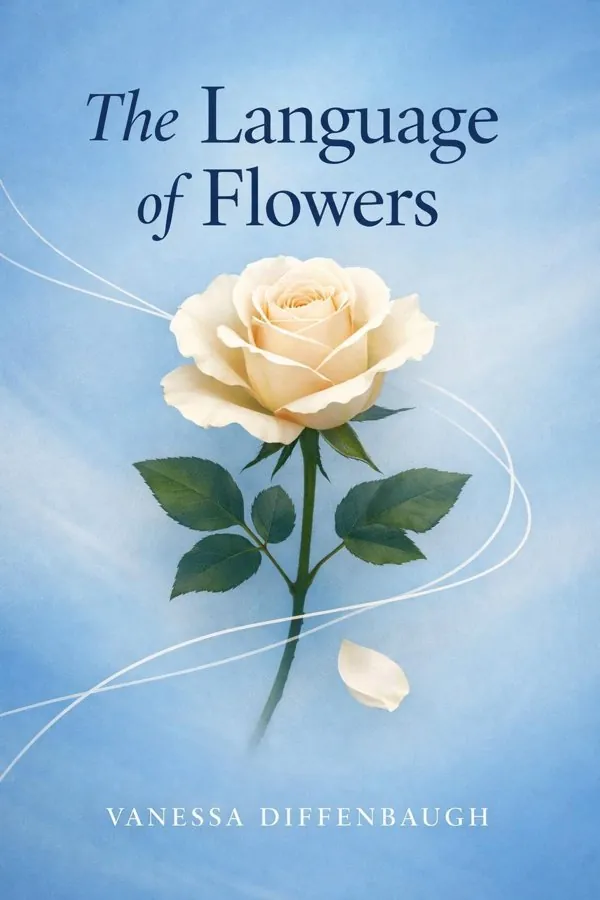
The Language of Flowers: Summary & Key Insights
 10 min3 chaptersAudio available
What Is The Language of Flowers About?
The Language of Flowers by Vanessa Diffenbaugh is a bestsellers book spanning 3 pages. A novel that intertwines the Victorian meanings of flowers with the story of a young woman, Victoria Jones, who has aged out of the foster care system and struggles to find her place in the world. Through her knowledge of flowers and their symbolic meanings, she learns to communicate emotions and heal from her past trauma while discovering love and forgiveness.
This FizzRead summary covers all 3 key chapters of The Language of Flowers in approximately 10 minutes, distilling the most important ideas, arguments, and takeaways from Vanessa Diffenbaugh's work. Also available as an audio summary and Key Quotes Podcast.
The Language of Flowers
A novel that intertwines the Victorian meanings of flowers with the story of a young woman, Victoria Jones, who has aged out of the foster care system and struggles to find her place in the world. Through her knowledge of flowers and their symbolic meanings, she learns to communicate emotions and heal from her past trauma while discovering love and forgiveness.
Who Should Read The Language of Flowers?
This book is perfect for anyone interested in bestsellers and looking to gain actionable insights in a short read. Whether you're a student, professional, or lifelong learner, the key ideas from The Language of Flowers by Vanessa Diffenbaugh will help you think differently.
- ✓Readers who enjoy bestsellers and want practical takeaways
- ✓Professionals looking to apply new ideas to their work and life
- ✓Anyone who wants the core insights of The Language of Flowers in just 10 minutes
Want the full summary?
Get instant access to this book summary and 100K+ more with Fizz Moment.
Get Free SummaryAvailable on App Store • Free to download
Key Chapters
When we first meet Victoria Jones, she has just turned eighteen and aged out of the foster care system. Freedom should mean possibility — yet for her, it feels like exile. She wanders the streets of San Francisco, hungry and disconnected, her only possessions a few crumpled bills and an aching distrust of human contact. Throughout her life, each new foster placement has meant a repetition of the same pattern: brief hope followed by disappointment, abandonment, or betrayal. It has taught her that love is a dangerous illusion, and attachment a prelude to pain.
But hidden within this brokenness is a peculiar gift. During one of her few stable placements, she lived with Elizabeth, a solitary vineyard owner who tried to nurture her not only with food and shelter, but with something rarer — knowledge. Elizabeth introduced her to the Victorian language of flowers, teaching her how a bouquet could speak emotions too fragile or too shameful to articulate directly. Camellia for admiration, basil for hate, moss for maternal love — everything had meaning. For Victoria, who could not speak her gratitude or her fear, the flowers became a private vocabulary of emotion.
Her time with Elizabeth might have saved her, but as with so many fragile beginnings in her life, it ended abruptly. A misunderstanding — born of mistrust and fear — leads Victoria to destroy what affection she had slowly begun to accept. She is removed from Elizabeth’s house, carrying with her only the floral language that had connected them. When she leaves, it becomes clear that this language is more than a memory; it is the sole bridge between her past and any future she might dare to imagine.
By the time she reaches adulthood, Victoria’s language of flowers becomes both her shield and her wound. She uses it to communicate the emotions she cannot voice, but she is also trapped by it: believing that a sprig of lavender or a bloom of sage can substitute for human intimacy. It is in this paradox — how we use symbols to protect ourselves from the very feelings they represent — that her journey truly begins.
Victoria’s life begins to take shape in the most unexpected of places — a flower shop. After nights spent sleeping in parks, she encounters Renata, an older florist whose shop seems almost like a sanctuary of color and scent. Renata recognizes Victoria’s instinctive touch with flowers and offers her part-time work. For the first time, Victoria feels a kind of belonging, a space where her knowledge seems to matter.
In arranging blooms for customers, she begins to rediscover a voice she thought she had lost. A mother mourning her daughter receives a bouquet that speaks of remembrance and grace. A nervous young man tries to apologize through hyacinths and white roses. Each small encounter forces Victoria to translate fragility into form, emotion into petal. What she cannot yet admit to herself — her own longing to heal — she begins to express vicariously for others.
It is here that she meets Grant, a quiet flower vendor whose familiarity with floral meanings both unnerves and attracts her. He, too, knows this language, and their first exchanges are full of unspoken emotion. A thistle might mean misanthropy; a daisy, innocence. Instead of speaking, they send each other messages through arrangements — an intricate, risky courtship of symbols rather than words.
But Grant carries a connection that entwines past and present: he is Elizabeth’s nephew. The moment Victoria discovers this, her carefully balanced world begins to tremble. She is forced to confront the buried memories of her life with Elizabeth — the brief warmth, the devastating rupture, the shame that followed. Through Grant, she must re-enter the garden of her pain and decide whether the flowers she clings to will continue to serve as her walls, or become her bridges.
+ 1 more chapters — available in the FizzRead app
All Chapters in The Language of Flowers
About the Author
Vanessa Diffenbaugh is an American novelist born in 1978. She is known for her debut novel 'The Language of Flowers', which became a New York Times bestseller. Diffenbaugh has also been active in supporting foster youth and co-founded the Camellia Network to help young people transition from foster care to independence.
Get This Summary in Your Preferred Format
Read or listen to the The Language of Flowers summary by Vanessa Diffenbaugh anytime, anywhere. FizzRead offers multiple formats so you can learn on your terms — all free.
Available formats: App · Audio · PDF · EPUB — All included free with FizzRead
Download The Language of Flowers PDF and EPUB Summary
Key Quotes from The Language of Flowers
“When we first meet Victoria Jones, she has just turned eighteen and aged out of the foster care system.”
“Victoria’s life begins to take shape in the most unexpected of places — a flower shop.”
Frequently Asked Questions about The Language of Flowers
The Language of Flowers by Vanessa Diffenbaugh is a bestsellers book that explores key ideas across 3 chapters. A novel that intertwines the Victorian meanings of flowers with the story of a young woman, Victoria Jones, who has aged out of the foster care system and struggles to find her place in the world. Through her knowledge of flowers and their symbolic meanings, she learns to communicate emotions and heal from her past trauma while discovering love and forgiveness.
You Might Also Like
The Godfather
Mario Puzo
10 min
The Handmaid's Tale
Margaret Atwood
10 min
The Hunger Games
Suzanne Collins
10 min
The Nightingale
Kristin Hannah
10 min
The Seven Husbands of Evelyn Hugo
Taylor Jenkins Reid
10 min
Backwater Justice
Fern Michaels
10 minBrowse by Category
Ready to read The Language of Flowers?
Get the full summary and 100K+ more books with Fizz Moment.