
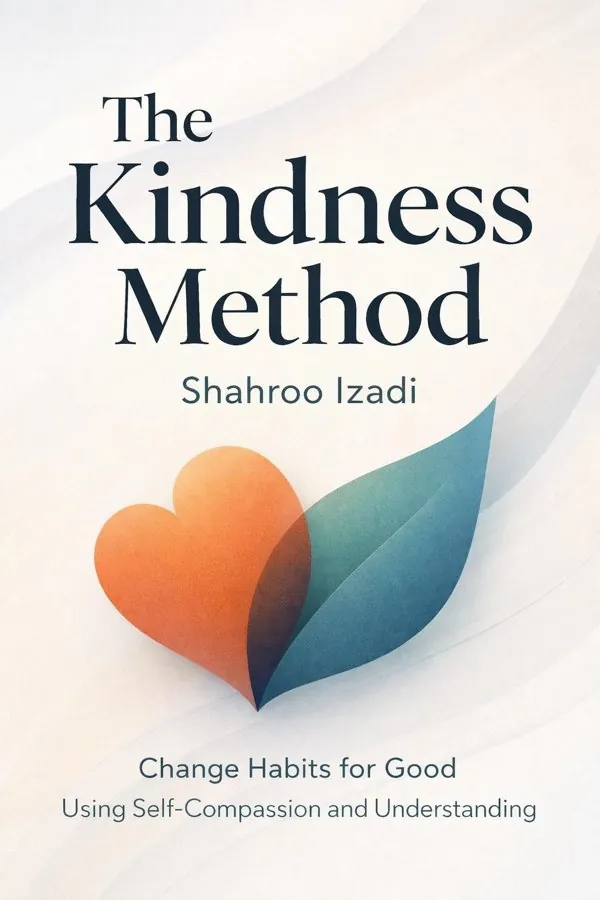
The Kindness Method: Change Habits for Good Using Self-Compassion and Understanding: Summary & Key Insights
 10 min8 chaptersAudio available
What Is The Kindness Method: Change Habits for Good Using Self-Compassion and Understanding About?
The Kindness Method: Change Habits for Good Using Self-Compassion and Understanding by Shahroo Izadi is a habits book spanning 8 pages. The Kindness Method is a self-development book that introduces a compassionate approach to personal change. Shahroo Izadi, drawing on her experience as a behavioral change specialist, guides readers to transform habits through self-kindness and self-awareness rather than guilt or punishment. The book provides practical exercises and reflective tools to help individuals build sustainable motivation and achieve lasting behavioral transformation.
This FizzRead summary covers all 8 key chapters of The Kindness Method: Change Habits for Good Using Self-Compassion and Understanding in approximately 10 minutes, distilling the most important ideas, arguments, and takeaways from Shahroo Izadi's work. Also available as an audio summary and Key Quotes Podcast.
The Kindness Method: Change Habits for Good Using Self-Compassion and Understanding
The Kindness Method is a self-development book that introduces a compassionate approach to personal change. Shahroo Izadi, drawing on her experience as a behavioral change specialist, guides readers to transform habits through self-kindness and self-awareness rather than guilt or punishment. The book provides practical exercises and reflective tools to help individuals build sustainable motivation and achieve lasting behavioral transformation.
Who Should Read The Kindness Method: Change Habits for Good Using Self-Compassion and Understanding?
This book is perfect for anyone interested in habits and looking to gain actionable insights in a short read. Whether you're a student, professional, or lifelong learner, the key ideas from The Kindness Method: Change Habits for Good Using Self-Compassion and Understanding by Shahroo Izadi will help you think differently.
- ✓Readers who enjoy habits and want practical takeaways
- ✓Professionals looking to apply new ideas to their work and life
- ✓Anyone who wants the core insights of The Kindness Method: Change Habits for Good Using Self-Compassion and Understanding in just 10 minutes
Want the full summary?
Get instant access to this book summary and 100K+ more with Fizz Moment.
Get Free SummaryAvailable on App Store • Free to download
Key Chapters
For years, we’ve been told that success in self-improvement comes from pushing harder, denying ourselves pleasure, and holding ourselves to impossible standards. But guilt and punishment create a toxic cycle. When we fail, we interpret it as evidence of weakness. That shame leads to more of the very behavior we’re trying to stop. In my experience working with addiction recovery, I saw this clearly: people who relapsed didn’t need another lecture—they needed understanding and the tools to meet their emotions kindly.
Punitive self-talk narrowcasts our focus to mistakes, feeding a belief that we don’t deserve better. It shuts down our ability to learn. On the other hand, kindness acknowledges error while keeping us curious. Instead of asking, “Why can’t I get this right?” we begin to ask, “What’s this behavior trying to tell me?” That shift is revolutionary. It opens up space for self-awareness to replace self-blame. The key is not to stop setting boundaries but to frame them lovingly. Just as we’d guide a child to learn from missteps rather than berate them, we must learn to offer ourselves the same grace.
When we use guilt to motivate ourselves, change feels like punishment. When we use compassion, it becomes an act of self-respect. The latter lasts because it’s based on connection, not control.
Self-compassion is not the same as self-indulgence; it is the psychological process of meeting ourselves with empathy and honesty. Research in positive psychology supports this: people high in self-compassion are more resilient, more likely to take responsibility for mistakes, and less prone to anxiety and avoidance. When we understand our behavior as a product of needs, patterns, and context, we stop taking it so personally and start seeing it systematically.
In behavioral change theory, compassion increases motivation because it reinforces internal safety. Imagine trying to grow in an environment of constant criticism—it’s impossible to thrive there. But if you know you’ll be met with understanding no matter what happens, you have the courage to take risks and the persistence to continue after setbacks.
In my own journey, self-compassion became the gateway to authenticity. It dismantled the facade of perfectionism that was keeping me rigid and reactive. Once you cultivate it, you begin to notice that change no longer feels like an uphill battle—it feels like an alignment with who you already are when fear and guilt are no longer steering the wheel.
+ 6 more chapters — available in the FizzRead app
All Chapters in The Kindness Method: Change Habits for Good Using Self-Compassion and Understanding
About the Author
Shahroo Izadi is a British behavioral change specialist and author. She has worked in addiction treatment and personal development, focusing on self-compassion and habit change. Her work emphasizes empowering individuals to create positive change through kindness and understanding.
Get This Summary in Your Preferred Format
Read or listen to the The Kindness Method: Change Habits for Good Using Self-Compassion and Understanding summary by Shahroo Izadi anytime, anywhere. FizzRead offers multiple formats so you can learn on your terms — all free.
Available formats: App · Audio · PDF · EPUB — All included free with FizzRead
Download The Kindness Method: Change Habits for Good Using Self-Compassion and Understanding PDF and EPUB Summary
Key Quotes from The Kindness Method: Change Habits for Good Using Self-Compassion and Understanding
“For years, we’ve been told that success in self-improvement comes from pushing harder, denying ourselves pleasure, and holding ourselves to impossible standards.”
“Self-compassion is not the same as self-indulgence; it is the psychological process of meeting ourselves with empathy and honesty.”
Frequently Asked Questions about The Kindness Method: Change Habits for Good Using Self-Compassion and Understanding
The Kindness Method: Change Habits for Good Using Self-Compassion and Understanding by Shahroo Izadi is a habits book that explores key ideas across 8 chapters. The Kindness Method is a self-development book that introduces a compassionate approach to personal change. Shahroo Izadi, drawing on her experience as a behavioral change specialist, guides readers to transform habits through self-kindness and self-awareness rather than guilt or punishment. The book provides practical exercises and reflective tools to help individuals build sustainable motivation and achieve lasting behavioral transformation.
You Might Also Like

Atomic Habits: An Easy & Proven Way to Build Good Habits and Break Bad Ones
James Clear
10 min
A Complaint Free World: How to Stop Complaining and Start Enjoying the Life You Always Wanted
Will Bowen
10 minBadass Habits: Cultivate the Awareness, Boundaries, and Daily Upgrades You Need to Make Them Stick
Jen Sincero
10 min
Better Than Before: Mastering The Habits Of Our Everyday Lives
Gretchen Rubin
10 min
Change Anything: The New Science of Personal Success
Kerry Patterson
10 min
Discipline Equals Freedom: Field Manual
Jocko Willink
10 minBrowse by Category
Ready to read The Kindness Method: Change Habits for Good Using Self-Compassion and Understanding?
Get the full summary and 100K+ more books with Fizz Moment.