
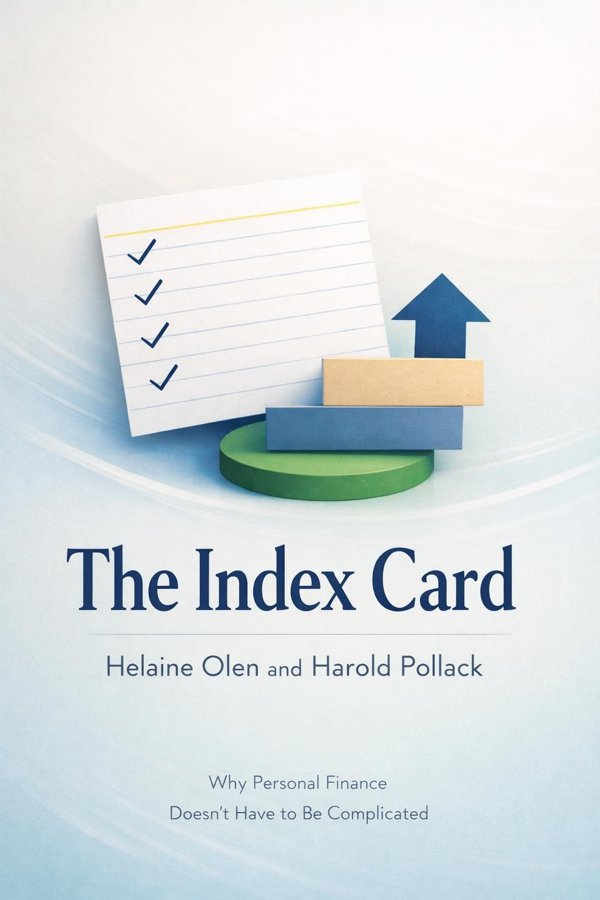
The Index Card: Why Personal Finance Doesn't Have to Be Complicated: Summary & Key Insights
by Helaine Olen, Harold Pollack
 10 min11 chaptersAudio available
What Is The Index Card: Why Personal Finance Doesn't Have to Be Complicated About?
The Index Card: Why Personal Finance Doesn't Have to Be Complicated by Helaine Olen and Harold Pollack is a finance book spanning 11 pages. The Index Card argues that managing personal finances can be simple and effective without complex strategies. The authors distill financial wisdom into a few straightforward rules that fit on a single index card, covering topics such as saving, investing, debt management, and retirement planning. The book emphasizes common-sense approaches and evidence-based advice to help readers make sound financial decisions.
This FizzRead summary covers all 11 key chapters of The Index Card: Why Personal Finance Doesn't Have to Be Complicated in approximately 10 minutes, distilling the most important ideas, arguments, and takeaways from Helaine Olen and Harold Pollack's work. Also available as an audio summary and Key Quotes Podcast.
The Index Card: Why Personal Finance Doesn't Have to Be Complicated
The Index Card argues that managing personal finances can be simple and effective without complex strategies. The authors distill financial wisdom into a few straightforward rules that fit on a single index card, covering topics such as saving, investing, debt management, and retirement planning. The book emphasizes common-sense approaches and evidence-based advice to help readers make sound financial decisions.
Who Should Read The Index Card: Why Personal Finance Doesn't Have to Be Complicated?
This book is perfect for anyone interested in finance and looking to gain actionable insights in a short read. Whether you're a student, professional, or lifelong learner, the key ideas from The Index Card: Why Personal Finance Doesn't Have to Be Complicated by Helaine Olen and Harold Pollack will help you think differently.
- ✓Readers who enjoy finance and want practical takeaways
- ✓Professionals looking to apply new ideas to their work and life
- ✓Anyone who wants the core insights of The Index Card: Why Personal Finance Doesn't Have to Be Complicated in just 10 minutes
Want the full summary?
Get instant access to this book summary and 100K+ more with Fizz Moment.
Get Free SummaryAvailable on App Store • Free to download
Key Chapters
From the beginning, the driving idea behind this book is that personal finance is not supposed to be intimidating. The financial industry thrives on complexity. Advisors, brokers, and pundits often speak as if the average person can’t possibly manage their own finances. But the truth, supported by academic evidence and decades of practical observation, is that simple, consistent decisions outperform flashy moves and ‘expert’ timing.
When I tell readers that everything important fits on one card, I’m also making a statement about trust. You can trust yourself more than the marketplace wants you to believe. Simplicity is not ignorance; it’s clarity. It means choosing what matters most—saving, investing, protecting your future—and refusing to drown in marginal details. Complicated products often hide high fees and loopholes that transfer wealth from individuals to institutions. The antidote is transparency and self-reliance, supported by proven fundamentals.
I want you to imagine the simplicity principle as a quiet form of rebellion. In a world that profits from making you feel unprepared, embracing simplicity is revolutionary. You’ll find that when you automate savings, pay down debt, and invest in low-cost index funds, you’re already ahead of most complex strategies. Simplicity doesn’t mean avoiding sophistication; it means recognizing what genuinely drives results and committing to it calmly and persistently.
Saving is the cornerstone of every other financial decision. It’s where freedom begins, because without savings, every unexpected expense becomes a crisis. I’ve met families who earn well but can’t breathe financially because nothing is set aside. The simplest, most effective step is to make saving automatic. When your paycheck arrives, let a portion move directly into savings or retirement accounts before you even see it.
This automation shifts your relationship with money. It turns saving from an act of discipline into an ordinary system that requires no ongoing effort. Emergency funds are your buffer against life’s uncertainties—job loss, medical surprises, home repairs. They transform fear into preparation. I want you to think of saving not as deprivation but as insurance for your peace of mind. Each dollar saved is a statement: you are preparing to live freely, not reactively.
When you start small and stay consistent, the compound effect takes care of the rest. Over decades, even modest automatic savings grow stunningly through compounding interest. The act of saving is not about timing markets or predicting futures; it’s about ensuring stability so that opportunities don’t pass you by simply because you’re under pressure.
+ 9 more chapters — available in the FizzRead app
All Chapters in The Index Card: Why Personal Finance Doesn't Have to Be Complicated
About the Authors
Helaine Olen is an American journalist and author specializing in personal finance and social policy. Harold Pollack is a professor at the University of Chicago, known for his research in public health and social welfare policy. Together, they advocate for accessible and practical financial literacy.
Get This Summary in Your Preferred Format
Read or listen to the The Index Card: Why Personal Finance Doesn't Have to Be Complicated summary by Helaine Olen and Harold Pollack anytime, anywhere. FizzRead offers multiple formats so you can learn on your terms — all free.
Available formats: App · Audio · PDF · EPUB — All included free with FizzRead
Download The Index Card: Why Personal Finance Doesn't Have to Be Complicated PDF and EPUB Summary
Key Quotes from The Index Card: Why Personal Finance Doesn't Have to Be Complicated
“From the beginning, the driving idea behind this book is that personal finance is not supposed to be intimidating.”
“Saving is the cornerstone of every other financial decision.”
Frequently Asked Questions about The Index Card: Why Personal Finance Doesn't Have to Be Complicated
The Index Card: Why Personal Finance Doesn't Have to Be Complicated by Helaine Olen and Harold Pollack is a finance book that explores key ideas across 11 chapters. The Index Card argues that managing personal finances can be simple and effective without complex strategies. The authors distill financial wisdom into a few straightforward rules that fit on a single index card, covering topics such as saving, investing, debt management, and retirement planning. The book emphasizes common-sense approaches and evidence-based advice to help readers make sound financial decisions.
You Might Also Like



Browse by Category
Ready to read The Index Card: Why Personal Finance Doesn't Have to Be Complicated?
Get the full summary and 100K+ more books with Fizz Moment.