
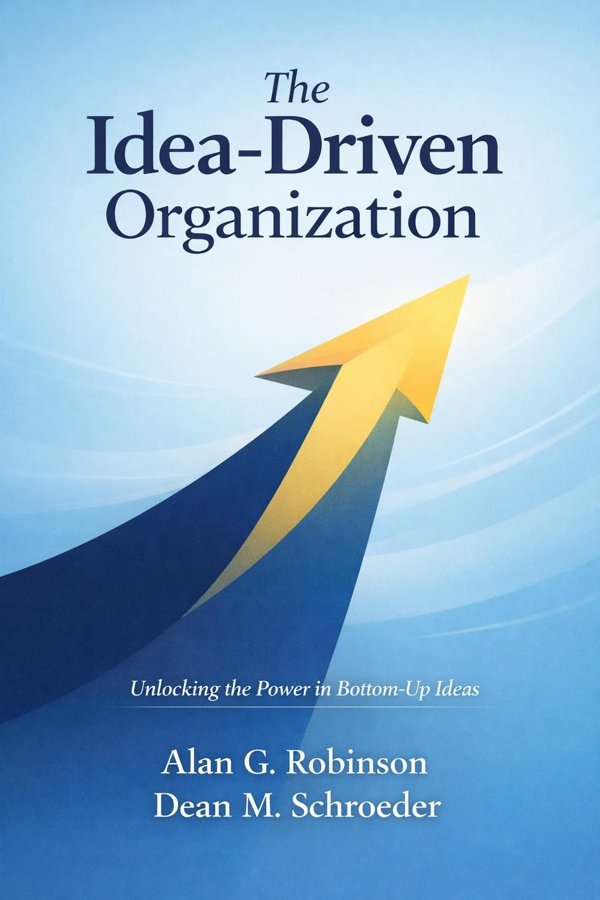
The Idea-Driven Organization: Unlocking the Power in Bottom-Up Ideas: Summary & Key Insights
by Alan G. Robinson, Dean M. Schroeder
 10 min5 chaptersAudio available
What Is The Idea-Driven Organization: Unlocking the Power in Bottom-Up Ideas About?
The Idea-Driven Organization: Unlocking the Power in Bottom-Up Ideas by Alan G. Robinson, Dean M. Schroeder is a leadership book spanning 5 pages. The Idea-Driven Organization explores how companies can harness the creativity and insights of their employees to drive innovation and continuous improvement. The authors present practical frameworks and real-world examples showing how empowering front-line workers to contribute ideas can lead to significant performance gains, higher engagement, and a more adaptive organization.
This FizzRead summary covers all 5 key chapters of The Idea-Driven Organization: Unlocking the Power in Bottom-Up Ideas in approximately 10 minutes, distilling the most important ideas, arguments, and takeaways from Alan G. Robinson, Dean M. Schroeder's work. Also available as an audio summary and Key Quotes Podcast.
The Idea-Driven Organization: Unlocking the Power in Bottom-Up Ideas
The Idea-Driven Organization explores how companies can harness the creativity and insights of their employees to drive innovation and continuous improvement. The authors present practical frameworks and real-world examples showing how empowering front-line workers to contribute ideas can lead to significant performance gains, higher engagement, and a more adaptive organization.
Who Should Read The Idea-Driven Organization: Unlocking the Power in Bottom-Up Ideas?
This book is perfect for anyone interested in leadership and looking to gain actionable insights in a short read. Whether you're a student, professional, or lifelong learner, the key ideas from The Idea-Driven Organization: Unlocking the Power in Bottom-Up Ideas by Alan G. Robinson, Dean M. Schroeder will help you think differently.
- ✓Readers who enjoy leadership and want practical takeaways
- ✓Professionals looking to apply new ideas to their work and life
- ✓Anyone who wants the core insights of The Idea-Driven Organization: Unlocking the Power in Bottom-Up Ideas in just 10 minutes
Want the full summary?
Get instant access to this book summary and 100K+ more with Fizz Moment.
Get Free SummaryAvailable on App Store • Free to download
Key Chapters
To create a truly idea-driven organization, inspiration is not enough. You must confront the deeper cultural and structural forces that silence employee voices. Many organizations, especially those shaped by decades of hierarchy, have internalized norms that discourage questioning or initiative. Employees might fear offending management, attracting extra work, or being ignored entirely.
Culture begins with psychological safety—the confidence that speaking up will not lead to punishment or ridicule. Leaders must model openness by responding visibly and respectfully to ideas, even imperfect ones. When people see that participation leads to recognition, not risk, the floodgates open.
Structural barriers are often hidden in bureaucracy. Traditional suggestion systems rely on long forms, multiple approvals, and slow processing. They create friction that disincentivizes contribution. A functioning idea system must be fast, direct, and visible. Whether handled through digital platforms or weekly team dialogues, the mechanics must mirror the immediacy of the ideas themselves. Employees must see their thoughts moving into action and producing results.
A supportive culture also demands that management redefine success. In many organizations, performance metrics focus solely on output or compliance, ignoring creativity. In idea-driven systems, the number and implementation rate of employee ideas are tracked as vital indicators of health. Recognition programs—formal awards or simple public gratitude—help reinforce the message that ideas are not extracurricular; they are central to the organization’s success.
When you remove barriers and replace them with mechanisms for feedback and engagement, people naturally step forward. We witnessed this in hospitals, logistics firms, even municipal governments. Once barriers lift, ideas emerge that save money, improve service, and deepen pride. Culture and structure, together, form the fertile soil where idea systems can grow.
+ 3 more chapters — available in the FizzRead app
All Chapters in The Idea-Driven Organization: Unlocking the Power in Bottom-Up Ideas
About the Authors
Alan G. Robinson is a professor at the Isenberg School of Management, University of Massachusetts Amherst, known for his research on creativity, ideas, and continuous improvement. Dean M. Schroeder is a professor emeritus of management at Valparaiso University and an expert in organizational management and idea systems.
Get This Summary in Your Preferred Format
Read or listen to the The Idea-Driven Organization: Unlocking the Power in Bottom-Up Ideas summary by Alan G. Robinson, Dean M. Schroeder anytime, anywhere. FizzRead offers multiple formats so you can learn on your terms — all free.
Available formats: App · Audio · PDF · EPUB — All included free with FizzRead
Download The Idea-Driven Organization: Unlocking the Power in Bottom-Up Ideas PDF and EPUB Summary
Key Quotes from The Idea-Driven Organization: Unlocking the Power in Bottom-Up Ideas
“Most leaders underestimate how much their employees know.”
“To create a truly idea-driven organization, inspiration is not enough.”
Frequently Asked Questions about The Idea-Driven Organization: Unlocking the Power in Bottom-Up Ideas
The Idea-Driven Organization: Unlocking the Power in Bottom-Up Ideas by Alan G. Robinson, Dean M. Schroeder is a leadership book that explores key ideas across 5 chapters. The Idea-Driven Organization explores how companies can harness the creativity and insights of their employees to drive innovation and continuous improvement. The authors present practical frameworks and real-world examples showing how empowering front-line workers to contribute ideas can lead to significant performance gains, higher engagement, and a more adaptive organization.
You Might Also Like

Extreme Ownership
Jocko Willink
10 min
Dare to Lead
Brene Brown
10 min
Leaders Eat Last
Simon Sinek
10 min
The 21 Irrefutable Laws of Leadership
John Maxwell
10 min
Start With Why
Simon Sinek
10 min
How to Lead When You're Not in Charge
Clay Scroggins
10 minBrowse by Category
Ready to read The Idea-Driven Organization: Unlocking the Power in Bottom-Up Ideas?
Get the full summary and 100K+ more books with Fizz Moment.