
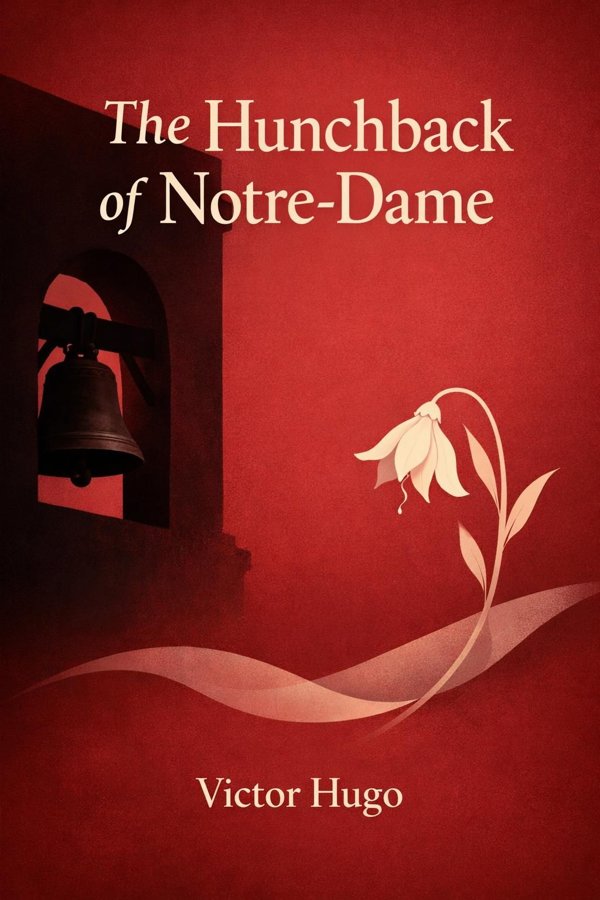
The Hunchback of Notre-Dame: Summary & Key Insights
by Victor Hugo
 10 min10 chaptersAudio available
What Is The Hunchback of Notre-Dame About?
The Hunchback of Notre-Dame by Victor Hugo is a classics book spanning 10 pages. A classic historical novel first published in 1831, 'The Hunchback of Notre-Dame' tells the tragic story of Quasimodo, the deformed bell ringer of the Notre-Dame Cathedral, and his unrequited love for the beautiful Esmeralda. Through this tale, Victor Hugo portrays medieval Parisian society and advocates for the preservation of Gothic architecture.
This FizzRead summary covers all 10 key chapters of The Hunchback of Notre-Dame in approximately 10 minutes, distilling the most important ideas, arguments, and takeaways from Victor Hugo's work. Also available as an audio summary and Key Quotes Podcast.
The Hunchback of Notre-Dame
A classic historical novel first published in 1831, 'The Hunchback of Notre-Dame' tells the tragic story of Quasimodo, the deformed bell ringer of the Notre-Dame Cathedral, and his unrequited love for the beautiful Esmeralda. Through this tale, Victor Hugo portrays medieval Parisian society and advocates for the preservation of Gothic architecture.
Who Should Read The Hunchback of Notre-Dame?
This book is perfect for anyone interested in classics and looking to gain actionable insights in a short read. Whether you're a student, professional, or lifelong learner, the key ideas from The Hunchback of Notre-Dame by Victor Hugo will help you think differently.
- ✓Readers who enjoy classics and want practical takeaways
- ✓Professionals looking to apply new ideas to their work and life
- ✓Anyone who wants the core insights of The Hunchback of Notre-Dame in just 10 minutes
Want the full summary?
Get instant access to this book summary and 100K+ more with Fizz Moment.
Get Free SummaryAvailable on App Store • Free to download
Key Chapters
Paris in the fifteenth century lives and breathes through its stones. I began by drawing a panoramic portrait of the city — crowded, noisy, full of contrasts. There are palaces and prisons, taverns and sanctuaries, noblemen and beggars, scholars and fools. But towering above all is Notre-Dame Cathedral, a marvel of Gothic creation. Through its majestic façade and intricate carvings, I sought to embody the grandeur of human aspiration.
To me, architecture is the script of civilization. Every generation leaves its values carved into walls, molded into arches. When I wrote this book, many Gothic structures were being demolished or forgotten. I felt an urgent need to defend them — to remind France that its stones, though silent, carried voices of centuries. In describing Notre-Dame, I wanted readers to see not merely a building, but a living organism — a guardian of faith, memory, and mystery.
The cathedral in the novel stands as a witness to the intertwined fates of men and women. It is vast enough to hold within its shadows the prayers of monks and the cries of beggars. Around it unfolds a world of contrasts — purity and corruption, joy and suffering. Its bells sing both of celebration and despair, echoing through the city like the heartbeat of Paris itself.
The architecture of Notre-Dame mirrors the moral architecture of the story: beautiful yet burdened, sacred yet haunted. Just as the cathedral has its grotesques and gargoyles, so too does humanity. The walls bear marks of love and ruin alike. Through this setting, I wanted readers to understand that every action — every desire, every cruelty — reverberates through the stones of the world, shaping the fate of generations.
In the belfries of Notre-Dame lives Quasimodo, the soul of silence. Deformed in body but radiant in emotion, he is the embodiment of misunderstood goodness. Deaf from the sound of his own bells, he sees, rather than hears, the world below — a world that mocks him. Yet within his solitude, he develops a profound bond with the cathedral itself. He moves through its passages like a guardian spirit, at once imprisoned and protected by its walls.
Quasimodo’s isolation is not merely physical. It is the loneliness of the heart that yearns to be seen, to be loved. The city calls him monster, but I invite you to look closer. His ungainly shape hides tenderness, loyalty, and beauty of soul. Through him, I challenge superficial judgment — the cruel habit of equating outward form with inner worth. Quasimodo’s deformity magnifies his humanity.
The bells he rings daily are his voice, the only sound he can give to the world that shuns him. Their vibration is his emotion made audible. He calls to Paris, but Paris never answers. Only within the cathedral does he find acceptance — its stone figures mirror his own grotesque symmetry, and its silence gives him peace. In creating Quasimodo, I wished to show the pity of the outcast and the grandeur of selfless love. He speaks through action rather than words, and those actions test the limits of compassion and sacrifice.
+ 8 more chapters — available in the FizzRead app
All Chapters in The Hunchback of Notre-Dame
About the Author
Victor Hugo (1802–1885) was a French writer, poet, and dramatist, and one of the most important figures of the Romantic movement. Author of 'Les Misérables' and 'The Hunchback of Notre-Dame', he profoundly influenced world literature with his social and political engagement and his powerful imagination and style.
Get This Summary in Your Preferred Format
Read or listen to the The Hunchback of Notre-Dame summary by Victor Hugo anytime, anywhere. FizzRead offers multiple formats so you can learn on your terms — all free.
Available formats: App · Audio · PDF · EPUB — All included free with FizzRead
Download The Hunchback of Notre-Dame PDF and EPUB Summary
Key Quotes from The Hunchback of Notre-Dame
“Paris in the fifteenth century lives and breathes through its stones.”
“In the belfries of Notre-Dame lives Quasimodo, the soul of silence.”
Frequently Asked Questions about The Hunchback of Notre-Dame
The Hunchback of Notre-Dame by Victor Hugo is a classics book that explores key ideas across 10 chapters. A classic historical novel first published in 1831, 'The Hunchback of Notre-Dame' tells the tragic story of Quasimodo, the deformed bell ringer of the Notre-Dame Cathedral, and his unrequited love for the beautiful Esmeralda. Through this tale, Victor Hugo portrays medieval Parisian society and advocates for the preservation of Gothic architecture.
More by Victor Hugo
You Might Also Like





Browse by Category
Ready to read The Hunchback of Notre-Dame?
Get the full summary and 100K+ more books with Fizz Moment.