
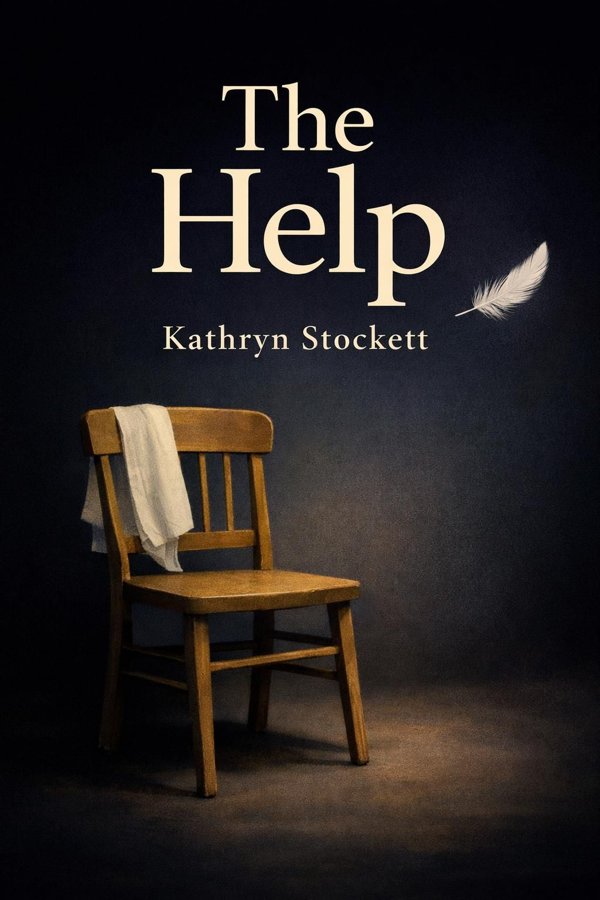
The Help: Summary & Key Insights
 10 min9 chaptersAudio available
Key Takeaways from The Help
Oppression often survives not through dramatic acts alone, but through the daily routines people stop noticing.
The softest voice in a story is sometimes the one telling the deepest truth.
Some of the most transformative relationships begin where social expectations say they should not exist.
Moral awakening rarely begins with certainty; it usually begins with unease.
Power depends on controlling not only what happens, but what gets recorded about what happens.
What Is The Help About?
The Help by Kathryn Stockett is a bestsellers book spanning 6 pages. Set in Jackson, Mississippi, during the early 1960s, The Help is a novel about the lives people share across racial lines—and the lies they are expected to live by. Kathryn Stockett tells the story through three unforgettable women: Aibileen, a Black maid whose quiet composure conceals deep grief and hard-won wisdom; Minny, a sharp-tongued domestic worker whose defiance makes her both vulnerable and powerful; and Skeeter, a young white woman who begins to question the social order she has always been told to accept. Together, they embark on a dangerous project: recording the experiences of Black maids working in white homes, exposing humiliations and injustices that polite Southern society prefers to ignore. What makes the novel enduring is not only its dramatic plot, but its ability to reveal how ordinary routines can uphold cruelty—and how storytelling can begin to break that pattern. Stockett, who grew up in Jackson, writes with intimate knowledge of the region’s social codes, tensions, and contradictions, creating a vivid, emotionally charged portrait of a community on the edge of change.
This FizzRead summary covers all 9 key chapters of The Help in approximately 10 minutes, distilling the most important ideas, arguments, and takeaways from Kathryn Stockett's work. Also available as an audio summary and Key Quotes Podcast.
The Help
Set in Jackson, Mississippi, during the early 1960s, The Help is a novel about the lives people share across racial lines—and the lies they are expected to live by. Kathryn Stockett tells the story through three unforgettable women: Aibileen, a Black maid whose quiet composure conceals deep grief and hard-won wisdom; Minny, a sharp-tongued domestic worker whose defiance makes her both vulnerable and powerful; and Skeeter, a young white woman who begins to question the social order she has always been told to accept. Together, they embark on a dangerous project: recording the experiences of Black maids working in white homes, exposing humiliations and injustices that polite Southern society prefers to ignore. What makes the novel enduring is not only its dramatic plot, but its ability to reveal how ordinary routines can uphold cruelty—and how storytelling can begin to break that pattern. Stockett, who grew up in Jackson, writes with intimate knowledge of the region’s social codes, tensions, and contradictions, creating a vivid, emotionally charged portrait of a community on the edge of change.
Who Should Read The Help?
This book is perfect for anyone interested in bestsellers and looking to gain actionable insights in a short read. Whether you're a student, professional, or lifelong learner, the key ideas from The Help by Kathryn Stockett will help you think differently.
- ✓Readers who enjoy bestsellers and want practical takeaways
- ✓Professionals looking to apply new ideas to their work and life
- ✓Anyone who wants the core insights of The Help in just 10 minutes
Want the full summary?
Get instant access to this book summary and 100K+ more with Fizz Moment.
Get Free SummaryAvailable on App Store • Free to download
Key Chapters
Oppression often survives not through dramatic acts alone, but through the daily routines people stop noticing. In The Help, Jackson, Mississippi, is a city organized by racial boundaries so deeply embedded that they appear natural to those who benefit from them. Separate bathrooms, separate churches, separate neighborhoods, separate expectations—these visible and invisible lines define who serves, who commands, who is believed, and who remains silent. The novel shows that segregation is not just a legal framework; it is a social script repeated in kitchens, bridge clubs, grocery stores, and front yards.
White families depend intimately on Black maids to raise children, cook meals, and maintain households, yet refuse to grant them dignity, equality, or safety. This contradiction is central to the book’s moral force. Children may love the women who care for them, but the society around them insists those same women are inferior. Stockett uses these tensions to reveal how injustice becomes ordinary when it is woven into habit.
This idea has practical relevance beyond the historical setting. Many harmful systems today persist because they are normalized by custom: who gets heard in meetings, who is expected to do emotional labor, who is welcomed into certain spaces, and who is merely tolerated. The lesson is to pay attention to structures, not just intentions. A person may believe they are kind while still participating in patterns that humiliate others.
Actionable takeaway: Examine one “normal” rule in your environment—at work, in your community, or in your home—and ask who it advantages, who it burdens, and whether it deserves to remain unquestioned.
The softest voice in a story is sometimes the one telling the deepest truth. Aibileen Clark appears, at first, to embody patience and restraint. She works carefully, speaks respectfully, and moves through white households with the discipline required for survival. Yet beneath that calm surface lies immense grief, insight, and moral clarity. The death of her son Treelore has sharpened her awareness of injustice, and her years raising white children have shown her how prejudice is taught long before it is understood.
Aibileen’s power comes not from domination, but from perception. She notices what others dismiss: how affection and inequality can coexist, how children absorb their parents’ fears, how silence can become its own kind of prison. Her relationship with Mae Mobley, the neglected daughter of Elizabeth Leefolt, is especially revealing. By telling the child “You is kind. You is smart. You is important,” Aibileen offers a counter-message to the cruelty surrounding her. It is an act of emotional resistance, a refusal to let another generation be shaped entirely by contempt.
In practical terms, Aibileen represents the kind of leadership that is often overlooked: steady, ethical, observant, and relational. Not every act of courage is loud. Sometimes courage is preserving tenderness in a brutal environment, speaking carefully until the right moment arrives, and choosing truth over safety when silence has become unbearable.
Actionable takeaway: Use your words intentionally with someone more vulnerable than you—especially a child, student, or junior colleague—because repeated affirmations can challenge damaging messages before they harden into identity.
Some of the most transformative relationships begin where social expectations say they should not exist. Minny Jackson is outspoken, funny, proud, and frequently punished for refusing to make herself agreeable. Her reputation follows her through Jackson, limiting her options and increasing her vulnerability. Celia Foote, meanwhile, is a white woman excluded by the very social world she is supposed to fit into. She lacks status among the town’s elite women, misunderstands their rules, and lives with a loneliness she cannot easily name. Their relationship begins as employment, but it develops into something more complicated and revealing.
What makes this pairing powerful is that it does not erase difference. Minny and Celia are not suddenly equals in a society built on racial hierarchy. The danger Minny faces remains real. Yet Stockett uses their bond to show how shared marginalization can create openings for honesty. Celia treats Minny with an unfamiliar degree of gratitude and human warmth, while Minny slowly realizes that Celia’s outsider status makes her less invested in maintaining cruel social performances.
Their connection also exposes the limits of surface judgments. Minny initially sees Celia as foolish; Celia initially depends on Minny for practical survival. Over time, each recognizes the other’s pain. This is a lesson in moving beyond stereotype without pretending circumstances are symmetrical.
In everyday life, this idea applies whenever we encounter people whose struggles differ from ours but whose vulnerability can still deepen mutual understanding. Real solidarity requires listening, not assuming sameness.
Actionable takeaway: Build one relationship outside your usual social circle with curiosity rather than judgment, and let genuine conversation replace the story you first told yourself about that person.
Moral awakening rarely begins with certainty; it usually begins with unease. Eugenia “Skeeter” Phelan starts The Help as a young white woman returning from college to a familiar world she no longer fully trusts. She notices what others in her social circle ignore: the casual cruelty toward maids, the smugness of white women who rely on Black labor while degrading Black humanity, and the troubling absence of the maid who raised her, Constantine. Skeeter’s transformation is not instant enlightenment. It is a gradual and often clumsy process of seeing what privilege had previously concealed from her.
This matters because the novel does not portray conscience as a feeling alone. Skeeter’s growth becomes meaningful only when it leads to risk. Writing down the stories of Black maids puts her social standing, friendships, and future prospects in jeopardy. She must confront the possibility that decency without action is simply comfort with better manners.
At the same time, Stockett shows the limitations of allyship. Skeeter has access and ambition, but the stories are not hers. Her role is useful because she can help open a channel to publication, yet she remains dependent on the courage of women who bear far greater consequences. This complexity makes her a more honest character than a simple rescuer figure.
In practical life, Skeeter’s journey is a reminder that recognizing injustice often means first recognizing your own insulation from it. Growth requires asking difficult questions, tolerating social friction, and accepting that learning may expose your past blindness.
Actionable takeaway: Identify one issue you care about but experience only from a distance, then take a concrete step beyond opinion—listen to affected voices, read primary accounts, or support a real effort that involves personal cost.
Power depends on controlling not only what happens, but what gets recorded about what happens. At the heart of The Help is the creation of a book within the book: a collection of testimonies from Black maids describing their treatment in white homes. This project is dangerous precisely because it turns private humiliation into public truth. The women are not merely venting; they are documenting. And documentation threatens systems that rely on denial.
The act of writing transforms isolated suffering into shared evidence. Aibileen, Minny, and eventually other maids begin to see that what they endured individually is part of a larger pattern. That recognition is empowering. It reduces shame, strengthens solidarity, and reveals that abuse often survives by convincing each victim that her experience is singular or insignificant. Through testimony, the maids reclaim authority over their own lives.
This is one reason the novel resonates so strongly. It suggests that narrative itself can challenge power. Diaries, interviews, memoirs, whistleblower accounts, oral histories, and even carefully documented workplace complaints can shift the balance between silence and accountability. The point is not that every story changes the world immediately, but that unspoken truth almost never does.
Stockett also reminds us that stories carry risk. Publication may expose hypocrisy, but it can also provoke backlash. This makes the women’s decision not literary in a decorative sense, but political in a deeply practical one.
Actionable takeaway: When something harmful keeps repeating in your environment, begin documenting it clearly and responsibly—what happened, when, to whom, and how often—because named patterns are harder for others to dismiss.
Change is inspiring in hindsight, but terrifying in the moment. The Help never lets us forget that speaking up in a racist society is dangerous. The women who participate in the secret book risk losing jobs, social standing, physical safety, and the fragile forms of stability they have fought to maintain. In Jackson, truth is not rewarded automatically; it is often punished first. That reality gives the novel its tension and its credibility.
Aibileen risks the little security she has left. Minny risks retaliation from employers and from an abusive husband. Skeeter risks estrangement from friends, conflict with family, and exclusion from the life she was trained to want. Even those who do not speak publicly feel the fear surrounding the project. This matters because courage is often romanticized as a feeling of confidence. The novel presents it more accurately: courage is action taken despite fear, uncertainty, and imperfection.
There is another layer here as well. Liberation is rarely complete or immediate. By the end of the novel, not every injustice has been corrected, not every relationship repaired, and not every danger removed. Yet meaningful change has begun. Some bonds are broken, but others are clarified. Some women lose illusions, but gain self-respect. The book suggests that freedom often starts not with victory, but with refusing to cooperate inwardly with lies.
In real life, this is a useful reminder for anyone considering a difficult truth-telling moment. The question is not whether courage will cost something; it usually will. The question is whether silence is already costing more.
Actionable takeaway: Before a hard conversation or principled stand, name the likely consequences honestly—then also name the cost of doing nothing, so your choice is guided by values rather than fear alone.
Some of the most consequential politics in The Help unfold not in courtrooms or statehouses, but in kitchens, nurseries, and laundry rooms. The novel insists that the home is not separate from society’s power struggles; it is one of the main places where those struggles are taught, normalized, and enforced. White women who may appear charming, respectable, and civilized in public often participate in everyday domination behind closed doors. They decide who may use the bathroom, what may be touched, how affection is rationed, and how humiliation is disguised as order.
This focus on domestic life is one of the novel’s strongest contributions. It shows that injustice is not sustained only by lawmakers or overt extremists. It is also sustained by ordinary people who preserve it through etiquette, gossip, employment arrangements, and childrearing. Hilly Holbrook exemplifies this dynamic. Her cruelty often appears in the language of propriety and cleanliness, making prejudice sound like common sense. That rhetorical strategy remains familiar in many contexts today, whenever exclusion is defended as policy, standards, or tradition.
The practical lesson is to take private behavior seriously. How people treat those who clean, serve, assist, or depend on them reveals their ethics more clearly than many public statements do. Power is most visible when someone has little incentive to perform kindness.
This idea also invites reflection on the messages embedded in family life. Children learn hierarchy not from abstract principles alone, but from observing who gives orders, who apologizes, who eats first, and whose discomfort matters.
Actionable takeaway: Pay attention to the ethics of everyday interactions in your household or workplace, especially toward people in service roles, because private habits often expose the values public language tries to conceal.
One of the novel’s quiet achievements is that it does not allow suffering to erase personality. The Help deals with grief, racism, fear, and cruelty, yet it is also filled with wit, rhythm, and memorable voice—especially through Minny. Humor in this context is not a distraction from pain; it is one of the ways people survive it. Jokes, sharp observations, and storytelling become tools for preserving selfhood in a world designed to diminish it.
Voice matters deeply here. Each narrator sees the same world differently, and those differences keep the novel from collapsing into a single moral lecture. Aibileen’s tenderness, Minny’s fire, and Skeeter’s searching restlessness create a layered portrait of Jackson. Their voices assert that no oppressed group is monolithic and no human life can be reduced to a role. The maids are not just “the help”; they are thinkers, mourners, strategists, caregivers, and critics.
In practical terms, this reminds us that dignity involves more than material treatment. To honor someone fully means recognizing their perspective, not just their function. At work, in families, and in public life, people are often flattened into labels: assistant, cleaner, intern, nanny, patient, customer. Listening to voice interrupts that flattening.
Humor also has a strategic use. It can expose hypocrisy without direct confrontation, create solidarity under pressure, and help people endure what might otherwise crush them. Used well, it restores agency.
Actionable takeaway: In your conversations, make space for people to speak in their own terms rather than only through the role they perform for you, because genuine listening is one of the clearest ways to resist dehumanization.
Communities are held together not only by laws and customs, but by stories about who matters. The Help shows how dangerous and necessary it can be to rewrite those stories. Jackson’s white society has a ready-made narrative: respectable women are virtuous, maids are background figures, and racial order is simply the way life works. The book project disrupts that mythology by shifting the center of attention. Once the maids’ experiences are heard, the supposedly stable social world begins to look fragile, absurd, and morally indefensible.
This is why the novel resonates far beyond its setting. Whenever neglected voices move to the foreground, the definition of belonging changes. The question becomes not, “How do we preserve the existing order?” but, “Whose suffering was required to make that order seem peaceful?” That question can transform families, workplaces, schools, and institutions.
Importantly, storytelling does not automatically heal everything. Some readers within the novel fail to recognize themselves; others choose denial. But change does not require universal agreement at the start. It often begins when enough truth enters public conversation that the old scripts no longer feel secure.
For modern readers, this idea applies to representation, memory, and leadership. Whose stories dominate your organization, community, or family history? Who is always discussed and who is rarely asked to speak? Changing that balance can change the culture itself.
Actionable takeaway: Audit the stories your environment tells most often—about success, authority, service, and respect—and intentionally elevate one missing perspective that could challenge the assumptions everyone else has grown used to.
All Chapters in The Help
About the Author
Kathryn Stockett is an American novelist born in 1969 in Jackson, Mississippi. She grew up in the South, an experience that deeply influenced the setting and social world of her debut novel, The Help. Before turning to fiction, she worked in magazine publishing and marketing in New York, developing a strong sense of audience and narrative appeal. The Help, published in 2009, became an international bestseller and introduced millions of readers to her emotionally vivid, character-centered storytelling. The novel’s success was amplified by its film adaptation, which won major awards and expanded Stockett’s cultural reach. Though she has maintained a relatively private public profile, Stockett remains best known for bringing the voices, tensions, and contradictions of mid-century Southern life into mainstream literary conversation.
Get This Summary in Your Preferred Format
Read or listen to the The Help summary by Kathryn Stockett anytime, anywhere. FizzRead offers multiple formats so you can learn on your terms — all free.
Available formats: App · Audio · PDF · EPUB — All included free with FizzRead
Download The Help PDF and EPUB Summary
Key Quotes from The Help
“Oppression often survives not through dramatic acts alone, but through the daily routines people stop noticing.”
“The softest voice in a story is sometimes the one telling the deepest truth.”
“Some of the most transformative relationships begin where social expectations say they should not exist.”
“Moral awakening rarely begins with certainty; it usually begins with unease.”
“Power depends on controlling not only what happens, but what gets recorded about what happens.”
Frequently Asked Questions about The Help
The Help by Kathryn Stockett is a bestsellers book that explores key ideas across 9 chapters. Set in Jackson, Mississippi, during the early 1960s, The Help is a novel about the lives people share across racial lines—and the lies they are expected to live by. Kathryn Stockett tells the story through three unforgettable women: Aibileen, a Black maid whose quiet composure conceals deep grief and hard-won wisdom; Minny, a sharp-tongued domestic worker whose defiance makes her both vulnerable and powerful; and Skeeter, a young white woman who begins to question the social order she has always been told to accept. Together, they embark on a dangerous project: recording the experiences of Black maids working in white homes, exposing humiliations and injustices that polite Southern society prefers to ignore. What makes the novel enduring is not only its dramatic plot, but its ability to reveal how ordinary routines can uphold cruelty—and how storytelling can begin to break that pattern. Stockett, who grew up in Jackson, writes with intimate knowledge of the region’s social codes, tensions, and contradictions, creating a vivid, emotionally charged portrait of a community on the edge of change.
You Might Also Like

The Godfather
Mario Puzo
10 min
The Handmaid's Tale
Margaret Atwood
10 min
The Hunger Games
Suzanne Collins
10 min
The Nightingale
Kristin Hannah
10 min
The Seven Husbands of Evelyn Hugo
Taylor Jenkins Reid
10 min
Backwater Justice
Fern Michaels
10 minBrowse by Category
Ready to read The Help?
Get the full summary and 100K+ more books with Fizz Moment.