
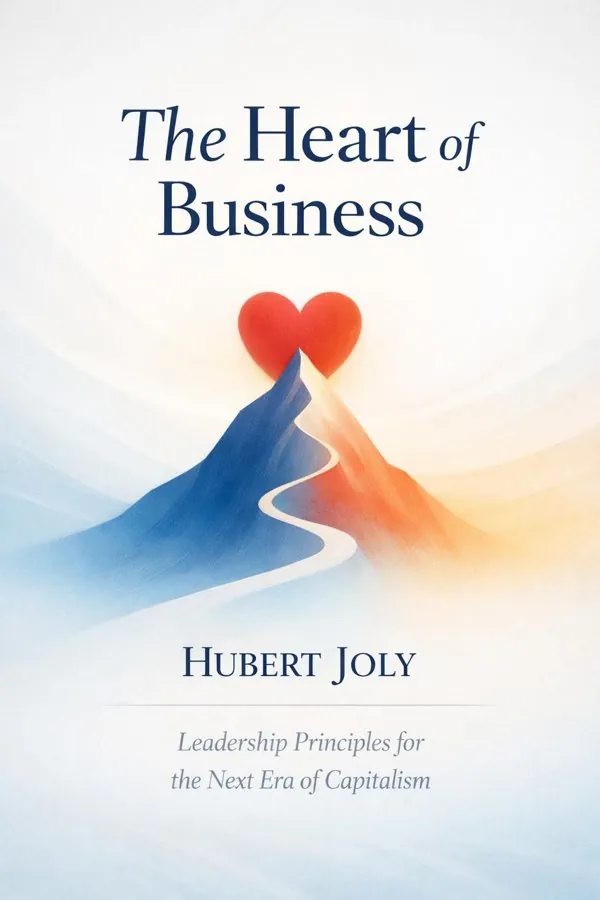
The Heart of Business: Leadership Principles for the Next Era of Capitalism: Summary & Key Insights
by Hubert Joly
 10 min7 chaptersAudio available
What Is The Heart of Business: Leadership Principles for the Next Era of Capitalism About?
The Heart of Business: Leadership Principles for the Next Era of Capitalism by Hubert Joly is a leadership book spanning 7 pages. In this book, former Best Buy CEO Hubert Joly shares his philosophy of purpose-driven leadership, showing how companies can achieve extraordinary results by putting people and purpose at the heart of business. Drawing on his experience transforming Best Buy, Joly argues that business can be a force for good when it focuses on human connections, authenticity, and shared values rather than short-term profits.
This FizzRead summary covers all 7 key chapters of The Heart of Business: Leadership Principles for the Next Era of Capitalism in approximately 10 minutes, distilling the most important ideas, arguments, and takeaways from Hubert Joly's work. Also available as an audio summary and Key Quotes Podcast.
The Heart of Business: Leadership Principles for the Next Era of Capitalism
In this book, former Best Buy CEO Hubert Joly shares his philosophy of purpose-driven leadership, showing how companies can achieve extraordinary results by putting people and purpose at the heart of business. Drawing on his experience transforming Best Buy, Joly argues that business can be a force for good when it focuses on human connections, authenticity, and shared values rather than short-term profits.
Who Should Read The Heart of Business: Leadership Principles for the Next Era of Capitalism?
This book is perfect for anyone interested in leadership and looking to gain actionable insights in a short read. Whether you're a student, professional, or lifelong learner, the key ideas from The Heart of Business: Leadership Principles for the Next Era of Capitalism by Hubert Joly will help you think differently.
- ✓Readers who enjoy leadership and want practical takeaways
- ✓Professionals looking to apply new ideas to their work and life
- ✓Anyone who wants the core insights of The Heart of Business: Leadership Principles for the Next Era of Capitalism in just 10 minutes
Want the full summary?
Get instant access to this book summary and 100K+ more with Fizz Moment.
Get Free SummaryAvailable on App Store • Free to download
Key Chapters
When I look at the modern economy, I see a system that has produced immense prosperity—and profound imbalance. Profit-centered capitalism promised efficiency, yet it often delivered alienation. In boardrooms across the world, we treated shareholder returns as the sole measure of success. But what of the employees whose creativity makes those returns possible, the customers who trust our products, the communities that sustain our enterprise? I came to believe that the obsession with short-term financial metrics has hollowed out meaning in the workplace and eroded trust in society.
This crisis is not just moral; it is practical. When businesses focus narrowly on maximizing profits, they invite fragility. Cultures become transactional, innovation slows, and engagement declines. The evidence is everywhere—from the rising disengagement of workers to the environmental and social costs we’ve ignored. Capitalism, as it was practiced, was losing its legitimacy. To restore it, we needed a new foundation: one built on purpose and humanity, not one-dimensional performance.
Purpose-driven capitalism does not renounce profit; rather, it redefines it as the outcome of serving people well. The heart of business beats through relationships, through empathy, through shared vision. In today’s world, the companies that thrive are those that recognize this truth—that greatness in business comes from aligning what we do with why we do it.
When I speak about purpose, I am not referring to a marketing slogan or a quarterly theme. Purpose is the company’s reason for being—why it exists beyond making money. Rediscovering purpose requires courage: it means asking who we are at our core, and what noble cause we serve. During the early days of Best Buy’s transformation, our purpose became crystal clear: we were not merely selling electronics; we were helping customers enrich their lives through technology. Suddenly, every decision—from store layout to product selection—was guided by this understanding.
Purpose is not written by consultants; it is discovered in the daily experiences of your team. It must resonate with every employee’s personal sense of meaning. Leaders must make purpose tangible, connecting it to stories, actions, and outcomes. When our associates saw that helping a customer choose the right laptop could improve someone’s education or career, their work gained new significance. The magic wasn’t in grand gestures but in authentic alignment.
Rediscovering purpose transforms organizations because it invites everyone to contribute from the heart. The clarity of a noble purpose gives direction even amid uncertainty. I have seen how defining and living that purpose releases energy, strengthens culture, and restores joy to work. It is the anchor that keeps the ship steady in turbulent seas.
+ 5 more chapters — available in the FizzRead app
All Chapters in The Heart of Business: Leadership Principles for the Next Era of Capitalism
About the Author
Hubert Joly is a French business executive best known for his tenure as CEO of Best Buy, where he led a successful turnaround of the company. Before joining Best Buy, he served as CEO of Carlson Companies and held leadership roles at Vivendi. Joly is also a senior lecturer at Harvard Business School and an advocate for purpose-driven capitalism.
Get This Summary in Your Preferred Format
Read or listen to the The Heart of Business: Leadership Principles for the Next Era of Capitalism summary by Hubert Joly anytime, anywhere. FizzRead offers multiple formats so you can learn on your terms — all free.
Available formats: App · Audio · PDF · EPUB — All included free with FizzRead
Download The Heart of Business: Leadership Principles for the Next Era of Capitalism PDF and EPUB Summary
Key Quotes from The Heart of Business: Leadership Principles for the Next Era of Capitalism
“When I look at the modern economy, I see a system that has produced immense prosperity—and profound imbalance.”
“When I speak about purpose, I am not referring to a marketing slogan or a quarterly theme.”
Frequently Asked Questions about The Heart of Business: Leadership Principles for the Next Era of Capitalism
The Heart of Business: Leadership Principles for the Next Era of Capitalism by Hubert Joly is a leadership book that explores key ideas across 7 chapters. In this book, former Best Buy CEO Hubert Joly shares his philosophy of purpose-driven leadership, showing how companies can achieve extraordinary results by putting people and purpose at the heart of business. Drawing on his experience transforming Best Buy, Joly argues that business can be a force for good when it focuses on human connections, authenticity, and shared values rather than short-term profits.
You Might Also Like

Extreme Ownership
Jocko Willink
10 min
Dare to Lead
Brene Brown
10 min
Leaders Eat Last
Simon Sinek
10 min
The 21 Irrefutable Laws of Leadership
John Maxwell
10 min
Start With Why
Simon Sinek
10 min
How to Lead When You're Not in Charge
Clay Scroggins
10 minBrowse by Category
Ready to read The Heart of Business: Leadership Principles for the Next Era of Capitalism?
Get the full summary and 100K+ more books with Fizz Moment.