
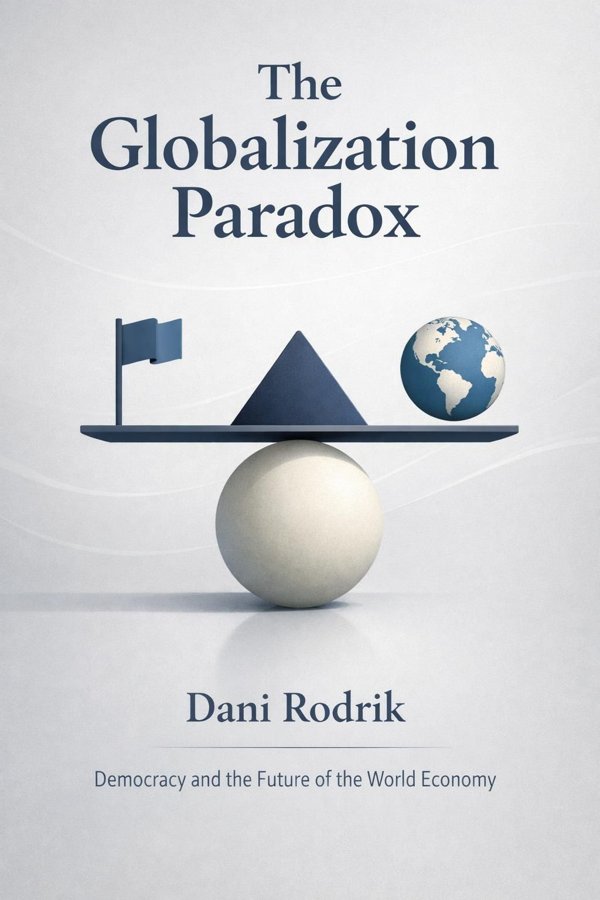
The Globalization Paradox: Democracy and the Future of the World Economy: Summary & Key Insights
by Dani Rodrik
 10 min9 chaptersAudio available
What Is The Globalization Paradox: Democracy and the Future of the World Economy About?
The Globalization Paradox: Democracy and the Future of the World Economy by Dani Rodrik is a economics book spanning 9 pages. In this influential work, Dani Rodrik argues that globalization, democracy, and national sovereignty are mutually incompatible. He presents the 'globalization trilemma,' showing that nations can only choose two of the three at any given time. Rodrik contends that excessive economic globalization undermines democratic governance and social stability, advocating instead for a balanced approach that preserves national autonomy while maintaining open markets.
This FizzRead summary covers all 9 key chapters of The Globalization Paradox: Democracy and the Future of the World Economy in approximately 10 minutes, distilling the most important ideas, arguments, and takeaways from Dani Rodrik's work. Also available as an audio summary and Key Quotes Podcast.
The Globalization Paradox: Democracy and the Future of the World Economy
In this influential work, Dani Rodrik argues that globalization, democracy, and national sovereignty are mutually incompatible. He presents the 'globalization trilemma,' showing that nations can only choose two of the three at any given time. Rodrik contends that excessive economic globalization undermines democratic governance and social stability, advocating instead for a balanced approach that preserves national autonomy while maintaining open markets.
Who Should Read The Globalization Paradox: Democracy and the Future of the World Economy?
This book is perfect for anyone interested in economics and looking to gain actionable insights in a short read. Whether you're a student, professional, or lifelong learner, the key ideas from The Globalization Paradox: Democracy and the Future of the World Economy by Dani Rodrik will help you think differently.
- ✓Readers who enjoy economics and want practical takeaways
- ✓Professionals looking to apply new ideas to their work and life
- ✓Anyone who wants the core insights of The Globalization Paradox: Democracy and the Future of the World Economy in just 10 minutes
Want the full summary?
Get instant access to this book summary and 100K+ more with Fizz Moment.
Get Free SummaryAvailable on App Store • Free to download
Key Chapters
To understand how we arrived at today’s predicament, we need to look back to the first era of globalization in the late nineteenth and early twentieth centuries. During this period, international trade and capital flows reached levels that, in some respects, rivaled those of our time. The gold standard served as the anchor of this system, ensuring that currencies were fixed and trade flowed relatively freely across borders.
This was a world of open markets but limited democracy. Policy decisions were largely insulated from popular pressures, and the defense of international financial stability often took precedence over national employment or social welfare. When democratic politics began to expand—when workers organized, when universal suffrage spread—the tension between the logic of gold and the needs of society became unsustainable. The Great Depression and the world wars marked not just geopolitical turbulence but the inevitable implosion of a system that refused to balance global integration with domestic legitimacy.
In that first globalization, as in ours, the lesson remains the same: markets may span borders, but political legitimacy is built within them. When the global order fails to recognize this, it eventually crumbles under social and political strain.
After the devastation of the Second World War, the architects of the new global order sought a different path. The Bretton Woods system that emerged in the mid-twentieth century was arguably the most successful economic compromise of the modern age. Leaders such as John Maynard Keynes and Harry Dexter White understood that economic stability required more than free markets; it required the policy space for nations to pursue their own economic and social objectives.
Countries were granted the freedom to manage their exchange rates, regulate capital flows, and maintain independent monetary and fiscal policies, while also committing themselves to an open trading system. This 'embedded liberalism' allowed nations to rebuild social contracts, foster growth, and maintain democratic legitimacy. It was not a perfect system, but it showed that globalization could coexist with national autonomy—so long as we remembered that markets serve societies, not the reverse.
The eventual collapse of the Bretton Woods consensus came as countries dismantled capital controls and deregulated financial markets. The freedom once accorded to democracies to shape their own economic futures gradually eroded, opening the way to a new phase of globalization—one more ambitious and, as I argue, more unstable.
+ 7 more chapters — available in the FizzRead app
All Chapters in The Globalization Paradox: Democracy and the Future of the World Economy
About the Author
Dani Rodrik is a Turkish-American economist and professor at Harvard University's John F. Kennedy School of Government. His research focuses on globalization, economic development, and political economy. Rodrik is known for his critical perspective on unrestrained global integration and his advocacy for pragmatic economic policies that respect national diversity.
Get This Summary in Your Preferred Format
Read or listen to the The Globalization Paradox: Democracy and the Future of the World Economy summary by Dani Rodrik anytime, anywhere. FizzRead offers multiple formats so you can learn on your terms — all free.
Available formats: App · Audio · PDF · EPUB — All included free with FizzRead
Download The Globalization Paradox: Democracy and the Future of the World Economy PDF and EPUB Summary
Key Quotes from The Globalization Paradox: Democracy and the Future of the World Economy
“To understand how we arrived at today’s predicament, we need to look back to the first era of globalization in the late nineteenth and early twentieth centuries.”
“After the devastation of the Second World War, the architects of the new global order sought a different path.”
Frequently Asked Questions about The Globalization Paradox: Democracy and the Future of the World Economy
The Globalization Paradox: Democracy and the Future of the World Economy by Dani Rodrik is a economics book that explores key ideas across 9 chapters. In this influential work, Dani Rodrik argues that globalization, democracy, and national sovereignty are mutually incompatible. He presents the 'globalization trilemma,' showing that nations can only choose two of the three at any given time. Rodrik contends that excessive economic globalization undermines democratic governance and social stability, advocating instead for a balanced approach that preserves national autonomy while maintaining open markets.
You Might Also Like
Business Adventures
John Brooks
10 min
Nudge
Richard H. Thaler, Cass R. Sunstein
10 min
The Hitchhiker"s Guide to the Galaxy
Douglas Adams
10 minThe Muqaddimah
Ibn Khaldun
10 minThe Outsiders
William N. Thorndike
10 min
A Little History of Economics
Niall Kishtainy
10 minBrowse by Category
Ready to read The Globalization Paradox: Democracy and the Future of the World Economy?
Get the full summary and 100K+ more books with Fizz Moment.