
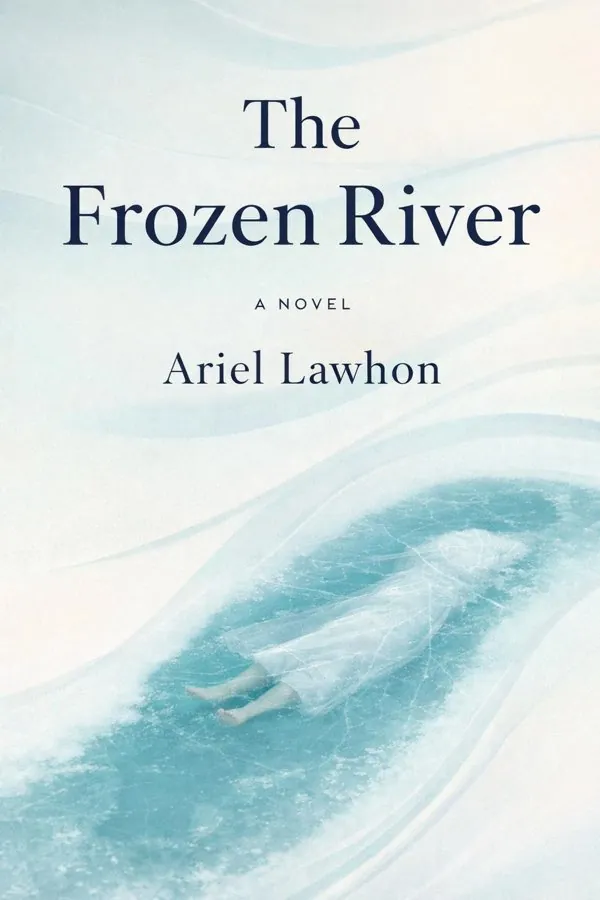
The Frozen River: A Novel: Summary & Key Insights
by Ariel Lawhon
 10 min6 chaptersAudio available
What Is The Frozen River: A Novel About?
The Frozen River: A Novel by Ariel Lawhon is a bestsellers book spanning 6 pages. Set in Hallowell, Maine in 1790, this historical mystery follows Martha Ballard, a midwife and healer, who is called upon to examine a body found frozen in the Kennebec River. Drawing inspiration from Ballard’s real-life diary, the novel explores her pursuit of justice in a male-dominated society, weaving themes of courage, truth, and resilience against the backdrop of early American life.
This FizzRead summary covers all 6 key chapters of The Frozen River: A Novel in approximately 10 minutes, distilling the most important ideas, arguments, and takeaways from Ariel Lawhon's work. Also available as an audio summary and Key Quotes Podcast.
The Frozen River: A Novel
Set in Hallowell, Maine in 1790, this historical mystery follows Martha Ballard, a midwife and healer, who is called upon to examine a body found frozen in the Kennebec River. Drawing inspiration from Ballard’s real-life diary, the novel explores her pursuit of justice in a male-dominated society, weaving themes of courage, truth, and resilience against the backdrop of early American life.
Who Should Read The Frozen River: A Novel?
This book is perfect for anyone interested in bestsellers and looking to gain actionable insights in a short read. Whether you're a student, professional, or lifelong learner, the key ideas from The Frozen River: A Novel by Ariel Lawhon will help you think differently.
- ✓Readers who enjoy bestsellers and want practical takeaways
- ✓Professionals looking to apply new ideas to their work and life
- ✓Anyone who wants the core insights of The Frozen River: A Novel in just 10 minutes
Want the full summary?
Get instant access to this book summary and 100K+ more with Fizz Moment.
Get Free SummaryAvailable on App Store • Free to download
Key Chapters
Martha Ballard’s life forms the foundation of the story. Living in 1790 Hallowell, Maine, she moves through the community by necessity and choice. As midwife, she crosses thresholds few men ever do—bedrooms, birthing chambers, huts on the outskirts of town. From these vantage points, she becomes both participant and observer of her society’s moral and physical fabric. In the novel, her diary threads throughout, reflecting a steady hand and sharp mind that record birth and death with equal gravity.
In my portrayal, I wanted Martha not as a historical footnote but as a fully realized consciousness. Her language of observation—precise, simple, steadfast—reveals how truth accumulates one line at a time. When she visits families, heals wounds, and delivers babies, she’s not just tending bodies but conducting a quiet social documentation. Through her work, the reader witnesses early American community life: the barter economy, the bitter winters, the weight of religion. Lawhon captures Martha’s dual existence—as devoted wife and mother and as professional midwife whose labor defies the narrow confines of “female work.”
Martha doesn’t speak of courage as abstraction; she lives it daily in the humility of her rounds. Her diary entries are inset into the novel not as simple quotations but as the pulse of her internal reasoning. What she sees—the good and the corrupt, the piety and the hypocrisy—becomes her own trial of faith and duty.
The discovery of the man’s body in the Kennebec River breaks the rhythm of daily life and introduces the conflict that drives the novel’s mystery. Martha is called upon not simply because she’s a midwife but because she’s trusted for her impartial eye. The details are haunting: cold flesh, bruises that speak of struggle, signs that raise questions of sexual violence. In those moments, Martha’s healing skills turn into investigative tools—her examination transcending medicine into a form of forensic reasoning long before the term existed.
What fascinated me was how the act of examination becomes an act of rebellion. Martha’s diagnosis challenges the official story proposed by men—the magistrate, the coroner, the town elders—who prefer a tidy tale that protects reputation and hierarchy. Through Martha’s steady clarity, we see how truth can be distorted when voiced through power rather than observation. I imagined her kneeling by the riverbank, frost biting her cheeks, understanding instantly that this death would ripple through every moral question in her town.
As she pushes past dismissal and skepticism, the investigation itself widens to expose the brittle order of the time: a world where men control justice while women witness but remain unheard. Martha’s voice cuts through that silence—an ordinary woman performing extraordinary logic against extraordinary odds.
+ 4 more chapters — available in the FizzRead app
All Chapters in The Frozen River: A Novel
About the Author
Ariel Lawhon is an American novelist known for her meticulously researched historical fiction. Her works often center on remarkable women from history, blending fact and imagination to illuminate forgotten stories. She is the author of several acclaimed novels including 'Code Name Hélène' and 'I Was Anastasia'.
Get This Summary in Your Preferred Format
Read or listen to the The Frozen River: A Novel summary by Ariel Lawhon anytime, anywhere. FizzRead offers multiple formats so you can learn on your terms — all free.
Available formats: App · Audio · PDF · EPUB — All included free with FizzRead
Download The Frozen River: A Novel PDF and EPUB Summary
Key Quotes from The Frozen River: A Novel
“Martha Ballard’s life forms the foundation of the story.”
“The discovery of the man’s body in the Kennebec River breaks the rhythm of daily life and introduces the conflict that drives the novel’s mystery.”
Frequently Asked Questions about The Frozen River: A Novel
The Frozen River: A Novel by Ariel Lawhon is a bestsellers book that explores key ideas across 6 chapters. Set in Hallowell, Maine in 1790, this historical mystery follows Martha Ballard, a midwife and healer, who is called upon to examine a body found frozen in the Kennebec River. Drawing inspiration from Ballard’s real-life diary, the novel explores her pursuit of justice in a male-dominated society, weaving themes of courage, truth, and resilience against the backdrop of early American life.
You Might Also Like

The Godfather
Mario Puzo
10 min
The Handmaid's Tale
Margaret Atwood
10 min
The Hunger Games
Suzanne Collins
10 min
The Nightingale
Kristin Hannah
10 min
The Seven Husbands of Evelyn Hugo
Taylor Jenkins Reid
10 min
Backwater Justice
Fern Michaels
10 minBrowse by Category
Ready to read The Frozen River: A Novel?
Get the full summary and 100K+ more books with Fizz Moment.