
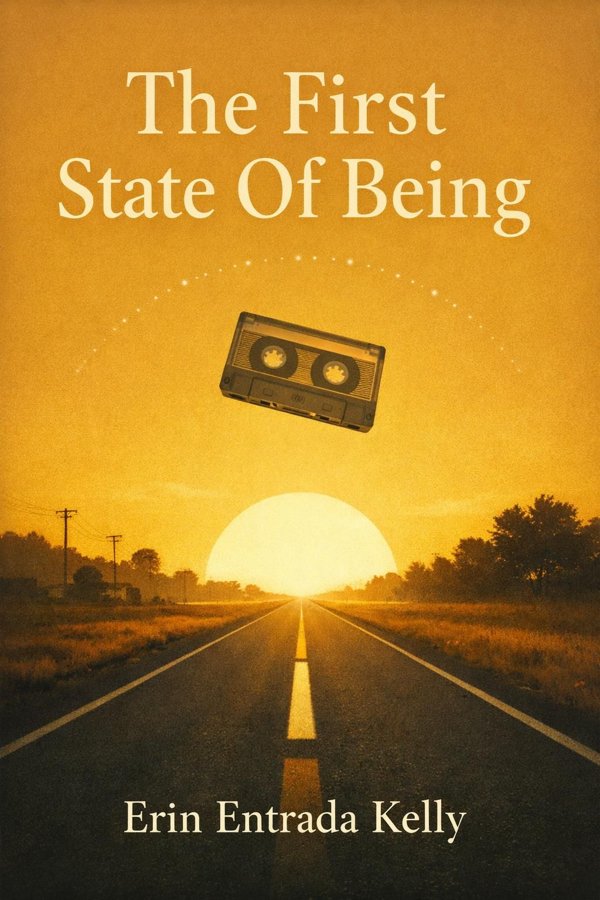
The First State Of Being: Summary & Key Insights
 10 min6 chaptersAudio available
What Is The First State Of Being About?
The First State Of Being by Erin Entrada Kelly is a bestsellers book spanning 6 pages. Set in 1999, this coming-of-age novel follows Michael, a Filipino American teenager in Delaware, as he navigates friendship, identity, and the Y2K anxieties of the turn of the millennium. When a mysterious new boy named Ridge arrives, claiming to be from the future, Michael’s world expands in unexpected ways, blending realism with speculative elements about time, belonging, and possibility.
This FizzRead summary covers all 6 key chapters of The First State Of Being in approximately 10 minutes, distilling the most important ideas, arguments, and takeaways from Erin Entrada Kelly's work. Also available as an audio summary and Key Quotes Podcast.
The First State Of Being
Set in 1999, this coming-of-age novel follows Michael, a Filipino American teenager in Delaware, as he navigates friendship, identity, and the Y2K anxieties of the turn of the millennium. When a mysterious new boy named Ridge arrives, claiming to be from the future, Michael’s world expands in unexpected ways, blending realism with speculative elements about time, belonging, and possibility.
Who Should Read The First State Of Being?
This book is perfect for anyone interested in bestsellers and looking to gain actionable insights in a short read. Whether you're a student, professional, or lifelong learner, the key ideas from The First State Of Being by Erin Entrada Kelly will help you think differently.
- ✓Readers who enjoy bestsellers and want practical takeaways
- ✓Professionals looking to apply new ideas to their work and life
- ✓Anyone who wants the core insights of The First State Of Being in just 10 minutes
Want the full summary?
Get instant access to this book summary and 100K+ more with Fizz Moment.
Get Free SummaryAvailable on App Store • Free to download
Key Chapters
Michael’s world at the beginning of the book is small, precise, and carefully contained. He’s an introverted teenager in Delaware, just months away from the year 2000, a time when technological optimism collides with apocalyptic dread. Computers aren’t just tools to him—they’re the bridges that might connect him to something greater, the instruments through which he can decode life’s logic. Yet, for all his fascination with wires and codes, Michael feels disconnected from the world around him. His classmates see him as quiet, different. His Filipino heritage sets him apart in a community where difference is often met with silence.
I imagined Michael’s bedroom as a kind of laboratory for thought—a space where he both hides and dreams. The hum of his computer is his companion; the glow of a screen replaces the uncertain gaze of other people. When the Y2K scare dominates headlines, he’s fascinated rather than afraid. What would it mean for the world’s systems to fail? What happens if every bit of coded data suddenly loses meaning? He doesn’t yet realize that these questions parallel the ones simmering inside him—questions about his own identity, his parents’ traditions, and his longing to fit into an American adolescence that seems coded in a language he can’t quite read.
The atmosphere of the late 90s shapes this story profoundly. Chat rooms were new landscapes. The turn of the millennium was heavy with symbolism—an imagined boundary between past and future. And in that liminal space, Michael becomes a vessel for all the insecurities of transition. He wants to understand system failures—both digital and emotional ones—so he studies what he can control, without realizing that the real mystery of life comes from what resists control.
In writing about Michael’s Filipino American family, I wanted to explore the quiet intricacies that come with dual cultural existence. His home isn’t chaotic but layered with contrasts—Filipino food simmering in the kitchen while American sitcoms play in the living room, traditional wisdom spoken in Tagalog and then diffused through the English rhythms of suburban life. His mother clings, in her own way, to memory; his father works long hours, carrying the invisible weight of migration and adaptation. These dynamics provide the emotional undercurrent for Michael’s solitude.
Michael’s cultural identity functions as a kind of invisible code—present in every action but not always fully interpreted. He often senses the difference between himself and his peers, though he can’t name it directly. They don’t quite understand the histories that shape his parents’ caution, their instinctive modesty, their avoidance of conflict. He loves them deeply but sometimes feels trapped between their faith in endurance and his own restless curiosity for progress.
This tension intensifies as the millennium approaches, because the global conversation about the future mirrors Michael’s personal journey. In his household, the past is preserved through language, tradition, and superstition; outside, the world rushes toward innovation, toward the sleek promises of new technology. Michael’s position between those poles is both his challenge and his gift. It places him at the intersection of continuity and change—the same intersection that defines the book itself.
Through careful observation of his family, readers begin to see how cultural difference isn't merely about contrast; it's about inheritance. It’s about the small, constant negotiations required to belong in two worlds at once. And in that negotiation, Michael begins to build his own internal code—one that can hold both memory and possibility.
+ 4 more chapters — available in the FizzRead app
All Chapters in The First State Of Being
About the Author
Erin Entrada Kelly is an American author of Filipino descent, known for her middle-grade novels exploring identity, family, and belonging. She won the 2018 Newbery Medal for 'Hello, Universe' and has been recognized for her authentic representation of Filipino American experiences.
Get This Summary in Your Preferred Format
Read or listen to the The First State Of Being summary by Erin Entrada Kelly anytime, anywhere. FizzRead offers multiple formats so you can learn on your terms — all free.
Available formats: App · Audio · PDF · EPUB — All included free with FizzRead
Download The First State Of Being PDF and EPUB Summary
Key Quotes from The First State Of Being
“Michael’s world at the beginning of the book is small, precise, and carefully contained.”
“In writing about Michael’s Filipino American family, I wanted to explore the quiet intricacies that come with dual cultural existence.”
Frequently Asked Questions about The First State Of Being
The First State Of Being by Erin Entrada Kelly is a bestsellers book that explores key ideas across 6 chapters. Set in 1999, this coming-of-age novel follows Michael, a Filipino American teenager in Delaware, as he navigates friendship, identity, and the Y2K anxieties of the turn of the millennium. When a mysterious new boy named Ridge arrives, claiming to be from the future, Michael’s world expands in unexpected ways, blending realism with speculative elements about time, belonging, and possibility.
You Might Also Like

The Godfather
Mario Puzo
10 min
The Handmaid's Tale
Margaret Atwood
10 min
The Hunger Games
Suzanne Collins
10 min
The Nightingale
Kristin Hannah
10 min
The Seven Husbands of Evelyn Hugo
Taylor Jenkins Reid
10 min
Backwater Justice
Fern Michaels
10 minBrowse by Category
Ready to read The First State Of Being?
Get the full summary and 100K+ more books with Fizz Moment.