
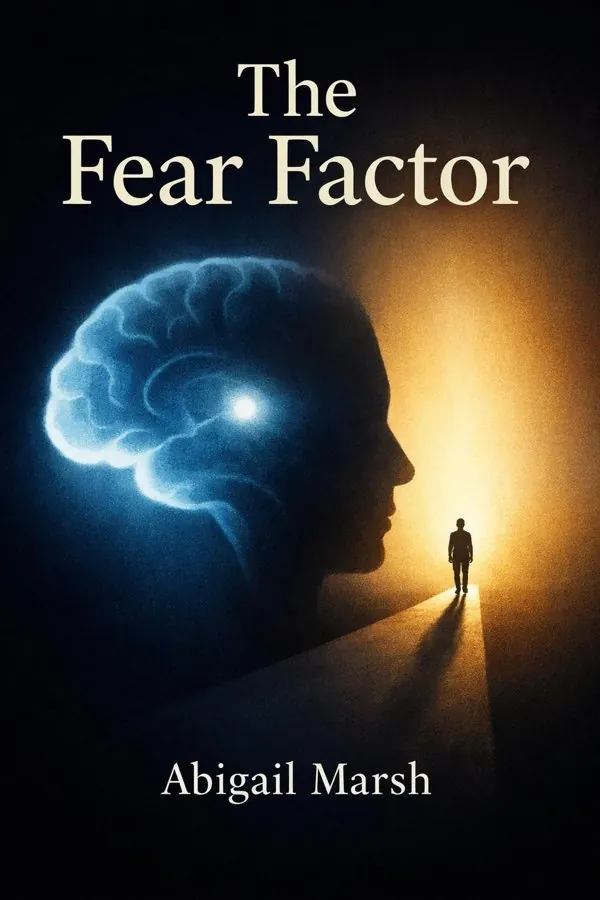
The Fear Factor: How One Emotion Connects Altruists, Psychopaths, and Everyone In-Between: Summary & Key Insights
 10 min11 chaptersAudio available
What Is The Fear Factor: How One Emotion Connects Altruists, Psychopaths, and Everyone In-Between About?
The Fear Factor: How One Emotion Connects Altruists, Psychopaths, and Everyone In-Between by Abigail Marsh is a neuroscience book spanning 11 pages. In this groundbreaking work, psychologist Abigail Marsh explores the science of fear and empathy, revealing how our capacity for altruism and compassion is deeply connected to the same neural systems that generate fear. Drawing on neuroscience, psychology, and real-life stories, Marsh examines the biological and evolutionary roots of kindness and cruelty, showing how understanding fear can illuminate the best and worst of human nature.
This FizzRead summary covers all 11 key chapters of The Fear Factor: How One Emotion Connects Altruists, Psychopaths, and Everyone In-Between in approximately 10 minutes, distilling the most important ideas, arguments, and takeaways from Abigail Marsh's work. Also available as an audio summary and Key Quotes Podcast.
The Fear Factor: How One Emotion Connects Altruists, Psychopaths, and Everyone In-Between
In this groundbreaking work, psychologist Abigail Marsh explores the science of fear and empathy, revealing how our capacity for altruism and compassion is deeply connected to the same neural systems that generate fear. Drawing on neuroscience, psychology, and real-life stories, Marsh examines the biological and evolutionary roots of kindness and cruelty, showing how understanding fear can illuminate the best and worst of human nature.
Who Should Read The Fear Factor: How One Emotion Connects Altruists, Psychopaths, and Everyone In-Between?
This book is perfect for anyone interested in neuroscience and looking to gain actionable insights in a short read. Whether you're a student, professional, or lifelong learner, the key ideas from The Fear Factor: How One Emotion Connects Altruists, Psychopaths, and Everyone In-Between by Abigail Marsh will help you think differently.
- ✓Readers who enjoy neuroscience and want practical takeaways
- ✓Professionals looking to apply new ideas to their work and life
- ✓Anyone who wants the core insights of The Fear Factor: How One Emotion Connects Altruists, Psychopaths, and Everyone In-Between in just 10 minutes
Want the full summary?
Get instant access to this book summary and 100K+ more with Fizz Moment.
Get Free SummaryAvailable on App Store • Free to download
Key Chapters
Everything begins with the amygdala, a small almond-shaped structure buried deep within the brain. Neuroscientists have long known it as the center that detects danger and triggers our fight-or-flight response. Yet in my lab, while measuring brain activity during social decision-making, I began seeing signs that this tiny organ governs far more than just self-protection. It is also the key to perceiving the suffering of others.
When we see someone in pain, especially another human face twisting in distress, our amygdala reacts instantly—even before we consciously register the image. It’s an ancient alarm, honed by evolution to promote survival not merely through avoiding threats, but also through forming bonds. Without the amygdala, emotions lose their depth; without fear, caution disappears. Damage to this structure results in a blunting of emotion so profound that people lose the capacity for empathy along with fear.
Thus, fear and empathy are dual aspects of the same biological coin. As I see it, fear isn’t about cowardice—it’s about awareness. It’s an internal language our brains evolved to detect both danger to ourselves and distress in others. This realization set the stage for everything that followed, guiding my studies on those who live at the extremes of empathy, from altruists who sacrifice for others to psychopaths who feel no guilt at all.
Long before I became a scientist obsessed with moral emotion, I was a survivor of another person’s courage. A decade before this book was written, my car spun out of control on a highway in Los Angeles and collided violently. When the dust cleared, I realized I was trapped, terrified, and helpless. Out of nowhere, a stranger ran toward the wreck. He pulled me free, at great peril to himself, and vanished before I could even learn his name. That moment became the emotional nucleus of my scientific life. I couldn’t stop wondering: what kind of person acts with such disregard for their own safety to save another?
This wasn’t the impulsive decency we all show at times. It was something more profound—a self-sacrifice reminiscent of heroism. When I learned that neuroscience could help explain this, I dedicated myself to studying those rare individuals who demonstrate what we call ‘extraordinary altruism.’ Some donate kidneys to strangers. Others risk their lives for causes that bring them no benefit. These individuals upend simplistic ideas of human selfishness. The same emotion that ignites their empathy—the capacity to feel another’s fear as if it were their own—pushes them toward acts that defy evolutionary logic.
In their brains, as we discovered through imaging studies, fear circuits do not draw a tight boundary between ‘me’ and ‘you.’ When they see someone in pain, their amygdala lights up more strongly than average, as though their bodies mistake another’s threat for their own. What appears to be courage might in fact be an intense form of sensitivity—an inability to turn away.
+ 9 more chapters — available in the FizzRead app
All Chapters in The Fear Factor: How One Emotion Connects Altruists, Psychopaths, and Everyone In-Between
About the Author
Abigail Marsh is a professor of psychology and neuroscience at Georgetown University. Her research focuses on the social and emotional processes underlying empathy, altruism, and psychopathy. She has received numerous awards for her contributions to the field of social neuroscience.
Get This Summary in Your Preferred Format
Read or listen to the The Fear Factor: How One Emotion Connects Altruists, Psychopaths, and Everyone In-Between summary by Abigail Marsh anytime, anywhere. FizzRead offers multiple formats so you can learn on your terms — all free.
Available formats: App · Audio · PDF · EPUB — All included free with FizzRead
Download The Fear Factor: How One Emotion Connects Altruists, Psychopaths, and Everyone In-Between PDF and EPUB Summary
Key Quotes from The Fear Factor: How One Emotion Connects Altruists, Psychopaths, and Everyone In-Between
“Everything begins with the amygdala, a small almond-shaped structure buried deep within the brain.”
“Long before I became a scientist obsessed with moral emotion, I was a survivor of another person’s courage.”
Frequently Asked Questions about The Fear Factor: How One Emotion Connects Altruists, Psychopaths, and Everyone In-Between
The Fear Factor: How One Emotion Connects Altruists, Psychopaths, and Everyone In-Between by Abigail Marsh is a neuroscience book that explores key ideas across 11 chapters. In this groundbreaking work, psychologist Abigail Marsh explores the science of fear and empathy, revealing how our capacity for altruism and compassion is deeply connected to the same neural systems that generate fear. Drawing on neuroscience, psychology, and real-life stories, Marsh examines the biological and evolutionary roots of kindness and cruelty, showing how understanding fear can illuminate the best and worst of human nature.
You Might Also Like
Anxious
Joseph LeDoux
10 min
Hallucinations
Oliver Sacks
10 min
The Biological Mind: How Brain, Body, and Environment Collaborate to Make Us Who We Are
Alan Jasanoff
10 min
The Feeling of Life Itself: Why Consciousness Is Widespread but Can't Be Computed
Christof Koch
10 min
The No-Nonsense Meditation Book
Steven Laureys
10 min
A General Theory of Love
Thomas Lewis, Fari Amini, Richard Lannon
10 minBrowse by Category
Ready to read The Fear Factor: How One Emotion Connects Altruists, Psychopaths, and Everyone In-Between?
Get the full summary and 100K+ more books with Fizz Moment.