
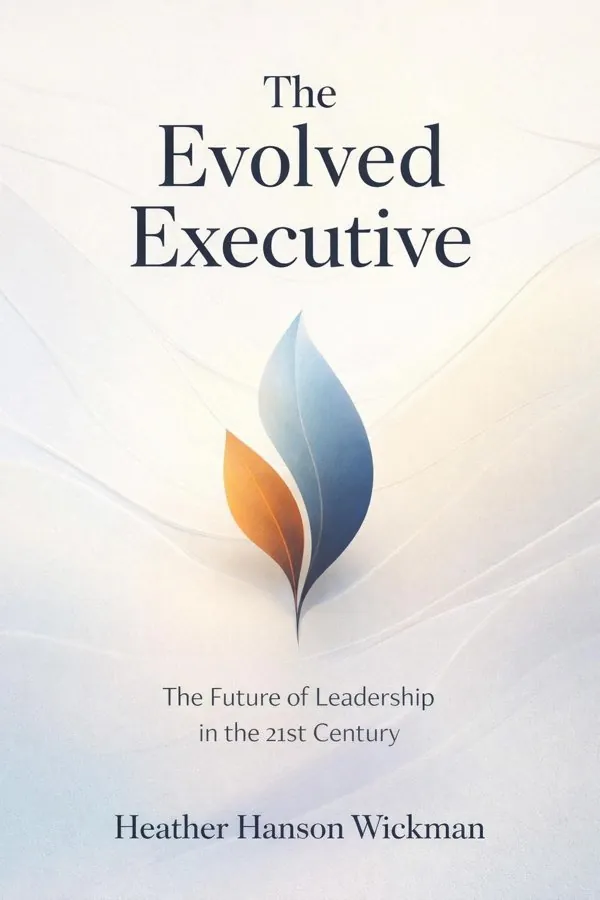
The Evolved Executive: The Future of Leadership in the 21st Century: Summary & Key Insights
 10 min9 chaptersAudio available
Key Takeaways from The Evolved Executive: The Future of Leadership in the 21st Century
The leadership model that once created efficiency now often creates dysfunction.
Every leadership problem eventually becomes an inner problem.
What many leaders call professionalism is sometimes just emotional armor.
Culture is not built by slogans on walls; it is built by what leaders normalize every day.
Many leadership behaviors that look like discipline are actually expressions of fear.
What Is The Evolved Executive: The Future of Leadership in the 21st Century About?
The Evolved Executive: The Future of Leadership in the 21st Century by Heather Hanson Wickman is a leadership book spanning 6 pages. Leadership is no longer defined by title, control, or the ability to command obedience. In The Evolved Executive, Heather Hanson Wickman argues that the leaders best equipped for the modern world are those who can cultivate self-awareness, emotional intelligence, trust, and purpose in themselves and in the systems they lead. Rather than treating people as resources to be managed, she invites executives to see organizations as living human ecosystems shaped by relationships, beliefs, and culture. The book matters because many leaders are still relying on outdated models built for stability, hierarchy, and compliance, while operating in a world marked by uncertainty, rapid change, and rising employee expectations. Wickman shows that the old command-and-control mindset not only limits innovation but also erodes engagement and resilience. Drawing on her work as an executive coach and organizational consultant, Wickman offers a practical and deeply human framework for leadership transformation. Her central message is both challenging and hopeful: organizations change when leaders do. By evolving how they show up, communicate, and make decisions, executives can build workplaces that are more adaptive, more ethical, and more fully alive.
This FizzRead summary covers all 9 key chapters of The Evolved Executive: The Future of Leadership in the 21st Century in approximately 10 minutes, distilling the most important ideas, arguments, and takeaways from Heather Hanson Wickman's work. Also available as an audio summary and Key Quotes Podcast.
The Evolved Executive: The Future of Leadership in the 21st Century
Leadership is no longer defined by title, control, or the ability to command obedience. In The Evolved Executive, Heather Hanson Wickman argues that the leaders best equipped for the modern world are those who can cultivate self-awareness, emotional intelligence, trust, and purpose in themselves and in the systems they lead. Rather than treating people as resources to be managed, she invites executives to see organizations as living human ecosystems shaped by relationships, beliefs, and culture.
The book matters because many leaders are still relying on outdated models built for stability, hierarchy, and compliance, while operating in a world marked by uncertainty, rapid change, and rising employee expectations. Wickman shows that the old command-and-control mindset not only limits innovation but also erodes engagement and resilience.
Drawing on her work as an executive coach and organizational consultant, Wickman offers a practical and deeply human framework for leadership transformation. Her central message is both challenging and hopeful: organizations change when leaders do. By evolving how they show up, communicate, and make decisions, executives can build workplaces that are more adaptive, more ethical, and more fully alive.
Who Should Read The Evolved Executive: The Future of Leadership in the 21st Century?
This book is perfect for anyone interested in leadership and looking to gain actionable insights in a short read. Whether you're a student, professional, or lifelong learner, the key ideas from The Evolved Executive: The Future of Leadership in the 21st Century by Heather Hanson Wickman will help you think differently.
- ✓Readers who enjoy leadership and want practical takeaways
- ✓Professionals looking to apply new ideas to their work and life
- ✓Anyone who wants the core insights of The Evolved Executive: The Future of Leadership in the 21st Century in just 10 minutes
Want the full summary?
Get instant access to this book summary and 100K+ more with Fizz Moment.
Get Free SummaryAvailable on App Store • Free to download
Key Chapters
The leadership model that once created efficiency now often creates dysfunction. Traditional command-and-control leadership emerged in an industrial context where predictability, standardization, and hierarchy were prized. In that environment, leaders were expected to direct, monitor, and correct. But today’s organizations operate in conditions of complexity, ambiguity, and constant change. In such a landscape, rigid authority structures can slow decision-making, suppress initiative, and push people into defensive compliance rather than meaningful contribution.
Wickman argues that modern leadership requires a fundamental shift in mindset. The executive of the future is not simply the smartest person in the room or the primary source of answers. Instead, that leader becomes a steward of clarity, trust, and collective intelligence. This means creating conditions where people think independently, speak honestly, and adapt together. The role of leadership moves from controlling outcomes to enabling healthy systems.
For example, a leader facing market disruption may be tempted to tighten control, centralize decisions, and demand certainty. But a more evolved approach would involve inviting broader input, clarifying shared priorities, and empowering teams closest to the work to experiment and respond quickly. This does not eliminate accountability; it redefines accountability as ownership rather than obedience.
The key insight is that old leadership habits often feel safe precisely when they are least effective. Organizations do not become more resilient when leaders grip harder. They become more resilient when leaders create alignment, openness, and adaptability. Actionable takeaway: identify one area where you are over-controlling people or processes, and replace that habit with a practice that increases trust, autonomy, and shared responsibility.
Every leadership problem eventually becomes an inner problem. Wickman emphasizes that conscious leadership begins with self-awareness because leaders inevitably shape culture through their emotional patterns, assumptions, and unresolved fears. If a leader is reactive, avoidant, approval-seeking, or driven by insecurity, those tendencies will show up in meetings, decisions, communication norms, and strategic priorities. Teams do not merely respond to what leaders say; they adapt to who leaders are.
This is why technical competence alone is not enough. A highly intelligent executive can still create confusion, burnout, or mistrust if they lack the ability to observe their internal state. Self-aware leaders notice when they are acting from fear rather than purpose. They recognize emotional triggers, understand how their behavior affects others, and take responsibility for the energy they bring into the room.
A practical example might be a leader who becomes defensive when challenged. Without self-awareness, they may shut down dissent, punish honesty, or rationalize their reaction. With self-awareness, they can pause, recognize the discomfort, and respond with curiosity instead of control. That one shift changes the tone of the team and encourages more candid dialogue.
Wickman’s deeper point is that transformation in organizations starts with transformation in the leader. You cannot ask teams to be open, resilient, and accountable if you are unwilling to examine yourself. Self-awareness is not self-indulgence; it is leadership discipline.
Actionable takeaway: build a regular reflection practice by asking after important interactions, “What was I feeling, what story was I telling myself, and how did that shape my behavior?” Over time, this habit will sharpen your ability to lead consciously rather than reactively.
What many leaders call professionalism is sometimes just emotional armor. Wickman challenges the assumption that executives must always appear certain, polished, and invulnerable. In reality, leadership credibility does not come from pretending to have no doubts or limitations. It comes from being grounded enough to acknowledge reality honestly. Vulnerability, in this sense, is not oversharing or weakness. It is the courage to be human in a role that often rewards performance over authenticity.
Trust grows when leaders can admit mistakes, ask for help, acknowledge uncertainty, and speak with sincerity. Teams are far more likely to engage fully when they sense that their leader is real. By contrast, when executives hide behind perfectionism or emotional distance, people often mirror that behavior. Meetings become guarded, feedback becomes filtered, and problems stay buried until they become crises.
Consider a leader navigating a failed initiative. A defensive response might involve blame, silence, or spin. A vulnerable response would sound different: “We made assumptions that proved wrong. I own my part in that. Let’s examine what happened and learn from it.” That kind of honesty lowers defensiveness and invites shared responsibility. It also models that accountability and humanity can coexist.
Wickman shows that vulnerability is especially important in times of uncertainty. Employees do not need leaders who fake certainty; they need leaders who can name difficulty without creating panic. This kind of grounded transparency creates psychological safety and relational trust.
Actionable takeaway: in your next team conversation, replace one instinct to defend or impress with a statement of honest ownership, such as admitting a blind spot, asking a genuine question, or acknowledging what you do not yet know.
Culture is not built by slogans on walls; it is built by what leaders normalize every day. Wickman argues that purpose and values are the heart of conscious leadership because they provide the moral and strategic center that guides decisions, behavior, and priorities. Without a clear purpose, organizations drift into short-termism, internal politics, and performative busyness. Without lived values, they create cynicism, because employees quickly notice the gap between what is said and what is rewarded.
Purpose gives work meaning beyond metrics. It helps people understand why the organization exists and how their contribution matters. Values, when genuinely practiced, become decision filters. They influence how conflict is handled, how customers are treated, how success is defined, and what tradeoffs are acceptable. In an evolved organization, purpose and values are not branding tools; they are operating principles.
For instance, a company that claims to value collaboration but rewards only individual heroics will unintentionally foster competition and siloed behavior. A leader committed to alignment would instead revise incentives, meeting norms, and recognition systems so that collaboration is not just encouraged but structurally supported. Similarly, if integrity is a stated value, leaders must be willing to sacrifice short-term wins when they conflict with ethics.
Wickman’s message is that culture becomes coherent when leaders embody what they ask from others. People believe values when they see them practiced under pressure, not when conditions are easy.
Actionable takeaway: choose one stated organizational value and audit whether your decisions, incentives, and meeting behaviors truly reinforce it. If there is a gap, make one visible structural change that aligns culture with principle.
Many leadership behaviors that look like discipline are actually expressions of fear. Micromanagement, excessive approval layers, guarded communication, and overemphasis on compliance often come from a leader’s anxiety about losing control, making mistakes, or being blamed. Wickman argues that fear-based leadership may produce short-term order, but it quietly weakens initiative, confidence, and engagement across the organization.
Trust-based empowerment is the alternative. This does not mean abandoning standards or letting everyone do as they please. It means creating clarity about goals, expectations, and boundaries while giving people meaningful ownership over how the work gets done. When people are trusted, they are more likely to bring creativity, judgment, and commitment to their roles. They move from passive task execution to active problem-solving.
A practical example is delegation. In a fear-based model, a leader assigns a task but remains overly involved, correcting every detail and signaling that the employee’s judgment is not fully trusted. In a trust-based model, the leader defines the desired outcome, discusses constraints and support, and then steps back enough for real ownership to develop. Follow-up becomes a coaching conversation rather than surveillance.
Wickman also highlights the systemic cost of fear. When employees worry about being punished for errors or speaking up, innovation slows and risks remain hidden. Trust creates the opposite effect: people surface concerns earlier, experiment more intelligently, and feel invested in collective success.
Actionable takeaway: examine one team process that is overloaded with approval, monitoring, or second-guessing. Simplify it by clarifying expectations upfront and increasing autonomy, then measure whether responsiveness and ownership improve.
Good intentions do not create lasting change unless systems reinforce them. One of Wickman’s most practical insights is that conscious leadership cannot remain an individual philosophy practiced only by a few enlightened executives. If organizations want authenticity, trust, inclusion, and accountability to endure, those qualities must be embedded into structures, policies, and routines. Otherwise, the culture will default back to old habits under pressure.
This means examining how leadership ideals are reflected in hiring, onboarding, performance reviews, promotion criteria, compensation, meeting design, communication channels, and conflict resolution practices. For example, an organization that says it values emotional intelligence but promotes only aggressive top performers sends a contradictory message. Likewise, a company that encourages candor but punishes dissent in subtle ways trains people to stay silent.
Embedding conscious leadership might involve redesigning performance evaluations to include relational effectiveness, coaching capability, and team health alongside financial outcomes. It could mean training managers to facilitate difficult conversations rather than avoid them. It might also require creating feedback loops where employees can safely raise concerns and influence decisions.
Wickman’s broader argument is that culture is always being shaped by systems, whether deliberately or accidentally. Leaders who want more humane, adaptive workplaces must move beyond inspiration and design environments that make evolved behavior easier and more consistent.
Actionable takeaway: pick one organizational system such as hiring, performance management, or meeting cadence and ask, “What behavior does this actually reward?” Then redesign one element so that it supports the kind of culture and leadership you claim to value.
Organizations often overvalue analytical intelligence while underestimating emotional intelligence, even though the two are inseparable in real leadership. Wickman shows that leaders make better decisions not when they suppress emotion, but when they understand it. Emotions carry information about needs, tensions, risks, and values. When leaders ignore emotional undercurrents, they misread situations, mishandle conflict, and create decisions that look rational on paper but fail in practice.
Emotional intelligence includes self-regulation, empathy, social awareness, and skilled communication. A leader with these capacities can sense when morale is slipping, notice unspoken resistance, and respond in ways that maintain trust without abandoning standards. They are able to have difficult conversations directly, without escalation or avoidance. They can also separate urgency from anxiety, helping teams stay grounded during pressure.
Imagine a reorganization that makes strategic sense but triggers uncertainty and grief. A purely mechanical leader may communicate only timelines and reporting lines, assuming the logic is enough. An emotionally intelligent leader would also address the human experience: acknowledging concerns, inviting questions, and giving people room to process change. This does not slow execution; it often improves it because people are less likely to resist what has been humanly and honestly communicated.
Wickman makes clear that emotional intelligence is not softness. It is operational effectiveness rooted in human reality. Teams led this way tend to show stronger engagement, less hidden conflict, and more sustainable performance.
Actionable takeaway: before your next major decision or announcement, ask not only “What is the logical message?” but also “What emotions is this likely to trigger, and how can I address them with clarity and empathy?”
Many leaders confuse resilience with endurance. They praise pushing through, staying busy, and absorbing pressure without pause. Wickman argues that this misunderstanding contributes to burnout at every level of the organization. Real resilience is not the ability to remain under strain indefinitely. It is the capacity to stay present, recover effectively, and respond to challenge without losing clarity, humanity, or purpose.
An evolved executive recognizes that pace is a leadership variable, not just a business necessity. When leaders model chronic urgency, teams internalize the message that worth is measured by overextension. Over time, this leads to fatigue, reduced creativity, poor judgment, and emotional disengagement. The organization may appear productive while becoming increasingly brittle.
Presence changes this dynamic. A present leader notices when stress is distorting communication, decision quality, or team relationships. They create space for reflection, prioritize what matters most, and resist the habit of treating every issue as equally urgent. They also understand that sustainable performance requires rest, boundaries, and recovery practices for themselves and for others.
For example, during a demanding quarter, a resilient leader might narrow priorities, pause nonessential work, and check in on team capacity rather than simply intensifying pressure. They may also model healthier behavior by taking breaks, setting realistic expectations, and discouraging performative overwork.
Wickman’s insight is that leadership energy is contagious. Calm, grounded presence helps teams function well under pressure; unmanaged stress spreads just as quickly.
Actionable takeaway: review your current workload and team expectations, then remove or defer one low-value demand that is adding pressure without meaningful impact. Use that reclaimed space to increase focus, recovery, and decision quality.
Big cultural change is usually the result of small repeated behaviors. Wickman reminds readers that evolved leadership is not a dramatic reinvention accomplished through a single workshop or declaration. It develops through daily practice: how leaders listen, how they respond under stress, how they run meetings, how they repair mistakes, and how consistently they align their behavior with their values.
This perspective is important because many leaders become inspired by new ideas but fail to integrate them into their routines. They may agree with conscious leadership in principle while continuing to interrupt, rush decisions, avoid feedback, or reward fear-driven performance. Real transformation happens when insight becomes habit.
A practical application is to translate abstract values into observable behaviors. If you want to lead with trust, what does that mean on Monday morning? Perhaps it means asking more questions before giving answers, delegating outcome ownership instead of prescribing every step, or creating time in meetings for dissenting views. If you want more authenticity, maybe it means naming difficult realities directly rather than coating them in vague corporate language.
Wickman’s message is encouraging because it makes change accessible. Leaders do not need to become flawless before they can become more conscious. They need willingness, practice, and accountability. Incremental shifts, repeated over time, alter team dynamics and eventually organizational culture.
Actionable takeaway: choose one leadership behavior to practice for the next two weeks, such as pausing before reacting, inviting honest feedback, or ending meetings with a reflection on alignment. Track the effect on your team and refine from there.
All Chapters in The Evolved Executive: The Future of Leadership in the 21st Century
About the Author
Heather Hanson Wickman, Ph.D., is an executive coach, leadership consultant, and organizational change specialist whose work centers on helping leaders evolve beyond outdated management models. She is the co-founder of Untethered Consulting, where she supports executives and organizations in building healthier cultures, navigating transformation, and developing more conscious forms of leadership. Her expertise spans executive development, emotional intelligence, team dynamics, and systems-level change. Wickman is especially interested in the connection between inner leadership work and external organizational results, a perspective that gives her coaching and writing both psychological depth and practical relevance. In The Evolved Executive, she draws on years of experience working with leaders across industries to offer a vision of leadership that is more self-aware, human-centered, and effective for the demands of the 21st century.
Get This Summary in Your Preferred Format
Read or listen to the The Evolved Executive: The Future of Leadership in the 21st Century summary by Heather Hanson Wickman anytime, anywhere. FizzRead offers multiple formats so you can learn on your terms — all free.
Available formats: App · Audio · PDF · EPUB — All included free with FizzRead
Download The Evolved Executive: The Future of Leadership in the 21st Century PDF and EPUB Summary
Key Quotes from The Evolved Executive: The Future of Leadership in the 21st Century
“The leadership model that once created efficiency now often creates dysfunction.”
“Every leadership problem eventually becomes an inner problem.”
“What many leaders call professionalism is sometimes just emotional armor.”
“Culture is not built by slogans on walls; it is built by what leaders normalize every day.”
“Many leadership behaviors that look like discipline are actually expressions of fear.”
Frequently Asked Questions about The Evolved Executive: The Future of Leadership in the 21st Century
The Evolved Executive: The Future of Leadership in the 21st Century by Heather Hanson Wickman is a leadership book that explores key ideas across 9 chapters. Leadership is no longer defined by title, control, or the ability to command obedience. In The Evolved Executive, Heather Hanson Wickman argues that the leaders best equipped for the modern world are those who can cultivate self-awareness, emotional intelligence, trust, and purpose in themselves and in the systems they lead. Rather than treating people as resources to be managed, she invites executives to see organizations as living human ecosystems shaped by relationships, beliefs, and culture. The book matters because many leaders are still relying on outdated models built for stability, hierarchy, and compliance, while operating in a world marked by uncertainty, rapid change, and rising employee expectations. Wickman shows that the old command-and-control mindset not only limits innovation but also erodes engagement and resilience. Drawing on her work as an executive coach and organizational consultant, Wickman offers a practical and deeply human framework for leadership transformation. Her central message is both challenging and hopeful: organizations change when leaders do. By evolving how they show up, communicate, and make decisions, executives can build workplaces that are more adaptive, more ethical, and more fully alive.
You Might Also Like
Extreme Ownership
Jocko Willink
10 min
Dare to Lead
Brene Brown
10 min
Leaders Eat Last
Simon Sinek
10 min
The 21 Irrefutable Laws of Leadership
John Maxwell
10 min
Start With Why
Simon Sinek
10 min
How to Lead When You're Not in Charge
Clay Scroggins
10 minBrowse by Category
Ready to read The Evolved Executive: The Future of Leadership in the 21st Century?
Get the full summary and 100K+ more books with Fizz Moment.