
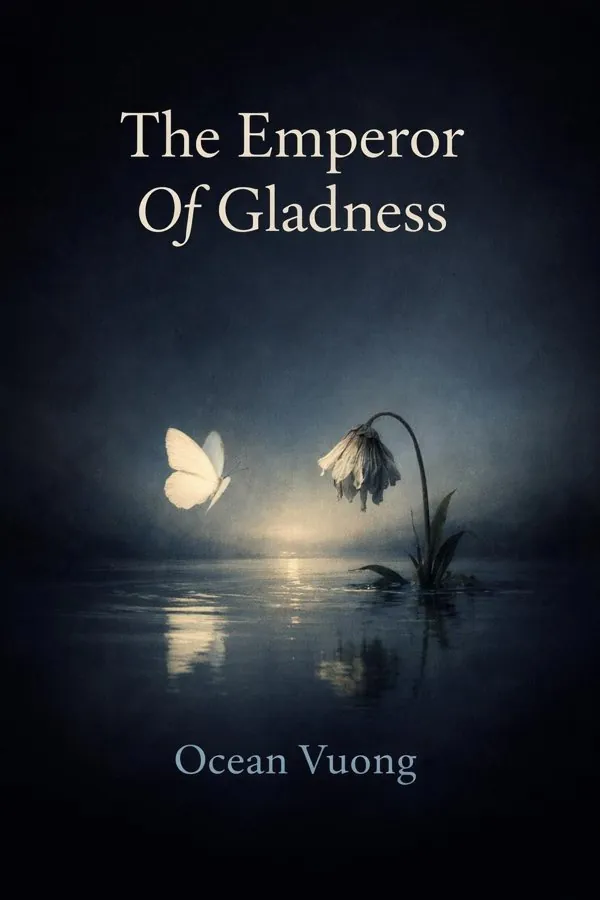
The Emperor Of Gladness: Summary & Key Insights
by Ocean Vuong
 10 min9 chaptersAudio available
Key Takeaways from The Emperor Of Gladness
One of Ocean Vuong’s most affecting insights is that gladness is not the opposite of suffering but something that often grows inside it.
A striking feature of Vuong’s writing is his belief that language does more than describe reality; it can make survival possible.
Vuong consistently shows that identity is never self-generated in a simple way; it is assembled from inheritances we did not choose.
An important insight in Vuong’s writing is that memory rarely arrives as a neat timeline.
Vuong’s work repeatedly reminds us that the body is not separate from history.
What Is The Emperor Of Gladness About?
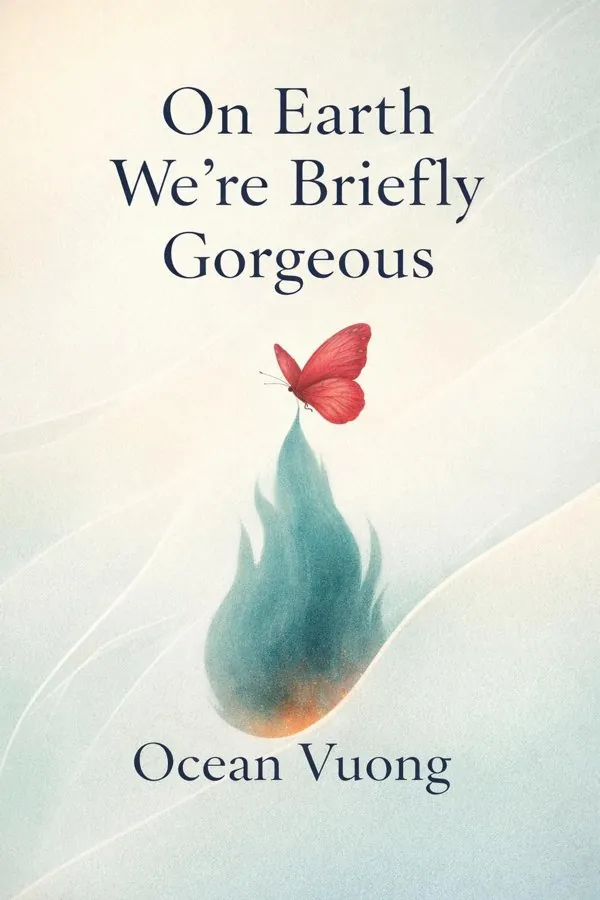
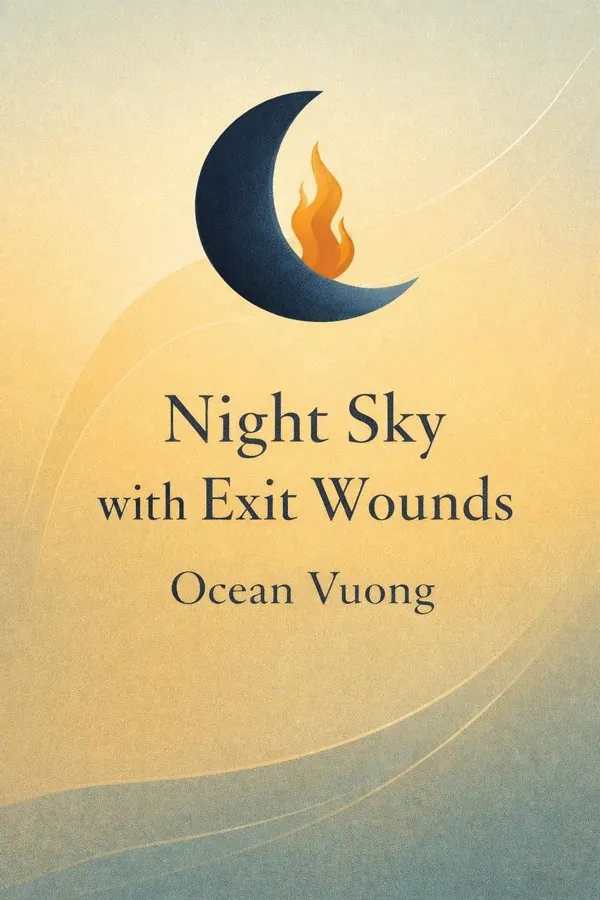
The Emperor Of Gladness by Ocean Vuong is a classics book spanning 5 pages. Ocean Vuong’s The Emperor Of Gladness is presented as a major new work from one of the most distinctive literary voices writing today. Known for blending poetic intensity with emotional precision, Vuong returns to the concerns that have made his writing resonate so deeply: grief, tenderness, memory, violence, desire, and the fragile forms of joy people create in the aftermath of loss. Rather than treating gladness as something simple or naïve, this book suggests that joy may be hardest won precisely where pain has been most intimate. What makes the work especially compelling is Vuong’s rare authority as a writer who moves seamlessly between poetry, memoir-like reflection, and narrative invention. In books such as Night Sky with Exit Wounds and On Earth We’re Briefly Gorgeous, he has shown an unusual ability to turn private feeling into shared human insight. The Emperor Of Gladness appears to extend that project, asking how identity is shaped by inheritance, how love survives historical trauma, and how language itself can become a shelter for the wounded. For readers of contemporary literature, this is not just another lyrical book. It is an invitation to consider how beauty, survival, and self-making remain possible in a fractured world.
This FizzRead summary covers all 9 key chapters of The Emperor Of Gladness in approximately 10 minutes, distilling the most important ideas, arguments, and takeaways from Ocean Vuong's work. Also available as an audio summary and Key Quotes Podcast.
The Emperor Of Gladness
Ocean Vuong’s The Emperor Of Gladness is presented as a major new work from one of the most distinctive literary voices writing today. Known for blending poetic intensity with emotional precision, Vuong returns to the concerns that have made his writing resonate so deeply: grief, tenderness, memory, violence, desire, and the fragile forms of joy people create in the aftermath of loss. Rather than treating gladness as something simple or naïve, this book suggests that joy may be hardest won precisely where pain has been most intimate.
What makes the work especially compelling is Vuong’s rare authority as a writer who moves seamlessly between poetry, memoir-like reflection, and narrative invention. In books such as Night Sky with Exit Wounds and On Earth We’re Briefly Gorgeous, he has shown an unusual ability to turn private feeling into shared human insight. The Emperor Of Gladness appears to extend that project, asking how identity is shaped by inheritance, how love survives historical trauma, and how language itself can become a shelter for the wounded. For readers of contemporary literature, this is not just another lyrical book. It is an invitation to consider how beauty, survival, and self-making remain possible in a fractured world.
Who Should Read The Emperor Of Gladness?
This book is perfect for anyone interested in classics and looking to gain actionable insights in a short read. Whether you're a student, professional, or lifelong learner, the key ideas from The Emperor Of Gladness by Ocean Vuong will help you think differently.
- ✓Readers who enjoy classics and want practical takeaways
- ✓Professionals looking to apply new ideas to their work and life
- ✓Anyone who wants the core insights of The Emperor Of Gladness in just 10 minutes
Want the full summary?
Get instant access to this book summary and 100K+ more with Fizz Moment.
Get Free SummaryAvailable on App Store • Free to download
Key Chapters
One of Ocean Vuong’s most affecting insights is that gladness is not the opposite of suffering but something that often grows inside it. The Emperor Of Gladness appears to approach joy not as a cheerful mood or a simple reward for endurance, but as a hard-earned form of perception. In Vuong’s work, the people most capable of tenderness are often those who have lived close to precarity, silence, migration, shame, or grief. That perspective transforms the title itself. An “emperor” of gladness is not someone untouched by pain, but someone who has learned how to recognize fragile beauty even while carrying damage.
This matters because much of modern life encourages emotional simplification. We are often told to move on quickly, optimize our lives, and perform resilience as if healing were linear. Vuong resists that logic. He suggests that joy can coexist with mourning, and that the smallest experiences—a remembered gesture, a body in motion, a moment of being seen—can hold enormous meaning. His language typically enlarges what appears minor, revealing how survival is often made of brief, almost invisible acts of care.
Readers can apply this idea by rethinking what counts as happiness in their own lives. Instead of waiting for total resolution, they might look for forms of gladness already present: a conversation that eases loneliness, a ritual that grounds memory, an artwork that gives language to confusion. Vuong’s vision asks us to honor incomplete joy rather than dismiss it.
Actionable takeaway: Start noticing the modest, recurring moments that make life bearable, and treat them not as accidents but as essential forms of meaning.
A striking feature of Vuong’s writing is his belief that language does more than describe reality; it can make survival possible. The Emperor Of Gladness seems to continue his long investigation into what words can hold when ordinary speech fails. For people shaped by war, displacement, family fracture, or social marginalization, language is never neutral. It can wound through erasure and stereotype, but it can also restore complexity to lives flattened by public narratives. Vuong writes with the understanding that to name something carefully is already an ethical act.
This idea helps explain why his style matters so much. His lyricism is not decorative excess. It is a method of attention. By slowing perception, layering image, and dwelling inside contradiction, he creates a verbal space in which difficult experience becomes speakable without being reduced. A memory is not just reported; it is re-entered. A body is not merely visible; it becomes a site where history, desire, and vulnerability converge. In that sense, art becomes a shelter not because it hides pain, but because it gives pain a shape that can be carried.
In practical terms, this insight invites readers to become more deliberate with their own language. Someone processing grief might keep a journal and describe sensations rather than forcing conclusions. A teacher might encourage students to write around silence rather than only around argument. A friend might ask more precise, less formulaic questions when someone is suffering.
Actionable takeaway: Use language not only to explain what happened, but to create space where difficult emotions can exist without being hurried into closure.
Vuong consistently shows that identity is never self-generated in a simple way; it is assembled from inheritances we did not choose. The Emperor Of Gladness likely deepens this idea by exploring how family history, migration, race, queerness, class, and cultural memory shape the self long before the self can narrate its own story. In Vuong’s world, becoming a person involves negotiating what has been passed down through bodies, silences, fears, and acts of love. The past is not behind us. It lives in speech patterns, gestures, fantasies, and wounds.
What makes this especially powerful is that inheritance is presented as neither purely oppressive nor purely sacred. It can be burdensome, carrying trauma across generations, but it can also transmit survival knowledge, humor, tenderness, and stubborn forms of devotion. Vuong often resists the temptation to idealize family while also refusing to flatten it into damage alone. This balanced treatment makes his work feel emotionally true. It acknowledges that people may be shaped by those who hurt them and sustained by them at the same time.
Readers can apply this concept by asking not just “Who am I?” but “What histories am I carrying?” That question can clarify recurring emotional patterns, internalized shame, or inherited resilience. It can also open conversations across generations. For example, learning a family migration story or revisiting an elder’s memories may illuminate present conflicts that once seemed purely personal.
Actionable takeaway: Reflect on one inherited belief, fear, or strength in your life, and ask whether you want to preserve it, revise it, or release it.
An important insight in Vuong’s writing is that memory rarely arrives as a neat timeline. It appears in fragments, repetitions, sensory flashes, and emotional returns. The Emperor Of Gladness seems likely to continue this fragmented approach, treating remembrance not as a stable archive but as an active, often painful process of reconstruction. This matters because people do not usually remember trauma, love, or childhood in orderly chapters. They remember through images, absences, textures, and sudden recognitions. Vuong’s art honors that nonlinear truth.
By structuring thought through echoes rather than strict chronology, he captures how the mind actually lives with the past. A smell may summon an entire history. A sentence overheard years later may alter the meaning of an old wound. A person may only understand an event after encountering another body, another loss, or another silence that makes the original pain legible. In this framework, memory is not simply about accuracy. It is about relation: how the past keeps revising the present.
This idea has practical relevance well beyond literature. Readers dealing with complicated personal histories may find relief in understanding that fragmented recall is not a failure of thought. It is often how experience is stored. Writers, therapists, and teachers can use this insight by creating forms that allow associative thinking rather than demanding instant coherence. A memoir exercise, for example, might begin with five images rather than a full narrative outline.
Actionable takeaway: When reflecting on your past, allow disconnected details to surface first; coherence often emerges after fragments are given room to speak.
Vuong’s work repeatedly reminds us that the body is not separate from history. It is where violence lands, where intimacy is learned, where labor leaves marks, and where desire contests shame. The Emperor Of Gladness likely continues this embodied thinking by treating the body as both vulnerable and revelatory. Bodies in Vuong are not abstract symbols. They breathe, ache, hunger, remember, and reach. Through them, private experience and public history meet.
This emphasis is especially important in literature concerned with migration, queerness, and class. These conditions are often discussed politically in broad terms, but Vuong narrows the frame to sensation: a scar, a hand, a posture, a touch withheld, a body watched or misread. Such moments show how systems of power become intimate. At the same time, the body is also where resistance begins. Pleasure can challenge shame. Care can interrupt inherited brutality. To inhabit one’s body with fuller awareness can become a form of dignity.
In everyday life, this idea encourages readers to pay attention to how emotions manifest physically. Anxiety may appear as tightness, grief as fatigue, love as ease, fear as numbness. It also asks us to think more ethically about the bodies around us: who gets to move safely, who is judged, who is exhausted, who is unseen. Vuong’s perspective bridges the personal and political without turning either into a slogan.
Actionable takeaway: Notice one recurring bodily sensation linked to stress, memory, or affection, and treat it as meaningful information rather than background noise.
A profound thread running through Vuong’s writing is that true intimacy depends on attention rather than ownership. The Emperor Of Gladness appears poised to explore relationships in which love is not measured by control, certainty, or permanence, but by the willingness to witness another person’s complexity. This is especially moving in Vuong’s literary universe, where many characters or speakers have experienced abandonment, misunderstanding, or objectification. To be seen clearly, without being claimed or reduced, becomes an almost radical form of care.
This vision challenges familiar myths about love. Popular culture often presents intimacy as fusion: two people completing each other, healing each other, or securing each other against uncertainty. Vuong tends to reject that fantasy. His work suggests that every person remains partially unknowable, carrying memories and fears that cannot be fully shared. Love therefore begins not in mastery, but in humility. It asks us to remain present before what we cannot entirely solve.
This has practical relevance in friendships, family life, and romance. Listening without rushing to fix someone, asking questions that invite depth rather than performance, and accepting emotional ambiguity are all ways of practicing this kind of intimacy. It also applies to how we see ourselves. Self-compassion may require observing our contradictions without trying to force immediate coherence.
Actionable takeaway: In your next important conversation, focus less on giving advice and more on helping the other person feel accurately seen.
One of the central achievements of Vuong’s work is his ability to transform private suffering into a shared field of recognition. The Emperor Of Gladness likely extends this by showing that art does not erase loneliness, but it can make loneliness less isolating. A deeply personal image, if rendered with precision, often becomes more universal rather than less. The paradox is that the more faithfully Vuong writes from specificity, the more readers from different backgrounds feel addressed.
This is part of why his work matters culturally. In a media environment saturated with speed and simplification, Vuong offers a slower mode of encounter. He invites readers to dwell in difficult feeling without sensationalizing it. The result is not confession for its own sake, but relation: a reader recognizes something in another person’s grief, desire, or shame and begins to feel less singularly burdened by their own. Literature becomes a meeting place for forms of experience that are often socially hidden.
In practical terms, this idea can encourage readers to engage art as a form of connection rather than status. Reading a poem with a friend, discussing a passage that mirrors a family conflict, or using literature in classrooms to explore emotional nuance can create meaningful dialogue. It also encourages creators to trust specificity. Writing honestly about one small scene may communicate more than broad declarations ever could.
Actionable takeaway: Share one passage of literature that moved you with someone else, and use it as a starting point for a deeper conversation about lived experience.
Vuong’s literary sensibility repeatedly suggests that vulnerability is not weakness but a disciplined openness to reality. The Emperor Of Gladness seems likely to continue this ethic by showing how emotional exposure, when handled with rigor and care, can produce insight that defensive certainty cannot. In many social settings, people are rewarded for hardness, irony, and self-protection. Vuong moves in the opposite direction. He treats tenderness as an intellectual and moral achievement.
This is not sentimental. Vulnerability in his work does not mean indiscriminate disclosure or passivity. It means allowing grief to be acknowledged, allowing beauty to matter, allowing dependence and need to be spoken. That kind of openness can be frightening, especially for those shaped by instability or shame. Yet it is often the precondition for honest relationship, artistic depth, and ethical self-knowledge. To refuse vulnerability entirely is often to live behind a mask of control.
Readers can apply this by distinguishing between exposure that is careless and exposure that is meaningful. Admitting uncertainty in a difficult conversation, naming a hurt instead of disguising it as anger, or asking for help before collapse are practical examples. In leadership, vulnerability can create trust when it is paired with responsibility. In creative work, it allows complexity rather than cliché.
Actionable takeaway: Identify one area where self-protection has become habitual, and experiment with a small, deliberate act of honest openness.
Perhaps the deepest lesson in Vuong’s work is that beauty is not escapism; it is a way of paying fuller attention to reality. The Emperor Of Gladness appears to treat beauty as ethically significant because it resists numbness. To notice light, gesture, rhythm, or tenderness in a damaged world is not to deny injustice. It is to refuse the deadening belief that pain is all there is. Beauty becomes a mode of witness, preserving what brutality would erase.
This understanding also clarifies why Vuong’s style remains so lush even when his subjects are harsh. He does not beautify suffering in order to make it palatable. Rather, he reveals that beauty and suffering are often entangled in lived experience. A loving memory may sharpen grief. A violent history may make a moment of care more radiant. By holding both together, he avoids both despair and false uplift.
For readers, this idea offers a practical philosophy of attention. Ethical noticing can shape daily life: observing a parent’s aging face with tenderness, recognizing the labor behind ordinary comforts, preserving a memory before it fades, or making art that honors overlooked people. Beauty then becomes a practice of regard, one that can deepen gratitude without erasing critique.
Actionable takeaway: Spend a few minutes each day deliberately noticing one beautiful detail in ordinary life, and ask what human reality that detail reveals rather than hides.
All Chapters in The Emperor Of Gladness
About the Author
Ocean Vuong is a Vietnamese American poet, essayist, and novelist celebrated for his lyrical language and emotionally incisive exploration of grief, family, war, queerness, and migration. Born in Saigon, Vietnam, and raised in the United States, he has drawn on personal and historical experience to create a body of work that is both intimate and formally ambitious. He rose to prominence with the poetry collection Night Sky with Exit Wounds, followed by the acclaimed novel On Earth We’re Briefly Gorgeous, which established him as a major contemporary literary voice. Vuong’s writing is known for its fusion of sensual imagery, philosophical reflection, and emotional vulnerability. Across genres, he examines how language can illuminate wounded lives while making space for beauty, tenderness, and survival.
Get This Summary in Your Preferred Format
Read or listen to the The Emperor Of Gladness summary by Ocean Vuong anytime, anywhere. FizzRead offers multiple formats so you can learn on your terms — all free.
Available formats: App · Audio · PDF · EPUB — All included free with FizzRead
Download The Emperor Of Gladness PDF and EPUB Summary
Key Quotes from The Emperor Of Gladness
“One of Ocean Vuong’s most affecting insights is that gladness is not the opposite of suffering but something that often grows inside it.”
“A striking feature of Vuong’s writing is his belief that language does more than describe reality; it can make survival possible.”
“Vuong consistently shows that identity is never self-generated in a simple way; it is assembled from inheritances we did not choose.”
“An important insight in Vuong’s writing is that memory rarely arrives as a neat timeline.”
“Vuong’s work repeatedly reminds us that the body is not separate from history.”
Frequently Asked Questions about The Emperor Of Gladness
The Emperor Of Gladness by Ocean Vuong is a classics book that explores key ideas across 9 chapters. Ocean Vuong’s The Emperor Of Gladness is presented as a major new work from one of the most distinctive literary voices writing today. Known for blending poetic intensity with emotional precision, Vuong returns to the concerns that have made his writing resonate so deeply: grief, tenderness, memory, violence, desire, and the fragile forms of joy people create in the aftermath of loss. Rather than treating gladness as something simple or naïve, this book suggests that joy may be hardest won precisely where pain has been most intimate. What makes the work especially compelling is Vuong’s rare authority as a writer who moves seamlessly between poetry, memoir-like reflection, and narrative invention. In books such as Night Sky with Exit Wounds and On Earth We’re Briefly Gorgeous, he has shown an unusual ability to turn private feeling into shared human insight. The Emperor Of Gladness appears to extend that project, asking how identity is shaped by inheritance, how love survives historical trauma, and how language itself can become a shelter for the wounded. For readers of contemporary literature, this is not just another lyrical book. It is an invitation to consider how beauty, survival, and self-making remain possible in a fractured world.
More by Ocean Vuong
You Might Also Like

Browse by Category
Ready to read The Emperor Of Gladness?
Get the full summary and 100K+ more books with Fizz Moment.