
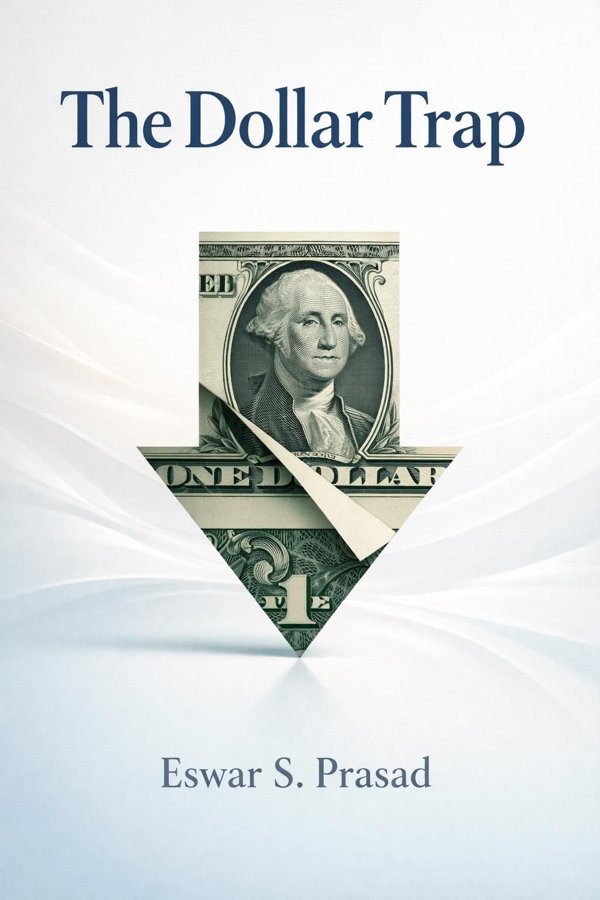
The Dollar Trap: How the U.S. Dollar Tightened Its Grip on Global Finance: Summary & Key Insights
 10 min9 chaptersAudio available
What Is The Dollar Trap: How the U.S. Dollar Tightened Its Grip on Global Finance About?
The Dollar Trap: How the U.S. Dollar Tightened Its Grip on Global Finance by Eswar S. Prasad is a economics book spanning 9 pages. In this book, economist Eswar S. Prasad examines how the U.S. dollar, despite financial crises and global imbalances, has maintained its dominance in the international monetary system. He explores the paradox of the dollar’s enduring strength, the structural factors that sustain it, and the implications for global economic stability and U.S. policy. Drawing on extensive data and analysis, Prasad explains why the dollar remains the world’s reserve currency and what this means for the future of global finance.
This FizzRead summary covers all 9 key chapters of The Dollar Trap: How the U.S. Dollar Tightened Its Grip on Global Finance in approximately 10 minutes, distilling the most important ideas, arguments, and takeaways from Eswar S. Prasad's work. Also available as an audio summary and Key Quotes Podcast.
The Dollar Trap: How the U.S. Dollar Tightened Its Grip on Global Finance
In this book, economist Eswar S. Prasad examines how the U.S. dollar, despite financial crises and global imbalances, has maintained its dominance in the international monetary system. He explores the paradox of the dollar’s enduring strength, the structural factors that sustain it, and the implications for global economic stability and U.S. policy. Drawing on extensive data and analysis, Prasad explains why the dollar remains the world’s reserve currency and what this means for the future of global finance.
Who Should Read The Dollar Trap: How the U.S. Dollar Tightened Its Grip on Global Finance?
This book is perfect for anyone interested in economics and looking to gain actionable insights in a short read. Whether you're a student, professional, or lifelong learner, the key ideas from The Dollar Trap: How the U.S. Dollar Tightened Its Grip on Global Finance by Eswar S. Prasad will help you think differently.
- ✓Readers who enjoy economics and want practical takeaways
- ✓Professionals looking to apply new ideas to their work and life
- ✓Anyone who wants the core insights of The Dollar Trap: How the U.S. Dollar Tightened Its Grip on Global Finance in just 10 minutes
Want the full summary?
Get instant access to this book summary and 100K+ more with Fizz Moment.
Get Free SummaryAvailable on App Store • Free to download
Key Chapters
The story begins with the transformation of international finance after World War II. When the Bretton Woods system was born in 1944, the dollar stood at the center of a new vision for stability. It was backed by U.S. economic scale, political strength, and the credibility of its institutions. Countries pegged their currencies to the dollar, and in turn, the dollar was convertible to gold. This arrangement cemented trust: the dollar became the anchor of global trade and finance.
Even when Bretton Woods collapsed in 1971, and the dollar was no longer tied to gold, the world did not abandon its reliance. By then, American financial markets were unrivaled in depth and liquidity. The U.S. Treasury market offered safety and transparency that no other country could match. The dollar’s role evolved—from a formal anchor to an implicit one sustained by market confidence.
Through oil shocks, inflation crises, and emerging global competition, the dollar remained indispensable. Multinational corporations invoiced trade in dollars, central banks held dollars in their reserves, and international debt markets priced contracts in dollars. This legacy of trust built over decades created a self-perpetuating system, where departing from the dollar seemed more disruptive than staying with it.
Understanding this historical trajectory is vital because it explains the structural inertia of global finance. The dollar’s dominance was not imposed—it was an outcome of collective choices made in pursuit of stability and predictability.
The 2008 financial crisis should, in theory, have shaken faith in the dollar. After all, the crisis began on Wall Street and stemmed from American over-leverage and institutional failure. Yet as global panic spread, investors fled not from the dollar, but toward it. The irony was striking: the same currency at the heart of the chaos became the refuge of security.
Why? The answer lies in the structure of global markets. In moments of turmoil, liquidity—rapid, reliable convertibility—is the most prized asset. The U.S. Treasury market, despite its imperfections, remained the deepest and most accessible safe haven. Central banks and sovereign funds poured into dollar-denominated assets not out of sentiment but necessity. Their own reserves, financial liabilities, and payment systems were designed around dollar transactions.
This episode exposed a fundamental truth: global finance lacks true alternatives to the dollar. The crisis demonstrated that resilience is measured not by immunity to shocks but by capacity for recovery. The Federal Reserve’s decisive intervention and the credibility of U.S. institutions restored confidence more quickly than any other major actor could have.
In this sense, the crisis was both a test and a reaffirmation of dollar centrality—the world discovered that while the dollar system was flawed, it remained indispensable. This paradox forms the core of what I term the dollar trap.
+ 7 more chapters — available in the FizzRead app
All Chapters in The Dollar Trap: How the U.S. Dollar Tightened Its Grip on Global Finance
About the Author
Eswar S. Prasad is the Tolani Senior Professor of Trade Policy at Cornell University and a senior fellow at the Brookings Institution. He previously served as head of the IMF’s China Division and has written extensively on international finance, monetary policy, and globalization.
Get This Summary in Your Preferred Format
Read or listen to the The Dollar Trap: How the U.S. Dollar Tightened Its Grip on Global Finance summary by Eswar S. Prasad anytime, anywhere. FizzRead offers multiple formats so you can learn on your terms — all free.
Available formats: App · Audio · PDF · EPUB — All included free with FizzRead
Download The Dollar Trap: How the U.S. Dollar Tightened Its Grip on Global Finance PDF and EPUB Summary
Key Quotes from The Dollar Trap: How the U.S. Dollar Tightened Its Grip on Global Finance
“The story begins with the transformation of international finance after World War II.”
“The 2008 financial crisis should, in theory, have shaken faith in the dollar.”
Frequently Asked Questions about The Dollar Trap: How the U.S. Dollar Tightened Its Grip on Global Finance
The Dollar Trap: How the U.S. Dollar Tightened Its Grip on Global Finance by Eswar S. Prasad is a economics book that explores key ideas across 9 chapters. In this book, economist Eswar S. Prasad examines how the U.S. dollar, despite financial crises and global imbalances, has maintained its dominance in the international monetary system. He explores the paradox of the dollar’s enduring strength, the structural factors that sustain it, and the implications for global economic stability and U.S. policy. Drawing on extensive data and analysis, Prasad explains why the dollar remains the world’s reserve currency and what this means for the future of global finance.
You Might Also Like

Business Adventures
John Brooks
10 min
Nudge
Richard H. Thaler, Cass R. Sunstein
10 min
The Hitchhiker"s Guide to the Galaxy
Douglas Adams
10 minThe Muqaddimah
Ibn Khaldun
10 minThe Outsiders
William N. Thorndike
10 min
A Little History of Economics
Niall Kishtainy
10 minBrowse by Category
Ready to read The Dollar Trap: How the U.S. Dollar Tightened Its Grip on Global Finance?
Get the full summary and 100K+ more books with Fizz Moment.