
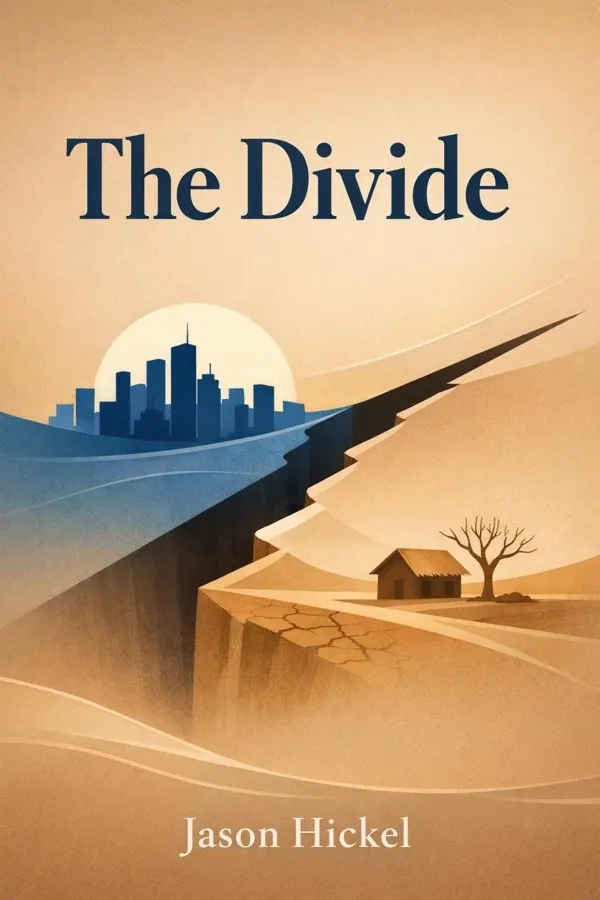
The Divide: A Brief Guide to Global Inequality and Its Solutions: Summary & Key Insights
by Jason Hickel
 10 min10 chaptersAudio available
What Is The Divide: A Brief Guide to Global Inequality and Its Solutions About?
The Divide: A Brief Guide to Global Inequality and Its Solutions by Jason Hickel is a economics book spanning 10 pages. In this incisive work, anthropologist Jason Hickel explores the structural roots of global inequality. He argues that poverty in the Global South is not a natural condition but the result of centuries of exploitation, colonialism, and economic policies that favor wealthy nations. Hickel challenges mainstream development narratives and proposes radical alternatives for achieving global justice and sustainability.
This FizzRead summary covers all 10 key chapters of The Divide: A Brief Guide to Global Inequality and Its Solutions in approximately 10 minutes, distilling the most important ideas, arguments, and takeaways from Jason Hickel's work. Also available as an audio summary and Key Quotes Podcast.
The Divide: A Brief Guide to Global Inequality and Its Solutions
In this incisive work, anthropologist Jason Hickel explores the structural roots of global inequality. He argues that poverty in the Global South is not a natural condition but the result of centuries of exploitation, colonialism, and economic policies that favor wealthy nations. Hickel challenges mainstream development narratives and proposes radical alternatives for achieving global justice and sustainability.
Who Should Read The Divide: A Brief Guide to Global Inequality and Its Solutions?
This book is perfect for anyone interested in economics and looking to gain actionable insights in a short read. Whether you're a student, professional, or lifelong learner, the key ideas from The Divide: A Brief Guide to Global Inequality and Its Solutions by Jason Hickel will help you think differently.
- ✓Readers who enjoy economics and want practical takeaways
- ✓Professionals looking to apply new ideas to their work and life
- ✓Anyone who wants the core insights of The Divide: A Brief Guide to Global Inequality and Its Solutions in just 10 minutes
Want the full summary?
Get instant access to this book summary and 100K+ more with Fizz Moment.
Get Free SummaryAvailable on App Store • Free to download
Key Chapters
To understand today’s divide, we must begin with the era of colonial expansion. Europe’s industrial rise did not happen in isolation—it was fueled by the systematic extraction of wealth from colonized lands in Africa, Asia, and the Americas. Colonization was not simply about territorial control; it was about reorganizing the global economy so that colonies served the material needs of empire. Wealth that should have remained local—minerals, crops, human labor—was seized and redirected to European markets.
From the 16th century onwards, colonial powers imposed new property laws, forced the production of cash crops for export, and dismantled indigenous systems of economy. The process stripped communities of self-sufficiency, replacing it with dependency. The profits built England’s factories, funded Europe’s industrial revolution, and cemented a global hierarchy. Colonized nations were left impoverished not because they lacked effort or intelligence, but because prosperity itself was stolen from them.
This historical fact matters because the structures born then still exist today. Global trade routes, corporate monopolies, and the concept of economic ‘development’ all descend from colonial logic—the idea that some territories exist to serve others. By acknowledging this foundation, we begin to see inequality not as a difference of wealth, but as a wound inflicted through violence and extraction that continues to shape the world economy.
After World War II, as colonies gained formal independence, a new discourse emerged: development. The rhetoric of modernization replaced the old language of empire, but the underlying relationships stayed remarkably similar. Western economists and political leaders promoted the idea that poor nations should emulate the industrial trajectory of the rich—build factories, grow GDP, and integrate into global markets. Aid programs, loans, and technical assistance were framed as benevolent gifts to help them catch up.
But beneath the moral façade lurked dependency. Development was never neutral; it came with conditions. Capital investment often flowed back to donor nations via interest payments and import demand. Aid prioritized policies that favored multinational corporations and export-oriented growth. Instead of autonomy, newly independent states found themselves locked into a model that reproduced colonial power. Their economies were reshaped around serving global supply chains rather than domestic needs.
I call this the development myth—the belief that poverty is cured through charity rather than justice. In truth, rich nations became rich because they extracted wealth, not because they received it. To extend the same logic to poor nations is to repeat history. Once we see development through this lens, the task is no longer to help poor countries emulate the rich but to dismantle the structures that keep them poor.
+ 8 more chapters — available in the FizzRead app
All Chapters in The Divide: A Brief Guide to Global Inequality and Its Solutions
About the Author
Jason Hickel is an economic anthropologist, author, and professor known for his research on global inequality, political economy, and ecological economics. He has taught at the London School of Economics and Goldsmiths, University of London, and is a leading voice in debates on post-growth and decolonization.
Get This Summary in Your Preferred Format
Read or listen to the The Divide: A Brief Guide to Global Inequality and Its Solutions summary by Jason Hickel anytime, anywhere. FizzRead offers multiple formats so you can learn on your terms — all free.
Available formats: App · Audio · PDF · EPUB — All included free with FizzRead
Download The Divide: A Brief Guide to Global Inequality and Its Solutions PDF and EPUB Summary
Key Quotes from The Divide: A Brief Guide to Global Inequality and Its Solutions
“To understand today’s divide, we must begin with the era of colonial expansion.”
“After World War II, as colonies gained formal independence, a new discourse emerged: development.”
Frequently Asked Questions about The Divide: A Brief Guide to Global Inequality and Its Solutions
The Divide: A Brief Guide to Global Inequality and Its Solutions by Jason Hickel is a economics book that explores key ideas across 10 chapters. In this incisive work, anthropologist Jason Hickel explores the structural roots of global inequality. He argues that poverty in the Global South is not a natural condition but the result of centuries of exploitation, colonialism, and economic policies that favor wealthy nations. Hickel challenges mainstream development narratives and proposes radical alternatives for achieving global justice and sustainability.
You Might Also Like
Business Adventures
John Brooks
10 min
Nudge
Richard H. Thaler, Cass R. Sunstein
10 min
The Hitchhiker"s Guide to the Galaxy
Douglas Adams
10 minThe Muqaddimah
Ibn Khaldun
10 minThe Outsiders
William N. Thorndike
10 min
A Little History of Economics
Niall Kishtainy
10 minBrowse by Category
Ready to read The Divide: A Brief Guide to Global Inequality and Its Solutions?
Get the full summary and 100K+ more books with Fizz Moment.