
The Dip: Summary & Key Insights
by Seth Godin
 10 min8 chapters
Key Takeaways from The Dip
One of the most dangerous beliefs in business is that quitting is always failure.
Every worthwhile pursuit becomes harder right after the beginning.
Difficulty alone does not make a goal noble.
In a crowded marketplace, average is invisible.
What makes expertise valuable is not just talent, but rarity.
What Is The Dip About?
The Dip by Seth Godin is a business book published in 2001 spanning 5 pages. Most people are taught that persistence is always virtuous and quitting is a sign of weakness. Seth Godin challenges that comforting myth. In The Dip, he argues that strategic quitting is often the smartest path to success, because not every goal deserves endless effort. The real challenge in work, business, and creative life is learning to tell the difference between temporary difficulty and a dead end. Godin calls this temporary stretch of hardship “the dip”: the painful period between the excitement of starting and the rewards of mastery. Those who push through the right dip can become extraordinary; those who cling to the wrong pursuit waste time, energy, and talent. This short but powerful book matters because it gives readers a sharper lens for ambition. Instead of praising grit in the abstract, Godin teaches disciplined perseverance and intentional quitting. As a bestselling author, entrepreneur, and one of the most influential voices in modern marketing, he brings practical insight to a problem nearly everyone faces: when should you stick, and when should you walk away? The Dip is a concise guide to making that decision wisely.
This FizzRead summary covers all 8 key chapters of The Dip in approximately 10 minutes, distilling the most important ideas, arguments, and takeaways from Seth Godin's work.
The Dip
Most people are taught that persistence is always virtuous and quitting is a sign of weakness. Seth Godin challenges that comforting myth. In The Dip, he argues that strategic quitting is often the smartest path to success, because not every goal deserves endless effort. The real challenge in work, business, and creative life is learning to tell the difference between temporary difficulty and a dead end. Godin calls this temporary stretch of hardship “the dip”: the painful period between the excitement of starting and the rewards of mastery. Those who push through the right dip can become extraordinary; those who cling to the wrong pursuit waste time, energy, and talent. This short but powerful book matters because it gives readers a sharper lens for ambition. Instead of praising grit in the abstract, Godin teaches disciplined perseverance and intentional quitting. As a bestselling author, entrepreneur, and one of the most influential voices in modern marketing, he brings practical insight to a problem nearly everyone faces: when should you stick, and when should you walk away? The Dip is a concise guide to making that decision wisely.
Who Should Read The Dip?
This book is perfect for anyone interested in business and looking to gain actionable insights in a short read. Whether you're a student, professional, or lifelong learner, the key ideas from The Dip by Seth Godin will help you think differently.
- ✓Readers who enjoy business and want practical takeaways
- ✓Professionals looking to apply new ideas to their work and life
- ✓Anyone who wants the core insights of The Dip in just 10 minutes
Want the full summary?
Get instant access to this book summary and 100K+ more with Fizz Moment.
Get Free SummaryAvailable on App Store • Free to download
Key Chapters
One of the most dangerous beliefs in business is that quitting is always failure. Seth Godin turns that idea upside down by arguing that winners quit all the time; they simply quit the wrong things quickly so they can focus on the right things deeply. The issue is not whether you quit, but what you quit and why. Many people spread their effort across too many projects, clients, markets, habits, or ambitions because they fear the emotional cost of letting go. Yet every mediocre commitment drains resources from a potentially exceptional one.
Godin’s point is practical: if a project has no realistic path to meaningful success, continuing is not courage, it is waste. Imagine an entrepreneur maintaining a side product that generates little revenue, serves the wrong audience, and distracts the team from the company’s strongest offer. Keeping it alive feels responsible, but it may actually be undermining growth. Or consider a professional pursuing an industry certification that no longer supports their career direction. Finishing it just because they started may be irrational.
Strategic quitting creates room for excellence. It allows you to preserve attention, cash, emotional energy, and reputation for work that matters more. This is especially important in competitive fields, where being average in many areas is less valuable than being outstanding in one. Quitting should not be impulsive or emotional. It should be thoughtful, deliberate, and based on whether the path still aligns with your goals and whether mastery is possible.
Actionable takeaway: Make a “stop doing” list this week. Identify one project, commitment, or goal with low upside and high distraction cost, and create a clear exit plan so you can reinvest your effort where it has the greatest chance of compounding.
Every worthwhile pursuit becomes harder right after the beginning. That is not a flaw in the process; it is the process. Godin calls this difficult stretch the dip, the period between the excitement of starting and the rewards of becoming truly good. The dip is where enthusiasm fades, complexity rises, and many people quit. But this is also precisely why the dip matters. It acts as a filter, separating dabblers from experts and average performers from exceptional ones.
At the start of any endeavor, progress often feels easy. A new business idea is energizing, a fresh job feels promising, and a skill can improve quickly at first. Then reality arrives. Customers are harder to win than expected. Systems break. Learning plateaus. Improvement slows. This is the dip. Most people interpret that discomfort as proof they chose badly. Often, it is simply proof they have reached the stage where meaningful advancement begins.
Think about a consultant building a reputation in a crowded market. In the beginning, designing a website and announcing services feels productive. The dip arrives when leads are scarce, differentiation is unclear, and credibility must be earned the hard way through repeated delivery. The same happens for writers, athletes, sales professionals, and founders. Those who endure the right dip create scarcity, because fewer people stay long enough to become excellent.
The key is to recognize that struggle is not always a signal to stop. Sometimes it is the toll required to reach the other side. If the destination is valuable and the path leads somewhere real, enduring the dip is a strategic advantage.
Actionable takeaway: Identify one current challenge that feels discouraging and ask yourself: is this a dead end, or is it the predictable discomfort of becoming good enough to stand out?
Difficulty alone does not make a goal noble. One of Godin’s most useful distinctions is that not all struggle is the dip. Some hard situations are cul-de-sacs or cliffs. A cul-de-sac is a path that seems productive but goes nowhere. A cliff is a situation where continuing becomes increasingly dangerous or costly. This distinction matters because many people romanticize hardship and assume pain guarantees value. It does not.
A cul-de-sac often appears in careers and businesses that offer activity without progress. You may be busy, but the path lacks meaningful upside. For example, a founder might keep refining a product nobody wants, believing one more feature will change everything. A professional may stay in a role with no development opportunities, hoping loyalty will eventually be rewarded. In both cases, the person is moving, but not advancing.
A cliff is even more serious. It is a path where costs rise faster than rewards and where persistence may create lasting damage. Think of a company financing losses with unsustainable debt, or an employee staying in a toxic workplace that erodes health and confidence. Here, quitting is not just wise; it may be urgent.
Godin’s insight is that successful people do not blindly persist through every obstacle. They evaluate the structure of the challenge. Is there a credible payoff on the other side? Is this pain temporary and developmental, or permanent and draining? That evaluation requires honesty. Pride, sunk costs, and fear of embarrassment often cloud judgment.
Actionable takeaway: Review one difficult commitment in your life and classify it clearly: dip, cul-de-sac, or cliff. If it is not leading to worthwhile growth or sustainable reward, stop treating persistence as virtue and start planning your next move.
In a crowded marketplace, average is invisible. Godin argues that the rewards in business often go disproportionately to the best, not merely the competent. Customers, employers, and audiences tend to remember, recommend, and pay for those who stand out. This means that quitting average opportunities can be essential if you want the chance to become exceptional at something that matters.
The logic is simple but uncomfortable. If you are number one, or among the very best in a meaningful niche, you gain attention, pricing power, trust, and momentum. If you are just another acceptable option, competition becomes a race to the bottom. This applies to companies, freelancers, products, and even personal brands. A bakery known for the best sourdough in its neighborhood can thrive. One known as generally fine at everything may struggle. A software tool that becomes the obvious choice for a specific user group can grow. One that tries to satisfy everyone often gets ignored.
This does not mean everyone must be globally famous. “Best” can mean best for a particular audience, problem, geography, or category. A local advisor can be the best choice for first-time founders in a city. A designer can be the best at a specific style for a specific industry. The point is not ego; it is positioning.
The dip matters here because becoming exceptional requires enduring a period when your output may not yet justify your ambition. That is why so few people reach this level. They quit too early, diversify too soon, or dilute their focus.
Actionable takeaway: Define the niche where you can realistically aim to be the best or among the best. Narrow your focus, strengthen your differentiator, and stop spending energy on activities that only help you remain average.
What makes expertise valuable is not just talent, but rarity. Godin explains that the dip creates scarcity because many people drop out before reaching the level where their work becomes truly remarkable. This is why endurance, when applied in the right place, has economic value. It reduces competition naturally. The longer and more intelligently you persist through a meaningful challenge, the fewer peers remain beside you.
Consider a field like enterprise sales, medical specialization, elite coaching, or high-level design. Entry is easy enough to attract many people, but sustained excellence is rare because the middle stage is demanding. Rejection, repetition, complexity, uncertainty, and delayed rewards cause attrition. Those who continue to improve while others leave become scarce, and scarcity often leads to better opportunities, stronger reputations, and higher compensation.
This also explains why shortcuts are so seductive and so often disappointing. Many people want the benefits of mastery without paying the price of the dip. They jump from strategy to strategy, platform to platform, or business model to business model. But frequent switching prevents the depth that creates distinctiveness. Endurance alone is not enough, of course; you must be enduring in a domain where scarcity matters and where the market rewards excellence.
For leaders, this idea has management implications. If you want a team capable of unusual results, you cannot remove all friction. Some challenge is necessary for growth and differentiation. The goal is not to make work miserable, but to build systems, standards, and coaching that help people get through the right kind of hard.
Actionable takeaway: Ask where your field naturally loses people. Then commit to building the skills and habits needed to stay in the game long enough to become rare, trusted, and difficult to replace.
Emotion is a poor strategist in the middle of discomfort. One of the smartest ideas in The Dip is that quitting decisions should often be made in advance, before discouragement clouds judgment. When people wait until they are tired, embarrassed, or under pressure, they tend to either quit too soon or persist too long. A pre-commitment framework creates clarity.
Godin suggests that before entering a challenging pursuit, you should define the conditions under which you will continue and the conditions under which you will quit. This turns persistence from a mood into a policy. For example, a startup founder might decide: we will continue investing in this product for twelve months if customer retention rises above a certain threshold; otherwise, we will pivot or stop. A job seeker might commit to pursuing a role in a field for six months, while also setting a clear rule that they will stop targeting companies with no advancement path or misaligned values. A content creator may commit to publishing weekly for a year, but only if audience engagement trends upward and the work still supports broader goals.
These rules are not rigid for the sake of rigidity. They protect you from the sunk-cost fallacy and from the temptation to interpret every hard week as a sign of doom. They also force you to define success honestly. What evidence would show that this effort is worth continuing? What warning signs would reveal a cul-de-sac?
Leaders can apply this principle at an organizational level through decision gates, kill criteria, and milestone reviews. That discipline prevents teams from wasting years on low-probability bets.
Actionable takeaway: For one major goal, write down your “persist” criteria and your “quit” criteria now. Use measurable signals whenever possible so you are not forced to make an important decision in the fog of frustration.
Many people think competition is mainly about working harder than everyone else. Godin’s deeper insight is that competition is often about choosing games where persistence creates leverage. The dip is not just a test of character; it is part of strategy. If you select a field, niche, or business model where most competitors give up when difficulty rises, then surviving the dip can become your competitive edge.
This shifts how you think about ambition. Instead of asking only, “What do I want to do?” you also ask, “Where will endurance produce disproportionate returns?” For instance, serving a difficult but valuable customer segment may initially feel inconvenient, yet many competitors avoid it, leaving room for a specialist to dominate. Building a reputation through consistently excellent long-form thought leadership may be harder than posting constant superficial updates, but fewer people sustain it. Developing deep operational discipline in an industry known for shortcuts can become a decisive advantage over time.
The best opportunities are often unattractive in the short term precisely because they contain a meaningful dip. There may be uncertainty, delayed recognition, or steep learning requirements. That friction discourages casual entrants. If you can identify a market where the long-term reward is significant and the dip is survivable, you have found a potentially powerful strategic position.
This idea also guards against imitation. Chasing what already looks easy and glamorous usually means entering a crowded, commoditized space. By contrast, committing to a path others underestimate can create more enduring value.
Actionable takeaway: Look at your market and identify one opportunity others avoid because the early stages are difficult. If the long-term payoff is strong, design a plan to outlast the competition rather than outshout it.
You cannot push through every dip in life. Time, money, energy, and attention are limited, which means excellence depends on selective commitment. Godin’s broader message is not merely “persist more,” but “persist more carefully.” The people and organizations that achieve extraordinary results are often not those doing the most things, but those making the clearest choices.
This is hard because modern culture constantly rewards motion. There is pressure to launch another offer, chase another audience, accept another client, add another feature, enroll in another course, or maintain every relationship and side project. But each yes carries a hidden no. Every extra commitment weakens your ability to endure the dips that really matter. Fragmented effort leads to shallow progress.
Selective commitment means choosing a few high-potential pursuits and giving them enough sustained focus to pass through the difficult middle. A founder may decide to serve one core customer segment instead of four. A manager may prioritize one transformational initiative rather than ten mediocre improvements. An individual contributor may invest deeply in one high-value capability that changes their career trajectory instead of dabbling in many unrelated skills.
This principle also applies emotionally. To commit selectively, you must tolerate missing out. You may have to decline plausible opportunities in order to preserve capacity for exceptional ones. That discipline can feel risky in the short term, but it is often what enables breakthrough outcomes later.
Actionable takeaway: Choose the one or two pursuits in your work that deserve sustained excellence. Reduce or remove commitments that compete with them, and give your best opportunities the concentrated attention required to survive the dip and produce outsized results.
All Chapters in The Dip
About the Author
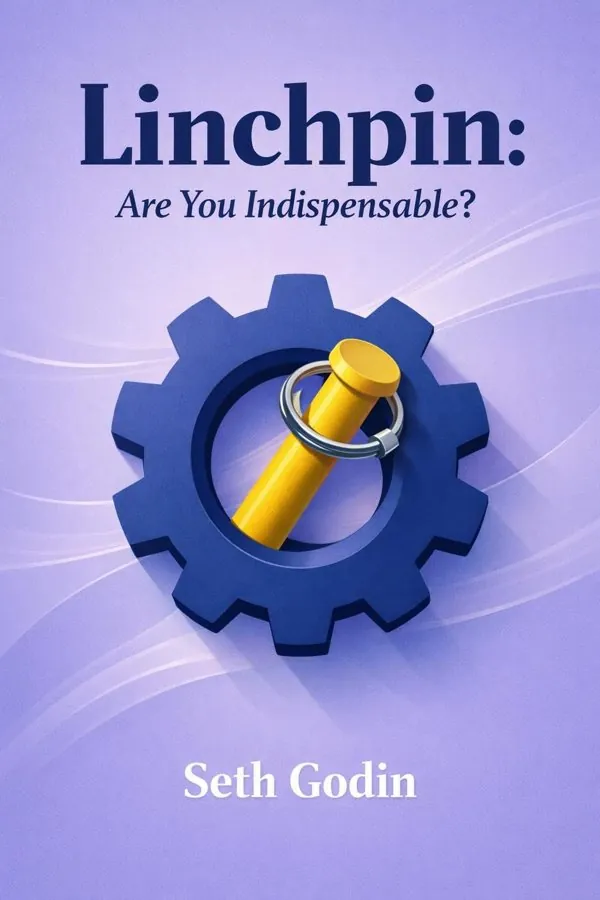
Seth Godin is an American author, entrepreneur, and marketing thinker widely regarded as one of the most influential voices in modern business writing. He became known for translating complex ideas about marketing, innovation, leadership, and creative work into simple, memorable frameworks that readers can apply immediately. Godin founded several companies, including Yoyodyne, an early internet direct marketing firm acquired by Yahoo, and later built a global audience through his books, blog, speaking, and teaching. His bestselling titles include Purple Cow, Tribes, Linchpin, All Marketers Are Liars, and This Is Marketing. Across his work, Godin emphasizes standing out, serving specific audiences, and making deliberate choices in a crowded world. The Dip reflects his signature style: concise, provocative, and highly practical for ambitious readers.
Get This Summary in Your Preferred Format
Read or listen to the The Dip summary by Seth Godin anytime, anywhere. FizzRead offers multiple formats so you can learn on your terms — all free.
Available formats: App · Audio · PDF · EPUB — All included free with FizzRead
Download The Dip PDF and EPUB Summary
Key Quotes from The Dip
“One of the most dangerous beliefs in business is that quitting is always failure.”
“Every worthwhile pursuit becomes harder right after the beginning.”
“Difficulty alone does not make a goal noble.”
“In a crowded marketplace, average is invisible.”
“What makes expertise valuable is not just talent, but rarity.”
Frequently Asked Questions about The Dip
The Dip by Seth Godin is a business book that explores key ideas across 8 chapters. Most people are taught that persistence is always virtuous and quitting is a sign of weakness. Seth Godin challenges that comforting myth. In The Dip, he argues that strategic quitting is often the smartest path to success, because not every goal deserves endless effort. The real challenge in work, business, and creative life is learning to tell the difference between temporary difficulty and a dead end. Godin calls this temporary stretch of hardship “the dip”: the painful period between the excitement of starting and the rewards of mastery. Those who push through the right dip can become extraordinary; those who cling to the wrong pursuit waste time, energy, and talent. This short but powerful book matters because it gives readers a sharper lens for ambition. Instead of praising grit in the abstract, Godin teaches disciplined perseverance and intentional quitting. As a bestselling author, entrepreneur, and one of the most influential voices in modern marketing, he brings practical insight to a problem nearly everyone faces: when should you stick, and when should you walk away? The Dip is a concise guide to making that decision wisely.
More by Seth Godin

You Might Also Like




Browse by Category
Ready to read The Dip?
Get the full summary and 100K+ more books with Fizz Moment.