
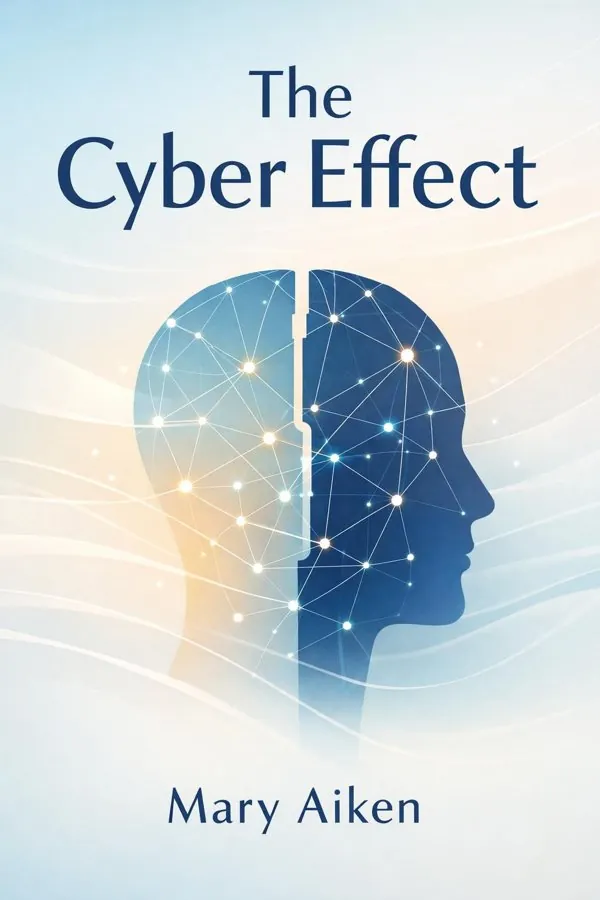
The Cyber Effect: A Pioneering Cyberpsychologist Explains How Human Behavior Changes Online: Summary & Key Insights
by Mary Aiken
 10 min3 chaptersAudio available
What Is The Cyber Effect: A Pioneering Cyberpsychologist Explains How Human Behavior Changes Online About?
The Cyber Effect: A Pioneering Cyberpsychologist Explains How Human Behavior Changes Online by Mary Aiken is a digital_culture book spanning 3 pages. The Cyber Effect explores how the internet and digital technologies are reshaping human behavior, relationships, and society. Drawing on her expertise as a cyberpsychologist, Mary Aiken examines phenomena such as online disinhibition, cyberbullying, digital addiction, and the psychological impact of virtual environments. The book provides insights into how cyberspace influences identity, morality, and social norms, urging readers to understand and manage the profound behavioral changes brought by the digital age.
This FizzRead summary covers all 3 key chapters of The Cyber Effect: A Pioneering Cyberpsychologist Explains How Human Behavior Changes Online in approximately 10 minutes, distilling the most important ideas, arguments, and takeaways from Mary Aiken's work. Also available as an audio summary and Key Quotes Podcast.
The Cyber Effect: A Pioneering Cyberpsychologist Explains How Human Behavior Changes Online
The Cyber Effect explores how the internet and digital technologies are reshaping human behavior, relationships, and society. Drawing on her expertise as a cyberpsychologist, Mary Aiken examines phenomena such as online disinhibition, cyberbullying, digital addiction, and the psychological impact of virtual environments. The book provides insights into how cyberspace influences identity, morality, and social norms, urging readers to understand and manage the profound behavioral changes brought by the digital age.
Who Should Read The Cyber Effect: A Pioneering Cyberpsychologist Explains How Human Behavior Changes Online?
This book is perfect for anyone interested in digital_culture and looking to gain actionable insights in a short read. Whether you're a student, professional, or lifelong learner, the key ideas from The Cyber Effect: A Pioneering Cyberpsychologist Explains How Human Behavior Changes Online by Mary Aiken will help you think differently.
- ✓Readers who enjoy digital_culture and want practical takeaways
- ✓Professionals looking to apply new ideas to their work and life
- ✓Anyone who wants the core insights of The Cyber Effect: A Pioneering Cyberpsychologist Explains How Human Behavior Changes Online in just 10 minutes
Want the full summary?
Get instant access to this book summary and 100K+ more with Fizz Moment.
Get Free SummaryAvailable on App Store • Free to download
Key Chapters
One of the most striking transformations in human behavior occurs when people step into cyberspace and experience what psychologists have termed 'online disinhibition.' In the physical world, face-to-face interactions are constrained by social cues—tone of voice, eye contact, body language. Online, many of those cues vanish. The screen becomes a mask, and behind that mask, people may say or do things they would never consider in person. Whether through anonymity, invisibility, or the psychological distance of typing instead of speaking, the Internet lowers inhibitions and emboldens impulses.
But disinhibition is not inherently negative. It can liberate creativity and honesty—people may reveal vulnerabilities or seek help more readily online than offline. However, it also opens the floodgates to cruelty. Trolls and cyberbullies emerge from this psychological distortion, as the norms of empathy recede. A single text, tweet, or comment can unleash emotional havoc. What fascinates me as a cyberpsychologist is the predictability of this shift: once the social mirror disappears, the human brain interprets the digital space as less real, less consequential. The moral brakes are loosened.
Through my research with law enforcement, I have seen how anonymity combines with group dynamics to amplify aggression. Consider the phenomenon of 'mob shaming'—groups of strangers uniting to destroy someone’s reputation online. Such behavior reveals not only the fragility of digital empathy but also how collective online behavior can mimic the worst aspects of crowd psychology, minus physical accountability. In cyberspace, diffusion of responsibility reigns—if everyone’s doing it, no one feels guilty.
The antidote is awareness. By recognizing that our sense of privacy online is an illusion, and that every avatar reflects a real human being, we can begin to reclaim civility in digital spaces. The Internet need not be a psychological Wild West; it can be a space of human connection, provided we remember that behind every screen lies a soul.
The design of digital platforms has perfected the art of captivation. Intermittent rewards—likes, notifications, new messages—keep our brains in a constant state of anticipation. This is not accidental; it’s psychology engineered into software. The same principles that drive gambling machines keep billions of users endlessly scrolling. What we once called 'checking email' has evolved into a behavior pattern that closely mirrors addiction.
As I examined cases of compulsive Internet use, I came to see how particularly vulnerable young brains are. The prefrontal cortex, responsible for impulse control, does not fully develop until the mid-twenties. Yet children now grow up in a digital ecosystem that rewards immediate gratification. This mismatch between neurological development and digital stimulation creates perfect conditions for dependency.
Digital addiction manifests in many forms—online gaming, social media, shopping, pornography—but the core mechanism is the same: our basic need for social belonging and novelty is hijacked by technological systems. People begin to feel anxious without connectivity, restless in silence, unable to disconnect even when surrounded by loved ones. The result is not only psychological fatigue but a profound reshaping of attention span and emotional regulation.
One of the most pressing challenges of our time is to redefine what 'healthy digital engagement' means. Unplugging is not merely about being offline; it is about reclaiming agency over attention. When we understand the psychological tricks embedded in our devices, we can consciously choose when and how to use them. The goal is not abstinence but awareness—a recalibration of our relationship to technology so that it serves human flourishing rather than undermines it.
+ 1 more chapters — available in the FizzRead app
All Chapters in The Cyber Effect: A Pioneering Cyberpsychologist Explains How Human Behavior Changes Online
About the Author
Mary Aiken is an Irish cyberpsychologist known for her research on the intersection of psychology and technology. She has served as an academic advisor to Europol’s European Cybercrime Centre and is an associate professor at University College Dublin. Her work focuses on cyber behavior, online safety, and the psychological effects of digital environments.
Get This Summary in Your Preferred Format
Read or listen to the The Cyber Effect: A Pioneering Cyberpsychologist Explains How Human Behavior Changes Online summary by Mary Aiken anytime, anywhere. FizzRead offers multiple formats so you can learn on your terms — all free.
Available formats: App · Audio · PDF · EPUB — All included free with FizzRead
Download The Cyber Effect: A Pioneering Cyberpsychologist Explains How Human Behavior Changes Online PDF and EPUB Summary
Key Quotes from The Cyber Effect: A Pioneering Cyberpsychologist Explains How Human Behavior Changes Online
“One of the most striking transformations in human behavior occurs when people step into cyberspace and experience what psychologists have termed 'online disinhibition.”
“The design of digital platforms has perfected the art of captivation.”
Frequently Asked Questions about The Cyber Effect: A Pioneering Cyberpsychologist Explains How Human Behavior Changes Online
The Cyber Effect: A Pioneering Cyberpsychologist Explains How Human Behavior Changes Online by Mary Aiken is a digital_culture book that explores key ideas across 3 chapters. The Cyber Effect explores how the internet and digital technologies are reshaping human behavior, relationships, and society. Drawing on her expertise as a cyberpsychologist, Mary Aiken examines phenomena such as online disinhibition, cyberbullying, digital addiction, and the psychological impact of virtual environments. The book provides insights into how cyberspace influences identity, morality, and social norms, urging readers to understand and manage the profound behavioral changes brought by the digital age.
You Might Also Like
An Ugly Truth: Inside Facebook’s Battle for Domination
Sheera Frenkel, Cecilia Kang
10 min
Cyber Citizens
Ian Goodfellow
10 min
Digital Minimalism: Choosing a Focused Life in a Noisy World
Cal Newport
10 min
E‑Books & Beyond
Various Authors
10 min
The Future of Media
Various Authors
10 min
This Is Why We Can't Have Nice Things
Whitney Phillips
10 minBrowse by Category
Ready to read The Cyber Effect: A Pioneering Cyberpsychologist Explains How Human Behavior Changes Online?
Get the full summary and 100K+ more books with Fizz Moment.