
The Business Of The 21st Century: Summary & Key Insights
 10 min9 chaptersAudio available
Key Takeaways from The Business Of The 21st Century
A secure job can feel safe right until it disappears.
How you earn money shapes how you think about money.
Wealth rarely comes from effort alone; it comes from leveraged effort.
Some business models survive change; others are built for it.
A bigger paycheck does not solve a lack of financial understanding.
What Is The Business Of The 21st Century About?
The Business Of The 21st Century by Robert T. Kiyosaki is a entrepreneurship book spanning 11 pages. In The Business Of The 21st Century, Robert T. Kiyosaki makes a bold case that traditional career paths are no longer the safest or smartest route to financial security. Instead of relying solely on wages, promotions, or pensions, he argues that people need systems that generate income beyond their direct labor. His chosen model is network marketing, which he presents not simply as a sales opportunity, but as a practical training ground for entrepreneurship, leadership, financial education, and asset building. At the heart of the book is a larger message: the economy has changed, and the habits that created stability in the industrial age often fail in a world shaped by technology, globalization, and constant disruption. Kiyosaki brings authority to this argument through his long-standing work in financial literacy, especially his Rich Dad Poor Dad series and the Cashflow Quadrant framework, which helped millions rethink how money works. Whether or not readers fully embrace network marketing, the book matters because it challenges passive thinking and pushes people to ask a harder question: are you building a job, or are you building an asset?
This FizzRead summary covers all 9 key chapters of The Business Of The 21st Century in approximately 10 minutes, distilling the most important ideas, arguments, and takeaways from Robert T. Kiyosaki's work. Also available as an audio summary and Key Quotes Podcast.
The Business Of The 21st Century
In The Business Of The 21st Century, Robert T. Kiyosaki makes a bold case that traditional career paths are no longer the safest or smartest route to financial security. Instead of relying solely on wages, promotions, or pensions, he argues that people need systems that generate income beyond their direct labor. His chosen model is network marketing, which he presents not simply as a sales opportunity, but as a practical training ground for entrepreneurship, leadership, financial education, and asset building. At the heart of the book is a larger message: the economy has changed, and the habits that created stability in the industrial age often fail in a world shaped by technology, globalization, and constant disruption. Kiyosaki brings authority to this argument through his long-standing work in financial literacy, especially his Rich Dad Poor Dad series and the Cashflow Quadrant framework, which helped millions rethink how money works. Whether or not readers fully embrace network marketing, the book matters because it challenges passive thinking and pushes people to ask a harder question: are you building a job, or are you building an asset?
Who Should Read The Business Of The 21st Century?
This book is perfect for anyone interested in entrepreneurship and looking to gain actionable insights in a short read. Whether you're a student, professional, or lifelong learner, the key ideas from The Business Of The 21st Century by Robert T. Kiyosaki will help you think differently.
- ✓Readers who enjoy entrepreneurship and want practical takeaways
- ✓Professionals looking to apply new ideas to their work and life
- ✓Anyone who wants the core insights of The Business Of The 21st Century in just 10 minutes
Want the full summary?
Get instant access to this book summary and 100K+ more with Fizz Moment.
Get Free SummaryAvailable on App Store • Free to download
Key Chapters
A secure job can feel safe right until it disappears. Kiyosaki begins with the idea that the economic assumptions of the 20th century no longer hold. For decades, many people were taught to study hard, get hired by a good company, work loyally, and eventually retire with benefits. That model depended on stable institutions, predictable markets, and companies that rewarded long-term employment. In today’s economy, those conditions are far less reliable. Global competition, outsourcing, automation, and technological change have weakened the promise of lifetime employment. Even highly educated professionals can find themselves vulnerable when industries shift or companies cut costs.
Kiyosaki’s point is not that jobs are useless, but that they are no longer enough to guarantee financial safety. Depending entirely on earned income leaves people exposed because it ties survival to time, performance reviews, and decisions made by others. He urges readers to recognize that economic change requires a different mindset: one that values ownership, adaptability, and income-producing assets.
A practical example is someone with a solid salary who still struggles financially if a layoff occurs. Compare that with a person who has built an additional income stream through a business system or investment. The second person may still face challenges, but has options. That difference is central to Kiyosaki’s argument.
The takeaway is simple: stop treating employment as your only financial plan. Begin building skills, systems, and assets that can support you even when the job market changes.
How you earn money shapes how you think about money. Kiyosaki connects this book to his well-known Cashflow Quadrant: E for Employee, S for Self-Employed, B for Business Owner, and I for Investor. The framework matters because it shows that financial outcomes are not driven only by income level, but by the structure behind the income. Employees trade time for pay. Self-employed people often own a job and remain central to every task. Business owners build systems that can operate with or without them. Investors put money to work in assets.
Kiyosaki argues that most people are trained for the left side of the quadrant, especially E and S. Schools prepare students to become competent workers or skilled professionals, but rarely teach them how to design systems or acquire assets. The result is that even ambitious people can become trapped by their own effort. A doctor, consultant, or freelancer may earn a lot, yet still depend completely on personal labor.
Network marketing, in Kiyosaki’s view, offers a bridge toward the B quadrant because it introduces people to system-based income, team building, and leverage without requiring the massive startup capital of a traditional company. Whether readers agree fully or not, the core lesson is valuable: there is a major difference between earning income and building an asset.
A useful application is to review your current work and ask which quadrant it belongs to. Then identify one activity that moves you closer to business ownership or investing.
The actionable takeaway: do not focus only on making more money. Focus on moving toward income that depends less on your direct labor and more on systems and assets.
Wealth rarely comes from effort alone; it comes from leveraged effort. Kiyosaki emphasizes that one of the biggest differences between traditional work and scalable business is leverage. In a job, your income is limited by your available hours, role, and salary ceiling. In a leveraged model, systems, teams, technology, and duplication allow your efforts to create results far beyond what you could achieve alone.
This is why he sees network marketing as especially relevant to the 21st century. Instead of relying on a single person to produce all outcomes, the model rewards building a structure in which many people can create value simultaneously. In principle, this resembles other modern business systems: software platforms, franchising, media channels, or online education businesses. The owner creates or joins a system, then scales through repetition and collaboration.
Kiyosaki also links leverage to freedom. If income depends only on your personal output, then stopping work often means stopping income. But if you help create a network or business structure that continues functioning beyond your direct involvement, you gain time flexibility. That is one reason he considers leverage a foundation of wealth.
A practical application is to audit your current income sources. Ask: are you being paid only for what you personally do today, or are you building something that can continue generating value tomorrow? Even outside network marketing, you can apply this by creating repeatable processes, documenting systems, mentoring others, or building digital products.
The takeaway is to seek scalable effort. Instead of asking, “How can I work harder?” start asking, “How can I build systems and relationships that multiply the value of my work?”
Some business models survive change; others are built for it. Kiyosaki argues that network marketing aligns well with the realities of the modern economy because it combines low barriers to entry, flexible participation, personal growth, and the possibility of residual income. Unlike traditional businesses that may demand large capital investments, leases, inventory risk, or extensive prior experience, network marketing can often be started part-time with relatively modest costs.
For Kiyosaki, this matters because many people need a practical on-ramp into entrepreneurship. They may not have the money to buy a franchise, the expertise to launch a startup, or the appetite for high financial risk. A network marketing business can function as a training environment where people learn sales, communication, leadership, and accountability while earning. In that sense, he presents it as a business school in the real world rather than a shortcut to riches.
He also stresses that the model matches the relationship-driven nature of the information age. Consumers are influenced by trust, communities, and recommendations, not just advertising. Digital tools make it easier than ever to connect, educate, and support customers and team members across distance.
Of course, the model is not magical, and success is not automatic. It still requires discipline, ethical behavior, and persistence. But Kiyosaki’s larger point is that in a time when many people want flexibility and ownership, network marketing offers a legitimate pathway worth understanding.
The actionable takeaway: evaluate opportunities not just by product or income claims, but by whether they help you build entrepreneurial skills, a system, and long-term leverage.
A bigger paycheck does not solve a lack of financial understanding. One of Kiyosaki’s central beliefs is that many people struggle not because they earn too little, but because they were never taught how money actually works. Schools teach academic and professional skills, yet often ignore concepts such as assets versus liabilities, cash flow, taxes, debt, risk, and wealth-building behavior. As a result, people can earn more and still remain financially fragile.
In this book, Kiyosaki presents network marketing as a context where financial education can become practical rather than theoretical. Participants are encouraged to think about income streams, business systems, and asset creation instead of focusing only on wages. More importantly, they begin to examine their beliefs about money. Fear of loss, need for approval, and attachment to security can keep people from making financially intelligent moves.
A practical example is someone who receives a raise and immediately upgrades lifestyle expenses. Without financial education, higher income simply feeds higher consumption. By contrast, a financially educated person may direct additional income into learning, business building, or investments that produce future cash flow.
Kiyosaki also emphasizes mindset. People who believe money is complicated, scarce, or reserved for others often avoid opportunities to grow. Financial education starts with replacing passive beliefs with informed decision-making.
The actionable takeaway is to build a personal curriculum around money. Study assets, track cash flow, question your assumptions, and direct at least part of your income toward things that can produce more income later.
Being busy and becoming wealthy are not the same thing. Kiyosaki repeatedly distinguishes between labor that produces temporary income and effort that creates lasting assets. An asset, in his framework, is something that puts money into your pocket over time. A job may generate immediate cash, but unless that income is converted into ownership or systems, the financial engine remains fragile.
He argues that one of the biggest advantages of network marketing is the possibility of building a residual income stream through an organization that continues to generate sales and commissions beyond your personal transactions. Whether the scale is small or large, the principle is what matters: you are attempting to build something that can keep producing value after the original effort has been made.
This idea is useful far beyond the book’s specific business model. A writer who builds a catalogue of books, a teacher who creates online courses, or a business owner who develops a strong distribution system is also creating assets. The key question is whether your effort disappears the moment you stop working, or whether it leaves behind something with ongoing earning power.
Kiyosaki’s broader warning is that many people spend their most productive years accumulating liabilities while calling them assets. A larger house, expensive car, or status purchase may look successful, but if it drains cash rather than generating it, it delays freedom.
The takeaway: measure your progress by the assets you are building, not just the income you are earning. Each month, ask what you created or acquired that can continue producing cash flow in the future.
Most people want better results before they become a better person. Kiyosaki argues that success in network marketing, and in entrepreneurship more broadly, depends on who you become in the process. Because the business is built through people, trust, communication, example, and influence matter as much as technical skill. That means personal development is not optional; it is part of the business model.
He suggests that many people are held back by internal barriers more than external ones. Fear of rejection, poor self-discipline, lack of confidence, weak communication, and emotional inconsistency can limit growth. A network-based business quickly reveals these weaknesses because results often depend on your ability to connect with others, persist through setbacks, and help a team grow.
Leadership, in this context, is not about status. It is about service, vision, and consistency. Strong leaders create clarity, encourage others, model integrity, and keep moving when enthusiasm fades. They also understand duplication: if you want a team to act professionally, you must first demonstrate professional behavior yourself.
A practical application is to treat your business activity as a mirror. If people are not responding, ask what skill needs improvement. Maybe you need to listen better, communicate more clearly, manage time more effectively, or become more resilient. Those upgrades increase value in every area of life, not just business.
The actionable takeaway: make personal development a scheduled discipline. Read, train, practice communication, and review your behavior weekly. The business will often grow only as fast as your character and leadership capacity do.
In a world flooded with information, trust becomes a premium asset. Kiyosaki highlights that network marketing is built on relationships, and that is one reason he considers it suited to modern times. People are more likely to buy, join, or stay committed when they feel understood, supported, and connected to a real community. Transactions may start a business, but relationships sustain it.
This insight extends beyond direct selling. Nearly every modern business depends on trust networks: reviews, referrals, communities, partnerships, and reputation. The strongest entrepreneurs do not merely push products; they create belonging, credibility, and service. Kiyosaki sees teamwork as a crucial counterbalance to the isolated success myth. Financial growth often happens faster when people learn to collaborate rather than trying to do everything alone.
He also addresses a practical misunderstanding: relationship-based business is not manipulation. Done ethically, it means helping people solve real problems, guiding new team members, and building mutual benefit. That requires patience. Strong networks are built through follow-up, education, listening, and consistency, not aggressive hype.
A useful example is the difference between someone who contacts others only when trying to sell and someone who regularly shares helpful information, supports customers, and mentors team members. The second person builds social capital that compounds over time.
The takeaway is to treat relationships as long-term assets. Invest in trust, serve before you sell, and become known as someone who creates value for others. In many businesses, your network is not just a contact list; it is your infrastructure.
Dreams of freedom remain fantasies until they are attached to a plan. Kiyosaki ends with a practical challenge: financial freedom does not come from admiring new ideas but from acting on them consistently. Many readers agree with the logic of asset building, leverage, and entrepreneurship, yet remain stuck because they never move from understanding to implementation.
He encourages readers to start where they are rather than waiting for ideal conditions. That may mean beginning part-time, learning while employed, using evenings and weekends to build skills, or joining a business model that offers structure and mentorship. The goal is not reckless risk-taking, but deliberate transition. Kiyosaki repeatedly suggests that confidence is earned through experience, not before it.
He also stresses the importance of overcoming misconceptions. Some people dismiss network marketing because of bad examples, social stigma, or unrealistic expectations. Kiyosaki’s counterpoint is that every industry has poor operators. The better question is whether a model can teach useful skills and create genuine assets when practiced ethically and intelligently.
A practical action plan might include choosing one income-producing opportunity to study, speaking with experienced participants, evaluating the compensation and product quality, committing to personal development, and setting measurable weekly goals. Progress comes from repetition, not inspiration.
The actionable takeaway: decide on one concrete financial move this month. Start a side business, begin an investing habit, study a scalable model, or seek mentorship. The 21st century rewards people who act before they feel fully ready.
All Chapters in The Business Of The 21st Century
About the Author
Robert T. Kiyosaki is an American entrepreneur, investor, financial educator, and bestselling author known for making personal finance more accessible to a mass audience. He rose to international prominence with Rich Dad Poor Dad, a book that challenged conventional beliefs about money, jobs, assets, and financial independence. Kiyosaki’s work often focuses on financial literacy, entrepreneurship, investing, and the importance of building cash-flow-producing assets rather than relying only on earned income. He also developed the widely known Cashflow Quadrant, a framework for understanding different ways people generate income. Through books, seminars, games, and media appearances, he has encouraged readers around the world to think differently about wealth creation, risk, and economic opportunity in a rapidly changing global economy.
Get This Summary in Your Preferred Format
Read or listen to the The Business Of The 21st Century summary by Robert T. Kiyosaki anytime, anywhere. FizzRead offers multiple formats so you can learn on your terms — all free.
Available formats: App · Audio · PDF · EPUB — All included free with FizzRead
Download The Business Of The 21st Century PDF and EPUB Summary
Key Quotes from The Business Of The 21st Century
“A secure job can feel safe right until it disappears.”
“How you earn money shapes how you think about money.”
“Wealth rarely comes from effort alone; it comes from leveraged effort.”
“Some business models survive change; others are built for it.”
“A bigger paycheck does not solve a lack of financial understanding.”
Frequently Asked Questions about The Business Of The 21st Century
The Business Of The 21st Century by Robert T. Kiyosaki is a entrepreneurship book that explores key ideas across 9 chapters. In The Business Of The 21st Century, Robert T. Kiyosaki makes a bold case that traditional career paths are no longer the safest or smartest route to financial security. Instead of relying solely on wages, promotions, or pensions, he argues that people need systems that generate income beyond their direct labor. His chosen model is network marketing, which he presents not simply as a sales opportunity, but as a practical training ground for entrepreneurship, leadership, financial education, and asset building. At the heart of the book is a larger message: the economy has changed, and the habits that created stability in the industrial age often fail in a world shaped by technology, globalization, and constant disruption. Kiyosaki brings authority to this argument through his long-standing work in financial literacy, especially his Rich Dad Poor Dad series and the Cashflow Quadrant framework, which helped millions rethink how money works. Whether or not readers fully embrace network marketing, the book matters because it challenges passive thinking and pushes people to ask a harder question: are you building a job, or are you building an asset?
More by Robert T. Kiyosaki
Why "A" Students Work for "C" Students and "B" Students Work for the Government: Rich Dad's Guide to Financial Education for Parents
Robert T. Kiyosaki
10 min
Rich Dad's Who Took My Money?: Why Slow Investors Lose and Fast Money Wins!
Robert T. Kiyosaki
10 min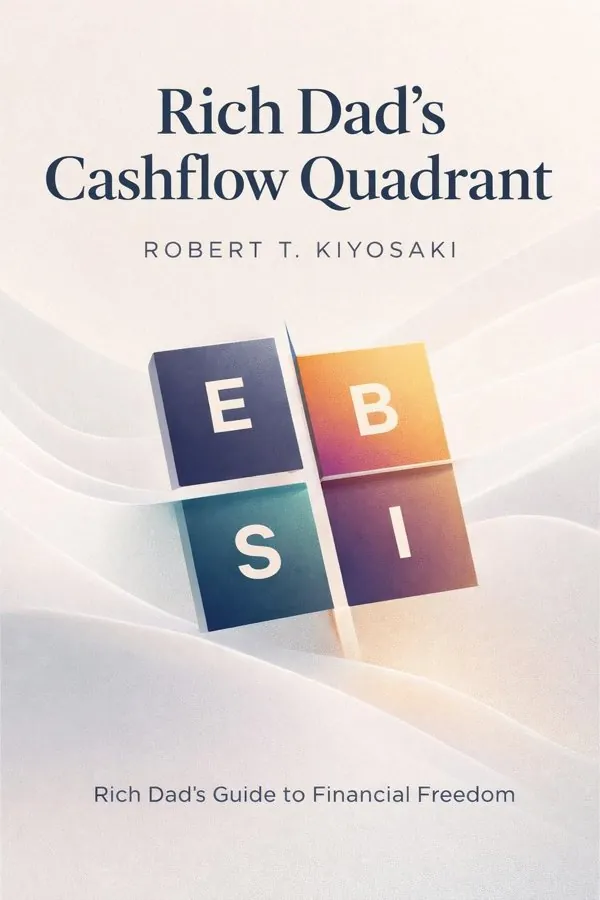
Rich Dad's Cashflow Quadrant: Rich Dad's Guide to Financial Freedom
Robert T. Kiyosaki
10 min
Rich Dad's Guide to Investing: What the Rich Invest in, That the Poor and the Middle Class Do Not!
Robert T. Kiyosaki
10 minYou Might Also Like
Lean Analytics
Alistair Croll, Benjamin Yoskovitz
10 min
21 Days To A Big Idea: Creating Breakthrough Business Concepts
Bryan Mattimore
10 min
Sam Walton: Made in America: My Story
Sam Walton
10 min
10x Is Easier Than 2x: How World-Class Entrepreneurs Achieve More by Doing Less
Dan Sullivan, Benjamin Hardy
10 min
12 Months to $1 Million: How to Pick a Winning Product, Build a Real Business, and Become a Seven-Figure Entrepreneur
Ryan Daniel Moran
10 min
24 Assets: Create a Digital, Scalable, Valuable Business
Daniel Priestley
10 minBrowse by Category
Ready to read The Business Of The 21st Century?
Get the full summary and 100K+ more books with Fizz Moment.