
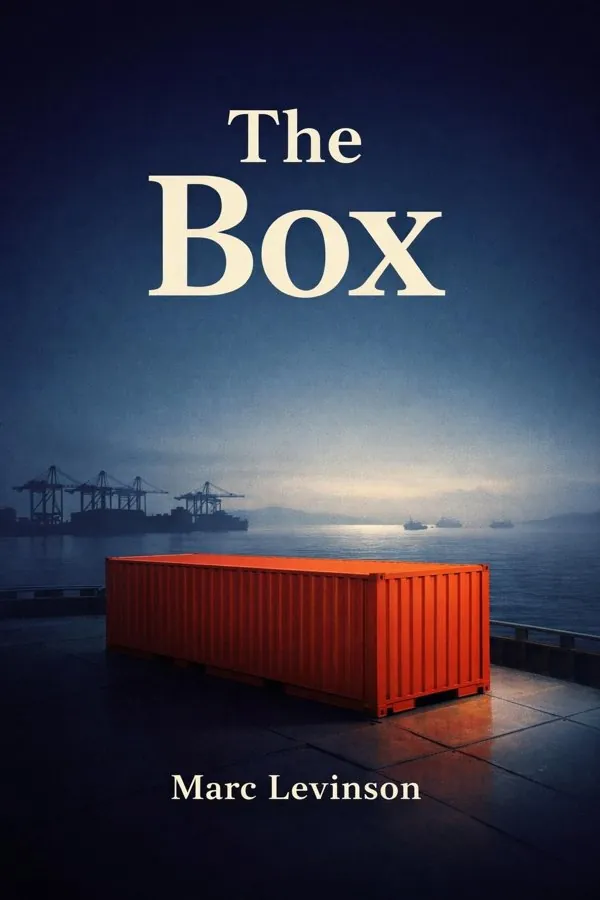
The Box: How the Shipping Container Made the World Smaller and the World Economy Bigger: Summary & Key Insights
 10 min11 chaptersAudio available
What Is The Box: How the Shipping Container Made the World Smaller and the World Economy Bigger About?
The Box: How the Shipping Container Made the World Smaller and the World Economy Bigger by Marc Levinson is a economics book spanning 11 pages. This book explores the history and transformative impact of the shipping container on global trade and the world economy. Marc Levinson traces how a simple metal box revolutionized transportation, reduced costs, and reshaped industries, cities, and international commerce. Through detailed historical analysis, he shows how containerization enabled globalization and changed the way goods move around the world.
This FizzRead summary covers all 11 key chapters of The Box: How the Shipping Container Made the World Smaller and the World Economy Bigger in approximately 10 minutes, distilling the most important ideas, arguments, and takeaways from Marc Levinson's work. Also available as an audio summary and Key Quotes Podcast.
The Box: How the Shipping Container Made the World Smaller and the World Economy Bigger
This book explores the history and transformative impact of the shipping container on global trade and the world economy. Marc Levinson traces how a simple metal box revolutionized transportation, reduced costs, and reshaped industries, cities, and international commerce. Through detailed historical analysis, he shows how containerization enabled globalization and changed the way goods move around the world.
Who Should Read The Box: How the Shipping Container Made the World Smaller and the World Economy Bigger?
This book is perfect for anyone interested in economics and looking to gain actionable insights in a short read. Whether you're a student, professional, or lifelong learner, the key ideas from The Box: How the Shipping Container Made the World Smaller and the World Economy Bigger by Marc Levinson will help you think differently.
- ✓Readers who enjoy economics and want practical takeaways
- ✓Professionals looking to apply new ideas to their work and life
- ✓Anyone who wants the core insights of The Box: How the Shipping Container Made the World Smaller and the World Economy Bigger in just 10 minutes
Want the full summary?
Get instant access to this book summary and 100K+ more with Fizz Moment.
Get Free SummaryAvailable on App Store • Free to download
Key Chapters
Before containers, shipping was a tangle of inefficiencies inherited from centuries of maritime habit. Cargo moved in small pieces: barrels of whiskey, bales of cotton, sacks of grain, wooden crates filled by hand. Each item had to be lifted individually from trucks or rail wagons onto ships, stowed carefully into irregular spaces below deck, and then reversed upon arrival. A single vessel could spend days—sometimes weeks—in port, waiting for labor crews to sort, stack, and secure thousands of items. The cost was staggering, because moving goods was about manual effort, not mechanical precision.
In the 1950s, a port like New York or Liverpool was a theater of human intensity. Longshoremen worked by the ton, paid for each sling of cargo hoisted. Strikes were frequent; theft and damage were routine. The gap between land and sea created delays that frustrated traders and discouraged industries from thinking globally. Every mile added cost, every hour uncertainty. Economists recognized this as the bottleneck of world commerce: transport was possible, but friction made scale impractical.
Businesses adapted as best they could, clustering factories near ports and warehouses near railheads. The geography of industry reflected the geography of inefficiency. The world’s economic landscape was spatially rigid because transportation inefficiency discouraged flexibility. The price of shipping could easily exceed the price of the goods themselves. These problems created the stage upon which a seemingly trivial idea—a box that could move interchangeably between truck, train, and ship—would appear not as a gadget, but as salvation.
Malcom McLean was not born into the shipping world. He ran a trucking company, moving tobacco and textiles up and down the American East Coast. But in 1937, standing at a dock in North Carolina, he watched his trucks waiting for days to unload their cargo onto ships. He realized the problem was not distance—it was duplication. Goods were handled multiple times: loaded into trucks, unloaded onto docks, loaded again onto ships, and so on. McLean’s insight was breathtakingly simple: what if the trailer itself could be loaded onto the ship?
Out of that question grew the concept of containerization. McLean envisioned a system where goods would be packed into standardized metal boxes that could travel uninterrupted from factory to customer, crossing seamlessly between transport modes. He sold his trucking company, bought a small shipping line, and began experimenting. By converting surplus oil tankers into container vessels, he demonstrated that time and labor costs could be slashed dramatically. The idea collided with entrenched interests—port authorities, unions, regulators—but McLean’s persistence turned simplicity into revolution.
What made McLean’s vision powerful was his grasp of systems. He wasn’t inventing a new product; he was reimagining logistics as a continuous flow. Every piece had to fit into the larger operational fabric—cranes, chassis, ships, terminals, tariffs. In that sense, containerization was less about the box itself and more about redefining the entire economy’s rhythm. Where old shipping was choreographed chaos, McLean’s box introduced systematized calm. He treated time as currency and standardization as trust. By turning transport into an integrated network, he opened the door to economic integration on a scale the world had never seen.
+ 9 more chapters — available in the FizzRead app
All Chapters in The Box: How the Shipping Container Made the World Smaller and the World Economy Bigger
About the Author
Marc Levinson is an economist, historian, and journalist specializing in trade, finance, and economic history. He has written extensively on globalization and the evolution of modern industry, and previously served as a senior fellow at the Council on Foreign Relations.
Get This Summary in Your Preferred Format
Read or listen to the The Box: How the Shipping Container Made the World Smaller and the World Economy Bigger summary by Marc Levinson anytime, anywhere. FizzRead offers multiple formats so you can learn on your terms — all free.
Available formats: App · Audio · PDF · EPUB — All included free with FizzRead
Download The Box: How the Shipping Container Made the World Smaller and the World Economy Bigger PDF and EPUB Summary
Key Quotes from The Box: How the Shipping Container Made the World Smaller and the World Economy Bigger
“Before containers, shipping was a tangle of inefficiencies inherited from centuries of maritime habit.”
“Malcom McLean was not born into the shipping world.”
Frequently Asked Questions about The Box: How the Shipping Container Made the World Smaller and the World Economy Bigger
The Box: How the Shipping Container Made the World Smaller and the World Economy Bigger by Marc Levinson is a economics book that explores key ideas across 11 chapters. This book explores the history and transformative impact of the shipping container on global trade and the world economy. Marc Levinson traces how a simple metal box revolutionized transportation, reduced costs, and reshaped industries, cities, and international commerce. Through detailed historical analysis, he shows how containerization enabled globalization and changed the way goods move around the world.
You Might Also Like

Business Adventures
John Brooks
10 min
Nudge
Richard H. Thaler, Cass R. Sunstein
10 min
The Hitchhiker"s Guide to the Galaxy
Douglas Adams
10 minThe Muqaddimah
Ibn Khaldun
10 minThe Outsiders
William N. Thorndike
10 min
A Little History of Economics
Niall Kishtainy
10 minBrowse by Category
Ready to read The Box: How the Shipping Container Made the World Smaller and the World Economy Bigger?
Get the full summary and 100K+ more books with Fizz Moment.