
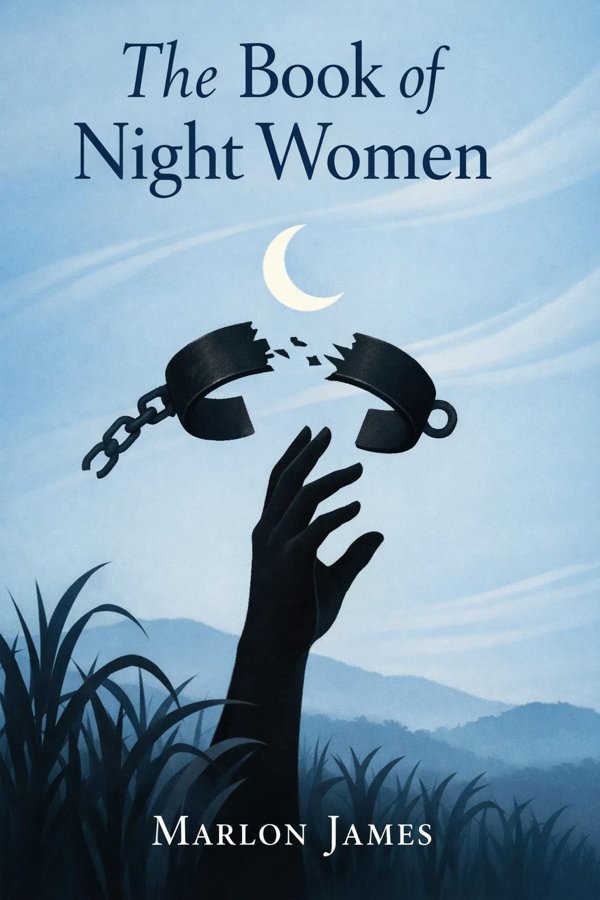
The Book of Night Women: Summary & Key Insights
by Marlon James
 10 min9 chaptersAudio available
Key Takeaways from The Book of Night Women
Some lives begin with safety; Lilith’s begins with evidence that the world she enters is already arranged against her.
A single act of defiance can reveal years of buried rage.
Power does not always look like open rebellion; sometimes it looks like patience, calculation, and the ability to survive within the enemy’s house.
The plantation does not exploit everyone in the same way; women endure forms of violation that expose slavery’s intimate horrors.
Love inside an unequal world is never just love.
What Is The Book of Night Women About?
The Book of Night Women by Marlon James is a classics book spanning 9 pages. Set on a Jamaican sugar plantation at the close of the eighteenth century, The Book of Night Women is a fierce, lyrical, and unsettling novel about slavery, womanhood, and rebellion. At its center is Lilith, a striking young enslaved woman born into violence and raised under a system designed to crush both body and spirit. As she grows, she becomes entangled with a clandestine circle of women planning revolt, forcing her to navigate terror, desire, loyalty, and survival in a world where every choice carries mortal risk. More than a historical novel, this book is an immersion into the emotional and psychological architecture of plantation life: the fear, the cunning, the intimacy of domination, and the hidden currents of resistance. Marlon James writes with extraordinary authority, drawing on Jamaican history while creating a voice that feels intimate, dangerous, and alive. Widely regarded as one of the most important contemporary Caribbean writers, James brings moral complexity and unforgettable intensity to a story that asks what freedom costs, who dares imagine it, and how oppressed people preserve identity inside machinery built for their erasure.
This FizzRead summary covers all 9 key chapters of The Book of Night Women in approximately 10 minutes, distilling the most important ideas, arguments, and takeaways from Marlon James's work. Also available as an audio summary and Key Quotes Podcast.
The Book of Night Women
Set on a Jamaican sugar plantation at the close of the eighteenth century, The Book of Night Women is a fierce, lyrical, and unsettling novel about slavery, womanhood, and rebellion. At its center is Lilith, a striking young enslaved woman born into violence and raised under a system designed to crush both body and spirit. As she grows, she becomes entangled with a clandestine circle of women planning revolt, forcing her to navigate terror, desire, loyalty, and survival in a world where every choice carries mortal risk. More than a historical novel, this book is an immersion into the emotional and psychological architecture of plantation life: the fear, the cunning, the intimacy of domination, and the hidden currents of resistance. Marlon James writes with extraordinary authority, drawing on Jamaican history while creating a voice that feels intimate, dangerous, and alive. Widely regarded as one of the most important contemporary Caribbean writers, James brings moral complexity and unforgettable intensity to a story that asks what freedom costs, who dares imagine it, and how oppressed people preserve identity inside machinery built for their erasure.
Who Should Read The Book of Night Women?
This book is perfect for anyone interested in classics and looking to gain actionable insights in a short read. Whether you're a student, professional, or lifelong learner, the key ideas from The Book of Night Women by Marlon James will help you think differently.
- ✓Readers who enjoy classics and want practical takeaways
- ✓Professionals looking to apply new ideas to their work and life
- ✓Anyone who wants the core insights of The Book of Night Women in just 10 minutes
Want the full summary?
Get instant access to this book summary and 100K+ more with Fizz Moment.
Get Free SummaryAvailable on App Store • Free to download
Key Chapters
Some lives begin with safety; Lilith’s begins with evidence that the world she enters is already arranged against her. Born on the Montpelier plantation in Jamaica, she arrives amid blood, grief, and the brutal routines of slavery. Her mother dies in childbirth, and from the start Lilith is marked not simply as an orphaned child but as property in a system where even birth is shaped by ownership. James uses her beginning to show that slavery is not merely a backdrop of cruelty. It is a total structure that determines family, labor, punishment, memory, and even the language available for self-understanding.
Lilith’s early life teaches readers an essential truth about oppression: it is most powerful when it seems ordinary. The plantation runs on repetition—work, hunger, threat, discipline—and children absorb that order before they can fully name it. Yet James also shows that personality survives inside coercion. Lilith is observant, proud, and inwardly defiant. She notices the small humiliations, the dangerous hierarchies among enslaved people, and the unpredictable moods of white authority. Her consciousness becomes the first site of resistance.
In practical terms, this opening asks modern readers to think about how systems shape identity long before individuals appear to make free choices. Whether in history, institutions, or family structures, people inherit conditions they did not create. Understanding someone’s behavior often requires understanding the world that formed them.
Actionable takeaway: when judging a person’s choices, first examine the structure surrounding those choices; context is not an excuse, but it is often the beginning of truth.
A single act of defiance can reveal years of buried rage. One of the defining moments in Lilith’s life comes when she violently resists an overseer who attempts to dominate her. The event is shocking, but James makes clear that it does not emerge from nowhere. It is the result of accumulated degradation, fear, instinct, and a fierce refusal to surrender completely. In plantation society, violence is monopolized by those in power, so when Lilith strikes back, she does more than protect herself. She disrupts the plantation’s assumed order.
What makes this moment powerful is its ambiguity. It is not presented as clean heroism or simple liberation. Resistance brings consequences, scrutiny, punishment, and a new kind of danger. Lilith becomes visible in ways she cannot control. Her action proves her strength, but it also deepens her entanglement with the logic of violence that governs plantation life. James refuses the comforting fantasy that rebellion immediately produces freedom. In oppressive systems, even justified resistance can intensify risk.
This idea has broad application beyond the novel. In real life, speaking up against abuse, exploitation, or manipulation often carries costs. Whistleblowers, dissenters, and survivors may gain self-respect while losing safety, status, or security. Moral action is frequently expensive.
The novel therefore asks readers to hold two truths together: defiance matters, and defiance is dangerous. Lilith’s act becomes a threshold moment, not because it solves anything, but because it shows that beneath coerced obedience there is still a will that cannot be fully owned.
Actionable takeaway: when confronting injustice, prepare not only for the courage required to act but also for the consequences that often follow resistance.
The plantation does not exploit everyone in the same way; women endure forms of violation that expose slavery’s intimate horrors. The Book of Night Women is especially powerful because it centers enslaved women’s experiences of labor, sexual coercion, reproduction, beauty, rivalry, and bodily vulnerability. James shows that the female body under slavery is treated as both workforce and object, valuable to owners precisely because it can be used, punished, desired, and reproduced for profit.
Lilith’s beauty becomes part of her danger. Rather than offering protection, it attracts attention from men who hold power over life and death. Desire on the plantation is never separate from hierarchy. Even moments that resemble tenderness are contaminated by ownership and fear. At the same time, women form bonds through shared pain, gossip, memory, midwifery, and clandestine planning. These relationships are not idealized; they include suspicion and conflict. But they create a counterworld in which women witness one another’s suffering and imagine alternatives.
This key idea matters because histories of slavery are sometimes told in ways that flatten gender. James restores the specific burdens placed on women while refusing to reduce them to victimhood. Their intelligence, sexuality, resentment, endurance, and tactical thinking all remain intact. For contemporary readers, the novel offers a framework for understanding how systems of domination often operate differently across gender lines, especially when power over labor and power over bodies intersect.
In workplaces, institutions, or social settings today, people may experience the same structure unequally. Attention to those differences is essential if justice is to be meaningful.
Actionable takeaway: when analyzing any oppressive system, ask how gender changes the form of harm, the available choices, and the kinds of resistance that become possible.
Love inside an unequal world is never just love. Lilith’s relationship with Robert Quinn, the plantation owner, is among the novel’s most disturbing and revealing threads because it dramatizes how intimacy can be shaped, warped, and poisoned by power. Quinn may imagine himself more humane than other white men around him, and at moments the connection between him and Lilith appears emotionally charged, even sincere. But James insists that no feeling can erase the fact that Quinn belongs to the class that owns, punishes, and profits from Lilith’s enslavement.
This relationship matters because it resists sentimental interpretation. Quinn’s interest does not undo the plantation; it depends on it. His ability to approach Lilith, desire her, and imagine a private bond while leaving the larger system intact exposes the moral shallowness of personal exception. He may wish to see her as special, but the structure that gives him access to her is the same structure that denies her freedom. For Lilith, any attachment to Quinn becomes both emotional complication and political danger. Desire offers no safe escape from domination.
Readers can apply this insight far beyond the novel. Unequal relationships—whether shaped by class, race, authority, age, or institutional hierarchy—often produce confusion because affection and coercion can coexist. Good feelings do not neutralize structural imbalance. Asking whether a relationship is genuine is less useful than asking what power arrangements make the relationship possible.
James thereby dismantles the fantasy that private tenderness can redeem public injustice. Love without equality becomes another instrument of distortion.
Actionable takeaway: whenever intimacy exists alongside major power imbalance, examine the structure first; personal feeling does not cancel systemic inequality.
The deepest conflicts are often internal, and Lilith’s greatest struggle is not only against masters or overseers but within herself. As she becomes entangled with the night women’s plans and with Quinn’s attention, she is pulled between competing desires: survival, love, revenge, belonging, and freedom. James gives her no easy moral path. Instead, he shows how oppressive systems force people into impossible calculations where every option carries betrayal of some kind.
Lilith’s hesitation is one of the novel’s most human elements. Readers might expect a rebel narrative to move cleanly toward political commitment, but James understands that fear and attachment are powerful. Revolution demands sacrifice, and not everyone reaches clarity at the same speed. Lilith is young, wounded, proud, and often isolated in her own mind. She wants more than one thing at once, and those wants collide. That contradiction does not make her weak; it makes her believable.
This idea applies widely in life. People facing toxic jobs, unjust institutions, abusive relationships, or exploitative systems often remain conflicted not because they fail to recognize the problem, but because alternatives are dangerous, uncertain, or emotionally costly. The distance between knowing what is wrong and acting against it can be enormous.
James asks readers to respect the weight of constrained choice. Moral judgment is easy from a distance; decision-making inside danger is much harder. Lilith’s conflict reminds us that courage is rarely pure. It is usually tangled up with fear, grief, and competing loyalties.
Actionable takeaway: when facing a high-stakes decision, name the values pulling you in different directions; clarity often begins by admitting the conflict rather than pretending it does not exist.
No uprising begins at the moment of fire; it begins in whispers, codes, misread loyalties, and fragile trust. As the plot moves toward revolt, The Book of Night Women becomes a study in how resistance networks form under extreme surveillance. Plans must be hidden, information must be rationed, and participants must constantly guess who is committed, who is frightened, and who may betray the cause. James captures the psychological burden of conspiracy: paranoia, urgency, secrecy, and the constant awareness that one weak link can doom many lives.
The novel also rejects any romantic image of collective rebellion. Enslaved people do not all think alike, and they do not all want the same future. Some are ready to risk everything; others prioritize immediate survival; some are compromised by fear, personal gain, or divided loyalties. This complexity makes the coming violence more tragic and more credible. Rebellion is not only a clash between enslaved and enslaver. It is also a test of solidarity under impossible pressure.
Modern readers can recognize similar dynamics in social movements, political organizing, and institutional reform. Change efforts often fail not because the injustice is unclear, but because trust is difficult to build, strategy is contested, and institutions exploit division. Successful resistance requires more than anger. It requires communication, preparation, discipline, and realistic assessment of risk.
James underscores that betrayal is especially devastating in oppressed communities because trust is already scarce. When secrecy is necessary, misunderstanding flourishes. The road to action is therefore shaped as much by uncertainty as by conviction.
Actionable takeaway: if you want collective change, invest early in trust, clear roles, and shared expectations; movements fracture when strategy is vague and loyalty is assumed rather than built.
Victory is not the only measure of resistance; sometimes the true measure is what remains after the punishment begins. The aftermath of the rebellion in The Book of Night Women is devastating because James refuses to offer tidy redemption. Violence on the plantation does not end with revolt; in many ways, revolt triggers even harsher retaliation. Bodies are broken, trust is shattered, and the emotional landscape is scorched. The novel insists that resistance under slavery is morally necessary and yet often materially catastrophic.
This is one of James’s most important contributions. He honors rebellion without romanticizing its outcomes. The enslaved are not transformed into symbols untouched by fear or grief. They remain vulnerable people navigating trauma, loss, and the bitter knowledge that history is often written through crushed attempts rather than successful revolutions. Even so, failed resistance is not meaningless. It exposes the lie that domination is natural or uncontested. It proves that submission was never complete.
For contemporary readers, this theme offers a sobering lesson about social change. Many struggles for justice produce partial gains, backlash, burnout, or visible defeat before any longer-term transformation occurs. Measuring action only by immediate success can erase the dignity and necessity of those who fought under impossible conditions. The aftermath matters because it reveals both the cruelty of power and the endurance of those who opposed it.
The novel leaves readers with grief, but not with emptiness. There is testimony in survival, memory in scars, and meaning in refusal.
Actionable takeaway: do not judge resistance only by short-term outcomes; ask instead what truth it revealed, what silence it broke, and what future courage it made imaginable.
One of the novel’s deepest acts of resistance lies in how the story is told. James’s use of voice, rhythm, and Jamaican-inflected narration does more than create atmosphere. It challenges the dominance of standard historical storytelling by allowing the world of the enslaved to be rendered through a language alive with local texture, oral cadence, and emotional force. In this sense, style itself becomes political. The novel refuses to translate pain into detached, polite distance.
Lilith emerges not just as a character in history but as a witness to it. Through memory, speech, and perspective, she embodies the truth that oppressed people are not merely objects of record; they are interpreters of their own reality. This matters because slavery sought not only to exploit labor but also to erase personhood. To narrate experience from within is to reclaim that personhood. The very existence of the story pushes against historical silencing.
The symbolism of night women is also crucial. Night suggests secrecy, invisibility, and fear, but also shelter, plotting, and an alternative realm beyond the master’s full control. These women operate in darkness because daylight belongs to surveillance. Yet darkness becomes the space where thought, community, and imagination survive.
Readers can apply this insight by paying attention to who gets to tell stories and in what voice. In workplaces, families, institutions, and public history, dominant narratives often flatten marginalized experience. Listening to language on its own terms can reveal realities official accounts miss.
Actionable takeaway: seek out voices that speak from within lived experience, especially when dominant narratives claim to explain everything; whose language survives often shapes whose humanity is recognized.
All Chapters in The Book of Night Women
About the Author
Marlon James is a Jamaican novelist and one of the most acclaimed voices in contemporary literature. Born in Kingston, Jamaica, he studied language and literature at the University of the West Indies before later pursuing graduate work in the United States. His fiction is celebrated for its intensity, linguistic originality, and deep engagement with Caribbean history, politics, myth, and identity. James first gained major attention with novels such as John Crow’s Devil and The Book of Night Women, both of which established his reputation for bold storytelling and unforgettable characters. He achieved international recognition after winning the 2015 Man Booker Prize for A Brief History of Seven Killings. Across his work, James combines historical depth with formal daring, making him an essential author for readers interested in literature that is both challenging and transformative.
Get This Summary in Your Preferred Format
Read or listen to the The Book of Night Women summary by Marlon James anytime, anywhere. FizzRead offers multiple formats so you can learn on your terms — all free.
Available formats: App · Audio · PDF · EPUB — All included free with FizzRead
Download The Book of Night Women PDF and EPUB Summary
Key Quotes from The Book of Night Women
“Some lives begin with safety; Lilith’s begins with evidence that the world she enters is already arranged against her.”
“A single act of defiance can reveal years of buried rage.”
“Power does not always look like open rebellion; sometimes it looks like patience, calculation, and the ability to survive within the enemy’s house.”
“The plantation does not exploit everyone in the same way; women endure forms of violation that expose slavery’s intimate horrors.”
“Love inside an unequal world is never just love.”
Frequently Asked Questions about The Book of Night Women
The Book of Night Women by Marlon James is a classics book that explores key ideas across 9 chapters. Set on a Jamaican sugar plantation at the close of the eighteenth century, The Book of Night Women is a fierce, lyrical, and unsettling novel about slavery, womanhood, and rebellion. At its center is Lilith, a striking young enslaved woman born into violence and raised under a system designed to crush both body and spirit. As she grows, she becomes entangled with a clandestine circle of women planning revolt, forcing her to navigate terror, desire, loyalty, and survival in a world where every choice carries mortal risk. More than a historical novel, this book is an immersion into the emotional and psychological architecture of plantation life: the fear, the cunning, the intimacy of domination, and the hidden currents of resistance. Marlon James writes with extraordinary authority, drawing on Jamaican history while creating a voice that feels intimate, dangerous, and alive. Widely regarded as one of the most important contemporary Caribbean writers, James brings moral complexity and unforgettable intensity to a story that asks what freedom costs, who dares imagine it, and how oppressed people preserve identity inside machinery built for their erasure.
More by Marlon James



You Might Also Like


Browse by Category
Ready to read The Book of Night Women?
Get the full summary and 100K+ more books with Fizz Moment.