
The Art of War: Summary & Key Insights
by Sun Tzu
 10 min10 chapters
Key Takeaways from The Art of War
At the heart of The Art of War is a crucial distinction between appearance and reality: what is shown, what is concealed, and who controls the story of conflict.
Sun Tzu insists that every conflict is filtered through human perception—and perception is always incomplete.
One of Sun Tzu’s most powerful lessons is the value of distance.
The Art of War repeatedly urges leaders to see the whole field, not just a single corner of it.
Deception is one of the most quoted and most misunderstood elements of The Art of War.
What Is The Art of War About?
The Art of War by Sun Tzu is a philosophy book published in 2016 spanning 10 pages. For more than two thousand years, The Art of War has remained one of the world’s most influential guides to strategy, leadership, and intelligent action. Though it is often introduced as a military classic, Sun Tzu’s short, penetrating text reaches far beyond the battlefield. Its real subject is how to win without waste, how to think clearly under pressure, and how to use knowledge, timing, and discipline to shape outcomes in your favor. That is why the book continues to be read by military leaders, executives, negotiators, athletes, and anyone facing high-stakes competition. What makes The Art of War endure is its refusal to glorify brute force. Again and again, Sun Tzu argues that the best victories come from preparation, adaptability, and psychological insight—not reckless confrontation. He teaches that success depends on understanding yourself, reading the situation accurately, and responding with flexibility rather than ego. Even in modern life, where the “enemy” may be a business rival, a difficult market, or a complex personal challenge, these lessons feel remarkably current. The book matters because it transforms strategy from mere aggression into a disciplined art of perception, restraint, and decisive advantage.
This FizzRead summary covers all 10 key chapters of The Art of War in approximately 10 minutes, distilling the most important ideas, arguments, and takeaways from Sun Tzu's work.
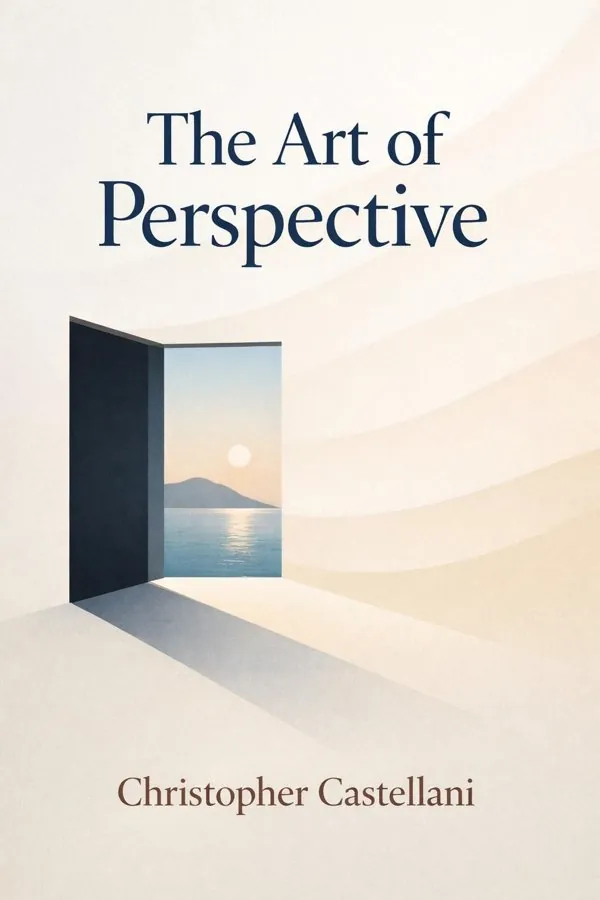
The Art of Perspective: Who Tells the Story
For more than two thousand years, The Art of War has remained one of the world’s most influential guides to strategy, leadership, and intelligent action. Though it is often introduced as a military classic, Sun Tzu’s short, penetrating text reaches far beyond the battlefield. Its real subject is how to win without waste, how to think clearly under pressure, and how to use knowledge, timing, and discipline to shape outcomes in your favor. That is why the book continues to be read by military leaders, executives, negotiators, athletes, and anyone facing high-stakes competition.
What makes The Art of War endure is its refusal to glorify brute force. Again and again, Sun Tzu argues that the best victories come from preparation, adaptability, and psychological insight—not reckless confrontation. He teaches that success depends on understanding yourself, reading the situation accurately, and responding with flexibility rather than ego. Even in modern life, where the “enemy” may be a business rival, a difficult market, or a complex personal challenge, these lessons feel remarkably current. The book matters because it transforms strategy from mere aggression into a disciplined art of perception, restraint, and decisive advantage.
Who Should Read The Art of War?
This book is perfect for anyone interested in philosophy and looking to gain actionable insights in a short read. Whether you're a student, professional, or lifelong learner, the key ideas from The Art of War by Sun Tzu will help you think differently.
- ✓Readers who enjoy philosophy and want practical takeaways
- ✓Professionals looking to apply new ideas to their work and life
- ✓Anyone who wants the core insights of The Art of War in just 10 minutes
Want the full summary?
Get instant access to this book summary and 100K+ more with Fizz Moment.
Get Free SummaryAvailable on App Store • Free to download
Key Chapters
Sun Tzu insists that every conflict is filtered through human perception—and perception is always incomplete. This is why The Art of War repeatedly warns against acting from ego, anger, pride, or wishful thinking. Leaders often become trapped in a kind of first-person blindness: they see only their own urgency, their own grievances, their own assumptions about what the opponent will do. Sun Tzu’s strategic genius lies in showing that this narrow viewpoint is dangerous. To win, you must recognize that your own mind can become the first battlefield.
A modern example is a manager who assumes a rival company’s silence signals weakness, only to discover that the competitor has been preparing a stronger launch. Or consider a tense conversation where one person interprets every pause as hostility, escalating a situation that might have been solved through patience. Sun Tzu would say that misreading reality usually begins with misreading yourself. His famous line, “If you know the enemy and know yourself, you need not fear the result of a hundred battles,” is not just military wisdom—it is a warning against self-deception.
The practical takeaway is to question your first interpretation. Before making a move, ask: What am I not seeing? What assumptions am I treating as facts? Where might emotion be distorting judgment? Strategic clarity begins when you stop mistaking your perspective for the whole truth.
One of Sun Tzu’s most powerful lessons is the value of distance. He teaches that strategy requires stepping back from immediate emotion so you can assess terrain, timing, morale, supply, and risk with a cooler eye. In modern terms, this is the ability to move from personal involvement to strategic observation—to stop reacting like a participant in the heat of the moment and start thinking like an analyst of the whole field.
This kind of distance prevents costly mistakes. A leader consumed by frustration may launch an initiative too quickly. A negotiator who feels insulted may push too hard and lose leverage. Sun Tzu warns against exactly this kind of impulsiveness. He emphasizes calculation before action: compare strengths, evaluate conditions, and wait until movement creates advantage. “He will win who knows when to fight and when not to fight” is really advice about disciplined detachment.
Applied practically, this means creating a pause between stimulus and response. Before replying to a hostile email, changing strategy, or entering a competitive clash, zoom out. What is the broader context? What are the consequences of acting now versus later? What does the other side want you to do emotionally? Distance is not passivity. It is a method for seeing clearly enough to act with precision. In Sun Tzu’s framework, the calmest mind often has the greatest power.
The Art of War repeatedly urges leaders to see the whole field, not just a single corner of it. This broader awareness—something like a strategic “god’s-eye view”—includes weather, geography, morale, logistics, leadership quality, and enemy intention. Sun Tzu argues that decisions fail when they are based on fragments. Victory belongs to the side that understands the system, not just the skirmish.
This is why intelligence gathering is central to the book. Sun Tzu values information not as trivia, but as a tool for pattern recognition. If you know the terrain, you can choose where to engage. If you understand morale, you know when pressure will work and when it will backfire. If you recognize your opponent’s habits, you can disrupt them before conflict intensifies. In business, this might mean studying the market, customer behavior, internal capacity, and competitor weaknesses together instead of making decisions from instinct alone.
The practical lesson is to widen your frame before committing resources. Build a map of the situation: stakeholders, incentives, constraints, timing, and hidden variables. Ask not just, “What do I want?” but “What forces are shaping this outcome?” Sun Tzu’s strategic vision is powerful because it resists tunnel vision. The more complete your understanding, the less likely you are to confuse activity with progress. In complex situations, perspective itself becomes a competitive advantage.
Deception is one of the most quoted and most misunderstood elements of The Art of War. Sun Tzu’s line “All warfare is based on deception” does not mean lying recklessly or behaving without ethics. It means that in conflict, appearances are unstable, and smart opponents will use expectation against you. Trust, therefore, must be earned through evidence—not granted simply because something looks obvious.
This idea is especially relevant in modern strategic life. A competitor may signal confidence to hide vulnerability. A negotiator may create urgency to push you into a bad decision. Even your own team can become overconfident if early success creates a false narrative of control. Sun Tzu reminds us that complexity increases when people begin acting on illusions. The side that questions appearances gains an edge.
Actionable advice from this principle is straightforward: verify before committing. Test assumptions with small experiments. Read incentives, not just statements. If an offer seems unusually generous, ask what the other party gains. If an opponent appears disorganized, consider whether that disorder is real or tactical. Sun Tzu does not celebrate paranoia; he advocates disciplined skepticism. In his framework, trust should be grounded in observation, preparation, and cross-checking reality. Strategic maturity means recognizing that the most dangerous battlefield is often the one shaped by mistaken beliefs.
A recurring strength of The Art of War is its insistence that no single viewpoint is enough. A general must consider his own position, the enemy’s intentions, the condition of troops, the nature of the ground, and the larger political stakes. Strategy fails when leaders lock themselves into one rigid interpretation of events. Sun Tzu favors a layered understanding of reality, where truth emerges from comparing perspectives rather than clinging to certainty.
This lesson is highly practical in any collaborative or competitive setting. In a business decision, finance may see risk, marketing may see opportunity, operations may see constraints, and customers may see something else entirely. If leadership hears only one of those voices, the strategy will be incomplete. The same is true in personal conflict: your account may feel accurate, but the other person’s motives, fears, and pressures may change the meaning of the situation.
Sun Tzu’s broader insight is that adaptability depends on perspective-taking. To anticipate behavior, you must learn to think beyond your own interests. One useful practice is to write down the situation from three angles: your own, your opponent’s, and a neutral observer’s. What changes? What becomes clearer? By expanding the frame, you reduce blind spots and improve judgment. For Sun Tzu, seeing more than one truth at a time is not philosophical decoration—it is the basis of real strategic power.
Timing is one of the most practical and profound ideas in The Art of War. Sun Tzu teaches that success does not come merely from having strength or intention; it comes from acting at the right moment. A brilliant plan launched too early can fail. A necessary move delayed too long can become irrelevant. Strategy, then, is inseparable from time—knowing when to prepare, when to wait, when to press, and when to withdraw.
Sun Tzu also implies the importance of learning from the past without becoming trapped by it. Memory matters because past victories and defeats reveal patterns: overconfidence after success, hesitation after loss, repeated errors in logistics or judgment. But retrospective perspective is useful only when it sharpens current awareness. If you fight the last battle instead of reading the present one, history becomes a liability.
In practical terms, this means reviewing outcomes with honesty. After a failed negotiation, product launch, or major decision, ask: Was the idea wrong, or was the timing wrong? What signals did we ignore? What conditions were not ready? Sun Tzu’s wisdom encourages strategic patience. Not every opportunity should be seized immediately. Sometimes the strongest move is to conserve energy until the moment when resistance is lowest and leverage is highest. Timing, in his system, is not luck. It is disciplined alignment between readiness and opportunity.
Although The Art of War is often read as a hard-edged manual, it depends deeply on empathy—specifically, the ability to understand how others think, feel, and react. Sun Tzu knows that strategy is not just about troops or resources; it is about human behavior. Morale, fear, pride, fatigue, hunger, confusion, and hope all shape outcomes. To anticipate action, you must understand the emotional and psychological world of others.
This applies both to allies and opponents. A wise leader understands what motivates the people under his command and does not waste their strength carelessly. At the same time, he studies the enemy’s tendencies: what angers them, what exhausts them, what tempts them into mistakes. Sun Tzu’s insight is that empathy is not softness—it is intelligence. If you know what another person values, dreads, or expects, you can predict behavior with far greater accuracy.
In daily life, this can improve negotiation, management, and conflict resolution. Before pushing harder, ask what pressure the other side is already under. Before assuming resistance is irrational, ask what they may be protecting. When you understand motivations, you can choose responses that are more effective and less wasteful. Sun Tzu’s broader message is that perspective without empathy becomes mechanical, while empathy without strategy becomes naive. The strongest decision-making combines both.
One reason The Art of War remains so useful is that it is not only philosophical; it is deeply practical. Sun Tzu understands that insight is easy in theory and difficult under pressure. The real challenge is sustaining strategic perspective when stress rises, information is incomplete, and quick reactions feel tempting. His answer is discipline: build habits that protect clarity before conflict begins.
This means preparing systems, not relying on mood. Study conditions in advance. Define your priorities. Know your limits. Establish what counts as success before you are emotionally invested. In modern settings, this could mean setting decision criteria before entering a negotiation, creating contingency plans before launching a project, or deciding in advance what risks are unacceptable. These structures reduce the chance that anxiety or ego will hijack judgment.
A simple Sun Tzu-inspired checklist can help: What is my objective? What are the real constraints? What does the other side likely want? Where is my advantage? What would make this not worth pursuing? Used consistently, these questions preserve perspective when situations become heated. The broader lesson is that strategy is not a one-time flash of brilliance. It is a repeatable practice of observation, restraint, and adjustment. Those who sustain perspective over time outperform those who depend on instinct alone.
All Chapters in The Art of War
About the Author
Sun Tzu is traditionally regarded as the ancient Chinese military strategist and philosopher behind The Art of War, one of the most influential works on strategy ever written. Though historical details about his life remain limited, his name has become synonymous with disciplined planning, tactical intelligence, and the art of winning through insight rather than force. His teachings have shaped military thought for centuries and later found wide relevance in business, leadership, negotiation, and politics. The Art of War remains his defining legacy, admired for its concise style and enduring strategic wisdom.
Get This Summary in Your Preferred Format
Read or listen to the The Art of War summary by Sun Tzu anytime, anywhere. FizzRead offers multiple formats so you can learn on your terms — all free.
Available formats: App · Audio · PDF · EPUB — All included free with FizzRead
Download The Art of War PDF and EPUB Summary
Key Quotes from The Art of War
“At the heart of The Art of War is a crucial distinction between appearance and reality: what is shown, what is concealed, and who controls the story of conflict.”
“Sun Tzu insists that every conflict is filtered through human perception—and perception is always incomplete.”
“One of Sun Tzu’s most powerful lessons is the value of distance.”
“The Art of War repeatedly urges leaders to see the whole field, not just a single corner of it.”
“Deception is one of the most quoted and most misunderstood elements of The Art of War.”
Frequently Asked Questions about The Art of War
The Art of War by Sun Tzu is a philosophy book that explores key ideas across 10 chapters. For more than two thousand years, The Art of War has remained one of the world’s most influential guides to strategy, leadership, and intelligent action. Though it is often introduced as a military classic, Sun Tzu’s short, penetrating text reaches far beyond the battlefield. Its real subject is how to win without waste, how to think clearly under pressure, and how to use knowledge, timing, and discipline to shape outcomes in your favor. That is why the book continues to be read by military leaders, executives, negotiators, athletes, and anyone facing high-stakes competition. What makes The Art of War endure is its refusal to glorify brute force. Again and again, Sun Tzu argues that the best victories come from preparation, adaptability, and psychological insight—not reckless confrontation. He teaches that success depends on understanding yourself, reading the situation accurately, and responding with flexibility rather than ego. Even in modern life, where the “enemy” may be a business rival, a difficult market, or a complex personal challenge, these lessons feel remarkably current. The book matters because it transforms strategy from mere aggression into a disciplined art of perception, restraint, and decisive advantage.
Compare The Art of War



You Might Also Like
Browse by Category
Ready to read The Art of War?
Get the full summary and 100K+ more books with Fizz Moment.