
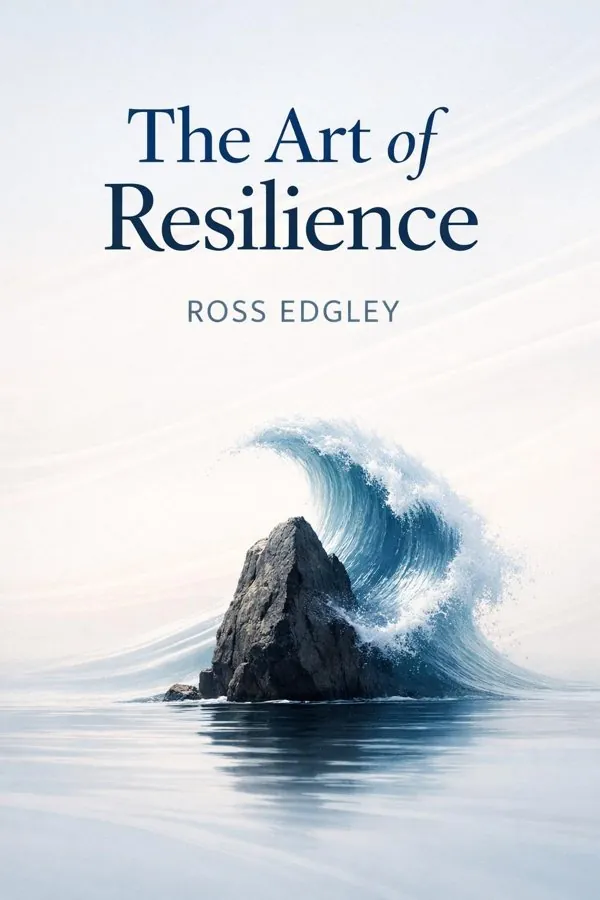
The Art of Resilience: Strategies for an Unbreakable Mind: Summary & Key Insights
by Ross Edgley
 10 min9 chaptersAudio available
Key Takeaways from The Art of Resilience: Strategies for an Unbreakable Mind
We often speak about mental toughness as if it lives only in the mind, but resilience is deeply physical.
The body may carry you, but the mind decides whether you continue.
Much of human suffering comes from trying to control what was never ours to command.
Comfort feels safe, but too much comfort quietly weakens our capacity to cope.
A culture obsessed with grinding often misunderstands resilience.
What Is The Art of Resilience: Strategies for an Unbreakable Mind About?
The Art of Resilience: Strategies for an Unbreakable Mind by Ross Edgley is a mindset book spanning 6 pages. What allows some people to keep going when pain, uncertainty, and exhaustion would stop almost anyone else? In The Art of Resilience, Ross Edgley argues that resilience is not a mysterious gift reserved for elite performers. It is a trainable capacity built through stress, recovery, perspective, and purpose. Drawing on his background in sports science and his extraordinary endurance challenges, including his legendary swim around Great Britain, Edgley explores how the body and mind adapt under pressure and why hardship can become a catalyst for growth rather than a reason to quit. What makes this book especially powerful is its blend of lived experience and evidence-based insight. Edgley does not talk about resilience from a distance; he has tested it in freezing water, brutal fatigue, and long stretches of isolation. At the same time, he grounds his lessons in psychology, physiology, and philosophy, especially Stoic thinking. The result is a practical guide to becoming steadier under stress, more disciplined in discomfort, and more capable when life gets hard. For anyone facing pressure at work, in sport, or in everyday life, this book offers a compelling blueprint for building an unbreakable mind.
This FizzRead summary covers all 9 key chapters of The Art of Resilience: Strategies for an Unbreakable Mind in approximately 10 minutes, distilling the most important ideas, arguments, and takeaways from Ross Edgley's work. Also available as an audio summary and Key Quotes Podcast.
The Art of Resilience: Strategies for an Unbreakable Mind
What allows some people to keep going when pain, uncertainty, and exhaustion would stop almost anyone else? In The Art of Resilience, Ross Edgley argues that resilience is not a mysterious gift reserved for elite performers. It is a trainable capacity built through stress, recovery, perspective, and purpose. Drawing on his background in sports science and his extraordinary endurance challenges, including his legendary swim around Great Britain, Edgley explores how the body and mind adapt under pressure and why hardship can become a catalyst for growth rather than a reason to quit.
What makes this book especially powerful is its blend of lived experience and evidence-based insight. Edgley does not talk about resilience from a distance; he has tested it in freezing water, brutal fatigue, and long stretches of isolation. At the same time, he grounds his lessons in psychology, physiology, and philosophy, especially Stoic thinking. The result is a practical guide to becoming steadier under stress, more disciplined in discomfort, and more capable when life gets hard. For anyone facing pressure at work, in sport, or in everyday life, this book offers a compelling blueprint for building an unbreakable mind.
Who Should Read The Art of Resilience: Strategies for an Unbreakable Mind?
This book is perfect for anyone interested in mindset and looking to gain actionable insights in a short read. Whether you're a student, professional, or lifelong learner, the key ideas from The Art of Resilience: Strategies for an Unbreakable Mind by Ross Edgley will help you think differently.
- ✓Readers who enjoy mindset and want practical takeaways
- ✓Professionals looking to apply new ideas to their work and life
- ✓Anyone who wants the core insights of The Art of Resilience: Strategies for an Unbreakable Mind in just 10 minutes
Want the full summary?
Get instant access to this book summary and 100K+ more with Fizz Moment.
Get Free SummaryAvailable on App Store • Free to download
Key Chapters
We often speak about mental toughness as if it lives only in the mind, but resilience is deeply physical. Edgley shows that our ability to endure stress depends on the body’s capacity to adapt, recover, and keep functioning under strain. A resilient mind is easier to build when sleep, nutrition, movement, and recovery are taken seriously. In endurance challenges, this reality becomes obvious: depleted energy, chronic inflammation, or poor recovery can make even a motivated person feel psychologically defeated. What looks like a mindset problem is often, at least partly, a physiology problem.
Edgley draws on sports science to explain that the human body is not fragile by design; it is adaptive. Muscles strengthen after stress. Cardiovascular capacity improves with training. Cold exposure, heat, fatigue, and repetitive exertion can all become more manageable when introduced progressively. This does not mean glorifying suffering or ignoring limits. It means understanding that the body becomes more capable through carefully managed challenge. The key is to balance overload with recovery so that stress becomes a teacher rather than a destroyer.
In everyday life, this principle matters just as much. A parent juggling family and work, an entrepreneur under constant pressure, or a student facing deadlines will all cope better with adversity if their physical foundation is solid. Hydration, regular exercise, sleep discipline, and recovery routines are not side issues; they are resilience tools.
Actionable takeaway: Before trying to “think” your way through stress, strengthen your physical base. Improve one foundational habit this week—sleep, nutrition, daily movement, or recovery—and treat it as mental resilience training, not just self-care.
The body may carry you, but the mind decides whether you continue. One of Edgley’s central insights is that the moment people quit is often not the moment they are physically incapable, but the moment they lose the psychological ability to tolerate discomfort. Thoughts such as “I can’t do this,” “This will never end,” or “I’m falling apart” can drain endurance faster than physical fatigue alone. That is why resilience depends heavily on how we interpret struggle.
Edgley highlights ideas from sports psychology that help people keep going under pressure. Self-talk matters because the brain listens to the stories we repeat. Focus matters because attention magnifies whatever it lands on. If you obsess over how far you still have to go, the challenge feels crushing. If you focus on the next stroke, the next breath, or the next ten minutes, the impossible becomes manageable. This is not denial; it is strategic attention control.
He also suggests that perseverance improves when we expect hardship rather than feel betrayed by it. Many people suffer twice: once from the pain itself and again from the belief that pain means something is wrong. Endurance athletes learn to normalize discomfort, which reduces panic and preserves energy.
In practice, this applies far beyond sport. During a difficult project, a personal setback, or a period of uncertainty, the same mental tools help: break the task into smaller units, replace catastrophic language with functional language, and focus on process over emotion.
Actionable takeaway: Create a simple mental script for hard moments. Use one phrase to steady yourself, one small process goal to focus on, and one reminder that discomfort is temporary and survivable.
Much of human suffering comes from trying to control what was never ours to command. Edgley uses Stoic philosophy to argue that resilience grows when we separate what is within our control from what is not. Weather, setbacks, other people’s opinions, unexpected delays, and many outcomes remain uncertain no matter how hard we try. Our effort, attitude, preparation, and response, however, remain available to us. This distinction is one of the book’s most stabilizing ideas.
In extreme endurance events, external conditions constantly shift. Water temperature changes. Winds turn hostile. Plans fail. If an athlete wastes emotional energy resenting uncontrollable conditions, performance deteriorates. The Stoic alternative is not passivity but disciplined acceptance. Accept reality quickly, then act well within it. This mindset turns adversity from an emotional insult into a practical problem.
This principle is equally powerful in ordinary life. You cannot control whether a company restructures, whether traffic delays you, or whether someone misunderstands you. But you can control how prepared you are, how respectfully you communicate, and how quickly you adapt. Resilient people are not calm because life is easy. They are calmer because they stop fighting reality at the wrong level.
Edgley’s use of Stoicism also reminds readers that inner freedom is a skill. When your peace depends entirely on ideal circumstances, you will always be vulnerable. When it depends more on your response than on your environment, you become steadier.
Actionable takeaway: In your next stressful situation, draw two columns: “My control” and “Not my control.” Put your energy only into the first column, and make one concrete decision based on that distinction.
Comfort feels safe, but too much comfort quietly weakens our capacity to cope. Edgley argues that resilience develops through deliberate exposure to manageable difficulty. Discomfort is not merely something to survive; it is often the very environment in which strength is formed. Whether it is cold water, physical training, boredom, hunger during controlled fasting, or emotionally difficult conversations, voluntary hardship teaches the nervous system that struggle is not the same as danger.
This idea rests on adaptation. When we repeatedly encounter challenge and recover from it, we expand our sense of what we can handle. The reverse is also true: if we avoid every inconvenience, frustration, and strain, our tolerance narrows. Small discomforts then begin to feel overwhelming. Edgley’s own endurance feats illustrate this principle dramatically, but the lesson is scalable. Most readers do not need to swim around a country to benefit from it. They simply need to stop treating every uncomfortable feeling as a stop sign.
Practical examples include finishing the last ten minutes of a workout when your mind wants to stop, taking a cold shower to practice composure, limiting distractions so you can tolerate boredom, or initiating a difficult but necessary conversation rather than postponing it. The goal is not self-punishment. It is to build familiarity with discomfort so that pressure loses some of its power over you.
Resilience grows when adversity is interpreted as training rather than personal injustice. That shift transforms hardship from an enemy into a stimulus for growth.
Actionable takeaway: Choose one small, safe form of voluntary discomfort this week and repeat it consistently. Use it to practice staying calm, breathing steadily, and proving to yourself that unease is tolerable.
A culture obsessed with grinding often misunderstands resilience. Edgley makes clear that toughness is not endless output; it is the ability to stress, recover, and return stronger. Without recovery, effort becomes depletion. The strongest performers are not always those who push hardest in every moment, but those who understand how to alternate strain and restoration intelligently. Recovery is not weakness in the resilience equation. It is what makes sustained performance possible.
From a physiological perspective, adaptation happens after stress, not during it. Training breaks the body down; sleep, food, and rest rebuild it. The same pattern applies psychologically. The mind needs periods of reflection, decompression, and connection to integrate difficult experiences. If you remain in a constant state of urgency, you may feel productive for a while, but eventually your decision-making, mood, and discipline erode.
Edgley also broadens recovery beyond passive rest. Recovery can include mobility work, breathing exercises, walks, laughter, meaningful conversation, proper fueling, and time away from stimulation. These practices restore capacity and help prevent burnout disguised as ambition.
For modern readers, this lesson is crucial. Many professionals wear exhaustion as a badge of honor, then wonder why they feel brittle under stress. But resilience is not proven by how long you can ignore your limits. It is proven by how wisely you manage them.
Actionable takeaway: Schedule recovery with the same seriousness as effort. Add one non-negotiable recovery ritual to your calendar—such as a fixed bedtime, post-work walk, or device-free evening block—and protect it as performance training.
People can withstand far more than they think when suffering is connected to meaning. Edgley emphasizes that endurance becomes sustainable when it is anchored in a reason larger than immediate comfort. Pain without purpose feels pointless and demoralizing. Pain connected to identity, mission, love, or service becomes easier to carry. This is one of the deepest truths in the book: resilience is strengthened not just by discipline, but by significance.
During long endurance efforts, motivation fluctuates. Excitement fades, boredom sets in, and discomfort becomes repetitive. In those moments, surface-level motivation is rarely enough. A stronger force is needed: a compelling why. That why may be proving something to yourself, honoring a commitment, setting an example, supporting a cause, or living in alignment with your values. Purpose organizes effort. It reminds you why continuing matters.
This applies in work and life just as strongly. A difficult job feels different when it supports your family, develops your character, or contributes to something you believe in. Parenting through exhaustion, studying through frustration, or rebuilding after failure all become more bearable when connected to purpose.
Edgley’s message is not that purpose removes pain. It reframes it. It turns hardship from meaningless suffering into chosen sacrifice. And chosen sacrifice is often easier to endure because it preserves dignity and direction.
Actionable takeaway: Write down one challenge you are currently facing and answer this question clearly: “Why is this worth enduring?” Keep the answer visible, and revisit it whenever motivation starts to fade.
Resilience is often portrayed as a solitary virtue, but Edgley shows that human endurance is profoundly social. Even the toughest individuals rely on support, encouragement, perspective, and shared belief. Community does not replace personal responsibility, but it multiplies it. When others help regulate your emotions, remind you of your values, or simply stand beside you, hardship becomes easier to bear.
In extreme challenges, support crews, teammates, friends, and mentors can make the difference between collapse and continuation. They provide practical assistance, but they also offer emotional containment. Sometimes resilience is not about summoning strength from nowhere. It is about borrowing strength from others until your own returns. This is not dependence in a negative sense; it is a recognition of how humans are built.
In everyday life, resilient communities are just as important. A colleague who helps you keep perspective, a friend who listens without panic, a coach who pushes you wisely, or a family member who reminds you who you are can all protect you from spiraling under pressure. Isolation magnifies stress, while connection often reduces it.
The book also implies a reciprocal lesson: if you want a stronger support system, become part of one. Offer help, encouragement, accountability, and presence to others. Resilience grows not only from receiving support but from participating in meaningful bonds.
Actionable takeaway: Identify three people in your resilience network—someone for perspective, someone for encouragement, and someone for accountability. Reach out intentionally, and strengthen those relationships before the next crisis arrives.
People often rise or fall to the level of the identity they believe about themselves. Edgley suggests that resilience becomes more durable when it is part of who you are, not just something you occasionally try to display. If you see yourself as someone who always avoids discomfort, every challenge threatens your self-image. If you see yourself as someone who adapts, learns, and keeps showing up, adversity becomes more compatible with who you are.
This is why repeated small wins matter. Each time you finish a hard workout, stay calm in frustration, or keep a promise to yourself, you gather evidence. Over time, that evidence shapes identity: “I am disciplined.” “I can handle hard things.” “I recover and return.” Identity-based resilience is powerful because it reduces negotiation in difficult moments. You do not ask, “Do I feel like doing this?” You ask, “What does a resilient person do next?”
Edgley’s own examples show that extraordinary endurance is often built from ordinary repetitions. Massive feats are less about a single heroic act and more about a long accumulation of identity-confirming behaviors. This is encouraging because it means resilience is accessible. You do not need a dramatic test to become tougher. You need consistency.
In practical terms, change your language. Instead of “I’m trying to be more resilient,” say “I am training myself to be someone who stays steady under pressure.” Then support that identity with daily proof.
Actionable takeaway: Choose one resilience identity statement and reinforce it with one small action every day for a week. Let behavior build belief.
Resilience is rarely forged in one dramatic moment. More often, it is assembled through ordinary daily practices that prepare you for extraordinary stress. Edgley’s broader framework suggests that an unbreakable mind and body emerge from the interaction of several disciplines: physical conditioning, mental training, emotional regulation, purposeful hardship, recovery, and meaning. The key is consistency. You do not wait for crisis to discover resilience; you train for it before you need it.
This means viewing daily life as a training environment. Morning routines can build discipline. Exercise can build discomfort tolerance. Reflection can build self-awareness. Good sleep can build emotional stability. Journaling can help you process setbacks. Breathing practices can improve composure. Purpose reminders can strengthen commitment. None of these habits seems heroic on its own, yet together they create a person who bends without breaking.
Edgley’s contribution is to make resilience feel practical rather than abstract. Instead of treating toughness as personality, he presents it as process. You can improve your inputs, sharpen your mindset, and reshape your response to stress. Over time, these repeated adaptations compound. What once felt overwhelming becomes challenging but manageable.
For readers, this is an empowering conclusion. The goal is not invulnerability. It is adaptability, steadiness, and the ability to continue acting well under pressure. Resilience is not the absence of struggle. It is the learned capacity to meet struggle with strength.
Actionable takeaway: Build a simple weekly resilience system with one habit for body, one for mind, one for recovery, and one for purpose. Keep it realistic, repeat it consistently, and let small disciplines compound into durable toughness.
All Chapters in The Art of Resilience: Strategies for an Unbreakable Mind
About the Author
Ross Edgley is a British endurance athlete, adventurer, and author whose work explores the limits of human performance. With a background in sports science, he combines academic knowledge with firsthand experience from some of the world’s most demanding physical challenges. He is best known for becoming the first person to swim around the entire coast of Great Britain, an achievement that brought international attention to his extraordinary stamina and mental toughness. Edgley has written extensively about strength, resilience, and endurance, translating elite lessons into practical ideas for everyday readers. His writing stands out for blending science, storytelling, and philosophy, especially Stoic thought, into an accessible approach to building a stronger body and a more resilient mind.
Get This Summary in Your Preferred Format
Read or listen to the The Art of Resilience: Strategies for an Unbreakable Mind summary by Ross Edgley anytime, anywhere. FizzRead offers multiple formats so you can learn on your terms — all free.
Available formats: App · Audio · PDF · EPUB — All included free with FizzRead
Download The Art of Resilience: Strategies for an Unbreakable Mind PDF and EPUB Summary
Key Quotes from The Art of Resilience: Strategies for an Unbreakable Mind
“We often speak about mental toughness as if it lives only in the mind, but resilience is deeply physical.”
“The body may carry you, but the mind decides whether you continue.”
“Much of human suffering comes from trying to control what was never ours to command.”
“Comfort feels safe, but too much comfort quietly weakens our capacity to cope.”
“A culture obsessed with grinding often misunderstands resilience.”
Frequently Asked Questions about The Art of Resilience: Strategies for an Unbreakable Mind
The Art of Resilience: Strategies for an Unbreakable Mind by Ross Edgley is a mindset book that explores key ideas across 9 chapters. What allows some people to keep going when pain, uncertainty, and exhaustion would stop almost anyone else? In The Art of Resilience, Ross Edgley argues that resilience is not a mysterious gift reserved for elite performers. It is a trainable capacity built through stress, recovery, perspective, and purpose. Drawing on his background in sports science and his extraordinary endurance challenges, including his legendary swim around Great Britain, Edgley explores how the body and mind adapt under pressure and why hardship can become a catalyst for growth rather than a reason to quit. What makes this book especially powerful is its blend of lived experience and evidence-based insight. Edgley does not talk about resilience from a distance; he has tested it in freezing water, brutal fatigue, and long stretches of isolation. At the same time, he grounds his lessons in psychology, physiology, and philosophy, especially Stoic thinking. The result is a practical guide to becoming steadier under stress, more disciplined in discomfort, and more capable when life gets hard. For anyone facing pressure at work, in sport, or in everyday life, this book offers a compelling blueprint for building an unbreakable mind.
More by Ross Edgley
You Might Also Like


Browse by Category
Ready to read The Art of Resilience: Strategies for an Unbreakable Mind?
Get the full summary and 100K+ more books with Fizz Moment.