
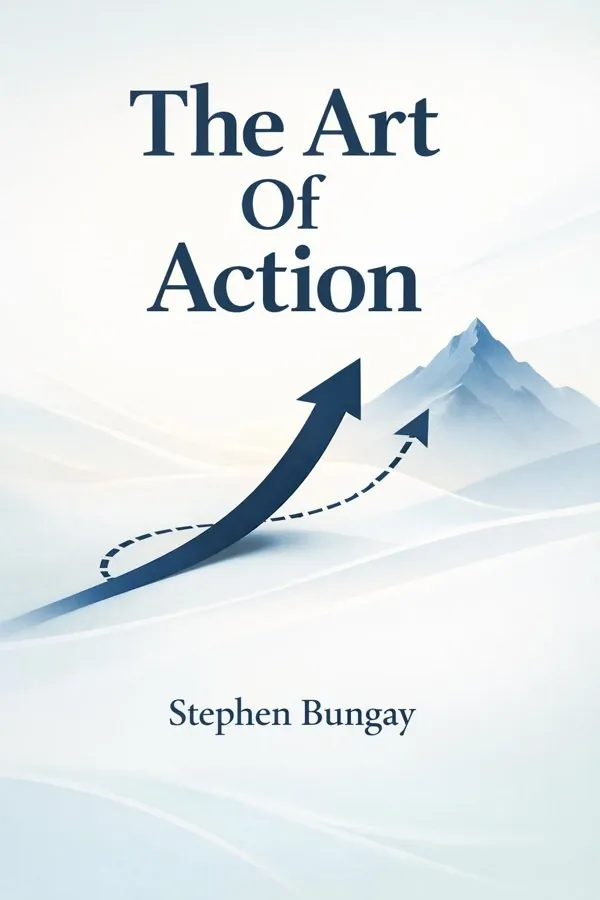
The Art Of Action: How Leaders Close The Gaps Between Plans, Actions And Results: Summary & Key Insights
 10 min10 chaptersAudio available
What Is The Art Of Action: How Leaders Close The Gaps Between Plans, Actions And Results About?
The Art Of Action: How Leaders Close The Gaps Between Plans, Actions And Results by Stephen Bungay is a leadership book spanning 10 pages. The Art of Action explores how leaders can bridge the gap between strategy and execution by applying principles derived from the 19th-century Prussian Army’s command philosophy. Stephen Bungay argues that organizations often fail not because of poor planning but because of misalignment between intent and action. The book provides a practical framework for empowering teams, clarifying intent, and improving decision-making to achieve better results.
This FizzRead summary covers all 10 key chapters of The Art Of Action: How Leaders Close The Gaps Between Plans, Actions And Results in approximately 10 minutes, distilling the most important ideas, arguments, and takeaways from Stephen Bungay's work. Also available as an audio summary and Key Quotes Podcast.
The Art Of Action: How Leaders Close The Gaps Between Plans, Actions And Results
The Art of Action explores how leaders can bridge the gap between strategy and execution by applying principles derived from the 19th-century Prussian Army’s command philosophy. Stephen Bungay argues that organizations often fail not because of poor planning but because of misalignment between intent and action. The book provides a practical framework for empowering teams, clarifying intent, and improving decision-making to achieve better results.
Who Should Read The Art Of Action: How Leaders Close The Gaps Between Plans, Actions And Results?
This book is perfect for anyone interested in leadership and looking to gain actionable insights in a short read. Whether you're a student, professional, or lifelong learner, the key ideas from The Art Of Action: How Leaders Close The Gaps Between Plans, Actions And Results by Stephen Bungay will help you think differently.
- ✓Readers who enjoy leadership and want practical takeaways
- ✓Professionals looking to apply new ideas to their work and life
- ✓Anyone who wants the core insights of The Art Of Action: How Leaders Close The Gaps Between Plans, Actions And Results in just 10 minutes
Want the full summary?
Get instant access to this book summary and 100K+ more with Fizz Moment.
Get Free SummaryAvailable on App Store • Free to download
Key Chapters
I saw the same puzzle repeat itself across industries: plans meticulously drawn up, yet results disappointing. To diagnose why, I began to map out the disconnections, and three distinct gaps emerged—the gap between plans and actions, the gap between actions and outcomes, and, ultimately, the gap between plans and outcomes.
The first is the *knowledge gap.* It stems from the assumption that leaders can foresee everything necessary for execution. In truth, frontline conditions constantly shift. Reality carries ambiguity that the plan never fully captures. Plans collapse not because people disobey them, but because they can’t apply them effectively in circumstances that differ from those imagined.
The second is the *alignment gap.* Even when people are eager to act, misunderstanding of goals and priorities leads their actions to diverge. What seems clear in the boardroom may become muddled on the shop floor. Communication becomes a game of telephone, with intentions reshaped at every level.
The third is the *effects gap.* We act with certain expectations, but results depend on complex external forces. No one directly controls outcomes. The world reacts in unpredictable ways, exposing the limits of planning.
These gaps are not signs of incompetence—they are intrinsic to human organizations navigating complexity. Closing them requires leadership capable of bridging the rift between abstract plans and concrete actions. Instead of more data and tighter control, we need a new logic: clarity of purpose, disciplined freedom, and feedback.
To truly grasp how to close these gaps, I turned to a domain where execution under uncertainty is literally a matter of life and death—the battlefield. In the early nineteenth century, Prussia faced the same dilemma as any modern corporation today: how to coordinate a large, complex structure in fast-changing, unpredictable environments.
After their defeat by Napoleon, Prussian leaders realized their army’s centralized command was too rigid. Plans couldn’t keep up with the pace of war. They embarked on a radical reform, not of structure alone but of mindset—the birth of *Auftragstaktik*, or mission command. This philosophy trusted officers to act independently once they understood the commander’s intent. It empowered them to adapt to ground realities without waiting for orders.
This evolution didn’t happen overnight. It required a cultural shift. Officers learned that discipline meant commitment to purpose, not blind obedience. Senior leaders learned to articulate intent succinctly—the *why* behind every mission—not just the *how.* The result was an army that moved like a network rather than a hierarchy, flexible yet coordinated.
Modern organizations share similar terrain. Our competitive landscapes shift as unpredictably as battlefields. The historical lens teaches us that adaptability doesn’t come from chaos but from clarity. When we replace control with intent, people can navigate uncertainty while staying true to strategy.
+ 8 more chapters — available in the FizzRead app
All Chapters in The Art Of Action: How Leaders Close The Gaps Between Plans, Actions And Results
About the Author
Stephen Bungay is a British management consultant, author, and lecturer at the Ashridge Business School. He has extensive experience in strategy and leadership, having worked with major corporations and served as a director at the Boston Consulting Group. Bungay is known for his expertise in applying historical and military insights to modern business leadership.
Get This Summary in Your Preferred Format
Read or listen to the The Art Of Action: How Leaders Close The Gaps Between Plans, Actions And Results summary by Stephen Bungay anytime, anywhere. FizzRead offers multiple formats so you can learn on your terms — all free.
Available formats: App · Audio · PDF · EPUB — All included free with FizzRead
Download The Art Of Action: How Leaders Close The Gaps Between Plans, Actions And Results PDF and EPUB Summary
Key Quotes from The Art Of Action: How Leaders Close The Gaps Between Plans, Actions And Results
“I saw the same puzzle repeat itself across industries: plans meticulously drawn up, yet results disappointing.”
“To truly grasp how to close these gaps, I turned to a domain where execution under uncertainty is literally a matter of life and death—the battlefield.”
Frequently Asked Questions about The Art Of Action: How Leaders Close The Gaps Between Plans, Actions And Results
The Art Of Action: How Leaders Close The Gaps Between Plans, Actions And Results by Stephen Bungay is a leadership book that explores key ideas across 10 chapters. The Art of Action explores how leaders can bridge the gap between strategy and execution by applying principles derived from the 19th-century Prussian Army’s command philosophy. Stephen Bungay argues that organizations often fail not because of poor planning but because of misalignment between intent and action. The book provides a practical framework for empowering teams, clarifying intent, and improving decision-making to achieve better results.
You Might Also Like
Extreme Ownership
Jocko Willink
10 min
Dare to Lead
Brene Brown
10 min
Leaders Eat Last
Simon Sinek
10 min
The 21 Irrefutable Laws of Leadership
John Maxwell
10 min
Start With Why
Simon Sinek
10 min
How to Lead When You're Not in Charge
Clay Scroggins
10 minBrowse by Category
Ready to read The Art Of Action: How Leaders Close The Gaps Between Plans, Actions And Results?
Get the full summary and 100K+ more books with Fizz Moment.