
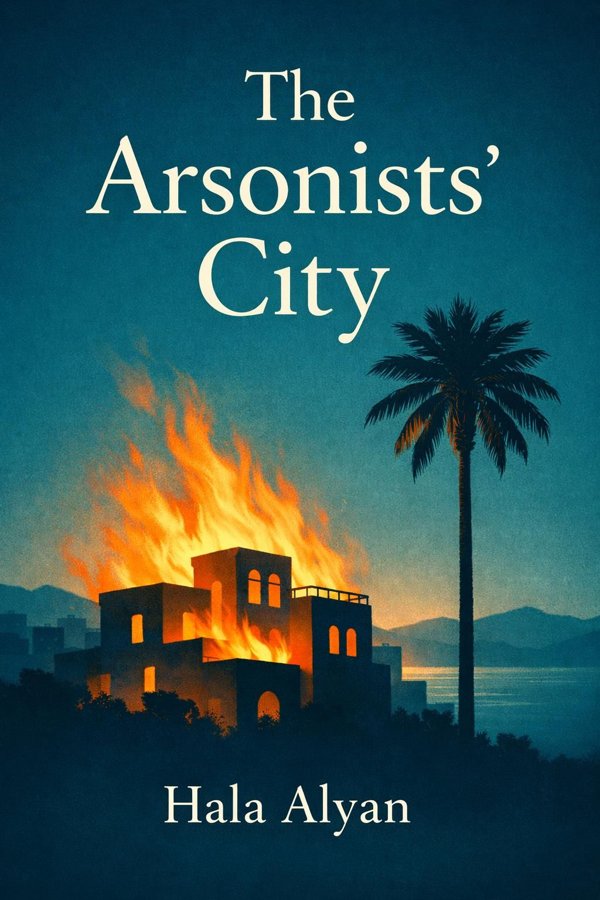
The Arsonists’ City: Summary & Key Insights
by Hala Alyan
 10 min9 chaptersAudio available
Key Takeaways from The Arsonists’ City
A family can remain connected by blood while living as emotional strangers.
Some marriages are built not on certainty but on escape.
Cities remember what families try to forget.
Families rarely collapse because of one secret; they erode because secrecy becomes the family language.
To belong to several places can feel like richness, fracture, or both at once.
What Is The Arsonists’ City About?
The Arsonists’ City by Hala Alyan is a bestsellers book spanning 4 pages. The Arsonists’ City is a richly layered family novel about what happens when people who have spent years surviving apart are suddenly forced to face one another again. Hala Alyan follows the Nasr family across Beirut, Damascus, Amman, New York, Texas, and California, tracing how war, migration, secrecy, marriage, and longing shape not only individual lives but entire generations. The immediate event is a wedding in Beirut, yet the novel’s real drama lies beneath the celebration: old betrayals, hidden histories, inherited grief, and the difficult question of what home means when every homeland has been altered by violence or distance. What makes this novel matter is its refusal to simplify exile, identity, or family love. Alyan shows that displacement is not only geographic; it is emotional, linguistic, and deeply private. As a Palestinian American writer, poet, and clinical psychologist, she brings unusual authority to these themes, combining lyrical insight with sharp psychological realism. The result is both intimate and expansive: a story of one family that becomes a powerful meditation on memory, belonging, and the fragile courage it takes to tell the truth.
This FizzRead summary covers all 9 key chapters of The Arsonists’ City in approximately 10 minutes, distilling the most important ideas, arguments, and takeaways from Hala Alyan's work. Also available as an audio summary and Key Quotes Podcast.
The Arsonists’ City
The Arsonists’ City is a richly layered family novel about what happens when people who have spent years surviving apart are suddenly forced to face one another again. Hala Alyan follows the Nasr family across Beirut, Damascus, Amman, New York, Texas, and California, tracing how war, migration, secrecy, marriage, and longing shape not only individual lives but entire generations. The immediate event is a wedding in Beirut, yet the novel’s real drama lies beneath the celebration: old betrayals, hidden histories, inherited grief, and the difficult question of what home means when every homeland has been altered by violence or distance.
What makes this novel matter is its refusal to simplify exile, identity, or family love. Alyan shows that displacement is not only geographic; it is emotional, linguistic, and deeply private. As a Palestinian American writer, poet, and clinical psychologist, she brings unusual authority to these themes, combining lyrical insight with sharp psychological realism. The result is both intimate and expansive: a story of one family that becomes a powerful meditation on memory, belonging, and the fragile courage it takes to tell the truth.
Who Should Read The Arsonists’ City?
This book is perfect for anyone interested in bestsellers and looking to gain actionable insights in a short read. Whether you're a student, professional, or lifelong learner, the key ideas from The Arsonists’ City by Hala Alyan will help you think differently.
- ✓Readers who enjoy bestsellers and want practical takeaways
- ✓Professionals looking to apply new ideas to their work and life
- ✓Anyone who wants the core insights of The Arsonists’ City in just 10 minutes
Want the full summary?
Get instant access to this book summary and 100K+ more with Fizz Moment.
Get Free SummaryAvailable on App Store • Free to download
Key Chapters
A family can remain connected by blood while living as emotional strangers. That tension sits at the heart of The Arsonists’ City, where the Nasr family is spread across countries, cultures, and private disappointments. Ava lives in California with ambition and restlessness; Mimi in Texas navigates adulthood with uncertainty and guarded feeling; Naj in New York carries distance as both style and protection. Their parents, Idris and Mazna, have built a life in Beirut marked by comfort on the surface and strain underneath. Though they share a family name, they do not share a single understanding of home, duty, or even one another.
Alyan uses this scattered arrangement to explore a modern reality many readers recognize: migration changes a family’s center of gravity. Geography becomes psychology. The farther family members move from one another, the easier it becomes for each person to invent a private version of the family story. One child remembers sacrifice, another remembers neglect. One parent tells a tale of survival, another of compromise. Distance allows silence to harden into identity.
What makes this portrayal so compelling is that separation is never shown as merely tragic. It also creates freedom, reinvention, and the chance to become someone new. Yet every reinvention has a cost. The Nasrs discover that unresolved history eventually travels with them, no matter how many cities they cross.
In practical terms, the novel invites readers to reflect on their own inherited narratives. Families often operate through assumptions left unspoken for years. Consider how siblings from the same household can tell completely different stories about childhood. Alyan reminds us that these differences are not accidents; they are part of how identity is formed.
Actionable takeaway: Identify one family story you have accepted as fixed, and ask what it looks like from another relative’s point of view.
Some marriages are built not on certainty but on escape. Mazna and Idris begin as two people shaped by upheaval, desire, and the need to survive futures they did not choose. Mazna, once a rising actress in Damascus, embodies sensuality, imagination, and thwarted artistic possibility. Idris, a medical student with seriousness and promise, carries the ambitions of a man who believes discipline can protect him from chaos. Their union emerges from a world already collapsing around them, and that origin matters: love becomes entangled with necessity, migration, and the pressure to build safety quickly.
Alyan’s genius lies in showing how a long marriage can preserve both tenderness and resentment. Mazna and Idris are not reduced to a simple failing couple. They are two complicated people who have spent decades translating themselves badly to one another. The versions of themselves that first met are not the versions who remain. Mazna mourns the self she might have been; Idris guards secrets that have silently shaped the household. Together, they represent a familiar but rarely articulated truth: when people remake their lives in exile, the marriage often becomes the archive of what was lost.
This idea has broad relevance beyond the novel. Many couples carry hidden contracts formed in crisis: we will not revisit the past, we will prioritize survival, we will call endurance love. Over time, those contracts can become prisons. Alyan suggests that intimacy requires more than longevity. It requires a willingness to let the other person know who you have become, not just who you once were.
For readers, Mazna and Idris offer a practical lens on long-term relationships. Ask: What parts of your history are still organizing your present? What sacrifices were never named? Which disappointments became personality traits?
Actionable takeaway: In any close relationship, name one old compromise that still shapes the present, and begin a more honest conversation around it.
Cities remember what families try to forget. In The Arsonists’ City, Beirut is not merely the setting for a wedding; it is the emotional theater where every hidden tension becomes harder to avoid. The city carries beauty, ruin, glamour, history, and contradiction all at once, making it the perfect backdrop for a family that also contains elegance and fracture in equal measure. As the Nasrs gather there, celebration and reckoning begin to blur.
Alyan presents Beirut as a place where the personal and political constantly intersect. Old neighborhoods, domestic spaces, and social rituals are charged with the memory of war, migration, and reinvention. For family members arriving from abroad, the city feels both intimate and unfamiliar. They are connected to it through heritage, language, and family history, yet they also confront their outsider status. This double vision is central to the novel’s treatment of diaspora. Home is not erased, but it is never fully recoverable either.
The wedding structure intensifies everything. Weddings are public performances of unity, but families rarely arrive at them as unified beings. They bring old injuries, secret comparisons, buried loyalties, and the desperate hope that appearances might still hold. Beirut becomes the place where those performances start to crack. The city’s own instability mirrors the instability within the family, reminding readers that no gathering is neutral when history sits in the room.
This has practical resonance for anyone who has returned to a hometown, attended a major family event, or reunited with relatives after years apart. Such occasions often act like emotional accelerants. Things long ignored can suddenly become impossible to ignore.
Actionable takeaway: Before any major family gathering, ask yourself what role you usually perform and what truth you may need to honor instead.
Families rarely collapse because of one secret; they erode because secrecy becomes the family language. In The Arsonists’ City, fire works as both image and structure. It evokes destruction, desire, danger, buried rage, and the possibility of cleansing revelation. Alyan uses the motif to show how hidden truths do not remain still. They generate heat. They reshape decisions. They pass from one generation to the next in disguised form.
The novel’s secrets are not sensational decorations added for plot. They are the mechanism through which Alyan explores shame and self-protection. Idris’s concealed history affects how he loves and withholds. Mazna’s private losses influence how she inhabits marriage and motherhood. The children, in turn, inherit the atmosphere created by what was never said. They may not know the facts, but they feel the distortions. This is one of the book’s strongest psychological insights: silence itself is a force. It organizes households. It teaches children what can and cannot be known.
Alyan does not suggest that truth automatically heals. Some disclosures arrive too late. Some revelations wound before they liberate. Yet the novel argues that avoiding truth has its own violence. Unspoken histories produce estrangement, fantasy, and repetition. The metaphor of arson captures this perfectly: the fire may have been set in one moment, by one person, for one reason, but its damage spreads unpredictably.
Readers can apply this insight in ordinary life. In families, workplaces, and intimate relationships, people often mistake avoidance for peace. But avoided conflicts tend to return as mistrust, emotional distance, or sudden disproportionate anger.
Actionable takeaway: Notice one pattern of silence in your life and ask whether it is preserving harmony or quietly feeding the fire.
To belong to several places can feel like richness, fracture, or both at once. Alyan’s novel refuses neat categories of identity, especially for a family shaped by Syrian, Lebanese, Palestinian, and American realities. The Nasrs do not carry nationality as a stable badge; they experience it as a layered, sometimes contradictory inheritance. Their languages, habits, politics, memories, and social expectations do not line up cleanly, and that friction becomes central to who they are.
What makes the book especially powerful is its resistance to the question, “Where are you really from?” Alyan understands that for many people in diaspora, origin is not a simple factual answer. It is a site of negotiation. One family member may feel intensely tied to an ancestral history they barely lived in. Another may reject inherited identity because it feels burdensome or romanticized. Another may move fluidly between worlds while belonging fully to none. In this way, the novel captures the emotional reality of hyphenated identities better than any abstract argument could.
The Nasr siblings demonstrate how differently identity can be lived within the same family. Their relationships to Arabness, Americanness, family expectation, and self-invention are not identical. That diversity matters. Alyan shows that shared heritage does not produce shared expression. Culture is inherited, but it is also interpreted.
This idea applies widely in multicultural families, immigrant communities, and even among people navigating class or regional difference. Identity is not a solved equation; it is an ongoing practice of choosing, remembering, resisting, and translating.
Actionable takeaway: Replace the urge to define yourself or others with one fixed label by asking which identities feel most alive in different contexts.
Children do not inherit the same family, even when they grow up under the same roof. One of Alyan’s most perceptive achievements is her portrayal of sibling difference. Ava, Mimi, and Naj are linked by lineage, but each carries a distinct burden of expectation, interpretation, and emotional adaptation. Their personalities are not random. They are responses to the same family climate lived from different angles.
Ava, the eldest, is marked by responsibility and performance. Eldest children often become translators of family tension, expected to be capable before they feel safe. Mimi’s interior life reveals another path: sensitivity mixed with dislocation, a struggle to locate desire and agency without betraying inherited scripts. Naj, younger and often more detached, turns irony and mobility into defenses. Together, they illustrate an essential truth about family systems: roles harden early, but they rarely tell the whole story.
Alyan shows how siblings can love one another deeply while misreading each other for years. Old roles survive adulthood. The dependable one still resents being depended on. The drifting one resents not being taken seriously. The emotionally distant one may actually be the most frightened of loss. These dynamics become especially visible when families reunite after time apart. Everyone re-enters the script, often before realizing it.
Readers can use this framework to rethink sibling and family relationships. Instead of asking why a brother or sister behaves a certain way, ask what role that person may have been assigned long ago. Family behavior often makes more sense when seen as adaptation rather than flaw.
Actionable takeaway: The next time you feel stuck in an old family role, pause and name it explicitly before responding from habit.
War does not end when the shooting stops; it lingers in bodies, routines, marriages, and parenting. Alyan’s novel is remarkable for how it portrays conflict not primarily through battlefield scenes but through aftermath. The characters live with war as memory, atmosphere, and inheritance. It appears in migration decisions, emotional reflexes, interruptions of trust, and the persistent sense that stability can vanish without warning.
This is one of the book’s deepest contributions. Many stories separate political history from domestic life, but Alyan insists that the two are inseparable. The grand events of the region do not remain outside the home. They alter where people can live, whom they can love, which ambitions become impossible, and how they understand danger. Even characters who are geographically far from conflict remain shaped by its psychological echo. Exile becomes not only movement away from violence but also a continued relationship to it.
The practical significance of this idea extends beyond war zones. Any large-scale disruption, whether political instability, forced migration, economic collapse, or communal trauma, leaves traces in intimate life. People may organize their days around control, overachievement, secrecy, or emotional self-protection without fully realizing these habits began as survival strategies.
Alyan treats these patterns with compassion. She does not romanticize suffering, but she does honor resilience. Her characters are damaged, funny, desirous, petty, loyal, and searching. Their trauma does not erase their complexity.
Actionable takeaway: When judging a person’s rigidity or distance, ask what history that behavior may have once helped them survive.
A life can look successful from the outside while feeling uninhabited from within. Across The Arsonists’ City, characters wrestle with desire not only in the romantic sense but in the existential one: What do I actually want, apart from duty, fear, and family script? Alyan treats this question with unusual seriousness, especially for women whose identities have been shaped by caregiving, migration, and the pressure to be legible to others.
Mazna’s history as an actress symbolizes one version of suspended desire: the self that once expected a larger life. Her children confront related dilemmas in contemporary forms. They navigate careers, intimacy, sexuality, and self-presentation while carrying inherited obligations. Alyan shows that autonomy is rarely achieved through one dramatic declaration. More often, it emerges through uncomfortable honesty, failed performances, and the willingness to disappoint people.
What makes this theme especially resonant is that the novel does not glorify reinvention as a clean break. Reinvention has collateral damage. To become more fully oneself may require grieving the roles that once earned love or safety. It may require admitting that achievement, marriage, geography, or style have functioned as disguises. Alyan’s characters are compelling because they do not simply seek freedom; they confront the costs of claiming it.
Readers can apply this insight by examining where habit has replaced desire. Many people continue in careers, relationships, or identities that were once adaptive but are no longer alive. The novel encourages a more courageous inventory.
Actionable takeaway: Ask yourself which part of your current life is based on genuine desire and which part is based on an outdated version of survival.
Love does not erase damage, but it can become the place where damage is finally seen. In a novel filled with disappointment, estrangement, and secrecy, Alyan still makes room for a hard-won vision of love. Not sentimental love, not rescuing love, but witnessing love: the kind that allows another person to exist in full contradiction. This idea gives The Arsonists’ City its emotional depth and keeps it from collapsing into despair.
Throughout the story, characters yearn to be recognized beyond the roles assigned to them. Parent, child, spouse, immigrant, success story, failure, caretaker, outsider. The tragedy is not only that they hurt one another; it is that they so often fail to perceive one another accurately. Yet Alyan suggests that moments of truthful recognition matter, even when they cannot repair everything. To be known partially but honestly may be more transformative than to be loved abstractly.
This insight is especially meaningful in families, where love is often assumed rather than practiced. The novel challenges the idea that care is proven solely through sacrifice or provision. Real care may require curiosity, listening, and the willingness to revise your story about someone you think you already understand.
In practical life, this means moving away from role-based relationships. Instead of interacting with a parent only as a parent, a sibling only as a sibling, or a partner only through conflict patterns, we can ask who that person is becoming now.
Actionable takeaway: Offer someone close to you the gift of fresh attention by asking a question that assumes they are more complex than the role you know them in.
All Chapters in The Arsonists’ City
About the Author
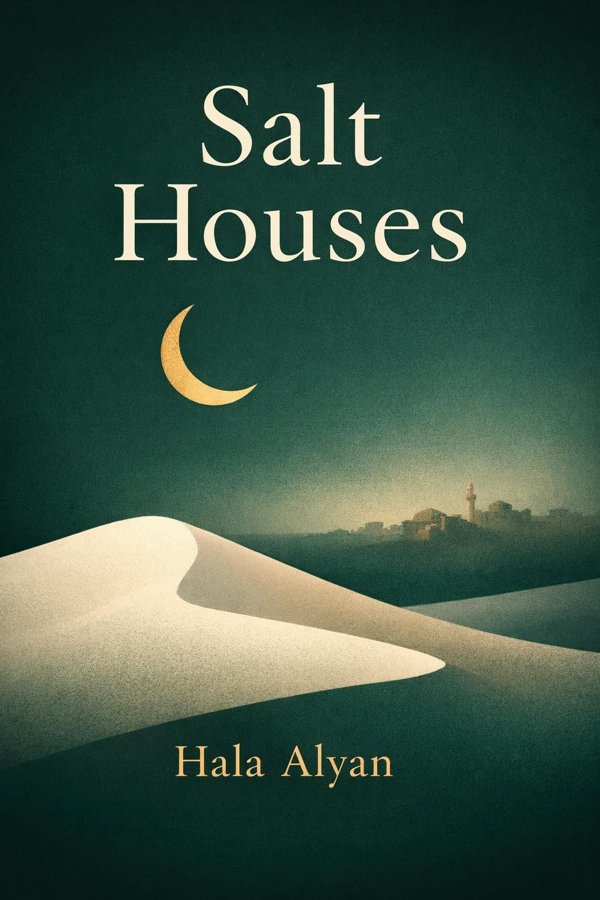
Hala Alyan is a Palestinian American poet, novelist, and clinical psychologist whose work explores exile, family, memory, and the layered experience of belonging across borders. Born in the United States and raised in several countries, she brings a deeply informed diasporic perspective to her writing. Alyan is the author of multiple poetry collections and acclaimed novels, including Salt Houses and The Arsonists’ City. Her fiction is known for its lyrical style, emotional intelligence, and nuanced portrayals of Arab and immigrant lives. Alongside her literary career, her training as a psychologist informs her sharp understanding of trauma, intimacy, and family dynamics. She is widely recognized as one of the most compelling contemporary voices writing about displacement and identity.
Get This Summary in Your Preferred Format
Read or listen to the The Arsonists’ City summary by Hala Alyan anytime, anywhere. FizzRead offers multiple formats so you can learn on your terms — all free.
Available formats: App · Audio · PDF · EPUB — All included free with FizzRead
Download The Arsonists’ City PDF and EPUB Summary
Key Quotes from The Arsonists’ City
“A family can remain connected by blood while living as emotional strangers.”
“Some marriages are built not on certainty but on escape.”
“Cities remember what families try to forget.”
“Families rarely collapse because of one secret; they erode because secrecy becomes the family language.”
“To belong to several places can feel like richness, fracture, or both at once.”
Frequently Asked Questions about The Arsonists’ City
The Arsonists’ City by Hala Alyan is a bestsellers book that explores key ideas across 9 chapters. The Arsonists’ City is a richly layered family novel about what happens when people who have spent years surviving apart are suddenly forced to face one another again. Hala Alyan follows the Nasr family across Beirut, Damascus, Amman, New York, Texas, and California, tracing how war, migration, secrecy, marriage, and longing shape not only individual lives but entire generations. The immediate event is a wedding in Beirut, yet the novel’s real drama lies beneath the celebration: old betrayals, hidden histories, inherited grief, and the difficult question of what home means when every homeland has been altered by violence or distance. What makes this novel matter is its refusal to simplify exile, identity, or family love. Alyan shows that displacement is not only geographic; it is emotional, linguistic, and deeply private. As a Palestinian American writer, poet, and clinical psychologist, she brings unusual authority to these themes, combining lyrical insight with sharp psychological realism. The result is both intimate and expansive: a story of one family that becomes a powerful meditation on memory, belonging, and the fragile courage it takes to tell the truth.
More by Hala Alyan
You Might Also Like

The Godfather
Mario Puzo
10 min
The Handmaid's Tale
Margaret Atwood
10 min
The Hunger Games
Suzanne Collins
10 min
The Nightingale
Kristin Hannah
10 min
The Seven Husbands of Evelyn Hugo
Taylor Jenkins Reid
10 min
Backwater Justice
Fern Michaels
10 minBrowse by Category
Ready to read The Arsonists’ City?
Get the full summary and 100K+ more books with Fizz Moment.