
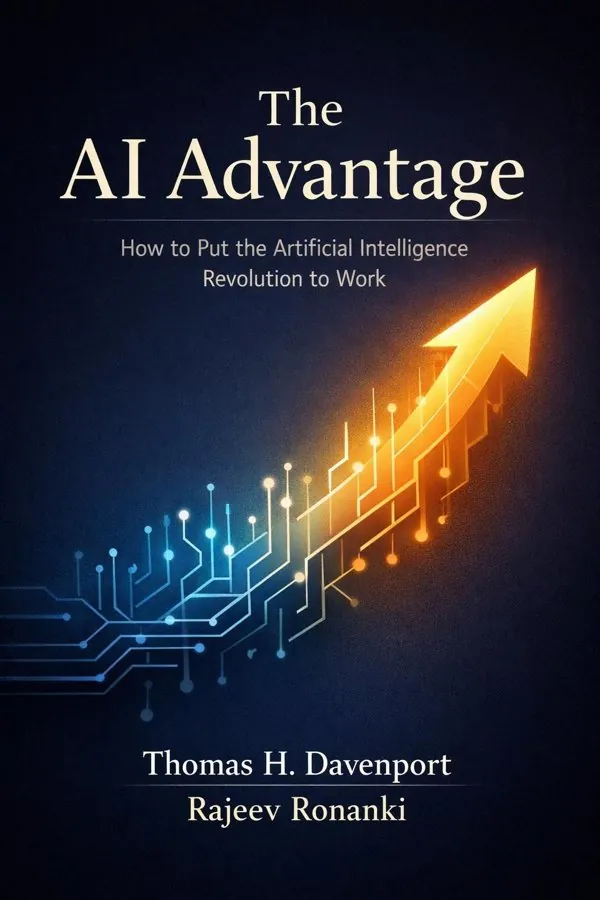
The AI Advantage: How to Put the Artificial Intelligence Revolution to Work: Summary & Key Insights
by Thomas H. Davenport, Rajeev Ronanki
 10 min9 chaptersAudio available
What Is The AI Advantage: How to Put the Artificial Intelligence Revolution to Work About?
The AI Advantage: How to Put the Artificial Intelligence Revolution to Work by Thomas H. Davenport, Rajeev Ronanki is a ai_ml book spanning 9 pages. The AI Advantage explains how businesses can leverage artificial intelligence technologies to improve performance, streamline operations, and create new value. Drawing on real-world case studies, the authors show that AI is not just for tech giants but can be implemented by organizations of all sizes to gain competitive advantage. The book provides a practical framework for understanding AI’s capabilities, limitations, and strategic applications in the modern enterprise.
This FizzRead summary covers all 9 key chapters of The AI Advantage: How to Put the Artificial Intelligence Revolution to Work in approximately 10 minutes, distilling the most important ideas, arguments, and takeaways from Thomas H. Davenport, Rajeev Ronanki's work. Also available as an audio summary and Key Quotes Podcast.
The AI Advantage: How to Put the Artificial Intelligence Revolution to Work
The AI Advantage explains how businesses can leverage artificial intelligence technologies to improve performance, streamline operations, and create new value. Drawing on real-world case studies, the authors show that AI is not just for tech giants but can be implemented by organizations of all sizes to gain competitive advantage. The book provides a practical framework for understanding AI’s capabilities, limitations, and strategic applications in the modern enterprise.
Who Should Read The AI Advantage: How to Put the Artificial Intelligence Revolution to Work?
This book is perfect for anyone interested in ai_ml and looking to gain actionable insights in a short read. Whether you're a student, professional, or lifelong learner, the key ideas from The AI Advantage: How to Put the Artificial Intelligence Revolution to Work by Thomas H. Davenport, Rajeev Ronanki will help you think differently.
- ✓Readers who enjoy ai_ml and want practical takeaways
- ✓Professionals looking to apply new ideas to their work and life
- ✓Anyone who wants the core insights of The AI Advantage: How to Put the Artificial Intelligence Revolution to Work in just 10 minutes
Want the full summary?
Get instant access to this book summary and 100K+ more with Fizz Moment.
Get Free SummaryAvailable on App Store • Free to download
Key Chapters
From our research, it quickly became evident that despite all the public attention, most organizations are still in early stages of AI maturity. They usually begin with *narrow* AI—applications designed to perform one specific task extremely well. Unlike the cinematic fantasies of fully autonomous systems, these solutions do not think generally; they operate within precise boundaries defined by data and algorithms.
In practice, companies use AI to automate document processing, predict customer churn, detect fraud, or power conversational interfaces on websites. These projects are often experimental, residing in innovation labs or IT departments. Only a few have scaled across the enterprise. Why? Because the barriers are not technological—they are organizational. There is uncertainty about where AI adds tangible value, and apprehension about how it might alter jobs or accountability structures.
We found that successful adopters share a pragmatic mindset. They treat AI not as a revolution to endure but as an opportunity to iterate. They pilot targeted use cases, measure outcomes, refine performance, and only then extend solutions more broadly. This iterative approach reduces fear and builds internal confidence. In many ways, it mirrors the incremental adoption of analytics decades ago: small successes create momentum, and momentum translates into strategy.
To navigate the landscape of AI, we distinguish three types of cognitive capabilities that organizations are deploying today. The first is *robotic process automation* (RPA). These are the digital equivalents of assembly line workers—software bots that perform rules-based tasks quickly and without fatigue. RPA offers rapid returns because it addresses well-defined workflows such as claims processing, data entry, or report generation. Its strength is precision, not creativity.
Next come *cognitive insight* applications. These involve algorithms that learn patterns from data—using machine learning and advanced analytics to uncover insights beyond traditional analysis. In finance, they identify early signs of default risk; in marketing, they segment customers dynamically; in supply chains, they predict demand fluctuations. Cognitive insight democratizes intelligence by allowing machines to analyze patterns too vast for humans to detect. However, it requires disciplined data governance and accurate labeling—a reminder that AI’s judgment is only as good as the information it consumes.
Third, we encounter *cognitive engagement*: systems that interact with humans using natural language, speech, or vision. Chatbots, virtual agents, and automated assistants illustrate this category. Their promise lies in scale—they can handle thousands of customer inquiries simultaneously, offering consistent and immediate responses. Yet, the best-performing examples still rely on human supervision for training, escalation, and empathy. The synergy between AI agents and human service representatives yields the best results.
Understanding these three categories helps you map potential initiatives according to your business priorities: efficiency through automation, intelligence through insight, and experience through engagement.
+ 7 more chapters — available in the FizzRead app
All Chapters in The AI Advantage: How to Put the Artificial Intelligence Revolution to Work
About the Authors
Thomas H. Davenport is a professor of information technology and management at Babson College and a research fellow at the MIT Initiative on the Digital Economy. Rajeev Ronanki is a senior executive at Deloitte Consulting LLP, specializing in cognitive technologies and digital transformation.
Get This Summary in Your Preferred Format
Read or listen to the The AI Advantage: How to Put the Artificial Intelligence Revolution to Work summary by Thomas H. Davenport, Rajeev Ronanki anytime, anywhere. FizzRead offers multiple formats so you can learn on your terms — all free.
Available formats: App · Audio · PDF · EPUB — All included free with FizzRead
Download The AI Advantage: How to Put the Artificial Intelligence Revolution to Work PDF and EPUB Summary
Key Quotes from The AI Advantage: How to Put the Artificial Intelligence Revolution to Work
“From our research, it quickly became evident that despite all the public attention, most organizations are still in early stages of AI maturity.”
“To navigate the landscape of AI, we distinguish three types of cognitive capabilities that organizations are deploying today.”
Frequently Asked Questions about The AI Advantage: How to Put the Artificial Intelligence Revolution to Work
The AI Advantage: How to Put the Artificial Intelligence Revolution to Work by Thomas H. Davenport, Rajeev Ronanki is a ai_ml book that explores key ideas across 9 chapters. The AI Advantage explains how businesses can leverage artificial intelligence technologies to improve performance, streamline operations, and create new value. Drawing on real-world case studies, the authors show that AI is not just for tech giants but can be implemented by organizations of all sizes to gain competitive advantage. The book provides a practical framework for understanding AI’s capabilities, limitations, and strategic applications in the modern enterprise.
You Might Also Like
Life 3.0
Max Tegmark
10 min
Superintelligence
Nick Bostrom
10 min
TensorFlow in Action
Thushan Ganegedara
10 min
AI Made Simple: A Beginner’s Guide to Generative AI, ChatGPT, and the Future of Work
Rajeev Kapur
10 min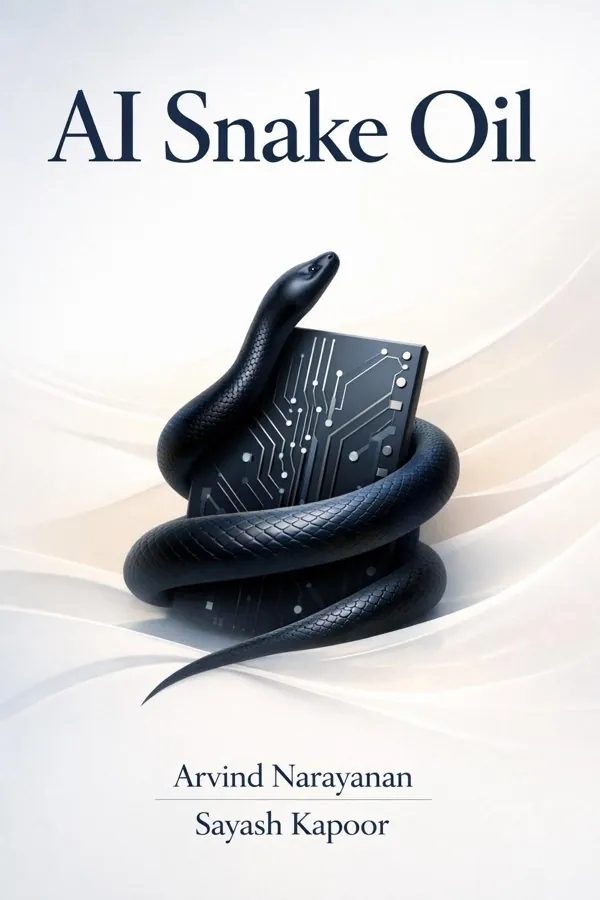
AI Snake Oil
Arvind Narayanan, Sayash Kapoor
10 min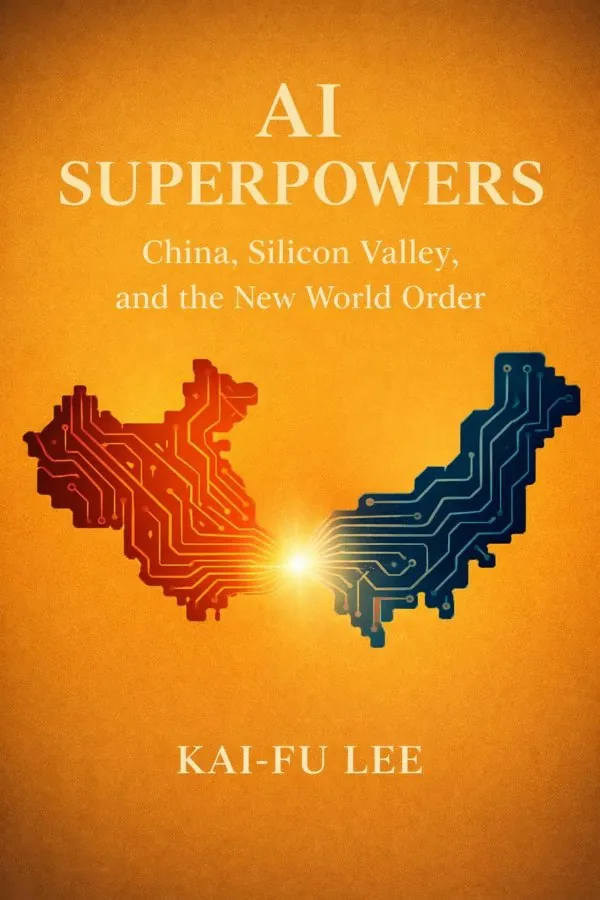
AI Superpowers: China, Silicon Valley, and the New World Order
Kai-Fu Lee
10 minBrowse by Category
Ready to read The AI Advantage: How to Put the Artificial Intelligence Revolution to Work?
Get the full summary and 100K+ more books with Fizz Moment.