
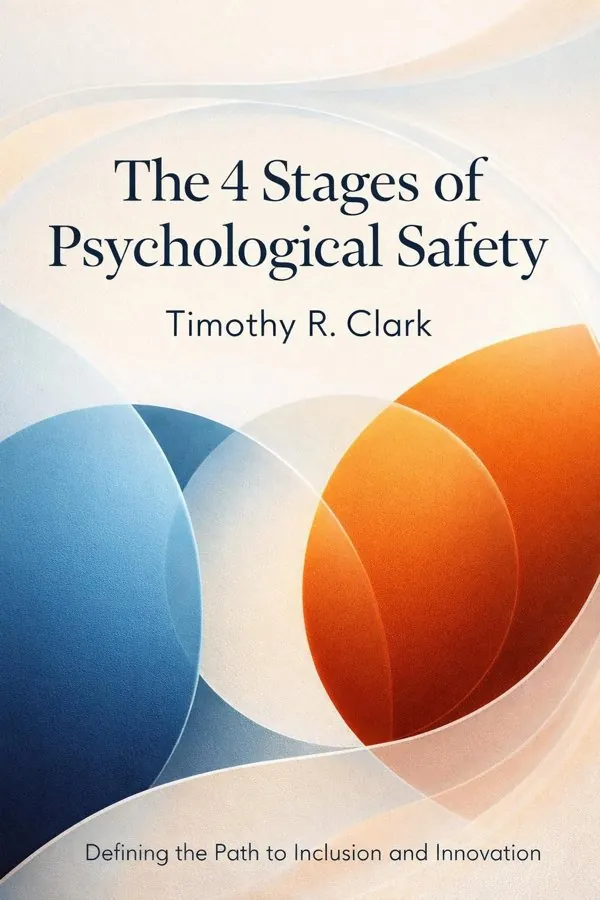
The 4 Stages of Psychological Safety: Defining the Path to Inclusion and Innovation: Summary & Key Insights
 10 min13 chaptersAudio available
What Is The 4 Stages of Psychological Safety: Defining the Path to Inclusion and Innovation About?
The 4 Stages of Psychological Safety: Defining the Path to Inclusion and Innovation by Timothy R. Clark is a leadership book spanning 13 pages. In this influential work, organizational psychologist Timothy R. Clark outlines a practical framework for building psychological safety in teams and organizations. He identifies four progressive stages—Inclusion Safety, Learner Safety, Contributor Safety, and Challenger Safety—that enable individuals to feel safe to be themselves, to learn, to contribute, and to challenge the status quo. Drawing on research and real-world examples, Clark provides leaders with actionable strategies to foster trust, innovation, and high performance.
This FizzRead summary covers all 13 key chapters of The 4 Stages of Psychological Safety: Defining the Path to Inclusion and Innovation in approximately 10 minutes, distilling the most important ideas, arguments, and takeaways from Timothy R. Clark's work. Also available as an audio summary and Key Quotes Podcast.
The 4 Stages of Psychological Safety: Defining the Path to Inclusion and Innovation
In this influential work, organizational psychologist Timothy R. Clark outlines a practical framework for building psychological safety in teams and organizations. He identifies four progressive stages—Inclusion Safety, Learner Safety, Contributor Safety, and Challenger Safety—that enable individuals to feel safe to be themselves, to learn, to contribute, and to challenge the status quo. Drawing on research and real-world examples, Clark provides leaders with actionable strategies to foster trust, innovation, and high performance.
Who Should Read The 4 Stages of Psychological Safety: Defining the Path to Inclusion and Innovation?
This book is perfect for anyone interested in leadership and looking to gain actionable insights in a short read. Whether you're a student, professional, or lifelong learner, the key ideas from The 4 Stages of Psychological Safety: Defining the Path to Inclusion and Innovation by Timothy R. Clark will help you think differently.
- ✓Readers who enjoy leadership and want practical takeaways
- ✓Professionals looking to apply new ideas to their work and life
- ✓Anyone who wants the core insights of The 4 Stages of Psychological Safety: Defining the Path to Inclusion and Innovation in just 10 minutes
Want the full summary?
Get instant access to this book summary and 100K+ more with Fizz Moment.
Get Free SummaryAvailable on App Store • Free to download
Key Chapters
Before we can build psychological safety, we need to understand what it truly is. Psychological safety is not about excessive comfort or protecting fragile egos; it’s about creating an environment where candor is possible. It is not an indulgence, it’s an efficiency mechanism—because teams that spend their energy managing fear have little left for creativity or innovation.
In essence, psychological safety is a shared belief that within this group, it is safe to engage—safe to speak up, to make mistakes, to disagree, and to learn. It emerges when a group collectively decides that interpersonal risk is worth taking because the net effect is learning and progress. This is a social condition, not an individual trait, and leaders either foster it or erode it by their everyday behavior.
In my research, I found that psychological safety evolves in a predictable sequence. You can’t skip steps. People first need inclusion before they can learn. They need to be safe learning before they can confidently contribute. Only when they feel secure contributing will they risk challenging the status quo. Thus, I structured the model as four progressive stages, each serving as the foundation for the next. Leadership, therefore, is not merely about motivating individuals but staging psychological safety so that human potential can fully emerge.
We begin with inclusion—the most basic and universal human need. Inclusion Safety means you feel accepted as part of the team. It’s when others treat you with respect and value your presence, regardless of your identity, background, or differences. Inclusion is not about mere tolerance; it’s about genuine acknowledgment. It answers the question every person silently asks when joining a group: Do I belong here?
When inclusion safety is absent, people feel like outsiders. They spend their emotional energy managing impressions or masking who they are rather than engaging in meaningful work. But when inclusion is strong, the temperature of the group changes. Communication flows freely, collaboration becomes natural, and people begin to invest emotionally.
Leaders play a decisive role here. They model inclusion by demonstrating empathy, curiosity, and respect. They signal acceptance through small actions—listening attentively, inviting diverse voices into conversations, recognizing contributions. Inclusion Safety is violated whenever someone is ignored, mocked, or subtly excluded. Therefore, the responsibility of leadership at this stage is to remove fear of rejection. Only when people feel included will they dare to learn.
+ 11 more chapters — available in the FizzRead app
All Chapters in The 4 Stages of Psychological Safety: Defining the Path to Inclusion and Innovation
About the Author
Timothy R. Clark is the founder and CEO of LeaderFactor, a global consulting and training organization specializing in leadership development and psychological safety. He holds a Ph.D. in social science from Oxford University and is recognized as a leading authority on organizational culture, change, and leadership effectiveness.
Get This Summary in Your Preferred Format
Read or listen to the The 4 Stages of Psychological Safety: Defining the Path to Inclusion and Innovation summary by Timothy R. Clark anytime, anywhere. FizzRead offers multiple formats so you can learn on your terms — all free.
Available formats: App · Audio · PDF · EPUB — All included free with FizzRead
Download The 4 Stages of Psychological Safety: Defining the Path to Inclusion and Innovation PDF and EPUB Summary
Key Quotes from The 4 Stages of Psychological Safety: Defining the Path to Inclusion and Innovation
“Before we can build psychological safety, we need to understand what it truly is.”
“We begin with inclusion—the most basic and universal human need.”
Frequently Asked Questions about The 4 Stages of Psychological Safety: Defining the Path to Inclusion and Innovation
The 4 Stages of Psychological Safety: Defining the Path to Inclusion and Innovation by Timothy R. Clark is a leadership book that explores key ideas across 13 chapters. In this influential work, organizational psychologist Timothy R. Clark outlines a practical framework for building psychological safety in teams and organizations. He identifies four progressive stages—Inclusion Safety, Learner Safety, Contributor Safety, and Challenger Safety—that enable individuals to feel safe to be themselves, to learn, to contribute, and to challenge the status quo. Drawing on research and real-world examples, Clark provides leaders with actionable strategies to foster trust, innovation, and high performance.
You Might Also Like

Extreme Ownership
Jocko Willink
10 min
Dare to Lead
Brene Brown
10 min
Leaders Eat Last
Simon Sinek
10 min
The 21 Irrefutable Laws of Leadership
John Maxwell
10 min
Start With Why
Simon Sinek
10 min
How to Lead When You're Not in Charge
Clay Scroggins
10 minBrowse by Category
Ready to read The 4 Stages of Psychological Safety: Defining the Path to Inclusion and Innovation?
Get the full summary and 100K+ more books with Fizz Moment.