
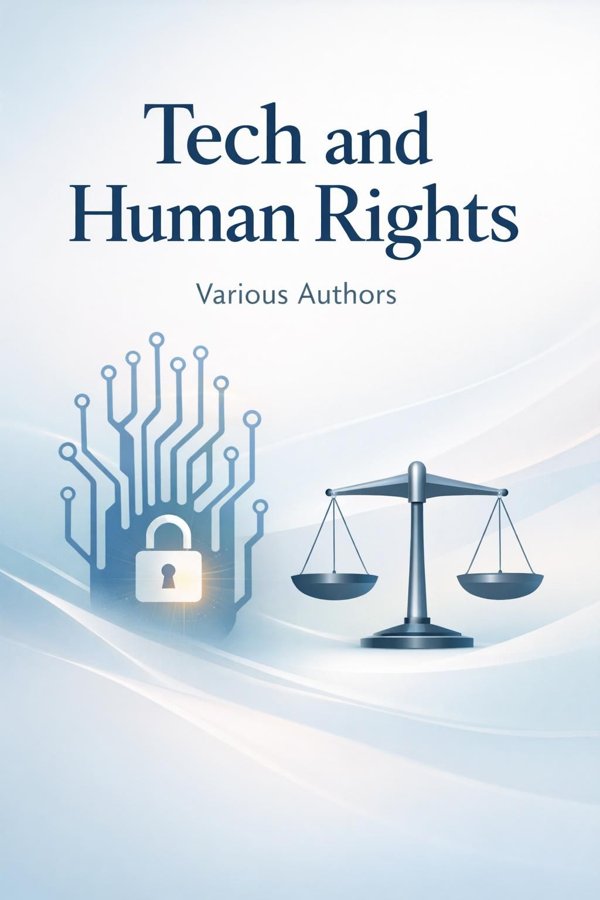
Tech and Human Rights: Summary & Key Insights
 10 min11 chaptersAudio available
What Is Tech and Human Rights About?
Tech and Human Rights by Various Authors is a digital_culture book spanning 11 pages. This book explores the intersection between technology and human rights, examining how digital innovation, artificial intelligence, and data governance impact privacy, freedom of expression, and equality. It includes essays and case studies from multiple experts and organizations working in the field of human rights and technology policy.
This FizzRead summary covers all 11 key chapters of Tech and Human Rights in approximately 10 minutes, distilling the most important ideas, arguments, and takeaways from Various Authors's work. Also available as an audio summary and Key Quotes Podcast.
Tech and Human Rights
This book explores the intersection between technology and human rights, examining how digital innovation, artificial intelligence, and data governance impact privacy, freedom of expression, and equality. It includes essays and case studies from multiple experts and organizations working in the field of human rights and technology policy.
Who Should Read Tech and Human Rights?
This book is perfect for anyone interested in digital_culture and looking to gain actionable insights in a short read. Whether you're a student, professional, or lifelong learner, the key ideas from Tech and Human Rights by Various Authors will help you think differently.
- ✓Readers who enjoy digital_culture and want practical takeaways
- ✓Professionals looking to apply new ideas to their work and life
- ✓Anyone who wants the core insights of Tech and Human Rights in just 10 minutes
Want the full summary?
Get instant access to this book summary and 100K+ more with Fizz Moment.
Get Free SummaryAvailable on App Store • Free to download
Key Chapters
Human rights principles have always evolved in response to technological transformation. In this section, I trace that evolution from the telegraph and radio to the rise of the internet. Each era demanded new interpretations of dignity, privacy, and freedom. After the Second World War, the Universal Declaration of Human Rights established global norms during an age of print and broadcast media. But as communication technologies advanced, these norms faced new strains—mass surveillance during the Cold War, the advent of satellite communications, and finally, a hyperconnected internet that blurred borders.
The digital age has pushed human rights law into unprecedented territory. Where once states were the primary guarantors or violators of rights, now private corporations wield comparable influence. Social media companies host public discourse on a scale governments never imagined. Cloud services collect and store personal information beyond national jurisdiction. International law, while rooted in physical sovereignty, must adapt to virtual authority.
This chapter reflects on how institutions such as the United Nations and the Council of Europe have gradually incorporated digital dimensions into human rights frameworks. The evolution of the right to privacy—from its early defense against wiretapping to modern debates on metadata and algorithmic profiling—shows both continuity and disruption. What remains constant is the moral foundation: the protection of human dignity against arbitrary interference, whether by state or machine.
History teaches us that human rights are not static doctrines; they are living instruments. To understand today’s digital dilemmas, we must view the law as dynamic—capable of responding to each technological turning point with renewed ethical reasoning.
Privacy lies at the heart of human autonomy. In today’s networked world, however, it has become a contested space—where governments seek surveillance, corporations monetize attention, and individuals struggle to reclaim control. This section explores privacy not merely as legal entitlement but as an existential condition for freedom.
From the author’s perspective, privacy in the digital age requires us to rethink consent and control. Every time we use an application or platform, we participate in invisible systems of data collection. These systems create profiles that affect us socially, economically, and politically. Whether it is predictive policing or targeted advertising, the manipulation of data can undermine dignity if left unchecked.
The book lays out examples such as the European Union’s GDPR, which demonstrates how legal instruments can reinstate accountability. It contrasts this with authoritarian surveillance models that treat citizens as data subjects rather than rights holders. Through these external and institutional analyses, the chapter underscores a moral imperative: data governance must prioritize people, not profit.
But beyond regulation, privacy also demands culture—a public awareness of the value of personal data. Technology design can nurture this awareness by embedding privacy-by-design principles, decentralizing control, and promoting transparency. As I argue here, true protection emerges when individuals, governments, and corporations share responsibility for maintaining ethical boundaries. Privacy is not merely about secrecy; it is about preserving the space for self-determination within a data-driven society.
+ 9 more chapters — available in the FizzRead app
All Chapters in Tech and Human Rights
About the Author
The contributors are scholars, activists, and policy experts specializing in technology ethics, digital rights, and international human rights law.
Get This Summary in Your Preferred Format
Read or listen to the Tech and Human Rights summary by Various Authors anytime, anywhere. FizzRead offers multiple formats so you can learn on your terms — all free.
Available formats: App · Audio · PDF · EPUB — All included free with FizzRead
Download Tech and Human Rights PDF and EPUB Summary
Key Quotes from Tech and Human Rights
“Human rights principles have always evolved in response to technological transformation.”
“Privacy lies at the heart of human autonomy.”
Frequently Asked Questions about Tech and Human Rights
Tech and Human Rights by Various Authors is a digital_culture book that explores key ideas across 11 chapters. This book explores the intersection between technology and human rights, examining how digital innovation, artificial intelligence, and data governance impact privacy, freedom of expression, and equality. It includes essays and case studies from multiple experts and organizations working in the field of human rights and technology policy.
More by Various Authors

You Might Also Like

An Ugly Truth: Inside Facebook’s Battle for Domination
Sheera Frenkel, Cecilia Kang
10 min
Cyber Citizens
Ian Goodfellow
10 min
Digital Minimalism: Choosing a Focused Life in a Noisy World
Cal Newport
10 min
E‑Books & Beyond
Various Authors
10 min
The Future of Media
Various Authors
10 min
This Is Why We Can't Have Nice Things
Whitney Phillips
10 minBrowse by Category
Ready to read Tech and Human Rights?
Get the full summary and 100K+ more books with Fizz Moment.